The upcoming local council elections, scheduled for May 7, 2026, represent a critical juncture for governance across the United Kingdom. While often overshadowed by the high-stakes theater of Westminster politics, local government serves as the primary interface between the state and the citizen. From the management of social care and the provision of affordable housing to the strategic oversight of planning and procurement, local councils wield significant power to either mitigate or exacerbate regional inequalities. As 5,014 seats across 136 English local authorities become contested, alongside pivotal national elections in Scotland and Wales, the 2026 electoral cycle offers a unique opportunity for residents to demand accountability and structural change.
The significance of these elections is underscored by a decade and a half of fiscal constraints. Since 2010, local authorities have navigated a landscape of reduced central government grants and rising demand for services. This environment has forced many councils to make difficult decisions regarding libraries, youth centers, and community infrastructure. Consequently, the 2026 vote is not merely a choice of political representation but a referendum on the future of community resilience and the local state’s role in fostering an equitable society.
The Landscape of Inequality: National Context and Local Impact
The United Kingdom remains one of the most geographically and economically unequal countries in the developed world. Research consistently indicates that high levels of inequality are not merely a matter of individual hardship but a systemic failure that hampers overall economic productivity and social cohesion. According to the Equality Trust, more equal societies tend to exhibit better health outcomes, lower crime rates, and higher levels of social trust.
The current economic climate serves as a stark backdrop to the 2026 elections. Wealth in the UK is heavily concentrated, with the richest 10% of households holding 43% of all wealth, while the bottom 50% hold only 9%. This disparity is mirrored in income levels and access to essential services. Local data often reveals even sharper divides within individual boroughs, where life expectancy can vary by over a decade between neighborhoods situated only a few miles apart.
Voters are encouraged to scrutinize local data, such as the Indices of Multiple Deprivation (IMD) and local authority health profiles, to understand how these national trends manifest in their specific wards. These statistics provide the factual basis necessary to challenge candidates on their plans for redistribution and service delivery.
The 2026 Electoral Timeline and Scope
The elections on May 7, 2026, involve a complex array of jurisdictions. In England, the 5,014 seats up for election span a variety of council types, including metropolitan boroughs, unitary authorities, and district councils. Simultaneously, voters in Wales and Scotland will head to the polls to elect representatives for the Senedd and the Scottish Parliament, respectively.
This synchronization of local and devolved national elections creates a rare moment of comprehensive political evaluation. For candidates, the campaign period serves as a test of their ability to translate broad party manifestos into actionable local policies. For the electorate, it is a window of maximum leverage, as candidates are most responsive to public pressure during the weeks leading up to the vote.
Strategic Questions for Candidates: A Five-Pillar Framework
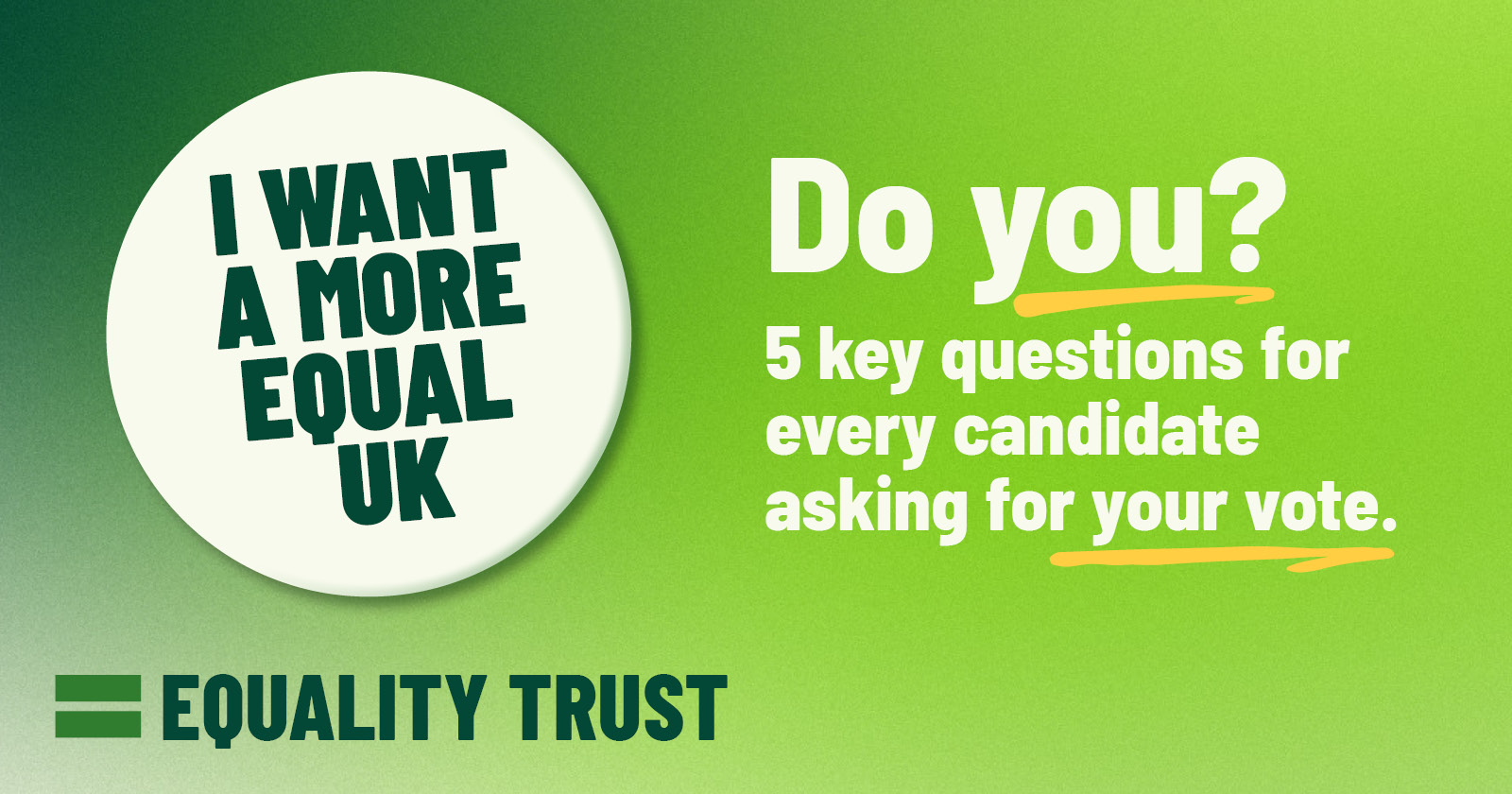
To effectively challenge the status quo, voters must engage candidates with specific, policy-oriented inquiries. The following five pillars represent the areas where local councils have the most significant impact on socio-economic inequality.
1. Housing Stability and Affordability
Housing remains the single largest expense for most UK households and a primary driver of poverty. Local councils possess the legal authority to influence housing markets through planning permissions and the management of social housing stock.
Voters should ask candidates whether they will commit to resisting the further sell-off of council homes and how they intend to use Compulsory Purchase Orders (CPOs) to bring long-term empty properties back into use. Furthermore, the issue of "affordable housing" definitions—often set at 80% of market rates—remains a point of contention. Candidates should be pressed on whether they will advocate for housing costs linked to local median incomes rather than inflated market values.
2. The Voluntary Adoption of the Socio-Economic Duty
Section 1 of the Equality Act 2010, known as the "socio-economic duty," requires public bodies to consider how their decisions can reduce the inequalities of outcome caused by socio-economic disadvantage. While the UK government has never formally commenced this duty in England, several forward-thinking councils have adopted it voluntarily.
Adopting this duty forces a council to conduct rigorous impact assessments on every budget cut or policy change, ensuring that the most vulnerable residents are not disproportionately harmed. Voters should demand to know if candidates will support the formal adoption of this duty to ensure transparency and accountability in decision-making.
3. Community Wealth Building and Procurement
Local authorities spend billions of pounds annually on goods and services. Traditionally, this procurement has favored large, often multinational, private contractors. However, the "Preston Model"—a strategy pioneered in Lancashire—demonstrates how councils can redirect this spending toward local businesses, worker cooperatives, and community-led enterprises.
By keeping wealth within the community, councils can stimulate local employment and improve wages. Additionally, voters should investigate the ethical dimensions of council investments. Many local authority pension funds remain invested in fossil fuels or the arms trade. Asking candidates for a commitment to divestment is a powerful way to align local finance with global and local equity.
4. Democratic Reform and Resident Participation
A 2024 poll by the Local Government Information Unit (LGIU) found that only 25% of voters trust the government to act in the best interests of local people. This crisis of trust is often exacerbated by exclusionary language and a lack of transparency in the planning process.
Candidates should be asked how they plan to move beyond "consultation"—which is often perceived as a box-ticking exercise—toward "co-production," where residents have a genuine say in how services are designed and delivered. Strategies such as participatory budgeting, where citizens vote on how a portion of the local budget is spent, offer a tangible way to restore faith in local democracy.
5. Protection of Essential Social Services
Social care for the elderly and disabled, youth services, and mental health support are at the heart of the council’s mandate. Years of austerity have left many of these services at a "breaking point," with some councils issuing Section 114 notices—effectively declaring bankruptcy.
Voters must ask candidates for specific plans to protect these services from further cuts. This includes exploring innovative funding models and advocating for fairer central government funding settlements. A candidate’s stance on social care is often the clearest indicator of their commitment to the most marginalized members of the community.
Methods of Engagement: Elevating the Discourse
Engaging in the democratic process requires more than just casting a ballot. To shift the political needle, residents can utilize several platforms to raise the profile of inequality as a key election issue.
The Role of Local Media and Radio
Local newspapers and radio stations remain influential in shaping the regional political agenda. Writing a "Letter to the Editor" that links a specific local problem—such as a lack of social housing or a closed youth center—to broader structural inequality can prompt responses from candidates.
Similarly, radio call-ins on stations like LBC or BBC Local Radio provide a direct line to political figures. When calling in, voters are encouraged to lead with personal or community-based stories, as these are harder for politicians to dismiss with rehearsed talking points. For instance, a pharmacist discussing patients who cannot afford prescriptions provides a powerful entry point into a discussion on the cost-of-living crisis and local health disparities.
Doorstep Advocacy and Hustings
When candidates or canvassers knock on doors, they are looking for "voter ID" data. This is a prime opportunity for residents to reverse the roles and interview the candidate. Being polite but firm and asking for specific commitments rather than vague promises is key.
Hustings—public debates where all candidates are present—offer another vital forum. In these settings, asking a question in front of an audience puts candidates on the record. If a candidate gives a non-committal answer, follow-up questions from the floor can prevent them from pivoting to unrelated topics.
Implications and Analysis: The Path Forward
The outcome of the 2026 local elections will have profound implications for the trajectory of the UK’s inequality crisis. If councils continue to prioritize austerity-driven management, the gap between the wealthy and the precarious is likely to widen, leading to increased social fragmentation and a further decline in public health.
However, if these elections return a cohort of representatives committed to socio-economic duty, community wealth building, and democratic renewal, local government could become the engine of a more equitable recovery. The success of such a shift depends entirely on the active participation of an informed electorate.
By demanding that candidates move beyond rhetoric and provide concrete plans for tackling inequality, voters can ensure that the local government of 2026 and beyond serves as a true guardian of the public interest. The decisions made in town halls today will determine the quality of life in our communities for decades to come. As the May 7 polls approach, the message to candidates must be clear: local power must be used to create local equality.