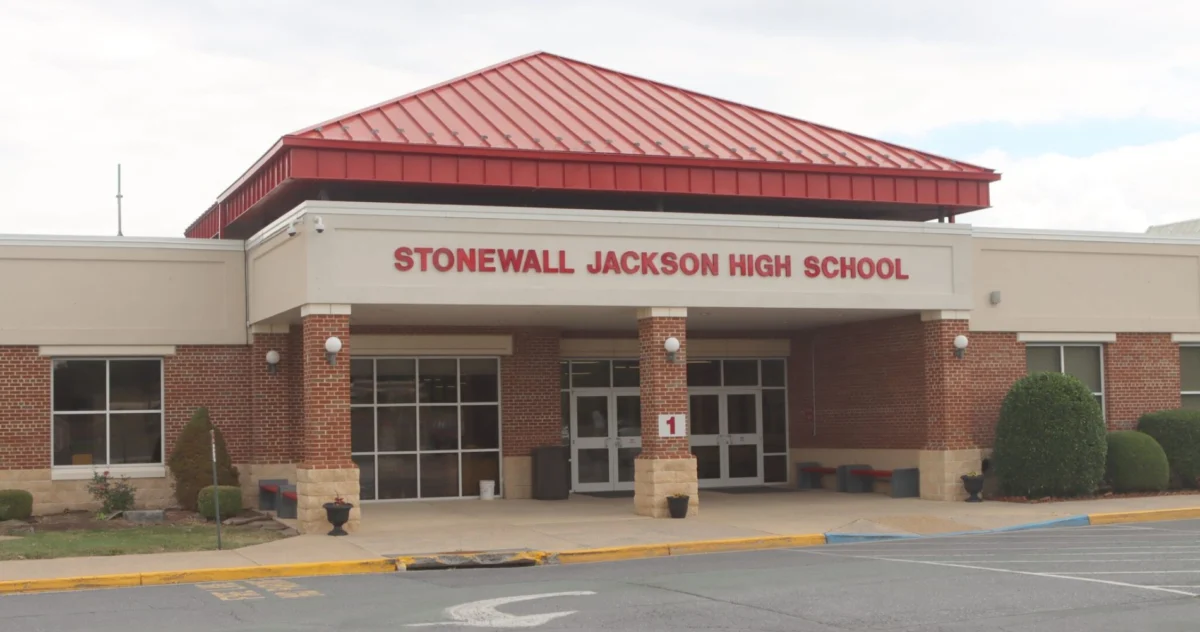
In a landmark decision handed down on August 6, 2026, the U.S. District Court for the Western District of Virginia issued a permanent injunction against the Shenandoah County School Board, ordering the immediate removal of school names honoring Confederate figures. The ruling concludes a high-stakes legal battle centered on whether the 2024 decision to reinstate the names of Stonewall Jackson, Robert E. Lee, and Turner Ashby constituted a violation of the Fourteenth Amendment’s Equal Protection Clause, as well as Title VI of the Civil Rights Act and the Equal Educational Opportunities Act (EEOA). In a comprehensive 141-page memorandum opinion, the court determined that the board’s actions were inseparable from racial discrimination, noting that the reinstatement of these names effectively codified an ideology inconsistent with federal civil rights mandates.
The ruling marks the latest chapter in a volatile period of local governance, characterized by shifting political tides and a community deeply divided over the symbolism of public institutions. For the student plaintiffs—four Black students whose identity and educational experience formed the core of the legal challenge—the court’s decision represents a definitive vindication of their right to an inclusive, non-discriminatory public education.
A Chronology of Contention: From Massive Resistance to Modern Litigation
To understand the legal gravity of the court’s order, one must examine the historical origins of the schools in question. The Shenandoah County school system was, for much of its history, defined by the "Massive Resistance" movement of the mid-20th century. Following the Supreme Court’s 1954 landmark ruling in Brown v. Board of Education, which declared segregated schools unconstitutional, many Southern districts engaged in a coordinated effort to maintain racial hierarchies.
In Shenandoah County, the construction of Stonewall Jackson High School between 1957 and 1959 served as a physical manifestation of this defiance. Evidence presented during the federal trial indicated that the school was built while a Confederate battle flag flew over the construction site, a symbolic choice intended to discourage Black students from seeking admission and to signal the local government’s opposition to desegregation. For decades, Black students in the county faced systemic exclusion; they were denied access to local high schools and forced to commute long distances to other jurisdictions.
The modern effort to address these vestiges began in earnest in the summer of 2020. Amid a national reckoning regarding racial justice, the Shenandoah County School Board initially acknowledged the divisive nature of its institutional branding. In a unanimous June 2020 vote, the board passed a resolution condemning racism and affirming a commitment to an inclusive environment. By January 2021, the schools had been renamed to "Mountain View" and "Honey Run," respectively. However, the political landscape shifted significantly in subsequent election cycles. Following the election of board members who campaigned on a platform of restoring the original names, the board reversed its 2020 decision in May 2024, voting 5-1 to bring back the Confederate designations.
Legal Findings and the Constitutional Standard
The federal court’s August 2026 opinion was scathing in its assessment of the board’s 2024 pivot. The court rejected the defense’s argument that the decision was merely a procedural correction intended to rectify the "flawed process" of the 2020 renaming. Instead, the judge highlighted that a 2022 motion to restore the names had failed after an open, robust public comment period, rendering the "procedural concern" argument legally and factually hollow.
Central to the court’s ruling was the concept of "discriminatory intent." The opinion noted that the board acted with "complete awareness of their historic legacy and ongoing discriminatory impact." By choosing to revert to names that were historically selected as tools of racial exclusion, the board had, in the eyes of the law, adopted the exclusionary intent behind the original names. The court emphasized that the 2024 vote was a reactionary measure—a direct response to the progress made in 2020—which, under the Fourteenth Amendment, constitutes a discriminatory burden placed upon Black students.
"The Confederate names were restored with complete awareness of their historic legacy and ongoing discriminatory impact," the opinion stated. "Accordingly, the vote to reinstate the names necessarily embraces the ideals for which Lee, Jackson, and Ashby fought—including the enslavement of Black people—an ideology patently inconsistent with the letter and spirit of the Fourteenth Amendment and the Civil Rights Act of 1964."
Data, Testimony, and the Psychological Toll
The trial featured five days of evidentiary hearings, during which the court examined not only historical records but also the lived experiences of students in the district. The plaintiffs provided consistent testimony describing a school environment that felt hostile and exclusionary. According to expert testimony accepted by the court, the presence of Confederate names—particularly in a district with a history of denying Black students equal facilities and resources—creates a psychological barrier to education.
The court referenced the 1954 Brown v. Board of Education precedent, noting that state-sponsored racial labels "generate a feeling of inferiority as to their status in the community that may affect their hearts and minds in a way unlikely ever to be undone." The court found that by resurrecting these names, the board had imposed a disproportionate burden on Black students, subjecting them to dignitary harms that their white peers did not experience.
Furthermore, the court addressed the broader implications of the Equal Education Opportunities Act (EEOA). The EEOA mandates that school districts take affirmative steps to remove the vestiges of a dual, segregated school system. The court concluded that the Shenandoah County School Board did not merely fail to take these steps; it actively took a step backward, essentially reinforcing a dual system that the law had long sought to dismantle.
Official Responses and the Path to Appeal
The ruling has drawn sharp lines between stakeholders. Kaitlin Banner, deputy legal director at the Washington Lawyers’ Committee for Civil Rights and Urban Affairs, hailed the decision as a victory for student rights. "One after another, students presented heartfelt and unwavering testimony, describing how Confederate school names make them feel unwelcome, devalued and ultimately inferior to their white peers," Banner said in a post-judgment statement. The legal team for the plaintiffs successfully argued that the "mobile billboard" effect—where students were forced to represent these figures on athletic uniforms and school merchandise—violated the students’ First Amendment rights, a finding the court had also touched upon in earlier proceedings.
Conversely, the school board has indicated its intent to challenge the ruling. Jim Guynn, representing the board, confirmed that an appeal is planned. The prospect of an appeal to the Fourth Circuit suggests that this case may continue to serve as a bellwether for how federal courts handle the intersection of local administrative autonomy and constitutional protections against state-sanctioned racial symbolism.
Broader Implications for American Public Education
The Shenandoah County ruling carries significant weight for school districts across the United States currently grappling with their own historical legacies. As many districts review the naming of facilities that honor figures associated with the Confederacy or slavery, the Shenandoah precedent provides a clear judicial roadmap: if a board acts with the intent to reverse equity measures in a way that disproportionately impacts minority students, it risks violating federal law.
The case underscores the reality that symbols in public education are never merely aesthetic; they are foundational to the environment in which students learn. By linking the 2024 reinstatement to the 1950s "Massive Resistance" movement, the court has effectively narrowed the legal space for boards to use historical nostalgia as a justification for policies that have a demonstrable discriminatory impact.
As the district now prepares to comply with the order to rename the schools "on a racially nondiscriminatory basis with all deliberate speed," the community faces a complex transition. The ruling mandates not just a change in signage, but a reevaluation of the district’s commitment to equality. For the students who challenged the board, the court’s decision is a validation that their presence and their history are integral parts of the school system, and that their educational experience is protected by the highest laws of the land.
The coming months will likely see further legal maneuvering, but for now, the federal court has drawn a firm line: the symbols of a discriminatory past cannot be used to undermine the constitutional rights of students in the present. Whether this ruling will serve as a definitive end to the conflict or as a catalyst for a broader national conversation remains to be seen, but the legal standard has been set, and it is one that demands accountability, historical accuracy, and equal protection for every student in the public school system.