
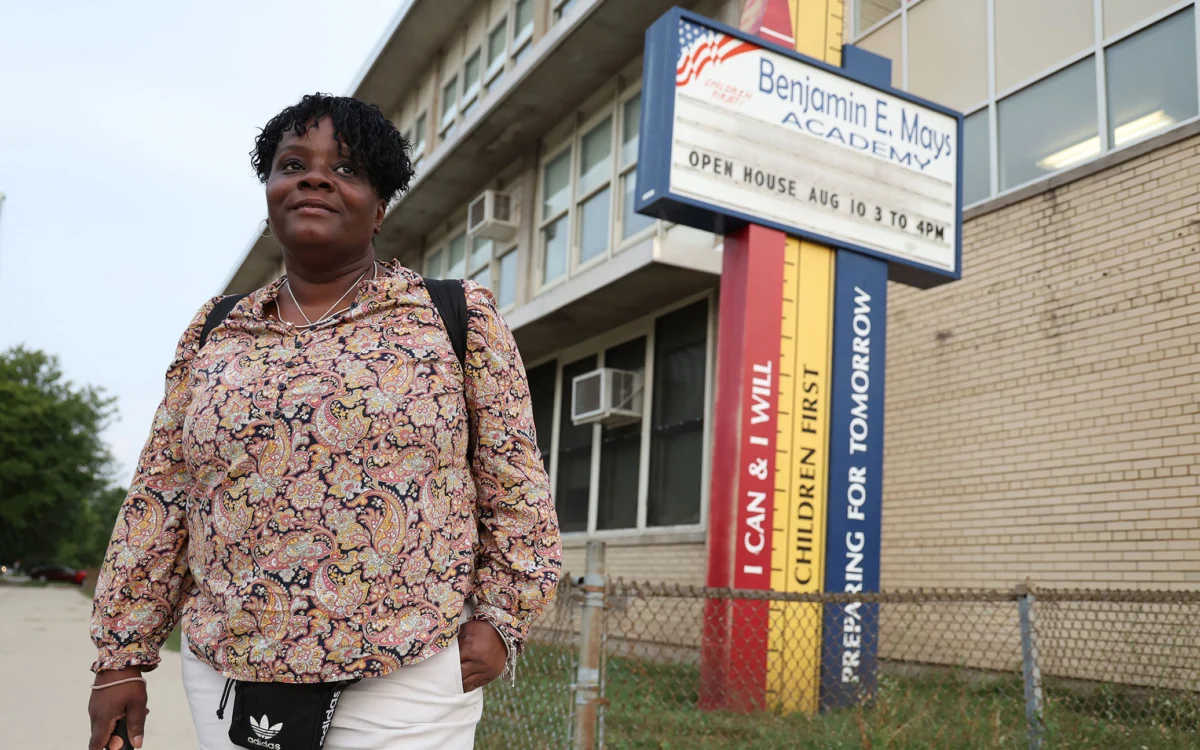
For years, Maria Johnson was a familiar and trusted face in Chicago Public Schools (CPS) classrooms. Operating strictly in a volunteer capacity, she served as an extra set of hands, helping young students sound out unfamiliar words and assisting teachers with daily routines. Though she could not precisely recall the day her volunteer journey began—her eldest son is now 22—her motivation remained constant. She wanted to support not only her own children, but also the broader community of students who might lack similar individualized attention at home.
What started as unpaid parent participation eventually transformed into a viable career pathway, thanks to a statewide initiative designed to confront chronic educational support shortages. Last fall, a nonprofit organization offered Johnson the opportunity to convert her years of unpaid dedication into a formal profession. Through a program offering free classes and personalized one-on-one coaching, she worked toward earning her license as a paid paraprofessional. Just seven months later, Johnson was officially hired as a special education classroom assistant (SECA) at Benjamin E. Mays Academy in Englewood.
Today, programs like this are redefining how urban school districts approach workforce recruitment, turning directly to the communities they serve to fill critical support roles.
The Genesis of Ladders of Opportunity
The initiative that changed Johnson’s trajectory is known as Ladders of Opportunity, a relatively new statewide nonprofit organization created to address Illinois’ chronic shortages of paraprofessionals, teacher assistants, and special education support staff. The program evolved organically out of the Parent Engagement Institute, an organization historically dedicated to recruiting parents to volunteer in their children’s schools.
Ladders of Opportunity takes that foundational model a step further. Instead of leaving parent involvement strictly in the realm of volunteering, the organization identifies parents who have logged at least 100 volunteer hours and express a clear interest in pursuing a career in education. Those individuals are subsequently funneled into a targeted licensure track.
Demographically, the initiative primarily serves Black and Latina mothers hailing predominantly from the South and West sides of Chicago and surrounding urban centers. For participants like Johnson—who, at 53, already held a college degree but had not been a formal student in over three decades—the program represents an unprecedented socioeconomic lifeline.
Chronic Staffing Pressures Within Chicago Public Schools
Across Chicago Public Schools, perennial staffing imbalances have long plagued campuses, routinely leaving individual schools struggling to staff SECAs, teacher assistants, and specialized support roles. Although overall district vacancy rates have reached historical lows, systemic challenges persist regarding how districts recruit, train, and retain workers for these demanding positions.
Statewide, paraprofessional turnover has historically remained high, driven largely by low hourly compensation, minimal initial training, and limited pathways for professional advancement. Special education requirements have simultaneously intensified. Since 2019, the share of CPS students identified with disabilities has grown from 14.6% to 17.3%, representing nearly 55,000 students across the district. To keep pace with this rising demand, CPS has added approximately 3,600 SECA positions to its employee rosters.
Despite district reports noting a low vacancy rate of roughly 2%—accounting for approximately 160 active openings at the start of the month—these shortages are unevenly distributed. Vacancy rates remain disproportionately higher in CPS networks located on the South and West sides. While district officials previously adjusted staffing distribution models to shift more SECAs into underserved communities, those administrative adjustments achieved only modest redistribution of personnel.
Program Mechanics and Comprehensive Support
The operational structure of Ladders of Opportunity is heavily funded and meticulously supported. Since its inception in 2023, the program has scaled rapidly, backed by a substantial $25 million grant from the Illinois Department of Human Services. It now operates across 11 pilot sites throughout the state, successfully licensing more than 1,100 parents as paraprofessionals, including 373 within CPS alone.
The recruitment and training pipeline is comprehensive:
- Community Embedding: Participants are actively recruited by community-based organizers who maintain a permanent physical presence inside local schools.
- Academic and Professional Instruction: Depending on the specific licensure track, candidates undergo weeks of rigorous training covering professional development, digital literacy, and English as a Second Language (ESL), specifically tailored to help them pass state certification exams.
- Supportive Logistics: To eliminate common barriers to adult education, the program provides personal academic coaching, childcare services during program activities, and complete financial reimbursement for state licensure fees.
- Career Placement: Dedicated coaches guide candidates through the professional hiring process, offering resume-building workshops and simulated job interviews.
This robust support system proved essential for participants facing unforeseen personal crises. In February, Maria Johnson was diagnosed with breast cancer while simultaneously caring for her 6-year-old son. Despite undergoing rigorous medical treatments, Johnson persevered through her coursework and study sessions, propelled forward by her community coach and organizers from Teamwork Englewood who refused to let her abandon her professional aspirations.
Overcoming Barriers and Raising Professional Standards
Special education advocates and labor representatives argue that professionalizing the paraprofessional workforce is long overdue. Historically, individuals could be hired as SECAs based solely on holding a required number of college credit hours in any general subject, often without possessing any specialized training in working with children or understanding specific developmental disabilities.
Barb Cohen, a special education advocate at the Legal Council for Health Justice, asserts that school district vacancies would decrease significantly if structured, high-quality training programs were universally mandated.
Union representation has also fought to improve working conditions. In its most recent collective bargaining agreement, SEIU Local 73—the union representing SECAs within CPS—successfully secured one day of paid onboarding and foundational training for newly hired staff members, marking a historic policy shift for the district.
Community Integration and Leadership Pipelines
School administrators on the ground have increasingly embraced the model, citing the unmatched value that parent-graduates bring to academic environments. Daniel De Los Reyes, principal of Darwin Elementary in Logan Square, hired four Ladders participants last year to serve in various support roles, including part-time lunch and recess monitors.
De Los Reyes notes that hiring parents who have graduated from rigorous training programs allows school leadership to effectively vet, train, and instill the necessary work ethic and professional disposition required for urban education. Darwin Elementary operates a dual-language program, with more than one-third of its student body classified as English learners, alongside a recent influx of immigrant families. The Ladders program acts as a direct pipeline for Latina mothers to run specialized school programming and support cultural initiatives, such as Hispanic Heritage Month and Día de los Muertos celebrations.
"There’s a need in school, and there’s a resource in the community," De Los Reyes observed, pointing out that solutions to systemic educational shortages often reside within the local community itself. More than 160 Ladders parent-graduates across the state have already advanced further to become accredited substitute teachers, while approximately a dozen have attained full professional educator licenses.
A similar sentiment echoes in West Lawn, where Anna Sanchez was hired as a substitute SECA at Hurley Elementary, where her 7-year-old daughter is a second-grade student. Previously employed at an ice cream shop, Sanchez initially worried her bilingual background and unfamiliarity with standardized testing would prevent her from passing the state licensure exam after 17 years in the United States.
Through the program, Sanchez gained confidence, professional workplace navigation skills, and specialized techniques for supporting children with developmental disabilities.
"I learned that we should not only focus on the students, but also support and guide parents on how they can also help their children outside of school," Sanchez said. Like many of her peers who entered the workforce through community-based pathways, her ultimate career objective is clear: she intends to continue her education and become a fully certified classroom teacher.




