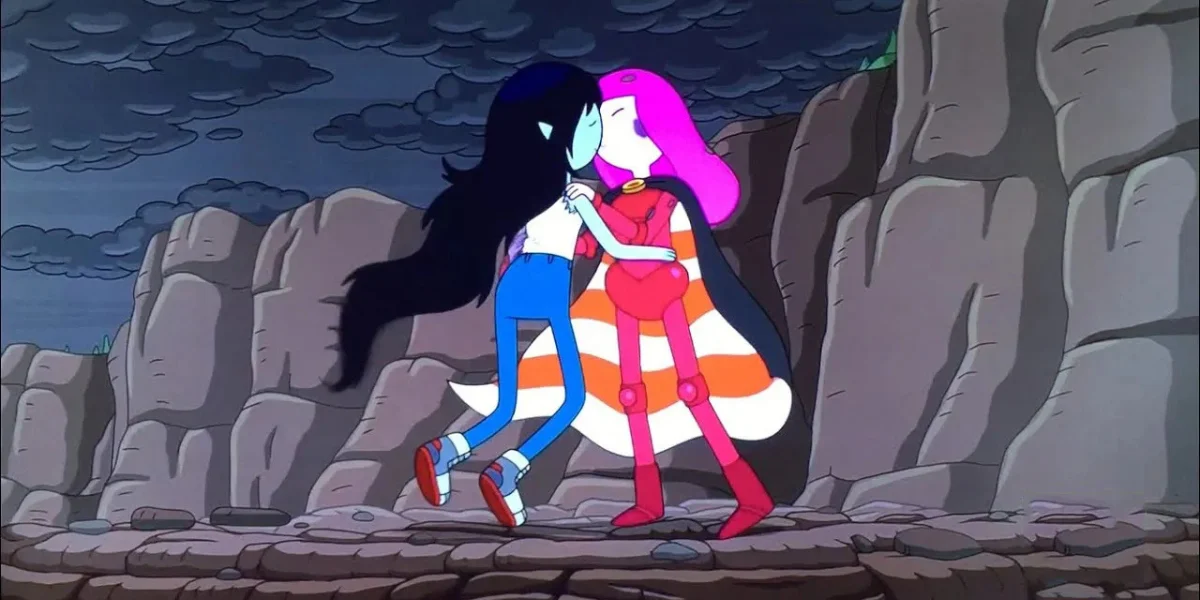
Warner Bros. Discovery has officially confirmed the development of a new ten-episode limited series within the Adventure Time universe, focusing specifically on the relationship and individual journeys of Princess Bubblegum and Marceline the Vampire Queen. The announcement marks a significant expansion of the franchise, which has continued to see critical and commercial success through various spinoffs following the conclusion of the original Peabody Award-winning series. This latest project, titled Adventure Time: Bubblegum and Marceline, will be overseen by showrunner Adam Muto, a long-time veteran of the franchise who has been instrumental in the series’ evolution since its fifth season.
The production represents a strategic move by Max (formerly HBO Max) to capitalize on the enduring popularity of the "Bubbline" pairing—a portmanteau used by the fanbase to describe the romantic arc between the two characters. The series is currently in the writing phase, with production expected to ramp up in the coming months. This announcement follows the success of Adventure Time: Fionna and Cake and Adventure Time: Distant Lands, both of which demonstrated a high demand for more mature, character-driven narratives set within the Land of Ooo.
Historical Context and Character Evolution
The relationship between Princess Bonnibel Bubblegum and Marceline Abadeer has been a cornerstone of Adventure Time’s narrative complexity for over a decade. When the series first debuted on Cartoon Network in 2010, the two characters were initially presented as having a contentious, if not outright hostile, history. Early episodes hinted at a deep-seated resentment that many viewers interpreted as the fallout of a past romantic relationship. However, due to the broadcast standards and practices of the time, as well as the sociopolitical climate surrounding LGBTQ+ representation in children’s media, their shared history remained largely subtextual for several years.
Throughout the original run, the creative team, including creator Pendleton Ward and later Adam Muto, navigated a delicate balance between fan expectations and network constraints. There were instances where production staff confirmed the romantic nature of the characters’ past in public forums, only to face pushback or see those statements retracted to avoid controversy. Despite these hurdles, the chemistry between the "Golden Retriever" personality of the optimistic, science-minded Bubblegum and the "Black Cat" archetype of the brooding, immortal Marceline became a definitive element of the show’s emotional core.
The subtext finally transitioned into explicit canon during the series finale, "Come Along with Me," which aired in September 2018. The episode featured a pivotal onscreen kiss between the two characters, confirming their status as a couple and providing a definitive resolution to years of narrative tension. This moment was widely hailed by critics and advocacy groups as a landmark for LGBTQ+ representation in mainstream animation.
Chronology of Post-Series Development
Since the conclusion of the original series, the Adventure Time franchise has utilized the streaming model to explore more specific and adult-oriented themes. In 2020, the special episode "Adventure Time: Distant Lands – Obsidian" focused almost exclusively on Bubblegum and Marceline. The special explored their domestic life together and the challenges of reconciling their vastly different lifespans and emotional traumas. "Obsidian" was notable for its inclusion of the song "Monster," written by Marceline for Bubblegum, which further cemented the romantic depth of their bond.
The announcement of the dedicated Bubblegum and Marceline series suggests a continuation of this trajectory. While the original series was an ensemble adventure show, the new spinoff appears poised to function as a character study. Adam Muto’s involvement as showrunner ensures creative continuity. Muto’s leadership during the latter half of the original series and his work on Fionna and Cake have been praised for maintaining the show’s surrealist humor while deepening its philosophical and emotional stakes.
Market Trends and Animated Representation
The greenlighting of Adventure Time: Bubblegum and Marceline reflects broader trends in the animation industry regarding diversity and inclusion. According to data from GLAAD’s "Where We Are on TV" reports, there has been a steady increase in LGBTQ+ representation in animated series over the last five years. Shows such as Steven Universe, The Owl House, and She-Ra and the Princesses of Power have paved the way for queer-centric narratives in the genre.
For Max, the project serves as a high-value intellectual property (IP) play. The Adventure Time brand remains one of the most recognizable names in modern animation, with a multi-generational audience. By focusing on specific fan-favorite characters, the streaming service can ensure high engagement rates and subscription retention. The decision to produce ten episodes indicates a shift toward serialized storytelling, a format that has proven successful for other recent animated dramas.
Concurrent Projects and the Adventure Time Franchise Expansion
The Bubblegum and Marceline spinoff is not the only project currently expanding the Land of Ooo. Disney+ and Hulu recently saw the release of Adventure Time: Side Quests, a series that returns to the franchise’s roots by following the early adventures of Finn the Human and Jake the Dog. Unlike the more mature themes expected in the Max spinoff, Side Quests appears to be aimed at a broader, younger demographic, focusing on the episodic "quest" format that defined the show’s early years.
Princess Bubblegum is expected to appear in Side Quests, though the timeline of that series—set during the early days of the trio’s friendship—suggests that Marceline may have a more limited role, reflecting her late introduction in the original show’s first season. This dual-track production strategy allows Warner Bros. Discovery to appeal to both nostalgic adult fans and new younger viewers simultaneously.
Broader Cultural and Entertainment News
The announcement of the new spinoff coincides with several other notable developments in the entertainment and cultural sectors, highlighting a period of significant activity for queer artists and media representation.
In the music industry, Phoebe Bridgers has released a new Renaissance-Faire-inspired music video for her single "Lost Boys." The video has garnered attention for its aesthetic direction and its alignment with Bridgers’ established reputation for atmospheric, emotionally resonant storytelling. Simultaneously, singer-songwriter WILLOW’s fansong "Marceline" continues to see resurgence in popularity on streaming platforms, illustrating the enduring cultural impact of the Adventure Time characters outside of their own medium.
In the realm of film and television, Angelina Jolie’s latest project, Couture, has entered the critical spotlight. Directed by Alice Winocour, the film explores the lives of women who make significant personal sacrifices for their professional ambitions in the high-stakes world of fashion. In reality television, Layla Taylor of Secret Lives of Mormon Wives recently utilized a podcast appearance to come out as bisexual, adding to the ongoing conversation regarding religious identity and sexual orientation in modern media.
The sports world is also seeing milestones in representation. The upcoming World Cup will feature Brooke Mayo as an assistant referee, marking the first time an openly LGBTQ+ official will serve in such a capacity at the tournament. This follows a broader trend of visibility in professional sports, mirrored by recent anecdotes from the WNBA where players have openly discussed the presence of lesbian fan fiction within locker room culture, signaling a more transparent and inclusive environment for athletes.
Analysis of Implications and Future Outlook
The development of Adventure Time: Bubblegum and Marceline is a testament to the power of sustained fan engagement and the evolving standards of the television industry. What began as subtext in a children’s cartoon has evolved into a flagship property for a major streaming service. This transition highlights the changing landscape of media consumption, where niche audiences and specific character arcs can drive entire production cycles.
However, the path forward is not without potential challenges. As noted by industry analysts, the "backlash" mentioned by creative teams in earlier years remains a factor in modern discourse. While LGBTQ+ representation has become more normalized, it remains a point of contention in certain political and social circles. The success of the new series will likely depend on its ability to balance its core romantic narrative with the high-concept world-building that Adventure Time is known for.
For fans, the series offers an opportunity to see a more mature exploration of a relationship that was once relegated to the shadows. For the industry, it serves as a case study in how to successfully evolve a legacy brand for a modern, diverse audience. As writing continues, the anticipation for Princess Bubblegum and Marceline’s next chapter underscores the enduring legacy of the Land of Ooo and the characters who inhabit it. With Adam Muto at the helm, the series is expected to maintain the high standard of visual artistry and emotional depth that has defined the franchise for over a decade.