
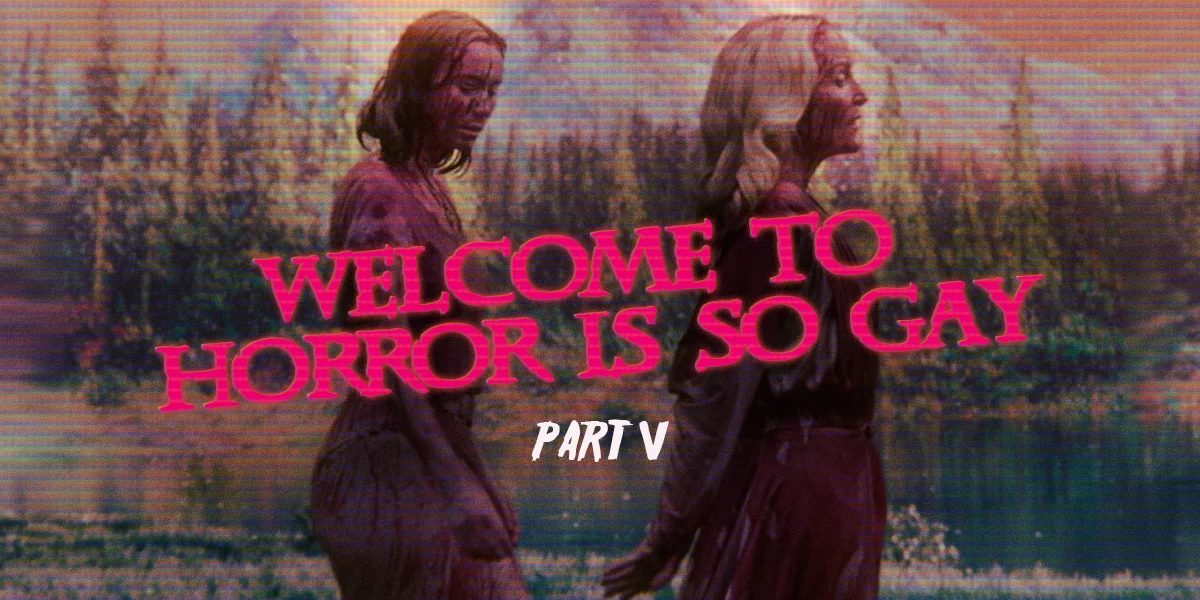
For the fifth consecutive year, the cultural publication Autostraddle has launched its annual October series, Horror Is So Gay, shifting its focus in 2026 to the structural and thematic underpinnings of the slasher subgenre. This year’s programming, titled "Horror Is So Gay 5," marks a departure from previous iterations by prioritizing a deep-dive analysis into the most iconic slasher franchises in cinema history. The series seeks to apply queer and trans critical frameworks to films that have traditionally been categorized as heteronormative, examining how these narratives interact with themes of desire, identity, and the visceral nature of the "flesh and fluids" trope.
Historical Context and Series Evolution
The inception of the Horror Is So Gay series in 2022 was designed to provide a critical space for LGBTQ+ audiences to engage with horror media. Over the past four years, the series has tracked a trajectory from general queer horror criticism to specific subgenre investigations.
The 2026 iteration is framed by the release of Jane Schoenbrun’s film Teenage Sex and Death at Camp Miasma, which has served as a touchstone for the current discourse. The project features a comprehensive undertaking: the ranking of every major slasher franchise, including Halloween, Friday the 13th, Scream, A Nightmare on Elm Street, The Texas Chain Saw Massacre, and Child’s Play. By cataloging these franchises, the series aims to offer a re-evaluation of films that are often criticized for their historical adherence to conservative tropes or problematic representations.
The Methodology of Queer Film Criticism
The project utilizes a methodology established in previous collaborations, such as the retrospective ranking of Stephen King adaptations. This approach relies on the principle that queer and trans audiences frequently find subversive meaning in texts that are not "textually queer." By analyzing the subtext of slasher films, critics aim to identify where the genre—often defined by the proximity of violence to sexual vulnerability—intersects with queer experiences.
According to the editorial team, the series intends to move beyond standard listicle formats common in pop culture journalism. Instead, the objective is to provide a synthesis of archival research, cultural critique, and personal perspective to explore why the slasher genre remains a pillar of global cinema. The series will feature a sequence of essays examining figures such as Freddy Krueger, Jason Voorhees, Michael Myers, Chucky, Ghostface, and Leatherface, while simultaneously highlighting lesser-known titles within the slasher canon.
Chronology of Horror Is So Gay
The development of this series reflects a broader trend in digital media regarding the intersection of niche identity politics and genre film analysis.
- 2022: Launch of "Horror Is So Gay," establishing the series as an annual October fixture.
- 2023: Expansion of the series scope to include broader horror tropes and psychological analysis ("Horror Is So Gay 2").
- 2024: "Horror Is So Gay: The Threequel," focusing on the longevity and evolution of horror icons.
- 2025: "Horror Is So G4Y," which emphasized the digital era’s impact on horror fandom.
- 2026: A pivot to the Slasher subgenre, incorporating a systematic ranking of major franchises.
Statistical and Structural Implications
The slasher genre is statistically significant in the history of commercial cinema. Franchises such as Friday the 13th and Halloween have collectively generated billions of dollars in global box office revenue since their inception in the late 1970s. The longevity of these properties, which often span decades and multiple reboots, provides a unique dataset for critics to analyze changing societal norms.
From a critical perspective, the series argues that the slasher film is an inherently "in-between" space. The genre relies on the "Final Girl" trope, which has been the subject of extensive academic study regarding gender performance and survival. By re-examining these films, critics are able to highlight the ways in which the genre’s reliance on "flesh and fluids"—a term utilized by contributor Billy Presley—mirrors the intensity of queer desire and the precarious nature of visibility in hostile environments.
Industry and Academic Reception
While the mainstream horror industry has traditionally marketed these films toward a general audience, recent years have seen an increase in academic and critical discourse surrounding "queer-coded" villains and protagonists. The "Horror Is So Gay" project contributes to a growing body of work that posits that the slasher genre’s obsession with body image, sexual purity, and surveillance is uniquely resonant with the LGBTQ+ experience.
Industry observers note that this type of critical engagement serves to extend the cultural shelf-life of classic horror properties. By identifying queer subtext in long-standing franchises, these critics are actively participating in the "canonization" of horror, moving it from low-brow entertainment to a subject of serious cultural inquiry.
Future Trajectory of the Series
As the 2026 series progresses, the editorial team plans to publish a series of essays that challenge the reader to reconsider the "problematic" elements of the slasher genre. By engaging with these texts through a contemporary lens, the project aims to demonstrate that even the most "overwhelmingly straight" films can be reclaimed and interpreted through the lens of queer identity.
The series is also designed to serve as an educational resource. By archiving previous entries—such as analyses of the "Dream Warriors" iteration of the Nightmare on Elm Street franchise or the socio-economic critique of Halloween III: Season of the Witch—the publication provides a roadmap for readers interested in the evolution of horror criticism.
The Role of Digital Discourse
The decision to make these lists interactive—encouraging reader debate and defense of underrated films—highlights the shift in media consumption from passive reading to active community participation. The series effectively functions as a digital forum where the boundaries of the slasher genre are constantly renegotiated.
Ultimately, the Horror Is So Gay series functions as a bridge between the historical legacy of the slasher genre and the current demands of modern cultural criticism. By applying a queer lens, the series suggests that the genre’s enduring popularity is not merely a result of its ability to shock, but rather its capacity to reflect the complexities of the human condition, including the visceral, the erotic, and the inherently transformative nature of fear itself.
The project stands as a testament to the fact that genre film, regardless of its original intent or historical baggage, remains a fertile ground for critical re-interpretation. As the October series continues to unfold, the focus will remain on the intersection of these iconic cinematic figures and the queer perspectives that continue to shape their reception in the 21st century. Through its rigorous and, at times, provocative approach, the series underscores the ongoing relevance of horror in the digital age, proving that the slasher film is not merely a artifact of the past, but a living, breathing subject of contemporary critical discourse.




