The tumultuous period of the past two years, marked by the ongoing global pandemic, has catalyzed an unprecedented, rapid-paced experimentation with novel approaches to work, fundamentally altering our collective perception of professional life and its future. This era has ignited a profound re-evaluation of the relationship between individual purpose and organizational objectives, challenging long-held assumptions about career trajectories and personal sacrifice. While numerous questions remain open and data continues to evolve, a clear trend has emerged: the pursuit of purpose has become a central tenet for employees, with significant implications for Diversity, Equity, and Inclusion (DEI) initiatives. This article, part of a broader series examining pandemic-era shifts categorized as ‘Purpose,’ ‘People,’ ‘Process & Policy,’ and ‘Polarization & Activism,’ delves into the intricate dynamics of purpose and its transformative influence on the contemporary workplace.
A Seismic Shift: From Pre-Pandemic Norms to a New Consciousness
Before the pandemic, the prevailing work model often implicitly encouraged, if not demanded, significant personal sacrifices in pursuit of career advancement and financial gain. Long hours, relentless commutes, and a clear demarcation between professional and personal identities were commonplace, with personal fulfillment often deferred or sought outside the professional sphere. Corporate purpose, while frequently articulated in mission statements, often struggled to translate into tangible impact on day-to-day employee experience or strategic decision-making. Research from PwC pre-pandemic, for instance, indicated that nearly 79% of business leaders recognized the importance of purpose, yet only 34% actively integrated it into their decision-making processes. This "intention-action gap" highlighted a systemic disconnect, one that the pandemic would brutally expose and accelerate the need to bridge.
The onset of the pandemic in early 2020, characterized by widespread lockdowns, the rapid pivot to remote work, and an pervasive sense of existential uncertainty, acted as a catalyst. Faced with unprecedented health crises, economic instability, and the blurring of home and office boundaries, millions were prompted to introspect deeply about their lives, values, and the intrinsic meaning of their work. The immediacy of life-and-death concerns, combined with the enforced deceleration of daily routines for many, created a fertile ground for profound personal reflection.
The Rise of Purpose as a Primary Driver
As the initial shock subsided and remote work became a sustained reality through 2020 and into 2021, the nascent trends around purpose began to solidify into quantifiable shifts. A U.S. survey by McKinsey & Company revealed that nearly two-thirds of respondents were actively reflecting on their personal purpose as a direct consequence of the pandemic experience. This introspection gave rise to fundamental questions for employees across sectors: "Is this job truly worth my energy and time?" and "Does it align with how I want to spend my life?"
This shift represents a significant departure from historical motivators for employment and job changes. Traditionally, higher compensation, robust benefits, and clear pathways for career growth were paramount. While these factors remain relevant, their hierarchy of importance has been challenged by the burgeoning desire for purposeful work and a more balanced lifestyle. A global survey conducted by Edelman in August 2021 underscored this paradigm shift, finding that nearly 60% of employees had either left or were actively planning to leave their jobs to seek roles that better aligned with their personal values. Concurrently, 50% were prioritizing roles offering an improved lifestyle. These motivations now demonstrably outweigh the desire for increased pay or faster career progression as primary drivers for job transitions.
The re-evaluation of work and purpose is not confined to a single demographic. While millennials, often characterized by their emphasis on social impact and work-life balance, were three times more likely to be re-evaluating their work in the U.S. according to McKinsey, the trend extends across generations. In the U.K., for example, the number of employees over the age of 50 opting for early retirement more than doubled since the pandemic began, suggesting that seasoned professionals, too, are seeking a different quality of life and work alignment. This widespread reconsideration signifies a fundamental alteration in the implicit social contract between employees and employers.
The Exacerbation of Inequalities and the Call for Healthier Work Models
The pandemic-induced introspection also starkly illuminated pre-existing systemic inequalities and biases within workplaces, particularly concerning gender roles and caregiving responsibilities. The "dual work burden" faced by many women – balancing professional obligations with disproportionate domestic and caregiving duties – was a well-documented issue prior to 2020 but had not historically prompted large-scale organizational redesigns. The pandemic, however, made this imbalance undeniably visible and acutely felt. With schools closed, childcare disrupted, and families confined to homes, the traditional support structures for working parents, especially mothers, crumbled.
This intensification of responsibilities led to significantly higher rates of burnout and resignations among women with caregiving duties. Globally, the first year of the pandemic saw women’s employment decline by 54 million, or 4.2%, compared to a 3% drop for men. While not all these departures were voluntary, the disproportionate impact on women underscored a critical failing of existing work models to support a healthy, connected, and fulfilled life for all employees. The implicit message was clear: the old ways of working were unsustainable, particularly for those bearing the brunt of societal and workplace inequities. This realization has spurred an urgent demand for healthier, more flexible, and inherently more inclusive work models that genuinely integrate personal purpose with professional life in a holistic and sustainable manner.
Organizational Implications and the Path Forward for DEI
For organizations, the burgeoning employee focus on purpose presents both a significant challenge and a profound opportunity. While a purpose-driven workforce can lead to increased employee engagement, innovation, and retention, achieving this requires more than just articulating a corporate mission. It demands authentic leadership, a culture that fosters individual purpose, and tangible actions that demonstrate alignment with stated values. The pre-pandemic intention-action gap regarding purpose can no longer be tolerated; employees are now actively voting with their feet.
Companies that successfully bridge this gap are likely to gain a significant competitive advantage in talent attraction and retention. This involves:
- Authentic Corporate Purpose: Clearly defining and consistently living out the organization’s purpose, ensuring it resonates with employees and is integrated into all strategic decisions. This moves beyond mere CSR initiatives to embed purpose into the core business model.
- Fostering Individual Purpose: Creating an environment where employees can connect their personal values and aspirations with their work. This might involve flexible work arrangements, opportunities for skill development, meaningful project assignments, and leaders who actively support employees’ well-being and growth.
- Empowering Inclusive Leadership: Equipping managers and leaders with the skills to understand, empathize with, and support their teams’ evolving needs and purpose-driven motivations. This includes recognizing and mitigating biases that hinder inclusivity and purpose realization.
- Redesigning Work Models: Moving beyond superficial adjustments to genuinely rethink work structures, policies, and processes to support flexibility, well-being, and equity. This includes addressing issues like meeting overload, unrealistic expectations, and the equitable distribution of workload.
The pandemic’s acceleration of purpose-driven work has inextricably linked it with the imperative for robust Diversity, Equity, and Inclusion (DEI) strategies. An organization cannot genuinely support employee purpose if its culture is not equitable and inclusive. When workplaces are biased, unequal, or fail to provide a sense of belonging, employees from underrepresented groups, who often face additional barriers, are particularly hindered in finding and fulfilling their purpose. For instance, the disproportionate impact on women during the pandemic underscores how systemic issues can directly impede purpose realization for specific demographic groups.
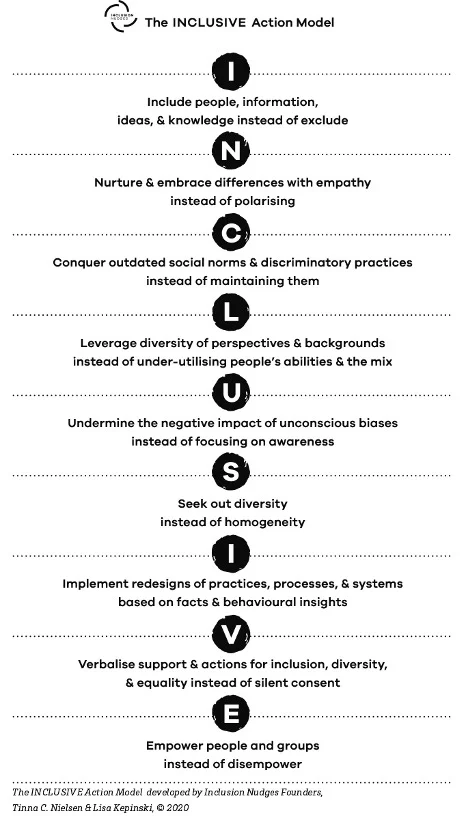
DEI initiatives, therefore, become central to cultivating a purpose-driven workforce. By actively addressing biases, fostering equitable opportunities, and creating truly inclusive environments, organizations enable all employees to bring their whole selves to work and align their personal purpose with their professional contributions. This includes implementing behavioral science-informed approaches, such as "Inclusion Nudges," to subtly shift mindsets and behaviors towards more inclusive practices. Examples like "The Speech Bubble Intervention" to encourage diverse perspectives, "Telling Employees’ Stories for Inclusion" to foster empathy, or "Realizing Monetary Loss of Diverse Consumers" to highlight the business case for DEI, can be powerful tools in this transformation.
Looking Ahead: The Evolving Landscape
The shifts observed since the beginning of the pandemic are not transient; they represent a fundamental, ongoing transformation in the global labor market. The power dynamic has, to some extent, shifted towards employees, who are now more vocal and intentional about their needs and values. Economists and labor market analysts continue to monitor these trends, noting that the "Great Resignation" was not merely a temporary phenomenon but a reflection of deeper structural changes in employee expectations. Businesses that fail to adapt risk significant talent drain, diminished innovation, and a damaged employer brand.
For leaders, managers, and HR professionals, this period demands continuous reflection and proactive adaptation. The questions posed by the original article – What do these shifts mean for DEI in your context? – remain critically important. Understanding the nuanced interplay between individual purpose, organizational purpose, and inclusive practices is paramount for navigating this ambiguous and fast-changing environment. It is an opportunity to not only rebuild but to build back better, fostering workplaces that are not just productive, but also profoundly purposeful, equitable, and human-centered.
As organizations move forward, engaging in advisory consulting, coaching, and expert speaking on these topics will be vital for leaders seeking to embed purpose and DEI authentically into their strategies. The pandemic has served as an unavoidable wake-up call, demanding an immediate and sustained response to create healthier, more connected, and truly fulfilling work experiences for everyone. The future of work is, undoubtedly, purpose-driven and intrinsically linked to the success of Diversity, Equity, and Inclusion.