

The pursuit of accurate public opinion measurement in an era of rapid technological change and shifting social dynamics requires a multifaceted approach to data collection. As of mid-2026, Pew Research Center has finalized its findings from two of its most significant research pillars: the Spring 2026 Global Attitudes Survey and the 2026 National Public Opinion Reference Survey (NPORS). These initiatives represent a concerted effort to capture the nuances of global political, social, and economic sentiment, while simultaneously maintaining a high standard of methodological transparency. The data produced by these studies serves as a critical benchmark for policymakers, academics, and the public, providing a window into how societies across the globe perceive democracy, identity, and the modern international order.

The Scope of Global Data Collection
The Spring 2026 Global Attitudes Survey was designed to synthesize perspectives from a diverse array of nations, bridging the gap between high-income and middle-income economies. To achieve this, the Center utilized a combination of telephone, face-to-face, and online interviewing techniques, executed under the expert direction of Gallup, Langer Research Associates, and the Social Research Centre.
The analytical framework for this global report relies on standardized variables to ensure comparability. For instance, the Center employs the United Nations’ International Standard Classification of Education (ISCED) to categorize educational attainment consistently across vastly different schooling systems. This standardization is essential when analyzing how education correlates with shifting views on globalization or international relations. Similarly, the project maintains continuity with historical analyses by utilizing World Bank classifications for national income levels. By categorizing countries into high- and middle-income groups, the researchers can discern whether economic status serves as a primary driver for diverging attitudes toward institutions such as global trade, democratic stability, and national belonging.
The American Trends Panel: A Deep Dive into Domestic Opinion
Domestically, the Center’s Wave 190 of the American Trends Panel (ATP) provides a high-resolution snapshot of U.S. public sentiment. Conducted between March 23 and March 29, 2026, the study engaged 3,507 panelists, achieving a robust 87% survey-level response rate. The ATP, a cornerstone of the Center’s methodology, has evolved significantly since its inception in 2014. Since 2018, the panel has utilized address-based sampling (ABS) to reach a representative cross-section of the population. By mailing invitations to households selected from the U.S. Postal Service’s Computerized Delivery Sequence File—which covers approximately 90% to 98% of the American population—the Center minimizes the biases inherent in traditional random-digit-dialing.
To ensure the precision of findings among smaller demographic groups, the 2026 survey included deliberate oversampling of Muslim, Jewish, and non-Hispanic Asian adults. These groups, while vital to the national tapestry, are often difficult to measure with statistical significance in standard samples. By employing complex weighting procedures, the researchers ensured that these oversampled cohorts were correctly proportioned to their actual representation in the U.S. population, thereby enhancing the reliability of the data.
Chronology of Data Integrity and Quality Control
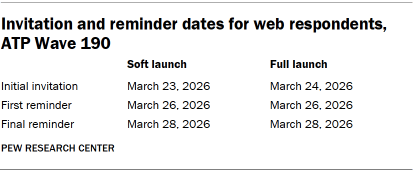
The integrity of the 2026 findings rests on a rigorous, multi-stage data collection protocol. For the ATP, the process began months in advance with questionnaire development, followed by extensive testing on both desktop and mobile platforms. The field period itself was characterized by a "soft launch" on March 23, involving a small cohort of 60 panelists. This initial phase allowed researchers to verify that the digital logic and randomizations were functioning correctly before the full rollout on March 24.
Data quality was not merely a passive goal but an active, ongoing effort. Upon completion of the fieldwork, the research team conducted thorough audits to detect "satisficing"—a phenomenon where respondents provide perfunctory answers, such as selecting only the first or last option in a series. This screening resulted in the removal of five respondents from the dataset. This preemptive cleansing of the data ensures that the final analysis reflects genuine, thoughtful engagement rather than fatigue-driven input.
The National Public Opinion Reference Survey (NPORS)
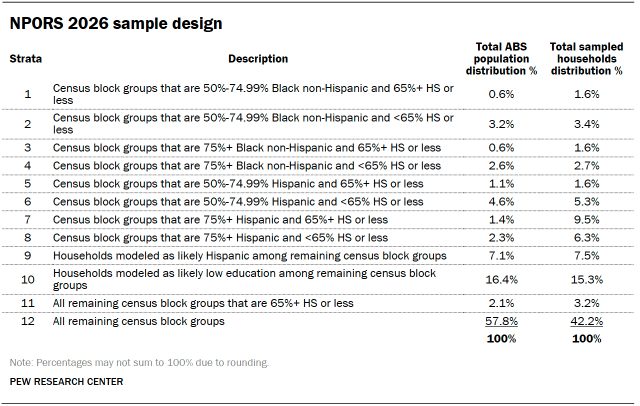
Complementing the ATP, the 2026 NPORS represents an ambitious endeavor in multi-mode surveying. Running from January 30 to June 18, 2026, this study reached a total of 5,511 respondents. Unlike the ATP, which draws from a pre-existing panel, the NPORS utilized a fresh, stratified random sample of U.S. addresses.
The mailing protocol for NPORS was uniquely designed to maximize participation. Households received initial packages containing two one-dollar bills, a tactic designed to demonstrate the seriousness of the research and encourage compliance. For non-responders, the follow-up process escalated to a Priority Mail envelope containing a five-dollar incentive, a paper version of the survey, and a postage-paid return envelope. This multimodal strategy—offering online, phone, and paper options—acknowledges the digital divide and ensures that the sample includes individuals who may be less comfortable with web-based questionnaires.
Statistical Weighting and the Margin of Error
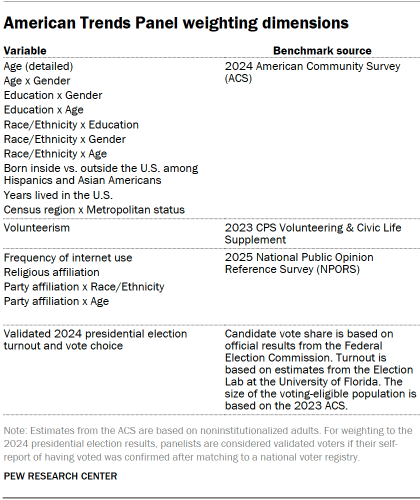
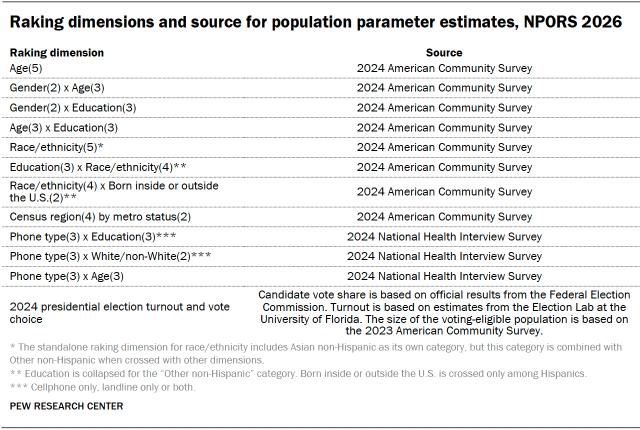
The raw data gathered from both the ATP and NPORS undergoes a sophisticated process of weighting to correct for nonresponse and sampling bias. For the ATP, this involved aligning the data with U.S. Census benchmarks for age, race, gender, and education. For the NPORS, the weighting process incorporated an "adaptive mode adjustment," which accounts for the differences between respondents who chose the online versus the paper/phone modes.
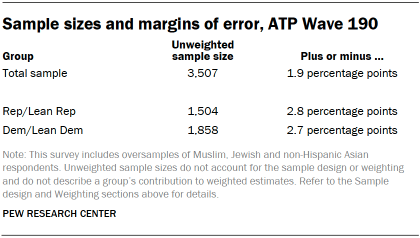
These statistical safeguards are crucial for defining the margin of error. In the ATP, for example, the margin of error for the full sample of 3,507 respondents is plus or minus 1.9 percentage points. For the NPORS, the design effect—the factor by which the variance of an estimate is increased due to the sampling design—resulted in a margin of error of plus or minus 1.8 percentage points at a 95% confidence level. These figures are essential for stakeholders to understand the precision of the reported trends.
The Broader Implications of 2026 Survey Data
The release of these data points occurs at a time when public trust in institutions is under significant scrutiny. By providing a transparent window into how public opinion is measured, Pew Research Center allows observers to evaluate the strength and limitations of the findings. The reliance on ideological scales for political analysis, for instance, provides a lens through which to view the current polarization in the U.S. and abroad. By categorizing individuals along a left-center-right spectrum, the studies can track how ideological leanings correlate with specific policy preferences or social attitudes.
Furthermore, the integration of demographic variables such as education and income provides a roadmap for understanding the socioeconomic roots of modern political divides. As the world continues to grapple with the complexities of globalization, democratic erosion, and technological disruption, the ability to anchor these conversations in high-quality, methodologically sound data becomes ever more important.

The 2026 surveys do more than just record what people think; they establish a standard for how research should be conducted in an increasingly fragmented information environment. By documenting the exact procedures—from the choice of envelopes to the mathematical formulas used in raking—the Center provides a blueprint for academic and journalistic rigor. As this data is integrated into ongoing policy debates, the clarity of its methodology will likely remain as important as the findings themselves, serving as a reminder that the quality of an answer is fundamentally linked to the quality of the question.
Summary of Methodological Best Practices
Looking back at the 2026 research cycle, several key themes emerge regarding the future of public opinion polling. First, the move toward "multi-mode" collection is clearly established as the industry standard; by meeting participants where they are—whether via SMS, paper mail, or live telephone—pollsters can better capture the voices of those who might otherwise be silenced. Second, the use of oversampling for minority groups is now recognized as a non-negotiable component of inclusive research, ensuring that "national" averages do not obscure the experiences of specific communities. Finally, the commitment to "open methodology" ensures that the findings remain durable and subject to independent validation. In an era where data is often weaponized, the transparency exhibited in these 2026 reports serves to reinforce the essential role of objective, empirical inquiry in a healthy, functioning society. As the Center looks toward future cycles, these methodologies will continue to serve as the baseline against which all other social science research is measured.




