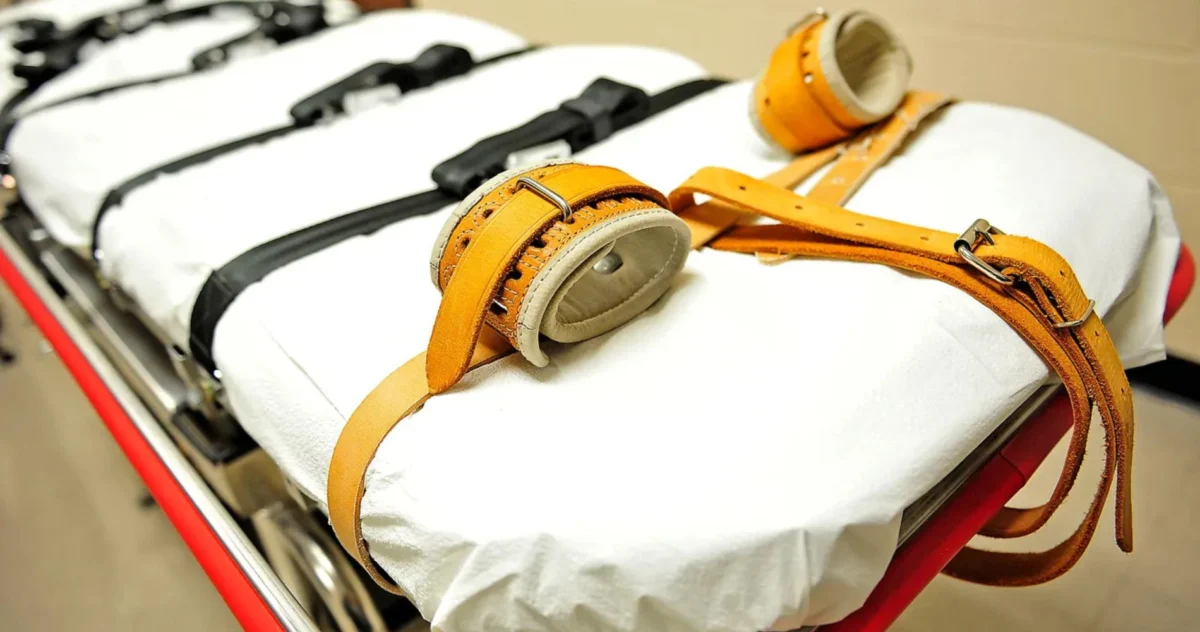
In a harrowing incident that has reignited fierce debate over capital punishment and the reliability of the justice system, Tennessee authorities last week subjected death row inmate Tony Carruthers to a prolonged and ultimately failed execution attempt by lethal injection. Despite profound and long-standing questions surrounding the integrity of his conviction and the absence of critical forensic evidence, the state proceeded with the scheduled execution, only to halt it after an agonizing ordeal during which Mr. Carruthers endured multiple painful punctures and visibly writhed in distress. The grim episode at Riverbend Maximum Security Institution in Nashville has drawn widespread condemnation and intensified calls for a thorough re-evaluation of Tennessee’s execution protocols and Mr. Carruthers’ case itself.
A Grueling Ordeal on Death Row
The attempt to execute Tony Carruthers, 57, unfolded on May 21 at the state’s maximum-security facility. According to officials from the Tennessee Department of Corrections (TDOC), the execution team successfully established "the primary IV line" but then encountered insurmountable difficulties in locating a suitable vein for the mandatory backup line, a critical requirement under the state’s lethal injection protocol. This procedural failure ultimately led to the suspension of the execution.
Eyewitness accounts from inside the execution chamber paint a vivid and disturbing picture of the events. Maria DeLiberato, Mr. Carruthers’ attorney, was present in the room and observed the arduous process unfold over more than an hour. She recounted seeing Mr. Carruthers "wincing and groaning" as prison staff repeatedly attempted to insert the secondary intravenous line. The team reportedly tried various locations on his body, including his left arm, left hand, and left foot, before attempting to establish a central line – a more invasive procedure often reserved for difficult cases. All attempts failed. Ms. DeLiberato described the scene as "horrible," noting that "there was a lot of blood" as the medical team struggled. Reporters stationed outside the chamber, though unable to see directly into the room due to closed blinds, confirmed hearing Mr. Carruthers’ groans, underscoring the audible distress he experienced. After the protracted and unsuccessful attempts, the warden ultimately called off the execution, bringing a temporary end to the ordeal.
Ms. DeLiberato immediately conveyed her outrage, stating to Newsweek, "Permitting Tony Carruthers’ execution to move forward without ordering DNA testing was already a profound injustice. Today, that injustice became outright barbaric after Mr. Carruthers was subject to a botched execution attempt." Her sentiments were echoed by the Death Penalty Information Center (DPIC), which issued a statement highlighting not only the deep concerns about Mr. Carruthers’ case but also the "additional issue surrounding the qualifications of the people tasked with executing prisoners." The failed execution has cast a dark shadow on the state’s ability to carry out capital punishment humanely and competently.
The Shadow of Doubt: Unanswered Questions in the Carruthers Case
The botched execution attempt gains even greater significance when viewed against the backdrop of persistent and serious questions regarding Tony Carruthers’ conviction for a triple murder in Memphis in 1994. Prosecutors at the time argued that Mr. Carruthers, along with another man, kidnapped and killed three individuals, one of whom was a drug dealer whose territory Carruthers allegedly sought to control. However, Mr. Carruthers has consistently maintained his innocence for decades, a claim bolstered by a significant lack of physical evidence connecting him directly to the crime scene.
Critically, five fingerprints recovered from the crime scene have never been matched to Mr. Carruthers, and their source remains unidentified. More alarmingly, the State of Tennessee has steadfastly refused requests to compare DNA collected from the scene to an alternate suspect identified in the case. This refusal to pursue potentially exonerating evidence has been a central point of contention for Mr. Carruthers’ defense team and advocacy groups.
The prosecution’s case at trial relied almost exclusively on the testimony of a jailhouse informant. The credibility of this testimony has been severely undermined by the fact that the informant was paid for his cooperation – a detail prosecutors only disclosed in 2024, despite earlier requests from defense counsel. The delayed disclosure of such material evidence raises serious questions about prosecutorial transparency and fairness.
Adding to the legal complexities, an appellate court previously found Mr. Carruthers’ original trial to be "so filled with errors due to [Mr. Carruthers’] forced self-representation" that it necessitated a new trial for his co-defendant. This co-defendant, whose own trial was deemed flawed, has affirmed Mr. Carruthers’ non-involvement in the crime and has even identified an alternate suspect. Mr. Carruthers’ legal team has repeatedly argued that this alternate suspect’s fingerprints and DNA should be compared to the crime scene evidence, a plea consistently denied by state authorities.
In the lead-up to the scheduled execution, a broad coalition of faith leaders, civil rights advocates, community members, and over 130,000 petition signers urgently appealed to Governor Bill Lee to grant clemency or at least issue a stay to allow for the crucial DNA testing. Despite these widespread calls for justice, Governor Lee declined to intervene, and the Tennessee Supreme Court similarly denied Mr. Carruthers’ request for DNA comparison. This refusal to exhaust all avenues for potential exoneration, especially in a capital case, has drawn sharp criticism from legal experts and human rights organizations.
Tennessee’s Troubled History with Executions
The botched execution of Tony Carruthers is not an isolated incident but rather the latest in a series of troubling events that have plagued Tennessee’s capital punishment system. Following the failed attempt, Governor Lee announced a one-year reprieve for Mr. Carruthers, during which the state will not attempt another execution. While Mr. Carruthers’ attorneys expressed relief at the reprieve, they are advocating for it to be made permanent, not just for their client but for all death row inmates in Tennessee. "We will fight to ensure that the state never again attempts to put Mr. Carruthers and his family through this torture," Ms. DeLiberato stated, emphasizing the need for forensic testing. "Tennessee cannot continue torturing a man while refusing to answer serious questions about his innocence."
This recent incident echoes a previous crisis in April 2022, when Governor Lee was forced to call off the execution of Oscar Smith due to an undisclosed "technical oversight." A subsequent independent investigation into that incident revealed "troubling" and "shocking" failures to comply with the state’s lethal injection protocol. The report highlighted systemic issues within the TDOC’s execution procedures, leading to the firing of several officials. These repeated failures raise serious questions about the competency and oversight within the state’s capital punishment system.
In light of these longstanding problems, Mr. Carruthers’ lawyers, on May 25, formally requested Governor Lee to impose a statewide pause on all executions until ongoing legal challenges to the state’s 2025 execution protocol are fully resolved. This call for a broader moratorium reflects growing concerns among legal professionals that the state’s current protocols are fundamentally flawed and carry an unacceptable risk of cruel and unusual punishment.
Tennessee’s record on wrongful convictions further amplifies these concerns. The Death Penalty Information Center reports a deeply troubling statistic: one person has been exonerated from death row for every five people executed in Tennessee. This rate of error significantly exceeds the national average, suggesting systemic issues within the state’s criminal justice system that may lead to the wrongful conviction of innocent individuals, particularly in capital cases. The DPIC highlighted that Tony Carruthers’ case brought to the forefront "serious concerns about mental illness, representation, innocence, and access to DNA testing," all of which are critical factors in ensuring a just legal process.
A National Pattern of Botched Executions
The traumatic experience of Tony Carruthers also places Tennessee within a broader national context of botched executions in the United States. According to Amherst College professor Austin Sarat, who co-authored a 2025 article documenting failed executions, Mr. Carruthers is the ninth person to survive a failed execution attempt in the last 80 years. This chilling statistic underscores the inherent difficulties and unpredictable nature of lethal injection, the most common method of execution in the U.S.
Alarmingly, the majority of these failed attempts have occurred relatively recently, since 2009. That year, Romell Broom endured an excruciating lethal injection attempt in Ohio, ultimately surviving the initial ordeal before dying in prison years later. Other notable botched attempts include:
- Alva Campbell (Ohio, 2017): Also survived a botched lethal injection attempt before dying in prison.
- Doyle Lee Hamm (Alabama, 2018): Survived a prolonged and painful execution attempt due to difficulty accessing veins, later died in prison.
- Alan Eugene Miller (Alabama, 2022): His lethal injection was called off after officials struggled for over an hour to find a suitable vein. He was subsequently executed in 2024 using nitrogen suffocation.
- Kenneth Eugene Smith (Alabama, 2022): Survived a botched lethal injection attempt before being executed in 2024 by nitrogen suffocation, becoming the first person in the U.S. to die by this method.
- Thomas Creech (Idaho, 2024): Survived a botched lethal injection attempt and remains alive on death row.
The cases of Mr. Smith and Mr. Miller in Alabama are particularly contentious. Despite strong legal and moral arguments against giving state officials a second chance to put a person to death, Alabama proceeded to execute both men using nitrogen suffocation. This experimental method has been condemned as torture by international experts and human rights organizations, raising significant ethical and constitutional questions about the boundaries of "cruel and unusual punishment." The repeated failures and the subsequent adoption of untested, controversial methods highlight a desperate struggle by states to carry out executions while maintaining a facade of humanity and legality.
Implications for Capital Punishment and the Quest for Justice
The failed execution of Tony Carruthers carries profound implications for the future of capital punishment in Tennessee and across the United States. It intensifies the already vigorous debate surrounding the death penalty, bringing to the forefront critical questions about its efficacy, morality, and adherence to constitutional standards, particularly the Eighth Amendment’s prohibition against cruel and unusual punishment.
Firstly, the incident places renewed scrutiny on lethal injection protocols and the training and qualifications of execution staff. The inability to properly administer the drugs, repeatedly demonstrated in botched executions, suggests either inherent flaws in the method itself or systemic inadequacies in execution procedures. This could lead to further legal challenges arguing that lethal injection, as currently practiced, constitutes cruel and unusual punishment.
Secondly, the case underscores the critical importance of access to all available evidence, especially DNA testing, in capital cases. The state’s persistent refusal to compare crime scene DNA to an alternate suspect, coupled with the reliance on a paid, undisclosed informant, erodes public trust in the justice system. It highlights the vulnerability of the system to errors, particularly when exculpatory evidence is withheld or ignored. The high rate of exonerations in Tennessee further emphasizes the need for robust safeguards to prevent wrongful executions.
Thirdly, the ethical dilemma of a state attempting to execute a person multiple times, or resorting to controversial new methods after initial failures, raises fundamental moral questions. Critics argue that such actions verge on torture and violate basic human dignity. International human rights law generally prohibits re-execution attempts after a botched procedure, viewing it as cruel, inhuman, and degrading treatment.
The incident is likely to galvanize anti-death penalty advocates and civil rights organizations, leading to renewed calls for a permanent moratorium on executions in Tennessee and potentially nationwide. Organizations like the Equal Justice Initiative (EJI) and the American Civil Liberties Union (ACLU) consistently highlight the racial bias, disproportionate impact on marginalized communities, and high risk of error associated with capital punishment.
In conclusion, the botched execution of Tony Carruthers is more than just a procedural failure; it is a stark reminder of the inherent fallibility of the death penalty system and the profound human cost of its imperfections. It reignites urgent calls for transparency, accountability, and a thorough examination of cases where significant doubts about guilt persist. As Mr. Carruthers’ attorneys continue their fight for DNA testing and a permanent reprieve, the state of Tennessee faces increasing pressure to address the systemic issues that have led to this latest, harrowing chapter in its troubled history with capital punishment. The outcome of Mr. Carruthers’ case, and the broader response from state officials, will undoubtedly shape the ongoing national dialogue about justice, human rights, and the ultimate power of the state.