
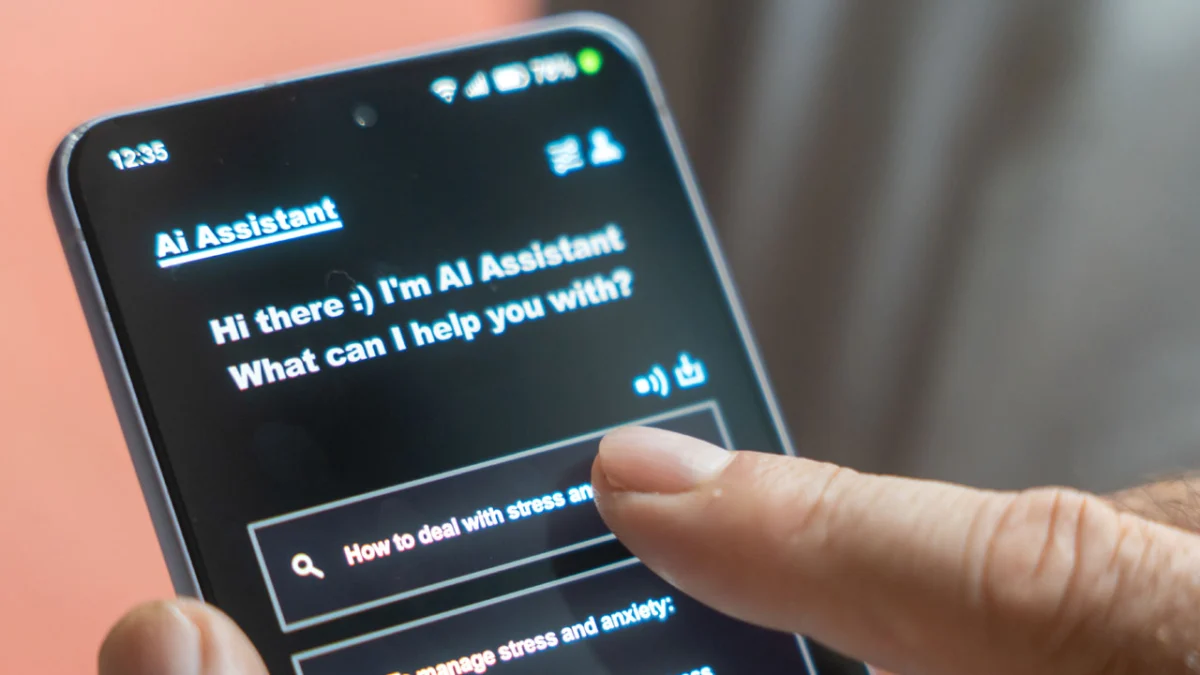
Artificial intelligence has become a ubiquitous presence in the modern tech landscape, with companies across the globe racing to integrate generative models into everyday software, from search engines to professional productivity suites. Despite this rapid proliferation, a substantial demographic of the United States remains entirely disengaged from the technology. According to recent data from the Pew Research Center, approximately 51% of U.S. adults report that they have never used an AI chatbot. This finding, drawn from a comprehensive survey of 5,119 U.S. adults conducted in February 2026, highlights a persistent "AI divide" that separates tech-savvy early adopters from a significant portion of the population that finds these tools either irrelevant or intimidating.
The landscape of AI adoption is not uniform, revealing deep-seated disparities across age, ethnicity, and generational lines. While chatbots like ChatGPT, Gemini, and Copilot have become standard industry tools, their reach is far from universal. The data indicates that age is the primary predictor of usage: while nearly two-thirds of adults aged 18 to 29 have experimented with AI chatbots, that figure drops to roughly 23% for those 65 and older. This trend suggests that while AI is being rapidly woven into the fabric of the modern workplace and educational systems, it has yet to penetrate the routines of older Americans who may rely on more traditional methods for information gathering and task management.
The Evolution of AI Integration: A Chronology
The current state of AI adoption is the culmination of a rapid, three-year ascent of generative artificial intelligence into the public consciousness. The timeline of this integration began in late 2022, when the release of large language models transformed AI from an abstract academic pursuit into a tangible, consumer-facing utility.
By 2023, the focus shifted to "AI literacy," with tech giants heavily marketing chatbots as indispensable personal assistants. Throughout 2024, corporate adoption skyrocketed, with major firms requiring employees to utilize AI for coding, drafting, and data analysis. By 2025, the market saw a diversification of services, with specialized chatbots emerging for medical, legal, and financial sectors. However, as the technology became more sophisticated, it also became more complex, leading to a point of stagnation for the general public in early 2026. The current data serves as a milestone, showing that for all the hype surrounding the "AI boom," the technology has reached a plateau in terms of broad-based household adoption.
Dissecting the Reasons for Non-Adoption
For those who have chosen not to interact with these systems, the decision is rarely based on a single factor. Pew’s research reveals that the reasons for avoidance are multifaceted, touching on deeply held concerns about digital privacy, the veracity of information, and a fundamental lack of utility.
The most frequently cited barrier is a lack of personal interest. Approximately 60% of non-users identify this as a "major reason" for their absence from the platform. This suggests that for a significant number of Americans, the value proposition of a chatbot—providing conversational answers to queries—does not outweigh the effort required to adopt a new digital tool.
Privacy concerns rank as the second most significant deterrent. With 54% of non-users identifying data usage fears as a major reason for their avoidance, there is a clear, pervasive anxiety surrounding how personal data is harvested and stored by the corporations behind these models. This skepticism is bolstered by the ongoing public discourse regarding the ethical implications of large language models and the potential for these systems to hallucinate or provide biased, inaccurate information. Nearly 45% of those surveyed cited a lack of trust in the accuracy of the responses provided by AI as a primary driver for their non-use.

The Role of Demographic Disparities
The demographic breakdown of AI usage also reveals a significant correlation between race, ethnicity, and digital engagement. While 70% of Asian adults report having used a chatbot at least once, that figure is markedly lower among White, Black, and Hispanic populations, where usage rates hover around 46% to 49%. These disparities are often tied to broader trends in technology adoption, influenced by socioeconomic access, professional requirements, and community-based exposure to new software.
When examining the "not-yet" demographic, it is clear that many users are not simply waiting for better technology; they are actively opting out. The survey found that only 5% of current non-users consider it "highly likely" that they will begin using a chatbot within the next year. Conversely, nearly 67% of the non-adopting population expressed that they are "not too likely" or "not at all likely" to engage with these tools in the near future. This suggests that the current gap is not a temporary hurdle that will be naturally overcome by better UI/UX design or increased accessibility, but rather a reflection of a permanent segment of the population that finds no meaningful role for AI in their daily lives.
Official Perspectives and Market Implications
While there is little in the way of "official" public sector responses to these specific figures, the tech industry has reacted with a pivot toward "invisible AI." Recognizing that a significant portion of the population is unwilling to engage with a chatbot interface, companies are increasingly moving toward embedding AI features into background processes—such as automated email sorting, predictive text, and smart scheduling—where the user benefits from AI without having to actively "chat" with a bot.
Market analysts observe that this strategy is a direct response to the "interest barrier" identified by the research. If users are not interested in the act of chatting, firms will simply remove the chat interface, instead positioning AI as an automated utility rather than a conversational partner.

Broader Societal Implications
The fact that half of the population remains outside the chatbot ecosystem has profound implications for the future of the digital divide. As AI begins to gatekeep information, job opportunities, and educational resources, those who have not adopted the technology may find themselves at an increasing disadvantage.
The divide also raises questions about the future of public policy. If essential services, from government portals to customer support, continue to transition toward AI-first interfaces, the 51% who do not use these tools could effectively be disenfranchised. This "digital exclusion" is a known phenomenon in the context of broadband access and smartphone usage; however, the speed and complexity of the AI transition present a unique challenge.
The findings from the Pew Research Center indicate that for all the momentum of the AI movement, the technology is currently existing in a polarized state. On one side, a dedicated user base is leveraging AI to transform their work and leisure; on the other, a majority of Americans remain skeptical, uninterested, or concerned by the technology’s potential risks. Whether this divide narrows as the technology matures or widens as AI becomes more deeply entrenched in the social and economic infrastructure remains one of the defining questions of the next decade.
For policy makers and developers alike, the path forward requires a nuanced understanding of these non-users. It is not merely a matter of "technological illiteracy"—only 29% of non-users cited not knowing how to use the tools as a major barrier. Instead, it is a matter of perceived utility and trust. Unless these tools can demonstrate a clear, safe, and privacy-conscious value to the average citizen, the divide is likely to persist, creating two distinct tiers of digital engagement in the years to come.




