
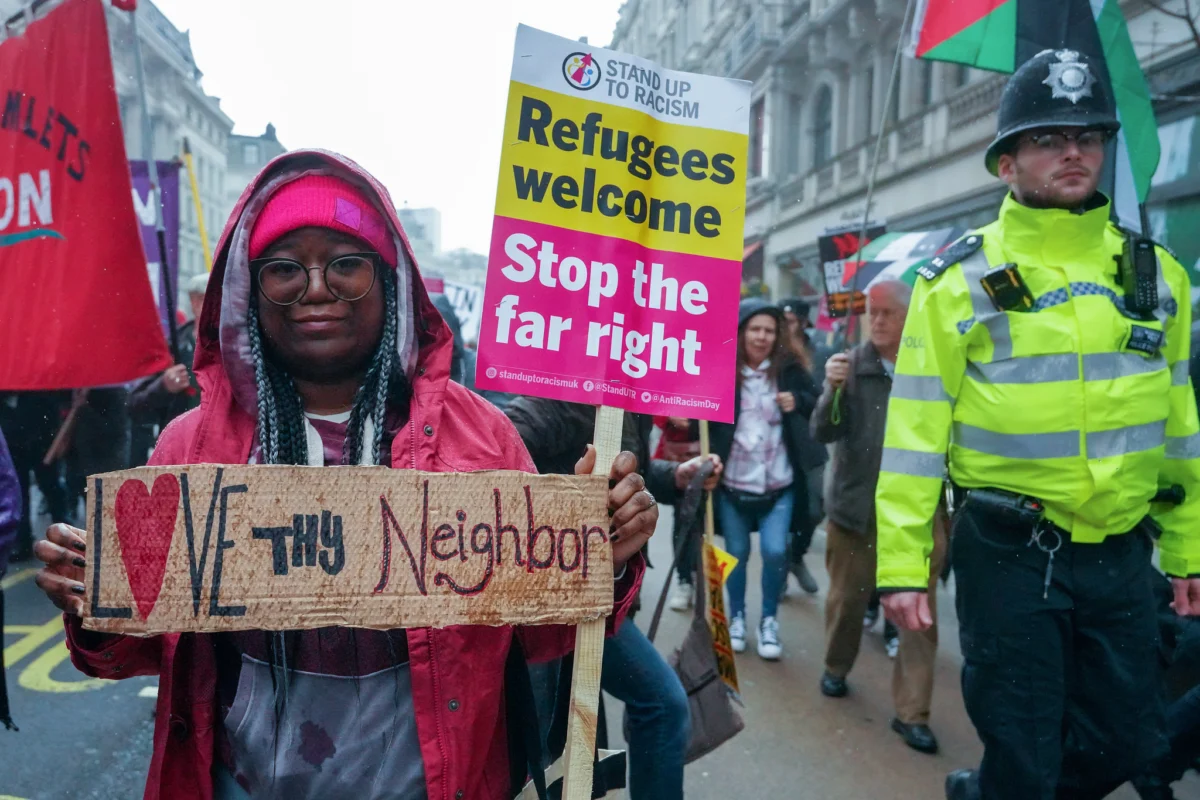
Fundamental rights and legal protections in the United Kingdom face an increasingly precarious future as a combination of shifting political priorities, legislative rollbacks, and targeted misinformation campaigns threaten to erode decades of social progress. Legal safeguards that shield citizens from discrimination, state overreach, and systemic inequality are no longer viewed as permanent fixtures of the British constitution. Instead, they have become focal points for intense ideological debate, legislative maneuvering, and polarization.
Civil liberties organizations, legal experts, and equality advocates are raising the alarm over a coordinated erosion of core statutory frameworks, chief among them the Equality Act 2010 and the Human Rights Act 1998. While these legislative pillars were originally designed to foster a fairer, more inclusive society by holding public bodies accountable and preventing systemic exclusion, they are now encountering unprecedented political headwinds. Observers note that the threat to these protections rarely manifests as a sudden, dramatic repeal; rather, it often occurs incrementally through narrowed judicial interpretations, underfunded enforcement mechanisms, uncommenced statutory duties, and continuous political rhetoric that frames basic human rights as special privileges rather than universal guarantees.
A Chronology of Legislative Evolution and Political Pressure
The architecture of modern British rights is relatively young, forged largely in the post-war consensus and significantly expanded during the late 20th and early 21st centuries. Understanding the current vulnerabilities requires examining the historical timeline of how these laws were established, implemented, and subsequently challenged.
In the aftermath of the Second World War, the United Kingdom played a foundational role in drafting the European Convention on Human Rights (ECHR), seeking to enshrine the lessons of history and ensure that the atrocities witnessed across the continent would never be repeated. Decades later, this commitment was domesticated into British law through the Human Rights Act 1998, which came into force in October 2000. This landmark legislation allowed UK citizens to seek justice for breaches of their fundamental human rights within domestic courts, rather than being forced to travel to the European Court of Human Rights in Strasbourg.
A decade later, the legislative landscape shifted again with the passage of the Equality Act 2010. This statute harmonized and streamlined dozens of separate anti-discrimination laws into a single, comprehensive act. It established protected characteristics—including race, sex, disability, sexual orientation, religion or belief, age, gender reassignment, marriage and civil partnership, and pregnancy and maternity—making it unlawful to discriminate against individuals in employment, education, housing, and the provision of goods and services. Furthermore, the Act included Section 1: the socio-economic duty, which compelled public authorities to consider how their strategic decisions could reduce inequalities resulting from socioeconomic disadvantage.
However, the political consensus underpinning these protections began to fracture significantly in the 2010s and 2020s. Successive Conservative administrations initiated reviews and legislative adjustments that critics argue weakened the enforcement of equalities legislation. Key duties within the Equality Act were left uncommenced, while high-profile proposals were advanced to replace the Human Rights Act entirely with a diminished Bill of Rights—a proposal that ultimately faced fierce parliamentary and legal resistance before being shelved.
More recently, the political spectrum has seen even more radical departures. Populist political entities, such as Reform UK, have explicitly campaigned on platforms pledging to scrap the Equality Act altogether, framing anti-discrimination legislation as burdensome red tape. Meanwhile, the Labour Party, following its return to government, has signaled potential legal reforms and a comprehensive review regarding how rulings from European human rights bodies are integrated into domestic jurisprudence. These shifting postures from mainstream and fringe parties alike have created an environment of profound uncertainty for civil rights advocates.
The Media Landscape and the Battle Over Public Perception
A critical factor accelerating the pushback against rights legislation is the state of the contemporary media ecosystem. Research into media ownership reveals a high concentration of influence, with approximately 90% of national newspaper circulation controlled by a small cohort of wealthy proprietors and billionaires. For decades, a significant portion of this media landscape has pursued editorial campaigns aimed at discrediting human rights frameworks.
Analysts note that these campaigns frequently employ sensationalized clickbait, misleading framing, and occasionally fabricated narratives to stoke public resentment against marginalized groups. By portraying accommodations for disabled individuals, protections for minority communities, or asylum processes as forms of unfair advantage or exploitation, these outlets have fostered a classic divide-and-rule dynamic.
The strategic objective of this sustained misinformation campaign is to shift public perception. When citizens view human rights laws not as a universal shield protecting everyone from state overreach and corporate discrimination, but rather as tools manipulated by specific groups for preferential treatment, the political appetite for weakening or repealing those laws increases. Legal scholars emphasize that this rhetoric obscures the reality of the legislation: that anti-discrimination laws and human rights guarantees apply universally, protecting every citizen from arbitrary mistreatment, harassment, and structural exclusion.
Real-World Impact: What the Human Rights Act and Equality Act Actually Do
To understand the stakes of the current legislative battles, experts point to the practical, everyday realities of life before and after these laws were enacted.
The Human Rights Act serves as a vital constitutional check, shielding individuals from the overreach of the state and public authorities. It guarantees the right to life, freedom from torture and inhuman treatment, the right to a fair trial, respect for private and family life, and freedom of expression. These provisions ensure that vulnerable citizens—whether patients in state-funded care facilities, individuals interacting with law enforcement, or citizens protesting government policies—retain fundamental legal recourse against administrative abuse or state negligence.
Similarly, the Equality Act 2010 fundamentally transformed civil society by outlawing systemic discrimination. Prior to the codification of these comprehensive protections, the legal landscape permitted widespread, overt exclusion. Business owners could legally refuse entry to disabled individuals accompanied by assistance dogs; hoteliers could turn away same-sex couples; cafes could evict nursing mothers; and employers could dismiss workers based on their race, pregnancy status, or caregiving responsibilities without legal consequence.
Moreover, the dormant nature of the Equality Act’s socio-economic duty highlights another layer of unrealized potential. While the devolved administrations in Scotland and Wales operationalized Section 1 to mandate that public bodies actively strategize to reduce wealth and income disparities, successive Westminster governments have left this provision inactive. Organizations such as the Equality Trust continue to campaign for its commencement, arguing that addressing economic inequality is inseparable from securing social justice.
Implications and the Road Ahead
The ongoing friction surrounding the UK’s human rights and equality frameworks carries profound implications for the future of British democracy and social cohesion. Legal commentators warn that rights do not vanish overnight through dramatic parliamentary abolitions; rather, they are frequently chipped away through stealth. Underfunded enforcement agencies, narrowed judicial definitions, reduced statutory guidance, and the erosion of legal aid create an environment where rights exist on paper but remain inaccessible in practice.
Furthermore, the alignment of wealthy interest groups and partisan political campaigns behind efforts to dilute these protections suggests that the pressure will not abate. As international trends demonstrate—particularly the regression of civil liberties and equality protections observed in various parts of the United States and Europe—the institutional safeguards protecting minority rights and public accountability are remarkably fragile.
In response to these multi-faceted challenges, civil society organizations, research institutes, and advocacy groups are mobilizing. Efforts are increasingly focused on public education to counter media misinformation, evidence-based policy advocacy to defend existing legal standards, and strategic litigation to hold public authorities accountable.
As the debate over the future of the Equality Act and the Human Rights Act intensifies, advocates emphasize that public awareness and active defense of these laws remain the primary bulwarks against regression. Ensuring that the legal protections won over generations are preserved for the future requires recognizing that these statutes are not privileges granted at the pleasure of the state, but essential democratic guarantees designed to protect the dignity, safety, and equality of every member of society.




