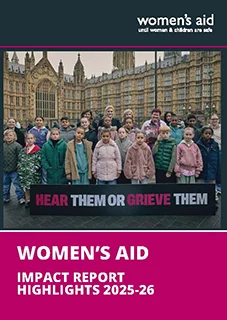
Women’s Aid has released a highlights report detailing its significant achievements between April 2025 and March 2026, marking a pivotal period for the national charity dedicated to ending domestic abuse. The report underscores a year of intensified advocacy, expanded survivor support, and crucial advancements in policy, particularly concerning the safety of children within the family justice system. While a comprehensive impact report is anticipated later in the year, these preliminary findings illuminate the profound influence of the organisation’s strategic initiatives and the unwavering commitment of its network.
A Landmark Victory for Child Safety: The ‘Hear Them or Grieve Them’ Campaign
Central to Women’s Aid’s accomplishments in the 2025-2026 period was the resounding success of its "Hear Them or Grieve Them" campaign. This ambitious and deeply personal advocacy effort aimed to fundamentally reform family court proceedings to ensure that the voices and safety of children are unequivocally prioritised, especially in cases involving domestic abuse. The campaign reached its zenith with the successful repeal of the presumption of parental involvement in family courts, a legislative change now enshrined within a government-backed bill.
The presumption of parental involvement, a long-standing legal principle in England and Wales, mandated that courts should assume parental involvement in a child’s life is beneficial unless proven otherwise. While ostensibly designed to promote shared parenting, critics, including Women’s Aid and numerous survivor advocates, argued that this presumption inadvertently placed children at significant risk when one parent had a history of domestic abuse. It often compelled children to maintain contact with abusive parents, exposing them to ongoing trauma, coercion, and even physical danger, effectively silencing their experiences and concerns within the legal framework.
The "Hear Them or Grieve Them" campaign meticulously built a powerful evidence base, compiling survivor testimonies, expert legal opinions, and child psychology research to demonstrate the detrimental impact of this presumption. It highlighted instances where children’s pleas to avoid contact were overlooked, leading to devastating consequences. The campaign’s strategic messaging and relentless lobbying efforts brought the issue to the forefront of public and political discourse.
A driving force behind the campaign was Women’s Aid ambassador Claire Throssel, whose own tragic experience profoundly shaped the urgency and emotional weight of the initiative. Claire Throssel’s two young sons, Jack and Paul, were murdered by their father during a contact visit in 2014, a tragedy that occurred after a family court had ordered unsupervised contact despite her pleas about his abusive behaviour. Her courage in sharing her story and advocating for systemic change provided an undeniable human face to the campaign, galvanising public support and compelling policymakers to act. Throssel’s powerful testimony before parliamentary committees and her tireless engagement with media outlets were instrumental in shifting public perception and legislative will.
The culmination of these efforts saw the government acknowledge the inherent risks posed by the previous legal framework. The inclusion of the repeal within a government-backed bill signifies a monumental shift in legal philosophy, placing child safety and well-being at the absolute core of family court decisions. This legislative change is expected to empower judges to make decisions based on the specific circumstances of each case, without an automatic predisposition towards parental involvement, thereby offering greater protection to children in vulnerable situations and allowing their voices, often expressed through guardians or legal representatives, to carry due weight.
The legislative process leading to this repeal involved extensive parliamentary debate, committee scrutiny, and cross-party collaboration. Women’s Aid, alongside allied organisations and legal experts, provided detailed briefings to Members of Parliament and Peers, participated in public consultations, and mobilised grassroots support. The successful passage of this provision represents a significant triumph for children’s rights and a testament to the power of sustained advocacy. This change is anticipated to come into full effect following the bill’s royal assent, with guidance to be issued to family courts on its implementation.
Expanding Vital Lifelines: Emergency Funding for Survivors
Beyond policy reform, Women’s Aid significantly expanded its direct support services for survivors during the 2025-2026 reporting period. The charity successfully supported over 5,750 survivors with emergency funding through its Flexible Fund and Survivor Safety Fund. These funds represent critical lifelines for individuals fleeing abuse, often with little to no financial resources.
The Flexible Fund is designed to provide rapid, responsive financial assistance for a wide array of immediate needs. This can include emergency accommodation costs, such as deposits for safe housing or short-term hotel stays when refuges are full; essential living expenses like food vouchers, toiletries, and clothing; and transportation costs for fleeing an abusive environment or attending legal appointments. For survivors who have often been subjected to economic abuse, controlling their access to money and resources, these funds are indispensable in enabling them to break free and rebuild their lives.
The Survivor Safety Fund focuses specifically on measures to enhance physical and digital safety. This might include funding for new locks, security cameras, personal safety alarms, or temporary relocation costs. It also extends to digital safety measures, such as new mobile phones or devices, or support for removing spyware and ensuring online accounts are secure. In an era where digital abuse is increasingly prevalent, these measures are crucial for protecting survivors from ongoing harassment and surveillance.
The demand for these funds has continued to rise, reflecting the persistent challenges faced by survivors, exacerbated by broader economic pressures. The ability to provide immediate financial aid often determines whether a survivor can escape an abusive situation safely and sustainably. The 5,750 individuals supported represent not just a number, but thousands of personal stories of resilience and new beginnings made possible by timely intervention. Women’s Aid’s robust vetting process ensures that funds are distributed efficiently and effectively to those most in need, often working in conjunction with local domestic abuse services within its federation.

Strengthening the Federation: Collaboration and Research
The 2025-2026 period also saw significant improvements in how Women’s Aid works with its members and allies within its federations. Women’s Aid operates as a national charity federating over 170 local domestic abuse services across the UK. This model ensures that local expertise and community-specific needs inform national strategy, while national advocacy provides a powerful collective voice for local services.
Improvements in federation engagement included enhanced communication channels, more frequent and targeted training programmes, and the development of shared best practice guidelines. This collaborative approach fosters a stronger, more cohesive network, allowing services to learn from each other, share resources, and collectively advocate for systemic change. Initiatives focused on strengthening referral pathways, improving data collection, and streamlining administrative processes for member organisations, ultimately enhancing the quality and reach of support available to survivors nationwide.
In its commitment to evidence-based advocacy, Women’s Aid published five new research reports during the year. These reports delve into various critical aspects of domestic abuse, providing invaluable insights that inform policy recommendations and service development. While specific titles are awaiting the full impact report, it is understood that these studies likely covered areas such as:
- The long-term impact of domestic abuse on children, building upon the insights gained from the "Hear Them or Grieve Them" campaign.
- The prevalence and effects of economic abuse, exploring how perpetrators control financial resources and its profound implications for survivors’ independence.
- Challenges faced by specific demographic groups, such as women with disabilities, BAME women, or LGBTQ+ individuals, in accessing support.
- The effectiveness of current legal and criminal justice responses to domestic abuse and recommendations for reform.
- The evolving landscape of digital abuse and technology-facilitated control.
These reports serve as vital tools for policymakers, practitioners, and the public, shedding light on the complexities of domestic abuse and advocating for informed, effective interventions. They underscore Women’s Aid’s role not only as a service provider and advocate but also as a leading research institution in the field.
Strategic Partnerships and Community Engagement
Another successful year was reported in partnering with corporations like Airbnb and AXA. Corporate partnerships are increasingly vital for charities, providing not only crucial financial support but also expertise, resources, and amplified public awareness.
The partnership with Airbnb, for instance, often focuses on providing safe temporary accommodation options for survivors, particularly those fleeing immediate danger when refuge spaces are scarce or unsuitable. This could involve direct funding for accommodation or leveraging Airbnb’s network to secure safe havens. Such collaborations can be transformative, offering immediate relief and a sense of security during a highly vulnerable period.
AXA, a global insurance leader, likely contributes through financial donations, employee fundraising initiatives, and potentially pro-bono support, such as legal advice for the charity or insurance services for its operations. Corporate partners often align with charities whose missions resonate with their corporate social responsibility goals, recognising the societal impact of domestic abuse and the importance of supporting organisations like Women’s Aid. These partnerships are strategic, long-term relationships that extend beyond simple donations, often involving joint campaigns and shared objectives.
The charity also celebrated the continued support of its many generous community fundraisers. From marathons and sponsored walks to bake sales, local concerts, and online challenges, individuals and community groups across the UK play a crucial role in raising funds and awareness. These grassroots efforts demonstrate widespread public solidarity with survivors and ensure that Women’s Aid can continue to provide its essential services, often reaching communities that might otherwise be overlooked. The collective impact of these diverse fundraising activities forms a significant portion of the charity’s annual income, reflecting the profound public trust and support for its mission.
Broader Implications and Future Outlook
The achievements outlined in this highlights report have far-reaching implications for domestic abuse survivors and the broader societal response to violence against women and girls. The repeal of the presumption of parental involvement marks a significant paradigm shift in how the family justice system views children in abusive contexts, moving towards a more child-centric and safety-first approach. This legislative change is expected to reduce re-victimisation and trauma for children, empowering courts to make decisions that truly safeguard their best interests. It also sends a clear message that the state prioritises child safety over abstract legal presumptions, especially when abuse is a factor.
The sustained provision of emergency funding through the Flexible and Survivor Safety Funds demonstrates an agile and practical response to the immediate needs of survivors. In an environment where state funding for domestic abuse services often struggles to meet demand, the charity’s ability to mobilise private and community funds is critical. This direct financial aid not only provides practical assistance but also offers a powerful message of hope and support to individuals navigating extremely challenging circumstances.
The enhanced collaboration within the Women’s Aid federation and the continued output of robust research reports solidify the charity’s position as a leader in the domestic abuse sector. A strong, unified network ensures that best practices are shared, services are high-quality, and advocacy efforts are coordinated and impactful. The research reports provide the evidence base necessary to challenge misconceptions, inform policy, and drive effective interventions, ensuring that Women’s Aid’s work is always grounded in data and survivor experiences.
As Women’s Aid prepares to release its full impact report later this year, the initial highlights paint a picture of an organisation that is not only responsive to the immediate needs of survivors but also proactive in driving systemic change. The period of April 2025 to March 2026 will be remembered as a year of significant legislative triumph, expanded direct support, and strengthened foundations for future advocacy, all contributing to the overarching goal of a society free from domestic abuse. The sustained efforts of Women’s Aid, its ambassadors, partners, and community fundraisers continue to be indispensable in transforming lives and shaping a safer future.