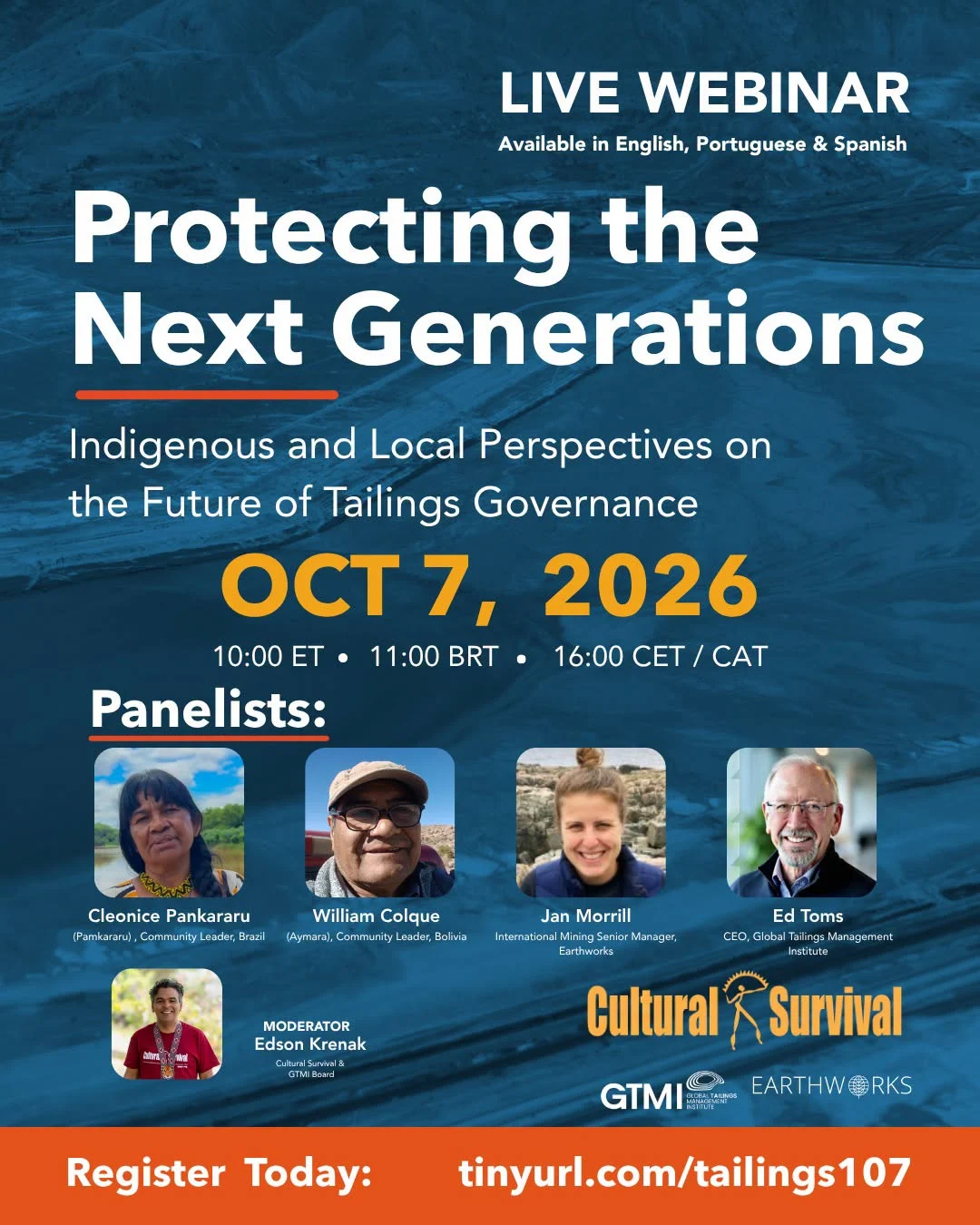
For over five decades, the landscape of global human rights has been continuously shaped by the tireless advocacy of Indigenous communities and the organizations that support them. On October 7, 2026, Cultural Survival, a premier international advocacy organization, will host a landmark webinar designed to bring critical global attention to the ongoing struggles and triumphs of Indigenous Peoples worldwide. This upcoming virtual gathering serves as a vital platform for discussing the intersection of land stewardship, cultural preservation, and political resilience in an era marked by rapid environmental and socio-political shifts. As governments and corporations increasingly eye Indigenous territories for resource extraction, the need for robust dialogue centered on Indigenous self-determination has never been more urgent.
Background Context and Organizational Heritage
Founded in 1972, Cultural Survival has operated at the forefront of the Indigenous rights movement for more than fifty years. The organization’s stated mission is rooted in the active advocacy for Indigenous Peoples’ rights, providing critical support for communities striving to maintain their self-determination, distinct cultures, and political resilience. Over the decades, Cultural Survival has borne witness to sweeping global changes, evolving from a small academic initiative into an influential international non-governmental organization (NGO) that collaborates directly with tribal leaders, grassroots activists, and international policymakers.
The organization’s foundational vision articulates a future that deeply respects and honors the inherent rights and dynamic cultures of Indigenous Peoples. This vision emphasizes that Indigenous cultures are inextricably interwoven with their ancestral lands, distinct languages, spiritual traditions, and artistic expressions—all of which are fundamentally anchored in the principles of self-determination and self-governance. The October 2026 webinar builds directly upon this rich institutional history, serving as both a continuation of decades-long advocacy and a modern response to contemporary crises facing tribal communities across the globe.
Chronology of Indigenous Advocacy and Event Evolution
The path toward modern international recognition of Indigenous rights has been long and fraught with systemic challenges. Understanding the significance of the upcoming Cultural Survival webinar requires examining the historical milestones that have shaped the global Indigenous rights movement:
- 1972: Cultural Survival is established, providing a platform to document human rights violations against Indigenous populations and advocate for policy reforms.
- 1982: The United Nations Working Group on Indigenous Populations is established, marking a major turning point for international diplomacy regarding tribal lands and sovereignty.
- 2007: The United Nations General Assembly adopts the Declaration on the Rights of Indigenous Peoples (UNDRIP) after more than two decades of intense negotiations, setting an international standard for the treatment and rights of Indigenous groups.
- 2015–2020: Global climate advocacy increasingly intersects with Indigenous rights, as scientific data highlights that lands managed by Indigenous communities exhibit significantly higher biodiversity and lower deforestation rates.
- October 7, 2026: Cultural Survival hosts its high-profile global webinar, convening international experts, community leaders, and activists to address modern frontiers in self-determination, resource protection, and digital rights.
Supporting Data and Environmental Realities
The urgency behind Cultural Survival’s advocacy efforts is underscored by compelling empirical data regarding land use, climate change, and human rights. According to estimates by the United Nations Food and Agriculture Organization (FAO) and various environmental research bodies, Indigenous Peoples safeguard an estimated 80 percent of the planet’s remaining biodiversity. Despite comprising less than 6 percent of the global population, Indigenous communities effectively manage territories that overlap with vast reserves of carbon-rich forests and critical freshwater sources.
Furthermore, academic studies consistently demonstrate that sustainable forest management practices utilized by Indigenous groups are vastly superior to conventional state or private management models in preventing deforestation. However, this stewardship comes at a staggering human cost. Environmental human rights monitors note that Indigenous land defenders face disproportionate levels of violence, legal harassment, and forced displacement. The 2026 webinar is expected to spotlight these alarming statistics, providing a data-driven overview of the threats facing land defenders and exploring legal mechanisms to enhance their safety and legal standing.

Official Responses and Stakeholder Perspectives
While the official agenda and speaker lineup for the October 7 webinar are still being finalized, preliminary statements from human rights advocates and organizational representatives emphasize the critical nature of the event. Representatives from Cultural Survival have repeatedly underscored that true global sustainability cannot be achieved without the full participation and leadership of Indigenous Peoples.
"Self-determination is not merely a theoretical concept or a legal footnote; it is the fundamental prerequisite for the survival of our communities, our languages, and our ecosystems," noted a senior program coordinator associated with Cultural Survival’s ongoing initiatives. "This webinar provides an essential space to amplify voices that are too often marginalized in international climate and economic forums."
Legal experts specializing in international human rights law have also weighed in on the broader implications of the event. Many anticipate that the discussions will focus heavily on the practical implementation of the United Nations Declaration on the Rights of Indigenous Peoples (UNDRIP), particularly the principle of Free, Prior, and Informed Consent (FPIC). Corporations and national governments frequently bypass FPIC requirements in the pursuit of mining, logging, and infrastructure projects, making community-led forums like the Cultural Survival webinar vital for sharing successful legal strategies and resistance tactics.
Broader Impact and Implications
The upcoming virtual event carries profound implications for the future of global policy, corporate accountability, and environmental conservation. As the international community grapples with compounding crises—including climate change, biodiversity loss, and geopolitical instability—the wisdom and traditional knowledge systems of Indigenous Peoples are increasingly recognized as indispensable assets.
By facilitating dialogue through this global platform, Cultural Survival aims to bridge the gap between grassroots realities and high-level policymaking. The insights generated during the October 2026 webinar are expected to inform future advocacy campaigns, shape upcoming legislative proposals regarding land rights, and foster solidarity networks among disparate Indigenous groups facing similar systemic pressures.
In addition to policy discussions, the event highlights the critical importance of public engagement and education. Through initiatives such as the "Stay Informed" outreach campaigns, Cultural Survival continues to mobilize a broad base of supporters, ensuring that the general public remains educated about the ongoing struggles for Indigenous justice. As the date of the webinar approaches, international observers, academics, and human rights advocates alike will be watching closely to see how the outcomes of this gathering will influence the next chapter of Indigenous self-determination and global rights advocacy.