The statistics paint a stark and devastating picture: the crisis of Missing and Murdered Indigenous Women, Girls, and People (MMIWG/MMIP) in the United States is a profound epidemic of undercounted violent crime that continues to be inadequately addressed. As of 2023, alarming figures revealed that over 5,800 American Indian and Alaska Native women were reported missing, with a chilling 74% of these individuals being children. This stark reality underscores a systemic failure to protect the most vulnerable members of Indigenous communities and highlights the urgent need for comprehensive national action.
The Scope of the Crisis: Underreported and Overlooked
A landmark 2018 study conducted by the Urban Indian Health Institute (UIHI) examined 71 cities across the United States and identified 506 unique cases of MMIP crimes. The findings were deeply concerning: 56% of these cases involved murder, and 25% pertained to missing persons. Critically, over 75% of these cases were not found in federal databases, revealing severe data deficiencies and a profound lack of transparency and accountability. This data gap significantly impedes the pursuit of justice for survivors and families, leaving countless cases unresolved. The Bureau of Indian Affairs (BIA) conservatively estimates there are approximately 4,200 unsolved missing and murdered cases, a number that likely underestimates the true scale of the tragedy.
Indigenous people are disproportionately impacted by violence compared to the general population. The statistics are not merely numbers; they represent lives lost and futures stolen. Indigenous women face murder rates that are ten times higher than the national average for their non-Indigenous counterparts. For Native American and Alaska Native women and girls, homicide stands as the third leading cause of death. Compounding this crisis, approximately 84% of Indigenous women experience violence in their lifetime, yet the majority of these crimes go unreported or are misclassified, making it virtually impossible to ascertain the full scope of the problem.
Voices from the Frontlines: Advocacy and Resilience
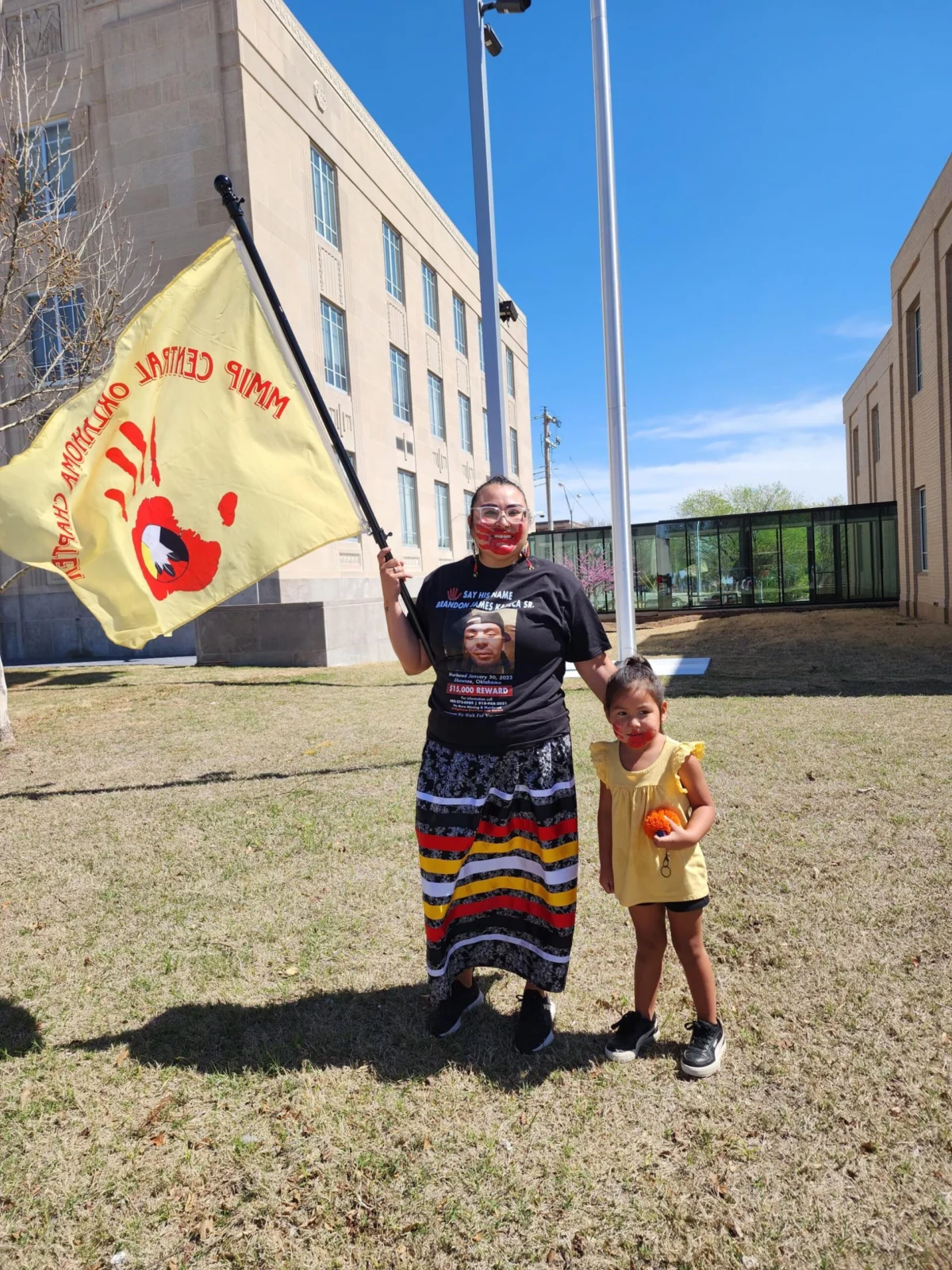
Christa McClellan, a member of the Prairie Band Potawatomi Nation and President of the Missing and Murdered Indigenous People (MMIP) Central Oklahoma Chapter, is a tireless advocate working to bring national attention to this epidemic. Cultural Survival recently spoke with McClellan to understand the critical work being done on the ground and the systemic challenges that persist.
Cultural Survival: Can you describe your role and responsibilities within the MMIP Central Oklahoma Chapter?
Christa McClellan: My work is multifaceted and deeply impactful. I am responsible for creating justice flyers for our murder cases and distributing them when we have a missing person. This involves a significant amount of outreach and coordination. I also manage and actively post information across our social media platforms, including Facebook, Instagram, and TikTok, to raise awareness and solicit tips. A crucial part of my role is connecting with and supporting the families of those affected by MMIP crimes. I also plan and speak at events designed to educate the public and advocate for policy changes.
CS: What initially motivated you to dedicate your time and energy to advocating for Missing and Murdered Indigenous People?
CM: My sister’s unwavering advocacy in New Mexico, where she has been working on these issues for far longer than I have, served as a profound inspiration. However, the personal tragedy of losing our cousin in 2022, whom we considered a brother, was the catalyst that truly propelled me into action. He was shot and killed on January 30, 2022, and we are still actively fighting for justice. The lack of answers has been agonizing, and I made a solemn promise to him that I would not rest until justice is served. This personal commitment fuels my dedication to the cause.
CS: What are the most significant misconceptions surrounding the MMIP crisis that you encounter?
CM: A pervasive and harmful misconception is that Indigenous people are predominantly alcoholics and drug addicts, which leads some to believe they are less worthy of being searched for or that their disappearances are not urgent. We frequently hear dismissive remarks like, "They have the right to go missing," or "They’re just out on a bender and will come home when they’re done." This same dismissiveness extends to our youth, who are often labeled as runaways, obscuring the reality that many fall victim to sex trafficking. The urgency of finding them is often overlooked.
This starkly contrasts with the public response when a Caucasian individual goes missing or is murdered. Their stories are more likely to garner significant media attention, and they receive a greater degree of public and institutional support. When it comes to people of color, whether Indigenous, African American, or Hispanic, the response is often vastly different. They are less likely to be featured in the news or receive adequate assistance. This disparity is deeply rooted in the prejudiced perception of our communities as being solely defined by addiction and criminality, preventing a broader understanding of our diverse humanity and the systemic issues we face. This bias extends even into the criminal justice and court systems, overlooking the many educated and contributing members of our communities.
The Mission of MMIP Central Oklahoma: Healing and Prevention
CS: What is the core mission of the MMIP Central Oklahoma Chapter, and how does it aim to serve the Indigenous community?
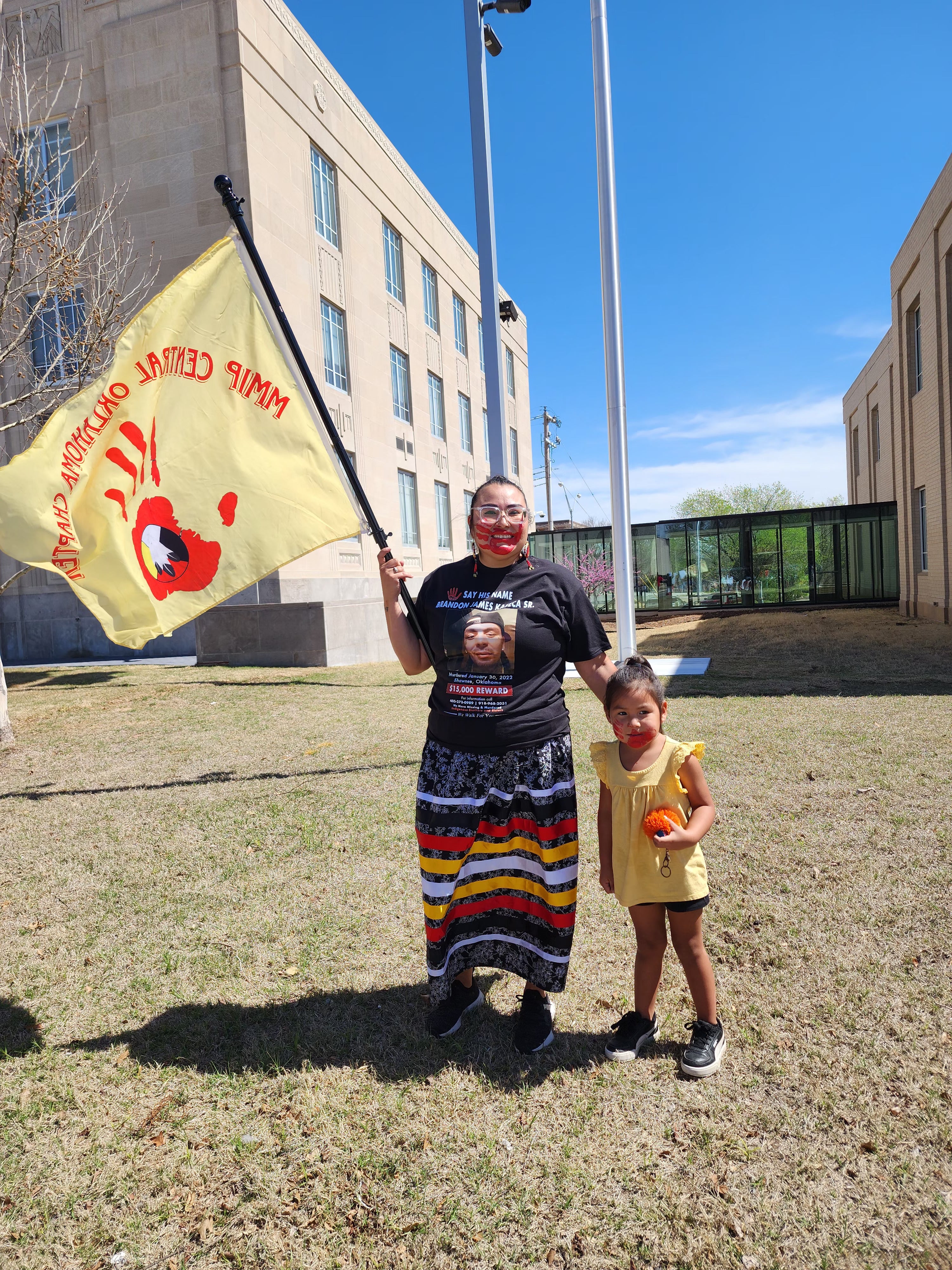
CM: Our initial mission was to directly assist families in locating their missing loved ones and to advocate for justice for those who have been murdered. Over time, we recognized that while finding missing individuals and fighting for justice are paramount, we must also focus on prevention. A key strategy we employ is re-engaging individuals with their cultural heritage. We believe that strong cultural connections foster resilience and provide a vital support system for navigating difficult circumstances.
As a recovering addict myself, I can attest to the profound healing and peace that comes from reconnecting with my culture. Participating in gourd dances, a tradition within my family, has been a significant part of my own healing journey. We strive to create this sense of community and belonging for all Indigenous families and the broader community. Our focus is not solely on MMIP families but on the holistic well-being of our community as a whole, with the ultimate goal of preventing further cases of MMIP.
While the challenge seems immense, we believe that by fostering trust within the community and demonstrating that there is a life beyond addiction and turmoil, we can significantly decrease the rates of violence and loss. To further this goal, we are expanding our cultural programming beyond our annual gourd dance to include other traditional dances like stomp dances and powwows, aiming to reach a wider audience across different tribal affiliations. We also hold an annual honor walk for families and the community and participate in various events throughout the year, including setting up information booths at powwows.
Systemic Change: Policy and Law Enforcement Reform
CS: What specific changes in policy or law enforcement practices do you believe would have the most significant impact on addressing MMIP cases?
CM: A critical change needed is the creation of an alert system specifically designed for Indigenous people. While a general alert system like Casey’s Alert has been enacted, covering individuals from 18 to 55, its effectiveness is questionable. The criteria for its use are so stringent that it has been activated only a handful of times in the years since its inception, despite the high number of missing Indigenous individuals. This limited activation severely hinders its potential to locate people quickly.
We need an alert system that is more accessible and broadly utilized. While certain criteria are necessary, the current approach limits its utility. If alerts could be issued more readily, and disseminated instantly and across entire states, it would significantly increase our chances of finding people. This contrasts sharply with the slower dissemination of information through social media, where visibility depends on individuals encountering posts organically. A dedicated and responsive alert system would be a monumental step forward.
The Evolving Landscape of MMIP Coverage
CS: How has the media coverage and public awareness of MMIP issues evolved in recent years, in your observation?
CM: I have not observed a significant positive change in the coverage of MMIP issues. I believe this could be linked to the current administration’s rhetoric, which often emphasizes equality for all. While equality is a noble goal, it can inadvertently create another barrier for Indigenous people. The focus on treating everyone "equally" can lead to a failure to recognize that Indigenous communities are not currently being treated equally, and the MMIP crisis is a stark manifestation of this disparity. The urgency and the crisis itself are not being seen when the narrative is solely about universal equality without acknowledging historical and ongoing systemic injustices.
I firmly believe that the most impactful way to foster understanding and drive change is for policymakers and the public to engage directly with the families affected by MMIP. Speaking with parents, children, and siblings of missing or murdered individuals would reveal the profound and devastating impact these cases have. It is gut-wrenching and alarming. For those of us directly involved in MMIP families, the grief and emotional toll remain as raw as the day the tragedy struck. If an individual with empathy were to witness this pain firsthand, I am confident they would understand the depth of suffering and the urgent need for action.
Empowering Support: How the Community Can Help
CS: How can individuals and organizations support the MMIP Central Oklahoma Chapter, and what are the best ways to reach you?
CM: As a grassroots organization, we rely heavily on donations to sustain our operations. Any form of financial contribution is invaluable, as without immediate funds, we often cover expenses out of our own pockets. Many of us, including myself and our vice president, are stay-at-home mothers, and the financial burden can be substantial. Flyers are not inexpensive, and our reach extends across the entire state of Oklahoma, requiring significant funds for travel and materials. The furthest we have traveled for a case is approximately two hours one way.
Beyond financial support, we are always seeking volunteers. If direct membership is not feasible, volunteering your time is incredibly beneficial. The most impactful way to volunteer is to actively share our flyers whenever you see them. Assisting us in posting flyers significantly expands our reach, allowing us to cover larger areas. Often, it’s just my nine-year-old daughter and me doing this work, covering only a few blocks. With more volunteers, we could cover much larger territories, achieving far more in a shorter amount of time. Volunteers are also welcome during our events, which serve as vital healing ceremonies for our community, offering a space for connection and mutual support.
You can find us on Facebook and Instagram under the name "Missing and Murdered Indigenous People Central Chapter." Your engagement, whether through sharing information, volunteering, or donating, makes a tangible difference in our ongoing fight for justice and the prevention of further tragedies.