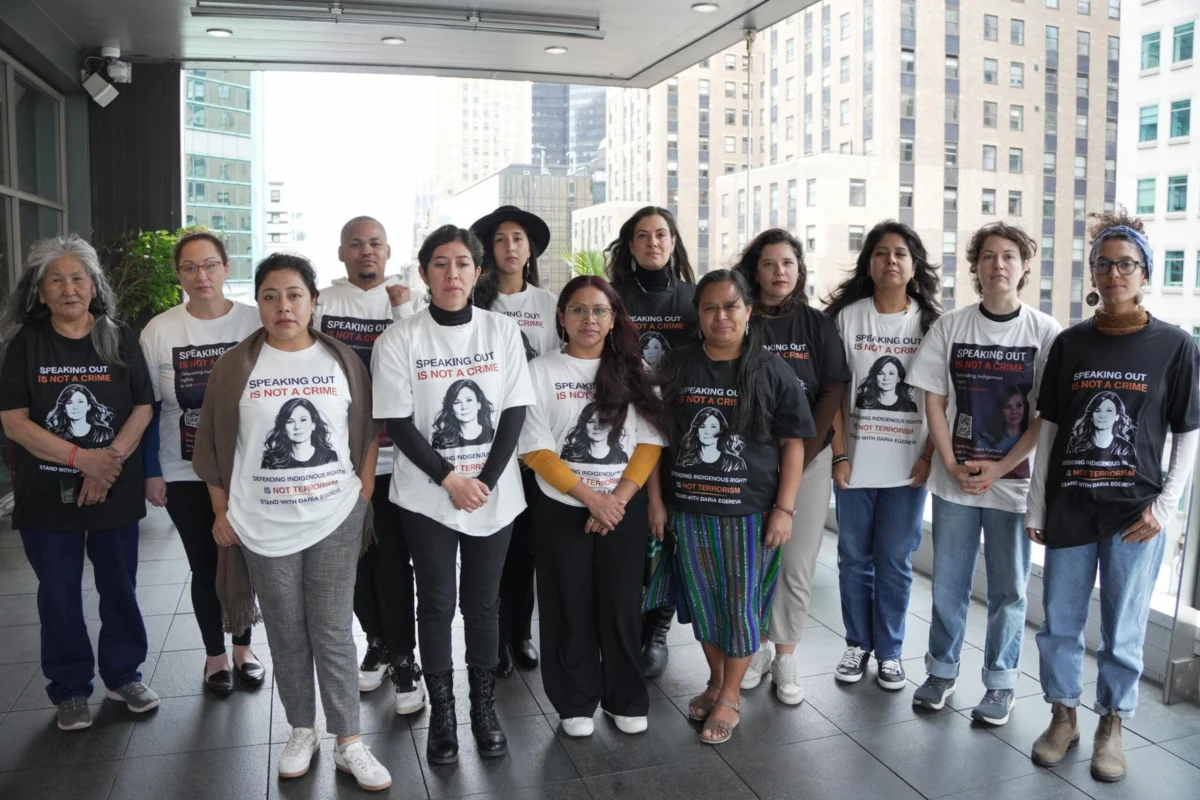
New York, NY – As the United Nations Permanent Forum on Indigenous Issues convened on April 20, 2026, a powerful chorus of international voices emerged, demanding the immediate and unconditional release of Daria Egereva and Natalia Leongardt, two prominent Indigenous rights advocates detained in Russia. Over 100 human rights and environmental organizations, alongside 70 Indigenous Peoples’ groups and their allies, have launched a concerted campaign, underscoring the critical threat their detention poses to Indigenous rights globally and the fundamental principles of free expression.
The charges leveled against Egereva and Leongardt – "participating in the activities of a terrorist organization" under Article 205.5 of the Russian Criminal Code – carry a severe potential penalty of 10 to 20 years imprisonment. This stark legal framework has been widely condemned as a disproportionate and politically motivated response to their dedicated advocacy.
A Global Uprising for Justice: International Condemnation Mounts
The solidarity statement issued by over 100 respected organizations, including the International Federation for Human Rights, Amnesty International, the Center for International Environmental Law (CIEL), and Greenpeace, unequivocally calls for the dismissal of all charges and the immediate release of Egereva and Leongardt. Furthermore, the statement extends its plea to include all Indigenous human rights defenders currently detained in Russia, highlighting a systemic pattern of repression.
In a direct appeal to the Russian Federation’s highest office, a separate letter signed by over 70 Indigenous Peoples’ organizations and their allies has been dispatched to President Vladimir Putin. This letter urges the Russian President to honor his nation’s international human rights obligations, specifically those pertaining to freedom of expression, association, and the right of individuals to participate in public affairs. The signatories emphasize that the detention of Ms. Egereva and Ms. Leongardt represents a grave threat to the safety of human rights defenders and the ability of Indigenous Peoples to actively contribute to shaping the global future.
Profiles in Courage: The Dedication of Egereva and Leongardt
Daria Egereva, an ethnic Selkup, is a figure of significant standing within the international Indigenous rights movement. Her contributions extend to her role as a member of the United Nations Permanent Forum on Indigenous Issues (UNPFII) and her co-chairmanship of the International Indigenous Peoples Forum on Climate Change (IIPFCC). Egereva’s deep understanding of the challenges faced by Indigenous communities, particularly in the face of environmental degradation and climate change, has made her a vital voice in global forums.
Natalia Leongardt, a seasoned Russian human rights defender, has been a steadfast colleague and collaborator with Egereva. Her professional life, spanning two decades, has been dedicated to the crucial work of supporting and protecting the rights of Indigenous Peoples across Russia’s vast North, Siberia, and Far East regions. Leongardt’s expertise in navigating the complex legal and social landscapes affecting these communities has been instrumental in their advocacy efforts.
The Escalating Climate of Repression: A New Report Sheds Light
Coinciding with the international outcry, the report titled "The Crime of Being Indigenous," released on April 20, 2026, provides a comprehensive and alarming account of the escalating repression and pressure exerted by Russian authorities against leaders of small-numbered Indigenous Peoples. This detailed study meticulously documents reprisals against these communities between 2019 and 2026, identifying discernible patterns of systematic targeting. The report serves as a critical piece of evidence illustrating the broader context of the detentions of Egereva and Leongardt.
Voices from the Frontlines: Indigenous Leaders Speak Out
The gravity of the situation has resonated deeply within Indigenous communities worldwide. Alicia Moncada, Director of Advocacy and Communications at Cultural Survival, a prominent Indigenous rights organization, articulated the widespread sentiment: "Daria Egereva was arbitrarily detained for doing exactly what the world asks of Indigenous leaders: engaging peacefully in international forums to defend her people’s future. Her continued detention is a direct attack on Indigenous Peoples’ right to participate in global decision-making. We call on all states to demand her immediate and unconditional release."
Luda Kinok, a Yupik rights activist from Chukotka, Russia, shared a poignant perspective, highlighting the existential threat faced by her people and others like them. "I am Yupik from Chukotka, Russia. There are approximately 1,600 of us left. I know what it means to belong to a people whose continued existence the world has not yet decided to protect. The Selkup people number fewer than 3,500. Daria Egereva spent her life making sure that number was known in the rooms where it might matter. Russia lists endangered species in its Red Book, like the Siberian tiger, and protects them under law, as it should. We ask only for the same coherence: that speaking for a people on the edge of disappearance should not be treated as a crime. I stand with Daria Egereva and Natalia Leongardt. I call for their immediate and unconditional release."
Environmental Defenders Under Siege: A Link to Climate Action
The implications of these detentions extend beyond Indigenous rights to the broader struggle for environmental protection and climate action. Camilla Pollera, Program Associate at the Center for International Environmental Law (CIEL), underscored this connection: "CIEL joins more than 100 civil society organizations in strongly condemning the arbitrary detention of Indigenous leader Daria Egereva and human rights defender Natalia Leongardt for their peaceful work defending human rights and the environment. Charging them with ‘terrorism’ is not justice – it’s a clear attack on those who stand up for Indigenous rights and climate action. Their work reflects the courage of countless defenders, especially women, who face disproportionate repression for challenging environmental harm and demanding accountability. When defenders are targeted, it undermines the integrity of global climate efforts and sets a dangerous precedent. We call for the immediate and unconditional release of Daria and Natalia with all charges dropped – because there can not be climate justice without human rights."
Broader Implications: A Bellwether for Human Rights
The case of Daria Egereva and Natalia Leongardt is not an isolated incident but rather symptomatic of a disturbing trend of shrinking civic space and intensified repression against human rights defenders in various parts of the world, with Russia being a significant focal point. The use of broad anti-terrorism legislation to silence legitimate advocacy raises serious concerns about due process and the rule of law.
The international community’s response, particularly the coordinated efforts at the UN Permanent Forum on Indigenous Issues and the direct appeals to the Russian President, signals a growing recognition of the interconnectedness of Indigenous rights, environmental protection, and global security. The demand for the release of Egereva and Leongardt is, in essence, a demand for the protection of fundamental human rights and the preservation of democratic principles.
The allegations against Egereva and Leongardt, stemming from their participation in international platforms and their advocacy for Indigenous rights, particularly in the context of climate change and resource extraction, are viewed by many as a direct attempt to stifle dissent and suppress voices critical of government policies. The potential for lengthy prison sentences for such activities creates a chilling effect, discouraging others from speaking out and participating in public discourse.
A Chronology of Concern:
- Ongoing: Daria Egereva and Natalia Leongardt are actively engaged in advocating for the rights of Indigenous Peoples, participating in international forums, and working on environmental protection issues.
- Prior to April 20, 2026: Egereva and Leongardt are detained in Russia. Specific dates of arrest are not provided in the initial release but the charges are known.
- April 20, 2026: The UN Permanent Forum on Indigenous Issues convenes. Over 100 organizations release a statement calling for the immediate release of Egereva and Leongardt. Concurrently, over 70 Indigenous groups and allies send a letter to President Putin. The report "The Crime of Being Indigenous" is published, documenting repression from 2019-2026.
- Present: The international campaign for their release continues, with ongoing media outreach and advocacy efforts.
Supporting Data and Context:
The demographic realities of the Indigenous Peoples Egereva and Leongardt advocate for underscore the urgency of their work. The Selkup people, to which Egereva belongs, number fewer than 3,500 individuals. The Yupik people from Chukotka, represented by Luda Kinok, are approximately 1,600 strong. These small-numbered Indigenous Peoples often face unique challenges, including cultural erosion, environmental degradation due to industrial development, and a lack of adequate representation in decision-making processes that affect their ancestral lands and livelihoods.
The Russian Federation is home to numerous Indigenous groups, many of whom are recognized as "small-numbered Indigenous peoples" under Russian law. These groups often rely on traditional livelihoods such as reindeer herding, fishing, and hunting, which are increasingly threatened by climate change, resource extraction, and infrastructure projects. Their rights to traditional lands, self-determination, and cultural preservation are often at the forefront of their advocacy.
The use of Article 205.5 of the Russian Criminal Code, which pertains to "participation in the activities of a terrorist organization," has been a recurring concern for human rights organizations. Critics argue that this broad legislation is frequently employed to target political opponents, activists, and religious minorities, blurring the lines between legitimate dissent and genuine threats to national security. The potential for lengthy prison sentences under this article creates a powerful tool for state repression.
The UN Permanent Forum on Indigenous Issues (UNPFII) is an advisory body to the Economic and Social Council (ECOSOC) of the United Nations, established in 2000. Its mandate is to provide expert advice and recommendations on Indigenous issues to the UN system, as well as to governments. The Forum serves as a crucial platform for Indigenous Peoples to voice their concerns, share experiences, and contribute to the development of policies and programs that affect them. The presence of Egereva, a co-chair of the IIPFCC, at such a forum highlights the international relevance of her work and the global implications of her detention.
The International Indigenous Peoples Forum on Climate Change (IIPFCC) is a global network of Indigenous Peoples’ representatives and organizations working on climate change issues. It plays a vital role in ensuring that Indigenous perspectives are integrated into international climate negotiations and policy development.
Call to Action:
The international community is urged to continue its pressure on the Russian authorities to ensure the immediate and unconditional release of Daria Egereva and Natalia Leongardt. Diplomatic channels should be utilized to advocate for the protection of human rights defenders and Indigenous leaders within Russia. The principles of freedom of expression, association, and the right of Indigenous Peoples to self-determination are fundamental to a just and sustainable world. The message from New York is clear: speaking out for one’s rights and for the protection of the planet should never be a crime.
For further media inquiries, individuals are directed to contact Tatiana Shauro, Solidarity Campaign Communications Coordinator, at [email protected]. She is available via Signal (@tati.61) and Telegram (@tatishauro) and can be reached in the GMT+9 time zone. Updates on the campaign are available by subscribing to the channel at http://t.me/freedariaegereva.