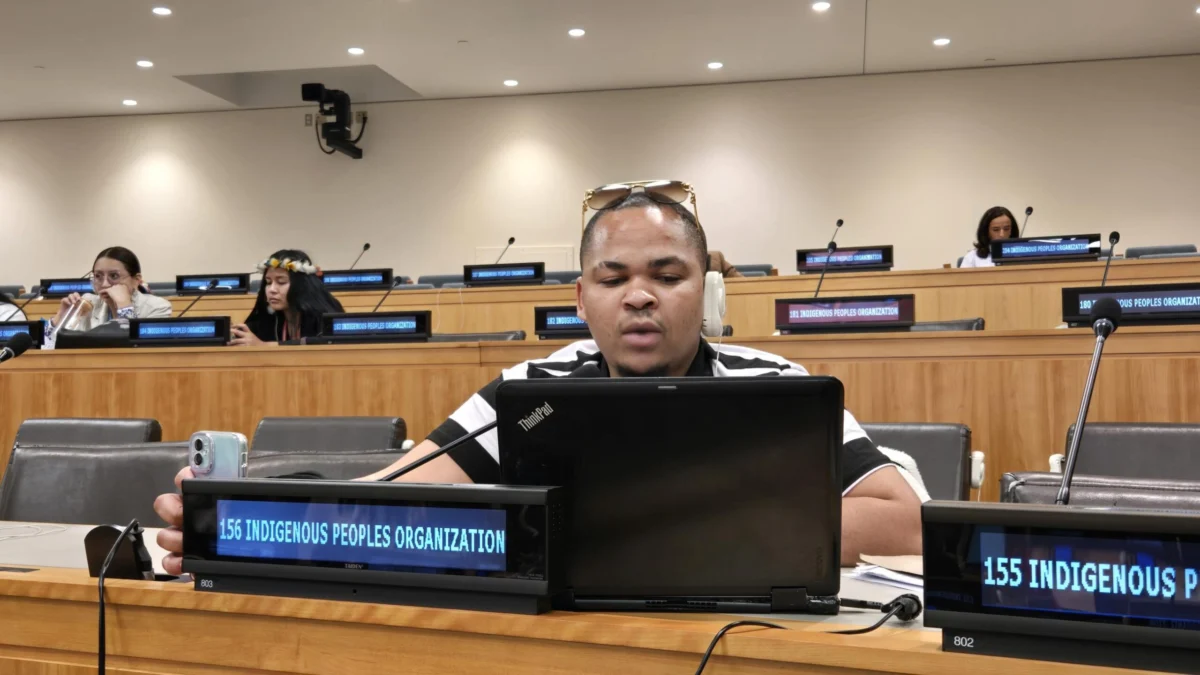
New York – April 23, 2026 – A significant address delivered at the 25th session of the UN Permanent Forum on Indigenous Issues by Samuel Stanley, Chairperson of the Indigenous Ink Network and Director of the Indigenous Youth Summit, has brought renewed attention to the ongoing challenges faced by Indigenous youth in Botswana, particularly the San and Nama Peoples. Stanley’s statement, delivered on behalf of Indigenous youth, highlighted a paradox: while Botswana is making strides in recognizing human rights and engaging with international mechanisms, critical gaps persist in the national policy framework, specifically concerning the distinct needs and rights of Indigenous youth.
The address, part of a broader dialogue at the UN Permanent Forum—an annual consultative body established by the Economic and Social Council (ECOSOC) of the United Nations in 2000 to provide expert advice and a platform for Indigenous peoples’ voices—underscored the urgent need for a truly rights-based approach to governance. The Permanent Forum itself serves as a crucial venue for Indigenous peoples worldwide to raise concerns, share experiences, and contribute to the UN system’s work on issues affecting them. The 25th session, held from April 20-30, 2026, focused on themes of “Enhancing Indigenous Peoples’ Right to Self-Determination in the Context of the UN Declaration on the Rights of Indigenous Peoples” and “Indigenous Peoples’ Resilience and Sustainable Livelihoods.” Stanley’s intervention directly addressed these overarching themes through the lens of Botswana’s Indigenous communities.
Botswana’s Progress and Persistent Gaps
Stanley commenced his statement by acknowledging the Government of Botswana’s recent commitments to human rights, including high-level political pronouncements and engagement with UN mechanisms. He specifically lauded the government’s efforts toward a more human rights-based governance model and its initiatives for youth empowerment, recognizing these as vital foundational steps. The recent visit of the UN Special Rapporteur on the Rights of Indigenous Peoples to Botswana was also cited as a positive development, fostering continued cooperation with international human rights systems.
However, the crux of Stanley’s message lay in the persistent disparities. He expressed deep concern that Botswana’s recently formulated national youth policy fails to adequately recognize or address the specific realities and rights of Indigenous youth, particularly the San Peoples. This oversight, he warned, risks perpetuating existing inequalities and effectively excluding Indigenous youth from national development agendas and opportunities.
A human rights-based approach, as articulated by Stanley, necessitates policies that are inclusive, non-discriminatory, and responsive to the unique cultural, social, and historical contexts of marginalized groups. He emphasized that Indigenous youth are not a monolithic entity within the broader youth demographic. Instead, they are rights-holders with distinct identities and lived experiences that demand explicit recognition. The current policy framework, by failing to differentiate, risks homogenizing diverse experiences and overlooking the specific vulnerabilities and aspirations of Indigenous youth.
Land Rights: The Cornerstone of Identity and Survival
Central to the concerns raised by Samuel Stanley are the fundamental issues of land rights. For the San Peoples, land transcends its economic value, serving as the very bedrock of their identity, culture, spirituality, and ability to survive. The ongoing displacement, restricted access to ancestral territories, and the lack of legal recognition for their traditional land tenure systems were identified as grave violations of fundamental human rights. These violations directly impinge upon the rights to self-determination, cultural preservation, and the right to a livelihood.
The historical relationship between Indigenous peoples and their ancestral lands is a recurring theme at the UN Permanent Forum. Many Indigenous communities across the globe rely on their traditional territories for sustenance, cultural practices, and spiritual well-being. The denial of secure land tenure often leads to a cascade of negative consequences, including loss of cultural heritage, erosion of traditional knowledge, and increased poverty. For the San, whose traditional livelihoods are intricately tied to their environment, the loss of access to land can be catastrophic, leading to social disintegration and cultural assimilation.
Calls to Action for the Government of Botswana
In light of these critical issues, Stanley articulated a series of direct calls to the Government of Botswana. While the original text of the article did not specify these calls in detail, it is reasonable to infer, based on the context of the UN Permanent Forum and the concerns raised, that they would encompass:
- Explicit Recognition of Indigenous Youth Rights: The national youth policy and all subsequent legislation and programs must be amended to explicitly recognize and protect the unique rights and needs of Indigenous youth, acknowledging their distinct cultural heritage and historical experiences.
- Land Rights Recognition and Protection: The government must prioritize the legal recognition, protection, and, where necessary, restitution of Indigenous land rights. This includes formalizing traditional land tenure systems and ensuring that San and Nama Peoples have secure and unfettered access to their ancestral territories.
- Meaningful Consultation and Participation: Indigenous youth must be actively and meaningfully consulted in the development and implementation of all policies and programs that affect them. This consultation should go beyond token gestures and ensure genuine co-creation of solutions.
- Addressing Discrimination and Inequality: Targeted measures must be implemented to combat the systemic discrimination and inequalities that Indigenous youth face in accessing education, healthcare, employment, and other essential services.
- Support for Indigenous Cultural Preservation: The government should actively support initiatives aimed at preserving and promoting the distinct cultures, languages, and traditions of the San and Nama Peoples, recognizing their intrinsic value.
Broader Implications and Analysis
Samuel Stanley’s statement at the 25th UN Permanent Forum on Indigenous Issues serves as a critical barometer for the state of Indigenous rights globally, with a specific focus on the challenges faced by young people. The persistent disconnect between national policy frameworks and the lived realities of Indigenous youth is a challenge echoed in many countries.
The implications of the issues raised are far-reaching. When Indigenous youth are not adequately represented or their rights are not fully acknowledged, it not only jeopardizes their present well-being but also threatens the continuity of their cultures and traditions for future generations. The erosion of land rights, in particular, can lead to forced assimilation, loss of cultural identity, and increased socio-economic marginalization.
The UN Permanent Forum on Indigenous Issues, in its role as a consultative body, plays a vital part in amplifying these voices and pushing for accountability. Recommendations and statements made at these sessions, while not legally binding, carry significant moral and political weight, influencing national policy and international discourse. The cooperation with international human rights mechanisms, as acknowledged by Stanley, provides a pathway for ongoing engagement and advocacy.
The focus on Indigenous youth is particularly significant. Youth represent the future of Indigenous communities. Empowering them, ensuring their rights are protected, and enabling their full participation in decision-making processes are crucial for the sustained resilience and self-determination of Indigenous peoples. Failure to do so risks a generational loss of cultural heritage and the perpetuation of cycles of disadvantage.
A Call for Deeper Inclusivity
In his concluding remarks, Stanley reiterated that while Botswana has taken positive steps toward strengthening human rights governance, these efforts require deeper commitment and greater inclusivity. He stressed that the realization of Indigenous Peoples’ rights, especially for youth, demands deliberate, targeted, and sustained action grounded in human rights principles. The dignity, knowledge, and rights of the San Peoples, he asserted, must not only be acknowledged in principle but fully realized in practice.
This statement from Samuel Stanley at the UN Permanent Forum on Indigenous Issues serves as a powerful reminder that progress in human rights requires constant vigilance and a commitment to addressing the specific needs of all segments of society, particularly those who have historically been marginalized. The call for the full realization of the rights of the San Peoples, particularly its youth, underscores the ongoing journey toward equitable and just societies that honor diversity and uphold the fundamental dignity of all people. The international community, through forums like the UN Permanent Forum, continues to serve as a crucial platform for these vital dialogues and advocacy efforts.