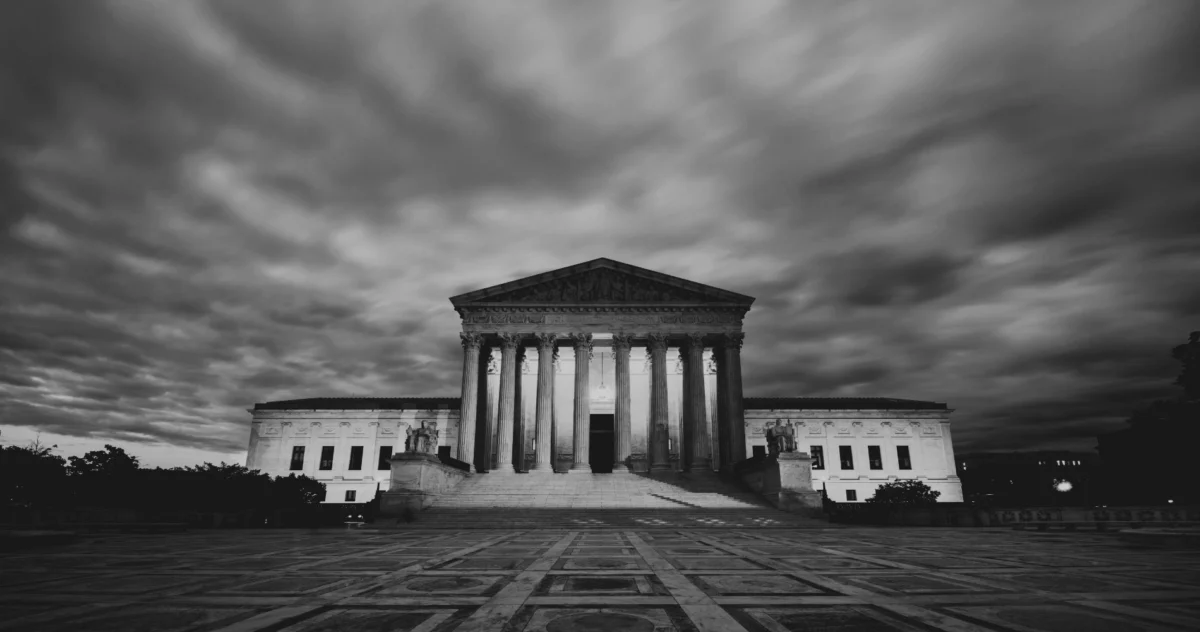
The Supreme Court yesterday, in a monumental 6-3 decision in Louisiana v. Callais, effectively nullified Section 2 of the Voting Rights Act (VRA), gutting a half-century-old bulwark against racial vote dilution. The ruling marks a significant retrenchment of federal protections for minority voters, drawing immediate condemnation from dissenting justices and civil rights advocates who warn of severe repercussions for democratic representation. As Justice Elena Kagan powerfully articulated in her dissent, the decision "threatens a half-century’s worth of gains in voting equality," effectively rendering Section 2 "all but a dead letter" by transforming its core legal standard.
Understanding Section 2: Origins and Purpose
Section 2 of the Voting Rights Act, originally enacted in 1965 and significantly amended in 1982, was designed to address racial vote dilution. This insidious tactic emerged as states, particularly in the South, sought new ways to diminish the political power of Black voters after the VRA made outright denial of ballots illegal. Instead of preventing Black Americans from voting, jurisdictions began manipulating electoral maps (gerrymandering) and implementing at-large election systems. These methods were engineered to ensure that even if minority citizens cast ballots, their votes would carry minimal or no weight in electing candidates of their choice.
Proving intentional discrimination under previous legal frameworks was notoriously difficult, as states often cloaked their true intentions in race-neutral language. Recognizing this challenge, Congress acted decisively in 1982 to amend Section 2, shifting the focus from discriminatory intent to discriminatory effects. This pivotal amendment allowed communities to challenge election rules and districting schemes that resulted in a reduction of minority voting strength, regardless of whether a state explicitly intended to discriminate. This "effects test" transformed Section 2 into an indispensable and highly effective tool for challenging racial discrimination in voting, leading to a dramatic increase in minority representation across the United States.
The Louisiana Redistricting Battle: A Case Study
The Louisiana v. Callais case originated from a contentious redistricting process in Louisiana following the 2020 census. Despite Black residents comprising nearly one-third of the state’s population, Louisiana lawmakers in 2020 initially drew a congressional map that created only one district out of six where Black voters had a realistic opportunity to elect their preferred candidate. This glaring disparity prompted a lawsuit by Black voters under Section 2 of the VRA, arguing that the map diluted their voting power.
A federal court subsequently agreed with the plaintiffs, finding that the map violated Section 2. The court ordered the state to redraw its congressional districts to include a second Black-majority district, a directive that Louisiana complied with in early 2024. However, this redrawn map, designed to remedy the previously identified vote dilution, was then challenged by a group of white voters. They contended that the new Black-majority district constituted an unconstitutional racial gerrymander, setting the stage for the Supreme Court’s intervention.
The Court’s Ruling in Callais: A Paradigm Shift
In its 6-3 decision, the Supreme Court’s conservative majority sided with the white plaintiffs, striking down Louisiana’s redrawn map. The Court’s reasoning fundamentally reinterpreted Section 2, effectively reverting its standard from an "effects test" back to an "intent test." This means that moving forward, a plaintiff alleging vote dilution under Section 2 must now prove that a state adopted an election rule with racially discriminatory intent. This burden of proof is significantly higher and notoriously difficult to meet, as it requires delving into the motives of lawmakers rather than simply demonstrating the discriminatory outcome of their actions.
The majority opinion, which has yet to be fully released but whose impact was immediately clear, also imposed new requirements that provide states with an "automatic political gerrymandering defense" to vote-dilution claims. This allows states to argue that any perceived racial disparity in districting is merely a consequence of legitimate political considerations, further complicating efforts to challenge discriminatory maps. The Court concluded that the Black voters in Louisiana had failed to meet these newly imposed, heightened requirements, and thus, Section 2 did not compel the state to add a second majority-minority district.
Justice Kagan’s Scathing Dissent
The dissenting opinion, authored by Justice Elena Kagan and joined by Justices Sonia Sotomayor and Ketanji Brown Jackson, delivered a powerful rebuke to the majority’s decision. Justice Kagan condemned the ruling as a deliberate act to "convert Section 2 into its opposite—a statute turning on discriminatory intent, not effects." She warned that requiring voters to prove intentional racial discrimination "renders Section 2 all but a dead letter," effectively dismantling its efficacy.
Kagan highlighted the practical impossibility of meeting this new standard, noting that plaintiffs would be barred from relying on crucial historical context—such as the fact that Louisiana has never elected a Black Congressperson from a non-majority-Black district—to demonstrate discriminatory intent. She further cautioned of "far-reaching and grave" consequences, including the probable elimination of districts that have, over the past half-century, provided minority citizens, particularly African Americans, with a vital political voice.
In a poignant conclusion, Justice Kagan invoked Justice Ruth Bader Ginsburg’s dissent in Shelby County v. Holder, reiterating that the Voting Rights Act "was ‘one of the most consequential, efficacious, and amply justified exercises of federal legislative power in our Nation’s history.’" She underscored the VRA’s origins in the "literal blood of Union soldiers and civil rights marchers" and its role in bringing the nation closer to its democratic and racial equality ideals. Kagan forcefully asserted that only Congress, the representatives of the people, has the authority to declare the VRA no longer needed, not the Supreme Court. Her dissent unequivocally marked the decision as the "latest chapter in the majority’s now-completed demolition of the Voting Rights Act."
A Historical Lens: The Fight for Voting Rights
To fully grasp the magnitude of Louisiana v. Callais, it is crucial to revisit the historical context of voting rights in America. Following the Civil War, the Fifteenth Amendment was ratified in 1870, explicitly prohibiting racial discrimination in voting. However, this constitutional guarantee was systematically undermined by Southern states through a labyrinth of Jim Crow laws and practices. Poll taxes, literacy tests, "grandfather clauses," and outright violence and intimidation were deployed to disenfranchise Black voters for nearly a century.
Selma, Alabama, serves as a stark illustration of this systemic oppression. In 1965, Black residents constituted half of Selma’s population, yet only a minuscule 2% of the county’s 15,000 eligible Black voters were registered. This egregious disparity ignited a fierce struggle for civil rights.
The Birth of the Voting Rights Act
The struggle culminated in pivotal events in March 1965. On March 7, a planned march from Selma to Montgomery, Alabama’s state capital, to demand voting rights was brutally suppressed by Alabama state troopers and local police on the Edmund Pettus Bridge. Hundreds of nonviolent protesters were attacked with billy clubs, whips, and tear gas in what became known as "Bloody Sunday," a moment that galvanized national outrage and resolve.
Two weeks later, thousands of activists, led by figures like Dr. Martin Luther King Jr., successfully completed the march to Montgomery, culminating in a powerful address by Dr. King to 25,000 people at the Capitol on March 25. The horrific images and stories from Selma, coupled with widespread civil rights activism, pressured Congress to act. Less than five months later, on August 6, 1965, President Lyndon B. Johnson signed the Voting Rights Act into law.
The VRA was landmark legislation, outlawing discriminatory qualification laws and, crucially, establishing a "preclearance" requirement under Section 5. This mandate compelled jurisdictions with a history of egregious discrimination, predominantly in the South, to obtain federal approval before implementing any new voting laws or procedures. This preventive measure was designed to halt discriminatory practices before they could take effect. The VRA was repeatedly and overwhelmingly reauthorized by Congress, most recently in 2006, with bipartisan support during a period when Republicans controlled both Congress and the White House.
The VRA’s Transformative Early Impact
The impact of the Voting Rights Act was immediate and profound. In the decade following its passage, over a million Black people registered to vote in the Deep South alone. By 1975, Alabama saw approximately 200,000 additional Black voters on its rolls. The number of Black elected officials across the Deep South soared from virtually none to roughly 1,000, fundamentally reshaping the political landscape and bringing new voices to local, state, and federal governance. This era marked a crucial step towards fulfilling the promise of a truly representative democracy.
The Shelby County Precedent: Weakening Federal Oversight
The VRA’s strength, however, began to erode with the Supreme Court’s 2013 decision in Shelby County v. Holder. In a 5-4 ruling, the Court struck down the preclearance requirement of Section 5, arguing that "things have changed dramatically" since 1965. The majority pointed to the illegality of voting tests, diminished racial disparities in voter turnout and registration, and "record numbers" of minorities holding elected office as evidence that the formula for determining which jurisdictions needed preclearance was outdated.
Justice Ruth Bader Ginsburg, in her famous dissent, likened the decision to "throwing away your umbrella in a rainstorm because you are not getting wet," presciently warning that the very success of the VRA was being used as a justification for its dismantling. Her dissent argued that the protections were working precisely because they were in place, not because the underlying threat of discrimination had vanished.
The Post-Shelby County Landscape: Resurgent Barriers
Ginsburg’s concerns proved tragically accurate. Following Shelby County, jurisdictions previously subject to preclearance swiftly moved to implement new voting restrictions. These included stringent voter identification requirements, limitations on early voting periods, and the closure of polling places, which disproportionately affected minority communities and poorer voters who often faced greater hurdles in obtaining required identification or navigating complex voting rules.
Another alarming practice that resurfaced was "voter purging," where states engaged in aggressive "cleaning up" of voter registration lists. This often flawed and racially discriminatory process led to the deletion of eligible voters from the rolls. Within five years of Shelby County, analyses by organizations like the Brennan Center revealed that states such as Florida, New York, North Carolina, and Virginia had engaged in illegal purges, while others like Alabama, Arizona, Indiana, and Maine adopted policies that violated federal laws designed to protect against such practices.
The cumulative effect of these new barriers was a discernible decline in minority voter participation relative to white voters. The "turnout gap" between white and nonwhite voters widened significantly, reaching 18 percentage points by the 2022 midterms. Crucially, this gap grew twice as quickly, on average, in counties that were formerly covered by the preclearance requirements, underscoring the vital role Section 5 had played in safeguarding equitable access to the ballot box.
Section 2’s Enduring Role Before Callais
Even after the blow to Section 5, Section 2 of the VRA remained a crucial safeguard. While the VRA had largely succeeded in preventing outright denial of ballots, states and local jurisdictions continued to devise more subtle methods to dilute minority votes. The 1982 amendment to Section 2, which introduced the "effects test," became the primary legal avenue for challenging these sophisticated tactics.
The impact of Section 2, particularly at the local level, was dramatic. Within a decade of its amendment, hundreds of cities, towns, and counties, especially in the South, abandoned discriminatory at-large election systems. These were replaced with single-member districts or alternative election systems that, for the first time since Reconstruction, allowed candidates preferred by communities of color to win elections. The Brennan Center, in a brief to the Supreme Court, highlighted Section 2’s "indispensable role in improving representation on city councils, school boards, county commissions, and other local government bodies across the country." It specifically noted how it dismantled "widespread use of at-large elections… often dating to the post-Reconstruction era" which, combined with racially polarized voting, had "lock[ed] minority voters out of any realistic chance to elect candidates representing their interests."
Section 2 also empowered voters to challenge discriminatory congressional and legislative districting plans. This led directly to states like Alabama, Florida, North Carolina, and Virginia creating their first majority-minority congressional districts after the 1990 census, significantly enhancing the political voice of minority communities at the federal level. Until yesterday, Section 2 vote-dilution claims continued to play a transformative role in "expanding electoral opportunities for voters of color at the local government level, especially in the South," as detailed in a friend-of-the-court brief filed by the Brennan Center in the Callais case.
Profound Implications for American Democracy
The Supreme Court’s decision in Louisiana v. Callais represents a profound and potentially devastating blow to voting rights in the United States. By effectively eliminating the "effects test" and reintroducing the nearly insurmountable burden of proving discriminatory intent, the Court has stripped Section 2 of its practical utility. Civil rights organizations and legal scholars widely anticipate a significant rollback of minority representation, particularly at the local and state levels where Section 2 has been most effective. Jurisdictions may now feel emboldened to revert to racially discriminatory systems, confident that legal challenges will be exceedingly difficult to sustain.
The immediate consequence for Louisiana is that its newly drawn map with two Black-majority districts will likely be discarded, reverting to a system where Black voters, despite their significant population share, have a realistic chance of electing a candidate in only one congressional district. This sets a dangerous precedent for other states with substantial minority populations that may now seek to redraw maps to dilute minority voting strength.
The ruling will place an immense burden on civil rights litigators, forcing them to pursue costly and often fruitless quests for direct evidence of discriminatory intent—evidence that is rarely explicit and often deliberately obscured. This will likely lead to fewer successful challenges to racially gerrymandered maps and discriminatory electoral systems, further entrenching the power of dominant groups at the expense of minority communities.
Reactions and the Path Forward
Reactions to the Callais decision have been swift and sharply divided. Civil rights groups, voting rights advocates, and progressive lawmakers have decried the ruling as a catastrophic setback for racial equality and democracy. Many view it as the final nail in the coffin for the once-robust protections of the Voting Rights Act, following Shelby County. They warn that the decision will exacerbate existing racial disparities in political representation and further diminish the political voice of minority communities.
Conversely, some conservative legal scholars and Republican lawmakers have lauded the decision, arguing that it corrects what they perceive as an overreach of federal power and restores a focus on "colorblind" legal principles, even if the practical effect is a reduction in minority representation. They may contend that the decision prevents "reverse discrimination" or "racial gerrymandering" that creates districts based primarily on race.
Looking ahead, the path forward for voting rights advocacy appears significantly more challenging. Efforts will likely shift to state-level legislative battles to enact stronger state voting rights acts or to pursue alternative legal strategies under state constitutions. There will also be renewed calls for congressional action to restore and strengthen the VRA, although such efforts face considerable political hurdles in a deeply divided Congress. The Supreme Court’s decision in Louisiana v. Callais irrevocably alters the landscape of voting rights in America, ushering in an era where the struggle for equitable representation will be fought on far more treacherous terrain.