The Alison Jacques gallery, in a significant collaboration with The Gordon Parks Foundation, is currently presenting "Gordon Parks: We Shall Not Be Moved," a powerful solo exhibition curated by Bryan Stevenson, the acclaimed founder and executive director of the Equal Justice Initiative. This exhibition marks a pivotal moment in the 20th-anniversary celebrations of The Gordon Parks Foundation, reaffirming the profound and enduring capacity of art to catalyse social change and illuminate critical societal issues. The collection of photographs, meticulously selected by Stevenson, spans a quarter-century of Gordon Parks’ prolific career, from 1942 to 1967, a period of immense social upheaval and transformation in American history.
A Curatorial Vision Rooted in Justice
Bryan Stevenson, renowned for his unwavering advocacy for civil rights and criminal justice reform, brings a deeply informed perspective to the curation of this exhibition. His selection underscores Parks’ resolute commitment to social justice, a theme that resonates powerfully with Stevenson’s own life work. "The scope of the images from Parks represents the struggle, resilience, and constant striving of Black Americans," Stevenson stated, emphasizing the breadth and depth of Parks’ visual narrative. As an individual who has confronted racial injustice throughout his life, Stevenson articulated his understanding of Parks’ nuanced lens: "As an African American survivor of racial injustice, Parks was keenly aware of race and class in America, and this palpably informed his work." This shared experience imbues Stevenson’s curation with an authentic and urgent relevance, positioning the exhibition not merely as a retrospective but as a vital contemporary commentary.
The partnership between Alison Jacques and The Gordon Parks Foundation is instrumental in bringing this significant body of work to a global audience. Alison Jacques, known for its commitment to showcasing artists whose work challenges perceptions and drives dialogue, provides an ideal platform for Parks’ oeuvre. The collaboration underscores a shared belief in the transformative power of art and its crucial role in fostering understanding and empathy across diverse communities.
Gordon Parks: The Camera as a Weapon for Change
Gordon Parks (1912-2006) was a pioneering figure whose multifaceted career encompassed photography, filmmaking, writing, and musical composition. Self-taught, Parks rose from humble beginnings in Fort Scott, Kansas, to become one of the most influential photojournalists of his time. He broke racial barriers, notably as the first African American staff photographer for Life magazine, where he cultivated a distinctive style that combined journalistic rigor with deeply personal and empathetic storytelling. Parks famously referred to his camera as his "weapon of choice," deploying it with an acute sense of purpose to combat prejudice, poverty, and racial inequality.
His work for Life magazine and other publications consistently challenged prevailing stereotypes, offering nuanced and dignified portrayals of Black life in America. Parks often penned his own articles to accompany his photographs, a practice that, as The Gordon Parks Foundation explains, "allowing him to inject his personal perspective and challenge stereotypes." This integrated approach ensured that the visual narrative was complemented by an authentic textual voice, providing deeper context and humanizing the often-marginalized subjects he chronicled.
Iconic Works and the Segregation Story
The exhibition features several of Parks’ most iconic and historically significant works, which have become indelible images in the American cultural consciousness. Among these is American Gothic, Washington, D.C. (1942), a stark and poignant portrait of Ella Watson, a charwoman in the federal building, standing with her broom and mop before an American flag. This image, a direct reference to Grant Wood’s famous painting, masterfully critiques the systemic racial inequalities prevalent in the nation’s capital even amidst World War II’s rhetoric of freedom and democracy. Parks shot this photograph while working for the Farm Security Administration (FSA), a New Deal agency dedicated to documenting the lives of impoverished Americans. His tenure at the FSA, under the mentorship of Roy Stryker, honed his skills and deepened his commitment to using photography as a tool for social documentation.
The exhibition also includes powerful photographs from the historic 1963 March on Washington for Jobs and Freedom, an event that galvanized the Civil Rights Movement. Parks’ portrait of Dr. Martin Luther King Jr. delivering his seminal "I Have a Dream" speech captures a moment of profound hope and determination, a testament to his ability to seize the emotional core of historical events. These images serve as crucial visual records of a pivotal era, reminding viewers of the collective struggle and aspirational vision for a more equitable society.
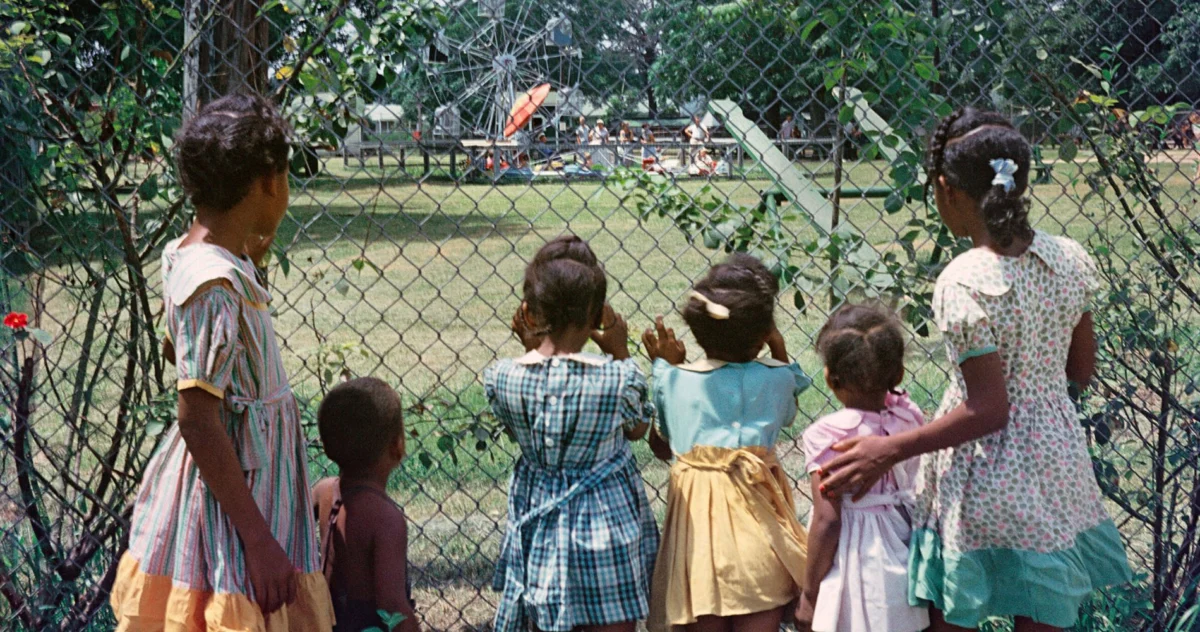
Central to the exhibition is Parks’ groundbreaking Segregation Story series, commissioned by Life magazine in 1956 and published under the title "The Restraints: Open and Hidden." This series offers an intimate, unflinching look at the daily lives of Black families living under Jim Crow segregation in Alabama. Parks immersed himself within these communities, documenting their resilience and dignity amidst pervasive discrimination. Key photographs from this series, such as Outside Looking In, Department Store, and Mr. and Mrs. Albert Thornton, vividly illustrate the absurdity and cruelty of segregation through everyday scenes. The Gordon Parks Foundation highlights the series’ impact, stating, "His Segregation Story series humanised the effects of Jim Crow segregation by following the daily lives of Black families in Alabama, creating narratives that consistently expressed the dignity and complex humanity of his subjects, starkly contrasting with mainstream representations." This project was a groundbreaking act of visual journalism, challenging the prevailing white-centric media narratives of the time and forcing a predominantly white readership to confront the realities of racial injustice.
Historical Context and Enduring Relevance
Bryan Stevenson’s accompanying essay for the exhibition provides crucial historical context, framing Parks’ work within the broader narrative of racial injustice and the ongoing struggle for civil rights in America. He delves into the harrowing history of slavery, noting that over 246 years, ten million Black people were enslaved in what would become the United States. Following the Civil War in 1865, four million formerly enslaved people were emancipated, making the remarkable decision to commit to creating a more just America. Stevenson emphasizes their choice for citizenship and nation-building over retribution, a testament to their "extraordinary fortitude." However, this commitment was met with betrayal as protections for African Americans were withdrawn just over a decade after the war, ushering in an era of white supremacist power and the abandonment of constitutional commitments to equal protection and voting rights.
Parks was born in this crucible of racial oppression in the early 20th century, witnessing and enduring the systemic marginalization, exclusion, terror, and humiliation enforced by Jim Crow laws, mob violence, lynching, and voter disenfranchisement. Yet, he also profoundly understood and captured "the strength, resilience, artistry, resolve, and beauty that animated Black life." His camera became an instrument to document America’s true story, exposing the "pain and humiliation of segregation, the despair of poverty, the violence of abusive law enforcement officers, and the appalling hypocrisy of an America globally on the rise—preaching democracy and equality abroad while mired in racial bigotry at home."
Parks was deeply energized by the spirit of resistance and creativity within the Black community. He brilliantly brought to life counter-narratives of the Civil Rights Movement, the emergence of "Black power," and the triumphs of Black athletes, musicians, and even gang leaders. His art was instrumental in challenging the legitimacy of racial caste, helping a new generation of leaders to dismantle the architecture of Jim Crow laws. Through his work, Parks helped "imagine a more hopeful future less burdened by racial bigotry and violence," crafting an artistic narrative that, in the words of Langston Hughes, sought to make "America be America."
A Call to Action in the Present Moment
The timeliness of "Gordon Parks: We Shall Not Be Moved" cannot be overstated. Bryan Stevenson explicitly connects Parks’ historical documentation to contemporary challenges, asserting that "in a moment when there is an intense and active effort of erasure, retreat from civil rights and silencing of Black voices and history in the United States," Parks’ images "provide insight and relevance to our current discourse. His work absolutely suggests resistance to bigotry and oppression."
Stevenson’s essay further elaborates on the urgency of Parks’ message in 2024. He observes that "many in the United States are retreating from a full commitment to equality and justice for all." There are powerful attempts to "rewrite history, minimizing the harms of slavery, lynching, segregation and racial bigotry." People of color are being "demonized and castigated," and "many Black Americans are recognizing that their struggle is still unfinished." The essay highlights concerns about a "reinforced presumption of dangerousness, guilt or incompetence" assigned based on race, and the "sabotage of Black political power through a multitude of schemes that the Supreme Court seems ready to legitimate."
In an era where "the gains of the civil rights movement are being taken away, as censorship and the whitewashing of history are on the rise and even artistic freedom is being attacked," Stevenson acknowledges that "it’s easy to understand why many people might want to escape, retreat and once again become silent. To many, silence seems safer." However, he unequivocally states that "Gordon Parks is an artist who absolutely rejected silence or retreat." Parks understood "the persistence and strength of the human spirit" too well to put down his camera, even in the face of "cruel and abusive power." His art, therefore, possesses "renewed significance" today, serving as "a retort to those who want to force Americans back to some earlier era of perceived greatness when racial and gender hierarchy reigned."
The exhibition, Stevenson concludes, is more than just an art show; it is "history, education and protest." It serves as a stark reminder that "we cannot turn back, we cannot remain silent and we cannot retreat from advancing true justice." The artistry of Gordon Parks compels viewers to confront difficult truths, to resist contemporary efforts to distort American history, and to embrace a future where equality and justice prevail. Through his powerful lens, Parks continues to speak, making clear "what many of us are prepared to say, and we will say it. We shall not be moved." This exhibition not only celebrates the monumental legacy of Gordon Parks but also serves as a rallying cry for continued vigilance and advocacy in the ongoing pursuit of a more just and equitable society.