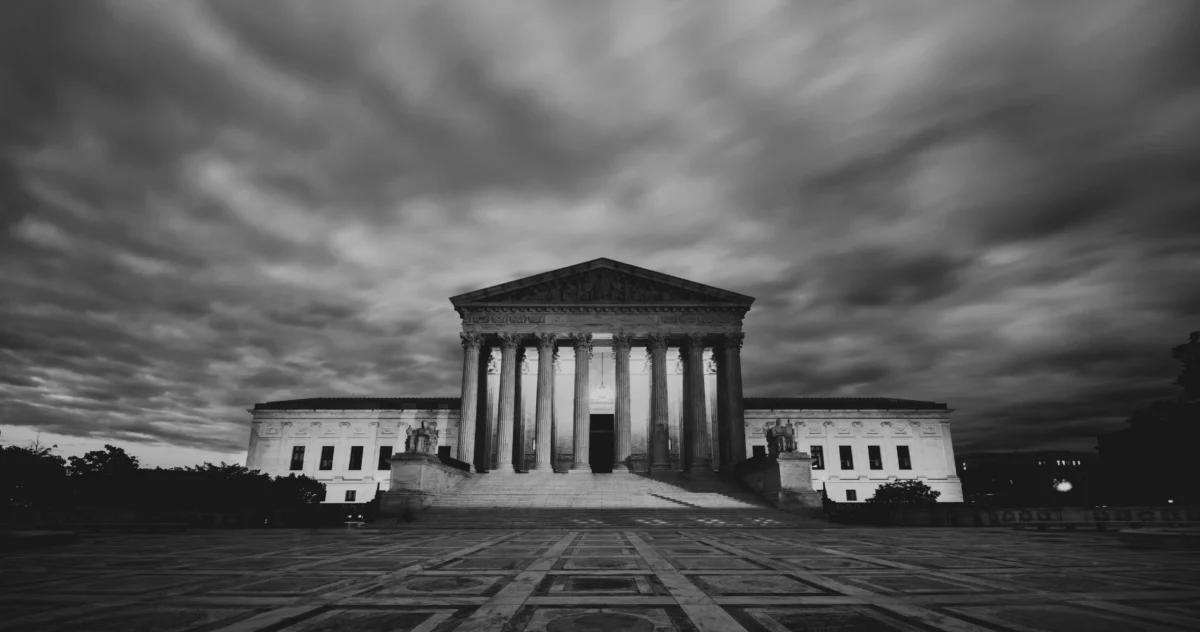
The Supreme Court yesterday delivered a landmark 6-3 decision in Louisiana v. Callais, effectively gutting Section 2 of the Voting Rights Act (VRA). This ruling nullifies a crucial tool for combating racial vote dilution and, as Justice Elena Kagan forcefully argued in her dissent, "threatens a half-century’s worth of gains in voting equality." The decision mandates that plaintiffs challenging vote dilution must now prove discriminatory intent, a monumental shift from the "discriminatory effects" standard that has been central to Section 2’s efficacy for over four decades.
Understanding Section 2: A Pillar of Voting Rights
Section 2 of the Voting Rights Act was designed to address racial vote dilution, a sophisticated tactic employed to diminish the political power of minority voters, particularly Black voters in the South, after the initial passage of the VRA in 1965. When states could no longer overtly deny ballots to Black Americans through poll taxes, literacy tests, and violent intimidation, they pivoted to more insidious methods. These included drawing electoral maps that fragmented minority communities across multiple districts (gerrymandering) or implementing at-large election systems where a majority white electorate could consistently outvote minority candidates, effectively giving minority citizens’ votes minimal or no weight.
Proving intentional discrimination in these practices was historically extremely difficult. States and local jurisdictions often masked their true intentions behind ostensibly race-neutral language and justifications. Recognizing this barrier, Congress dramatically amended Section 2 in 1982, transforming it into an effective mechanism. The amendment shifted the standard of liability from requiring proof of discriminatory intent to focusing on the discriminatory effects of a districting scheme or electoral practice. This "results" test allowed communities to challenge electoral systems that, even without explicit racist intent, resulted in a denial or abridgement of the right to vote on account of race or color. This amendment was pivotal, turning Section 2 into a bulwark against systemic disenfranchisement and a catalyst for increased minority representation.
The VRA’s Historical Journey: From Bloody Sunday to Landmark Legislation
The Voting Rights Act of 1965 did not emerge from a vacuum; it was forged in the crucible of a brutal struggle for civil rights. Despite the Fifteenth Amendment, ratified in 1870, explicitly barring racial discrimination in voting, Southern states perfected a labyrinthine system of Jim Crow laws designed to disenfranchise Black voters. These included poll taxes, arbitrary literacy tests, complex registration processes, and outright violent intimidation by state-sanctioned authorities and white supremacist groups.
A stark illustration of this systemic oppression unfolded in Selma, Alabama. In 1965, Black residents constituted half of Selma’s population, yet only a minuscule 2% of the county’s 15,000 eligible Black voters were registered. This egregious disparity fueled the Civil Rights Movement’s push for federal intervention. On March 7, 1965, a pivotal moment in American history occurred when hundreds of nonviolent voting rights protestors, led by Hosea Williams and John Lewis, attempted to march from Selma to the state capital in Montgomery to demand their fundamental right to vote. As they crossed the Edmund Pettus Bridge, they were brutally attacked by Alabama state troopers and local police using billy clubs, whips, and tear gas. The images of this savagery, broadcast nationwide, shocked the conscience of the nation and earned the day the moniker "Bloody Sunday."
The profound outrage following Bloody Sunday galvanized national support for federal action. Two weeks later, thousands of voting rights activists from across the country converged on Selma, completing the march to Montgomery. On March 25, an estimated 25,000 people gathered at the Capitol, where the Reverend Dr. Martin Luther King Jr. delivered a powerful address demanding voting rights. President Lyndon B. Johnson, deeply moved by the events and the moral imperative, signed the Voting Rights Act into law less than five months later, on August 6, 1965.
This landmark legislation outlawed discriminatory qualification laws and, crucially, established a "preclearance" requirement (Section 5) that mandated certain jurisdictions with histories of egregious discrimination, primarily in the South, to obtain federal approval before implementing any new voting laws. The VRA was overwhelmingly reauthorized by Congress in 2006, with strong bipartisan support, under a Republican-controlled Congress and White House, underscoring its perceived necessity and effectiveness.
The immediate impact of the VRA was transformative. In the decade following its passage, more than a million Black people registered to vote in the Deep South, including approximately 200,000 in Alabama by 1975. The number of Black individuals elected to office in the Deep South surged from virtually none to about 1,000, signaling a profound shift in political representation and civic participation.
The Rise of Section 2 and its Transformative Power
While Section 5 (preclearance) addressed prospective discriminatory changes, Section 2 became the primary tool for challenging existing practices that diluted minority votes. After direct disenfranchisement became illegal, states and local jurisdictions continued to find ways to marginalize minority voters, leading to the 1982 amendments that embraced the "effects" test.
The results of this amendment were dramatic and far-reaching. Before the 1982 amendment, only 18 Black individuals were elected to the 96th Congress (1979-1981). By contrast, the 119th Congress (2025-2027) is projected to include 65 Black representatives and five Black senators, a testament to the VRA’s enduring impact. Nationwide, the number of Black elected officials in the U.S. has seen an astonishing increase, surging from a mere 1,469 in 1970 to more than 10,000 today, according to data from the Joint Center for Political and Economic Studies.
At the local level, the impact was arguably even more profound. The Brennan Center for Justice reported that within a decade of the 1982 amendment, hundreds of cities, towns, and counties, particularly in the South, dismantled discriminatory at-large election systems. These were replaced with single-member districts or alternative electoral structures that, for the first time since Reconstruction, allowed candidates preferred by communities of color to win elections. This transformation was critical in local governance, where at-large systems, often dating back to the post-Reconstruction era, interacted with deeply entrenched racially polarized voting to effectively lock minority voters out of any realistic chance to elect representatives who championed their interests.
Section 2 also empowered voters to challenge discriminatory congressional and legislative districting plans. Following the 1990 census, states like Alabama, Florida, North Carolina, and Virginia created their first majority-minority congressional districts, directly attributable to successful Section 2 challenges. Until yesterday’s ruling, Section 2 vote-dilution claims continued to play an indispensable role in expanding electoral opportunities for voters of color across all levels of government, especially in the South.
The First Blow: Shelby County v. Holder (2013)
The VRA’s protective power had already been significantly curtailed a decade prior. On June 25, 2013, in a 5-4 decision in Shelby County v. Holder, the Supreme Court struck down Section 4(b) of the VRA, which contained the coverage formula used to determine which jurisdictions were subject to the Section 5 preclearance requirement. The Court’s majority argued that "things have changed dramatically" since 1965, citing the illegality of voting tests, diminished racial disparities in voter turnout and registration, and "record numbers" of minorities holding elected office.
Justice Ruth Bader Ginsburg, in her famous dissent, presciently warned of the consequences: "Throwing out preclearance when it has worked and is continuing to work to stop discriminatory changes is like throwing away your umbrella in a rainstorm because you are not getting wet." Her words proved chillingly accurate.
In the wake of Shelby County, jurisdictions previously covered by preclearance immediately began implementing new restrictive voting laws. These included stringent photo identification requirements, limitations on early voting, and the closure of polling places, disproportionately affecting minority communities and low-income voters who faced greater hurdles in obtaining requisite identification or traveling to distant polling sites. Another pervasive practice was "voter purging," where states "cleaned up" registration lists by deleting names from voter rolls, often in flawed and racially discriminatory ways. Within five years of Shelby County, the Brennan Center documented that Florida, New York, North Carolina, and Virginia had engaged in illegal purges, while Alabama, Arizona, Indiana, and Maine had adopted policies violating federal laws designed to protect against such practices.
This flood of new restrictions led to a measurable decline in minority voter participation relative to white voters. The "turnout gap" between white and nonwhite voters widened to 18 percentage points by the 2022 midterms, growing twice as quickly on average in counties that were formerly subject to preclearance requirements, demonstrating a clear erosion of voting access.
The Louisiana v. Callais Case: A Microcosm of a Macro Issue
The Louisiana v. Callais case brought to the forefront the very issues Section 2 was designed to address. In 2020, Louisiana lawmakers drew a new congressional map with only one district out of six where Black voters, who constitute a third of the state’s population, had a realistic chance of electing their preferred candidate. Black voters subsequently sued under Section 2, alleging racial vote dilution. A federal court agreed, striking down the map and ordering the state to redraw it to include two Black-majority congressional districts, which Louisiana eventually did in early 2024.
However, a group of white voters then challenged this redrawn map, arguing that the new Black-majority district constituted an unconstitutional racial gerrymander. The Supreme Court’s conservative majority seized this opportunity, as Justice Kagan’s dissent explained, to "convert Section 2 into its opposite — a statute turning on discriminatory intent, not effects."
The Court’s decision now imposes new, formidable requirements on vote-dilution plaintiffs. They must prove that a state adopted an election rule with racially discriminatory intent, and critically, they must do so without relying on historical context—such as the salient fact that Louisiana has never elected a Black Congressperson from a non-majority-Black district. Furthermore, the ruling introduces new mechanisms that effectively provide states with an automatic political gerrymandering defense against vote-dilution claims, making it even harder for plaintiffs to prevail.
Finding that the Black voters in Louisiana had failed to meet these newly imposed, heightened requirements, the Supreme Court held that Section 2 did not, in fact, compel the state to add a second majority-minority district. Consequently, the Court struck down Louisiana’s redrawn map, reverting to a system likely to produce only one Black-majority district.
Reactions and Implications: A "Dead Letter" and Grave Consequences
Justice Kagan’s dissent, joined by Justices Sonia Sotomayor and Ketanji Brown Jackson, delivered a scathing indictment of the majority’s decision. She declared that requiring voters to prove intentional racial discrimination "renders Section 2 all but a dead letter." Kagan warned of "far-reaching and grave" consequences, including the probable elimination of districts that, "in the last half-century have given minority citizens, and particularly African Americans, a meaningful political voice."
Her dissent powerfully invoked the historical significance of the VRA: "The Voting Rights Act is — or, now more accurately, was — ‘one of the most consequential, efficacious, and amply justified exercises of federal legislative power in our Nation’s history.’" Quoting Justice Ginsburg’s dissent in Shelby County, Kagan reminded the Court that the VRA "was born of the literal blood of Union soldiers and civil rights marchers. It ushered in awe-inspiring change, bringing this Nation closer to fulfilling the ideals of democracy and racial equality." She concluded by stating that only Congress, the people’s representatives, have the right to declare the VRA no longer needed, "not the Members of this Court. I dissent, then, from this latest chapter in the majority’s now-completed demolition of the Voting Rights Act."
Civil rights organizations and legal scholars have widely condemned the ruling, expressing profound alarm. Leaders of voting rights groups have called the decision a devastating setback, predicting that it will usher in an era where minority communities will find it nearly impossible to challenge discriminatory electoral maps. The practical implications are stark:
- Increased Difficulty for Plaintiffs: Proving discriminatory intent is notoriously challenging, requiring access to internal legislative documents, communications, and direct admissions of racial motivation, which are rarely explicit. States can easily mask discriminatory intent behind ostensibly neutral justifications.
- Redistricting Battles: The decision is expected to embolden state legislatures to draw maps that dilute minority voting strength without fear of successful Section 2 challenges. Existing majority-minority districts could also face legal challenges based on new standards, potentially leading to their dismantling.
- Local Elections Vulnerability: Given Section 2’s historical success in transforming local governance by dismantling at-large systems, this ruling could lead to a resurgence of such practices, locking minority voters out of local representation once again.
- Return to Old Tactics: Jurisdictions may feel empowered to revert to electoral schemes that effectively dilute minority votes, confident that the burden of proving intent is too high for plaintiffs to overcome.
- Electoral Landscape Shift: The long-term consequence could be a significant reduction in minority representation at all levels of government, undermining the progress made over the past half-century in fostering a more inclusive democracy.
- Congressional Response: While there will undoubtedly be calls for Congress to restore the VRA’s protections through new legislation, the current political climate and legislative gridlock make such an endeavor exceedingly difficult.
The Supreme Court’s decision in Louisiana v. Callais marks a critical moment in the ongoing struggle for voting rights in the United States. By reintroducing a formidable barrier to justice, it casts a long shadow over the future of minority political participation and threatens to unravel decades of hard-won progress toward a more equitable and representative democracy.