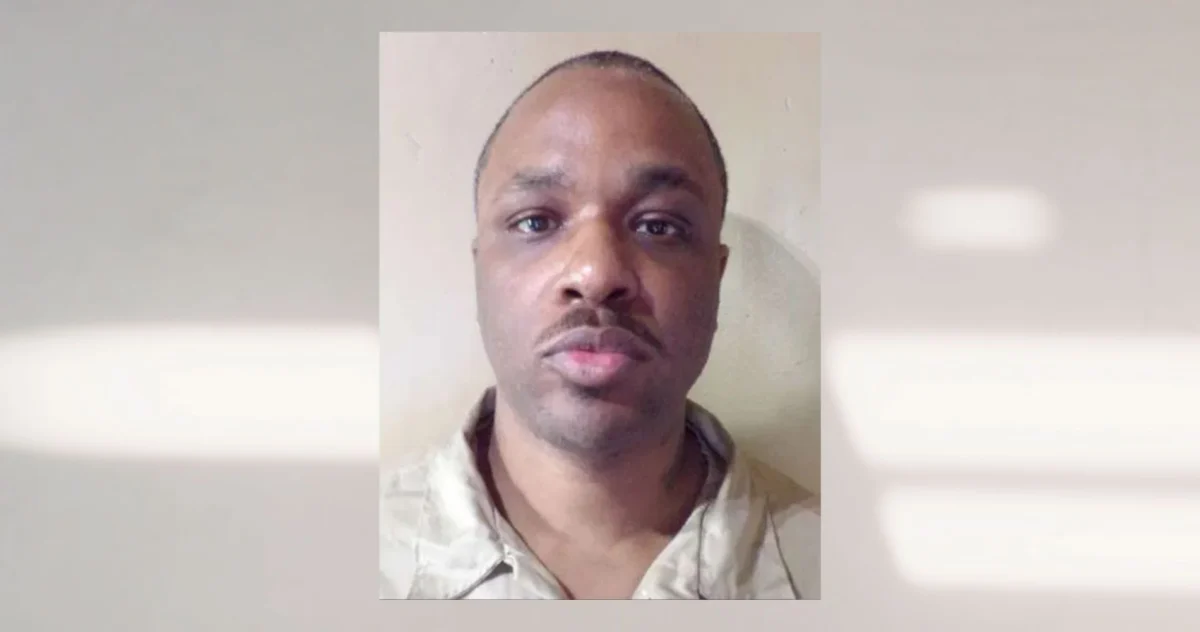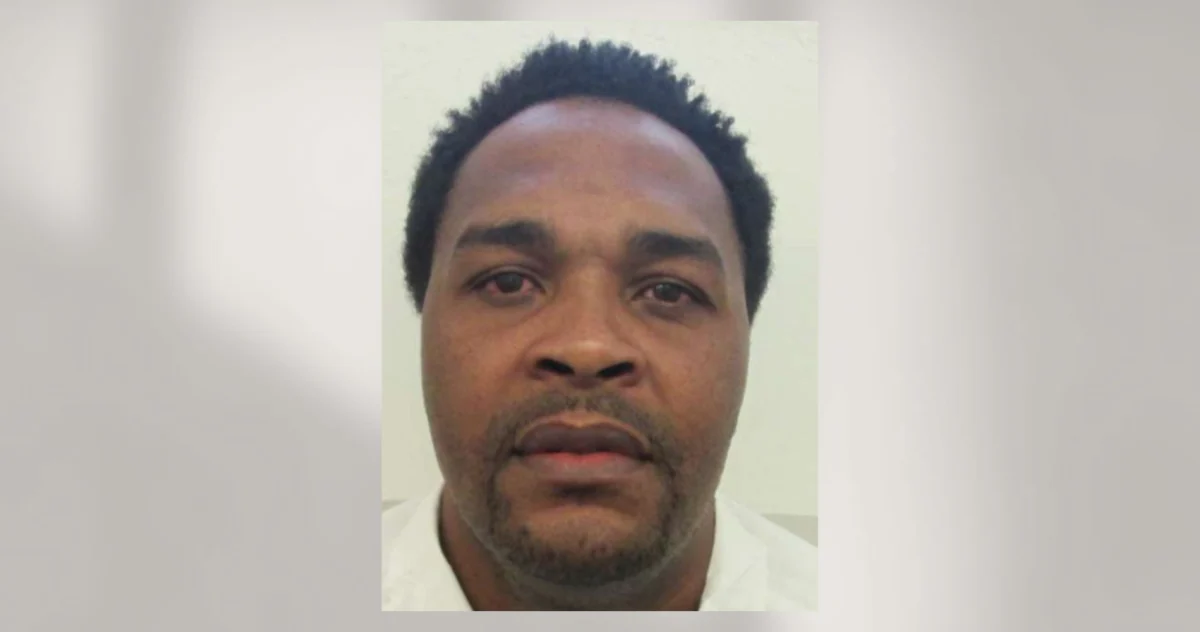
Alabama Governor Kay Ivey has set June 11, 2026, as the date for the execution of Jeffery Lee by nitrogen suffocation, a decision that has reignited fierce debate over the state’s controversial practice of judicial override in capital cases and the ethical implications of its chosen execution method. Lee’s case stands as a stark reminder of a unique legal anomaly that once allowed Alabama judges to impose death sentences even when juries recommended life imprisonment, a practice now abolished but not retroactively applied to those like Lee already on death row.
A Sentence Against Jury’s Will: The Judge Override Legacy
The core of the controversy surrounding Jeffery Lee’s impending execution lies in the circumstances of his sentencing in 2000. Following a capital murder trial, the jury, tasked with determining his fate, voted 7-5 in favor of life imprisonment without parole. However, the presiding trial judge exercised a power then unique to Alabama: judicial override. Disregarding the jury’s clear recommendation, the judge overrode their verdict and sentenced Mr. Lee to death. This practice, now outlawed, allowed a single judicial official to negate the collective judgment of 12 jurors, leading to an outcome fundamentally at odds with the jury’s deliberated decision.
Alabama was an extreme outlier in its routine application of judge override. While a handful of other states, namely Florida and Delaware, also permitted judges to override jury recommendations in capital cases, Alabama utilized this power with unparalleled frequency. Data compiled by the Equal Justice Initiative (EJI) reveals that since 1976, Alabama judges overrode jury verdicts of life to impose the death penalty in more than 100 cases. This pervasive use meant that nearly 20% of the individuals currently on Alabama’s death row were condemned by elected judges despite their juries having chosen life imprisonment without parole. This statistical anomaly underscores the extent to which judicial discretion could alter the course of justice, often leading to harsher penalties than those deemed appropriate by a cross-section of the community.
The practice raised significant constitutional and ethical concerns. Critics argued that judge override undermined the Sixth Amendment right to a trial by an impartial jury, transforming the jury’s role from ultimate arbiter of fact and sentence into a mere advisory body. Furthermore, in a system where judges are often elected, there were worries that political pressures could influence sentencing decisions, potentially incentivizing judges to appear "tough on crime" by imposing death sentences even when a jury had shown mercy.
The Abolition of Judge Override: Acknowledging a Flawed System
The tide began to turn against judge override in the mid-2010s. Florida and Delaware, the only other states to still permit the practice, officially ended it in 2016. Alabama, facing increasing legal scrutiny and national pressure, followed suit on April 11, 2017, becoming the last state in the nation to abolish judge override. The legislative action was a bipartisan acknowledgment of the inherent flaws and injustices embedded within the practice.
However, the abolition came with a critical caveat: it was not applied retroactively. This means that individuals like Jeffery Lee, who were sentenced to death by judge override before April 2017, remain subject to those original sentences, even though the legal mechanism used to impose them is now considered unconstitutional and unjust by the very state that employed it. This non-retroactive application has created a cohort of death row inmates whose fates are determined by a legal standard no longer considered valid, highlighting a profound inconsistency in the state’s pursuit of justice.
Former Chief Justice of the Alabama Supreme Court, Drayton Nabers Jr., a prominent voice in the call for clemency for Mr. Lee, has publicly condemned the situation. In a recent op-ed, Nabers Jr. articulated the foundational principles at stake, stating, "The Alabama Legislature and Gov. Kay Ivey abolished judge override because they recognized it was wrong." He further appealed to Governor Ivey to commute Mr. Lee’s death sentence, grounding his plea in "fidelity to the conservative principles of limited government, respect for the jury system, and the rule of law." Nabers Jr. underscored the inherent contradiction, asserting, "A jury of Alabamians voted for life. The state of Alabama later agreed that juries, not judges, should make that call. Governor Ivey can honor both of those judgments—the jury’s and the Legislature’s—by commuting Jeffery Lee’s sentence to life imprisonment without the possibility of parole." His statements reflect a deep-seated concern within the legal community about upholding the integrity of the judicial process and respecting the jury’s role.
The Case of Jeffery Lee: A Chronicle of Systemic Issues
Jeffery Lee’s journey to death row began with the tragic events of 1998. He was charged with the shooting deaths of Jimmy Ellis and Elaine Thompson and the attempted murder of Helen King during the robbery of a pawn shop near Orrville in Dallas County, Alabama. All three victims were white, while Mr. Lee is Black. The racial dynamic, combined with the geographical location, introduces another layer of historical complexity to the case.
Dallas County, situated in Alabama’s historically significant Black Belt, carries a profound legacy of racial injustice, inextricably linked to the Civil Rights Movement and its preceding era of systemic discrimination. This historical context suggests an environment where racial biases could subtly or overtly influence legal proceedings. Indeed, the record of Mr. Lee’s trial reveals troubling signs of racial disparity in jury selection. The prosecutor, during jury selection, utilized all 21 of his peremptory strikes against Black potential jurors. Such a systematic exclusion of prospective jurors based on race, a practice known to undermine the fairness of a trial and often challenged under Batson v. Kentucky jurisprudence, casts a shadow over the impartiality of the jury ultimately seated for Mr. Lee’s case.
Further compounding the issues of fairness and due process was the quality of legal representation afforded to Mr. Lee. Living in chronic poverty, Mr. Lee could not afford private counsel. He was appointed a lawyer who, critically, had never before tried a capital case. The lack of experience in such a complex and high-stakes legal arena evidently impacted the defense’s preparation, which was described as minimal. In capital cases, effective counsel is paramount, requiring extensive investigation, expert witness engagement, and a robust mitigation strategy to present a compelling case for life imprisonment. In Mr. Lee’s trial, which lasted less than two days, defense counsel reportedly presented no additional evidence during the sentencing hearing to advocate for a life sentence, leaving the jury with limited information to counter the prosecution’s arguments for death. This combination of an inexperienced defense and a racially problematic jury selection process contributed to what many legal experts would classify as an unreliable capital trial, further questioning the legitimacy of the ultimate death sentence imposed by the judge.
Transformation on Death Row and Calls for Clemency
Despite the grim reality of being condemned to death for over 25 years, Jeffery Lee, now 49, has undergone a significant personal transformation within prison walls. He has become a leader in the Kairos ministry, an assistant chaplain, and a mentor to other men on death row. His record reflects a profound change, with no violent infractions reported during his more than a quarter-century of incarceration.
Advocacy groups, including the Catholic Mobilizing Network, have highlighted Lee’s rehabilitation as a compelling reason for clemency. The network describes him as "a man of strong Christian faith" who has dedicated himself to spiritual growth and guiding others. They, along with other human rights organizations, have called upon Governor Kay Ivey to grant clemency, arguing that his transformation demonstrates that he is no longer the man who committed the crimes decades ago and that a sentence of life imprisonment without parole would adequately serve justice while reflecting his profound personal change. This aspect of the case brings into focus the broader debate about rehabilitation, redemption, and the purpose of punishment within the criminal justice system.
The Controversial Method of Execution: Nitrogen Hypoxia
Adding another layer of controversy to Mr. Lee’s case is the method of execution chosen by the state: nitrogen suffocation, or nitrogen hypoxia. Alabama, like several other states, has turned to this experimental method due to increasing difficulty in obtaining the drugs required for lethal injection, largely a result of pharmaceutical companies refusing to supply them for capital punishment. Alabama became the first state to carry out an execution by nitrogen hypoxia in January 2024, when Kenneth Eugene Smith was executed using the method. That execution, which reportedly involved prolonged struggles and convulsions, drew international condemnation and raised serious concerns about its humaneness.
Mr. Lee himself has filed a federal lawsuit challenging nitrogen suffocation as cruel and unusual punishment, a violation of the Eighth Amendment of the U.S. Constitution. His legal challenge asserts that the method "causes inmates to experience prolonged air hunger and feelings of suffocation, which evoke severe anxiety, fear, and physiological distress." The suit contends that the process cruelly superadds pain because it triggers a person’s primal survival instincts to breathe oxygen while simultaneously preventing them from doing so, thereby inflicting conscious, excruciating suffering.
Concerns about nitrogen hypoxia are not limited to legal filings. Justice Sonia Sotomayor, in a related case, recognized the potential for "unnecessary psychological terror" and "conscious, excruciating suffocation," emphasizing the "severe emotional suffering" of "consciously experiencing the ‘primal urge to breathe’." Human rights organizations and medical experts have also voiced strong opposition, citing the lack of scientific consensus on its humaneness and the potential for agonizing suffering.
On May 28, a significant legal development occurred when U.S. District Court Judge Emily Marks issued a ruling on Mr. Lee’s challenge. After a bench trial, Judge Marks concluded that "[w]hile Lee establishes that death by nitrogen hypoxia involves some suffering, he fails to show that the protocol is cruel and unusual in violation of the Eighth Amendment." The court acknowledged that individuals executed by nitrogen suffocation "likely experience severe air hunger," which "results in profound physiological discomfort and distress, as well as anxiety, fear, and dread" and "can be worse than pain." However, the judge ultimately determined that this suffering was not unconstitutional because consciousness is lost "in not significantly more than one to three minutes" after the nitrogen flow begins.
Crucially, Judge Marks’ determination came despite her rejection of unrebutted expert testimony presented by Mr. Lee’s legal team. This testimony, based on observations of previous nitrogen hypoxia executions in Alabama, detailed purposeful movements—such as rolling, attempting to sit up to breathe, lifting legs and head, clenching fists, and pulling against restraints—that indicated subjects remained conscious for between three and seven minutes. The court’s decision to discount this expert evidence, which directly contradicts the estimated time to unconsciousness, has been met with significant criticism and raises further questions about the reliability and humaneness of the method as applied.
Broader Implications and The Path Forward
Jeffery Lee’s case encapsulates a troubling confluence of systemic issues within capital punishment in Alabama: the legacy of judicial override, the non-retroactive application of legal reforms, questions of racial bias in jury selection, concerns about ineffective assistance of counsel, and the controversial adoption of an experimental execution method. His situation is a stark illustration of how a legal system, even one designed to be just, can produce outcomes deemed arbitrary and potentially unjust in retrospect. If his trial were held today, after the abolition of judge override in 2017, he would undoubtedly be serving a sentence of life imprisonment without parole, as his jury initially decided. The fact that he faces execution solely because of the timing of his trial underscores the arbitrary nature of his sentence.
The scheduled execution has prompted calls from various quarters for Governor Ivey to exercise her power of clemency. The decision to commute Lee’s sentence to life without parole would not only honor the jury’s original verdict and the state legislature’s subsequent repudiation of judge override but would also acknowledge the significant personal transformation Lee has undergone. It would also allow the state to avoid the international scrutiny and ethical dilemmas associated with carrying out an execution via a method that remains highly controversial and legally challenged.
As Mr. Lee’s appeal regarding the constitutionality of nitrogen hypoxia remains pending, the certainty of the June 2026 execution date is not absolute. The legal battle over the method itself, coupled with the ethical debate surrounding his judge-imposed death sentence, ensures that Jeffery Lee’s case will continue to be a focal point in the ongoing national conversation about capital punishment, particularly in a state grappling with its own complex history of justice and reform. The implications extend beyond Lee himself, influencing future legal challenges to execution methods, debates about judicial discretion, and the very definition of humane punishment in the United States.