Vice President JD Vance’s forthcoming memoir, detailing his personal religious journey and conversion to Catholicism, has brought renewed public attention to the demographics and trends surrounding religious affiliation in the United States, particularly concerning Catholicism. Drawing from the Pew Research Center’s comprehensive 2023-24 Religious Landscape Study, this analysis delves into the intricate patterns of conversion to and from Catholicism, offering a data-driven perspective on the faith’s evolving presence in the American religious tapestry.
The Shifting Tides of American Catholicism
While Catholicism remains a significant religious force in the United States, Pew Research Center data reveals a complex picture of religious switching. Converts to Catholicism constitute a notable, albeit statistically small, segment of the nation’s adult population, representing 1.5% of all U.S. adults. Based on an estimated 267 million adults in the U.S. as of 2024, this translates to approximately 4 million individuals who have embraced Catholicism after having been raised in a different faith tradition.
It is important to contextualize this figure. The number of Catholic converts in the U.S. is comparable to, or even exceeds, the adherents of several sizable Protestant denominations, including Presbyterians, Episcopalians, and Reformed Christians. This highlights that while Catholicism may be experiencing a net loss due to religious switching, the influx of new adherents is a significant factor in its demographic composition.
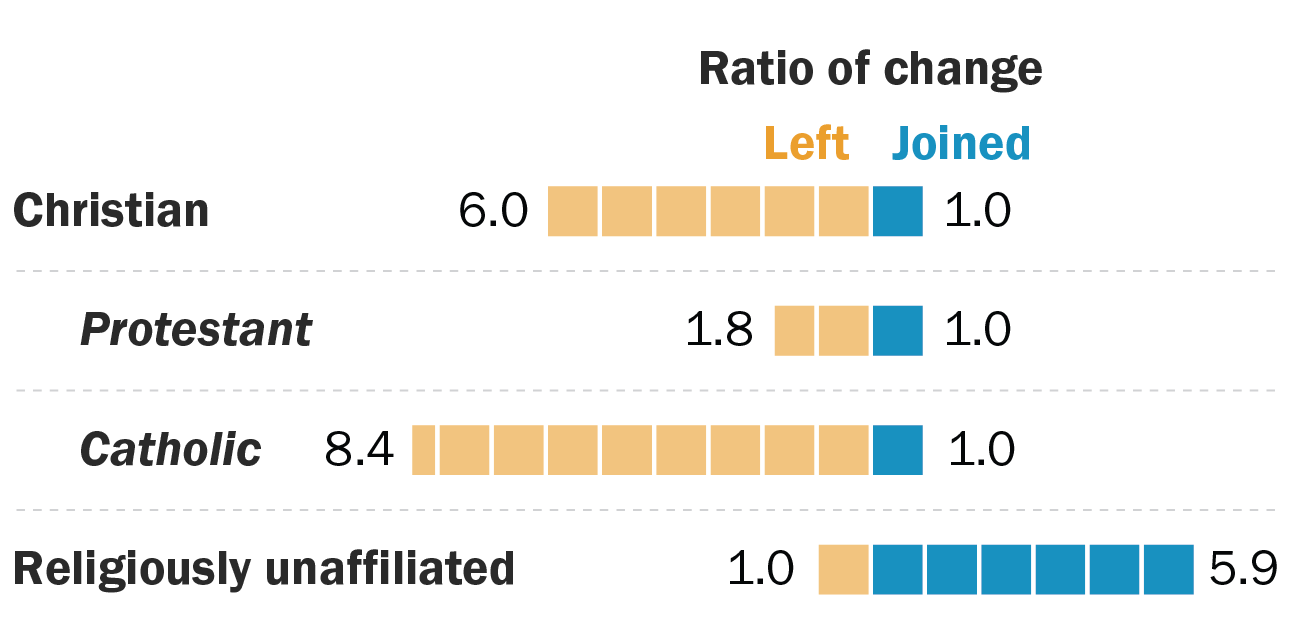
However, the broader trend indicates that Catholicism, like many other Christian traditions in the U.S., is losing more adherents than it gains through religious switching. For every adult who converts to Catholicism, more than eight individuals who were raised Catholic no longer identify with the faith. This pattern is not unique to the U.S. and has been observed in many other countries studied by the Pew Research Center, suggesting a broader societal shift away from traditional religious affiliations.
Understanding Religious Switching:
The Pew Research Center’s methodology for measuring religious switching involves comparing an individual’s current religious affiliation with their childhood religion. This approach captures lifelong shifts in belief and practice, rather than short-term fluctuations. The data indicates that the majority of religious switching occurs during childhood or young adulthood, with most individuals making such changes before the age of 30. This suggests that the formative years of an individual’s life are critical in shaping their religious identity.
Who Are the Converts to Catholicism?
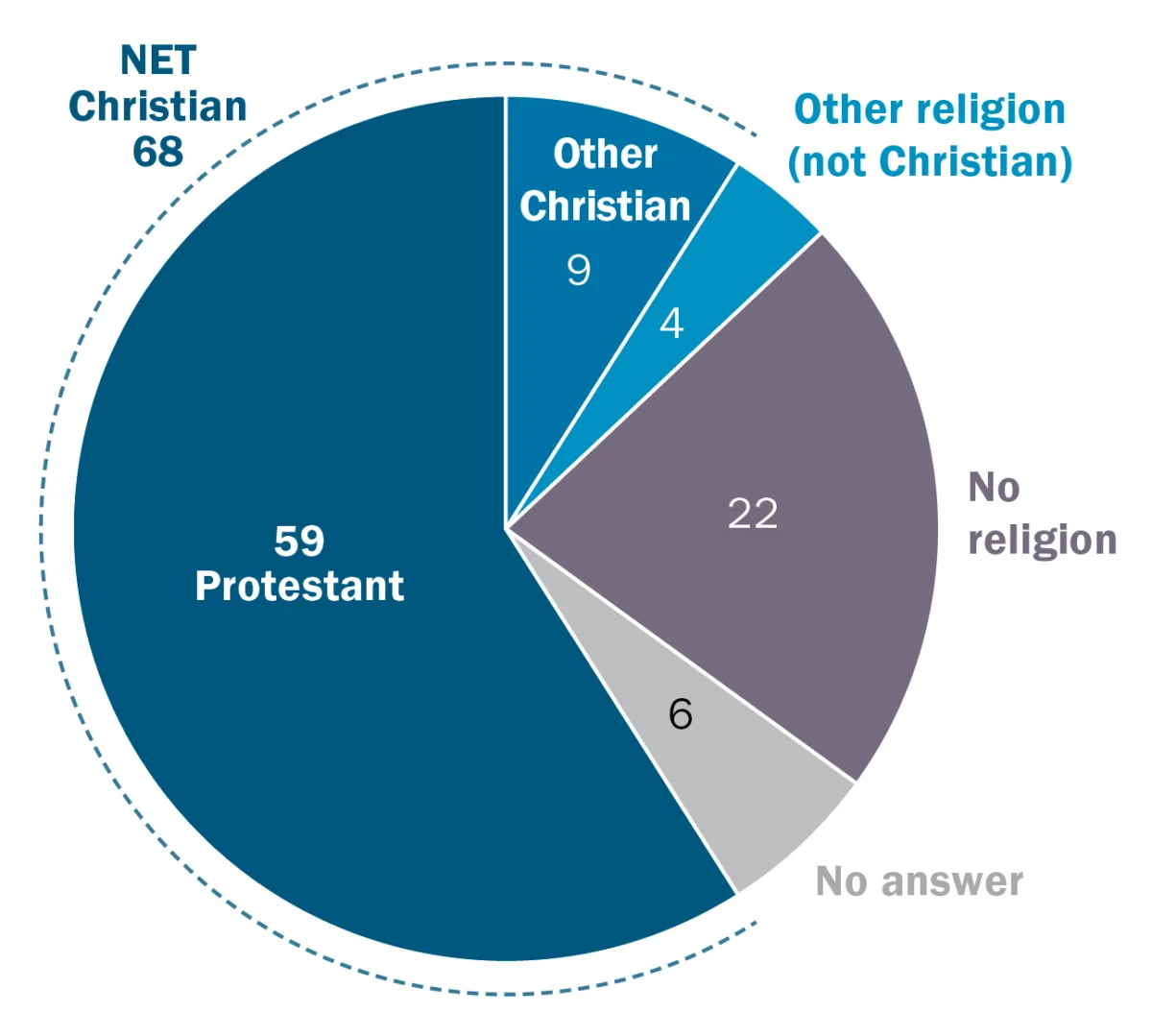
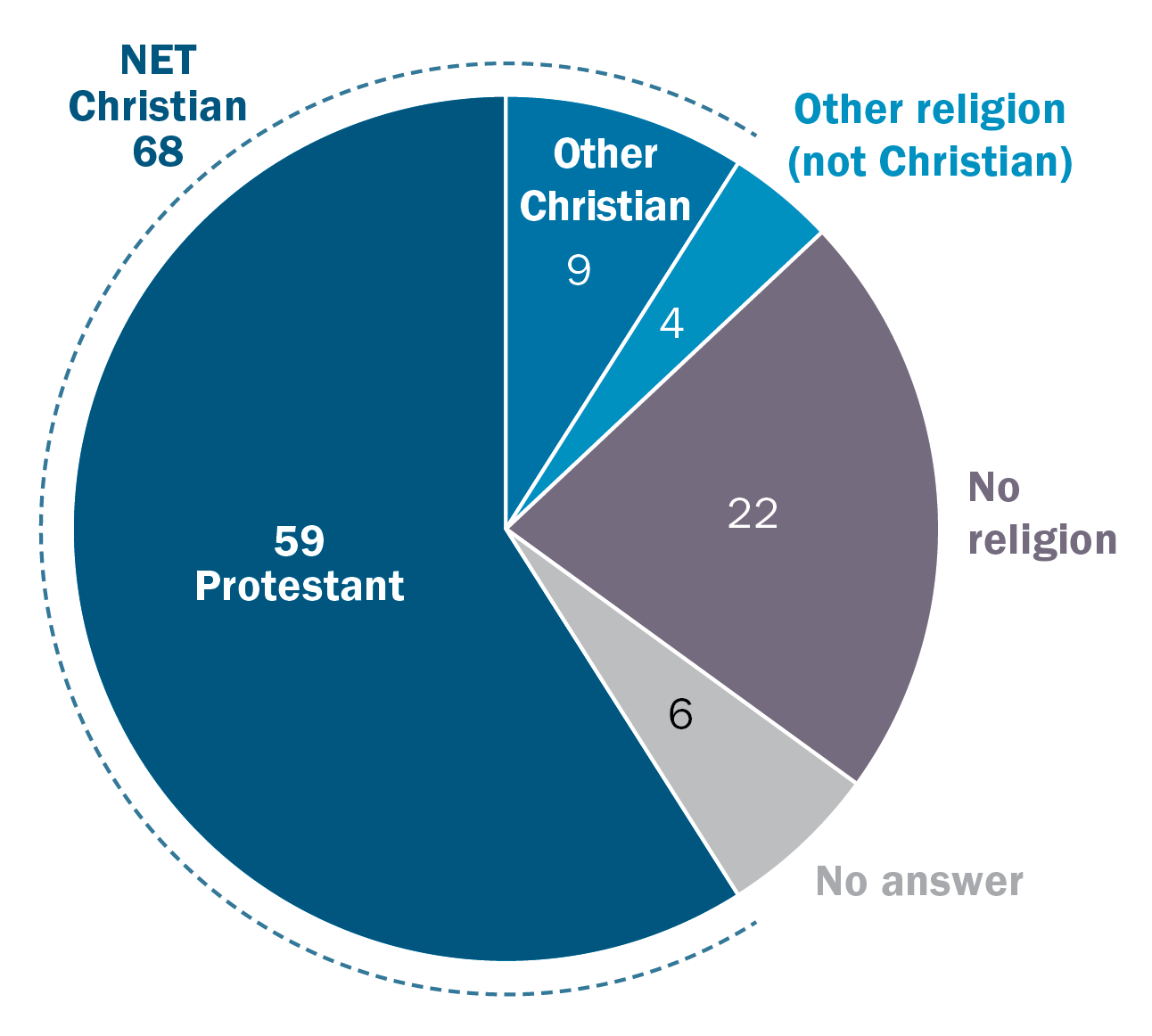
The profile of those converting to Catholicism offers insights into the pathways and motivations for joining the faith. A significant majority of Catholic converts, approximately two-thirds, come from other Christian traditions. Specifically, 59% of converts were raised Protestant, while an additional 9% came from other Christian backgrounds, such as Orthodox Christianity or the Church of Jesus Christ of Latter-day Saints. A substantial segment, about 22% of converts, had no religious affiliation during their childhood.
The primary driver for conversion to Catholicism, as reported by nearly half of converts in open-ended responses, is a Catholic spouse or the desire to marry within the Catholic Church. This underscores the significant role of interfaith relationships and family connections in shaping religious choices.
In terms of demographics, Catholic converts are more likely to be White and born in the United States compared to lifelong Catholics. While White individuals constitute 67% of Catholic converts, they represent 53% of all Catholics. Conversely, Hispanic individuals, a vital and growing demographic within American Catholicism, make up a smaller proportion of converts (20%) compared to lifelong Catholics (37%). Similarly, immigrants are less represented among Catholic converts than among those raised in the faith.
Furthermore, Catholic converts tend to exhibit a stronger leaning towards the Republican Party. Among Catholic registered voters, 60% of converts identified as Republican or leaned Republican, compared to 52% of lifelong Catholics. This suggests that the decision to convert to Catholicism may be associated with broader political or ideological orientations.
Engagement and Practice Among Converts
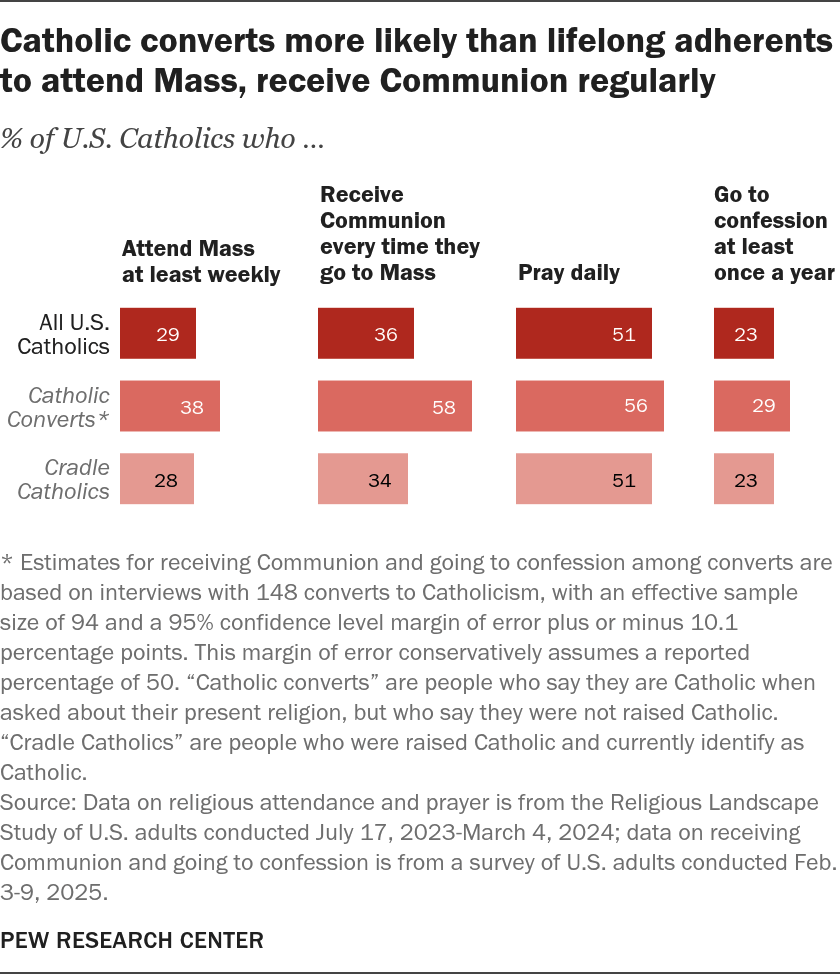
An intriguing aspect of the Pew data is the comparison of religious practices between Catholic converts and lifelong Catholics ("cradle Catholics"). Converts demonstrate a higher level of engagement with certain Catholic practices. For instance, 38% of converts attend Mass at least weekly, a figure significantly higher than the 28% of cradle Catholics who report the same frequency of attendance.
This higher engagement extends to sacramental practice, with 58% of converts reporting that they receive Communion every time they attend Mass, a stark contrast to the 34% of cradle Catholics who do so. However, this difference in religious practice does not extend to prayer frequency or participation in confession. There are no statistically significant differences between converts and cradle Catholics in how often they report praying daily or going to confession at least once a year. This suggests that while conversion may lead to a more consistent participation in Mass and Communion, the foundational practices of prayer and confession are maintained at similar levels across both groups.
Broader Implications and Context
The discussion around Vice President Vance’s conversion and memoir occurs within a broader context of reported trends in American Catholicism. Some dioceses have noted an increase in the number of converts, leading to media narratives about a potential "quiet revival" within the Church. Pew Research Center’s data provides a crucial national perspective, grounding these observations within larger demographic and religious switching patterns.
The fact that Catholicism in the U.S. experiences a net loss through religious switching is a critical piece of information. While conversion is a vital component of the faith’s continued presence, the outflow of adherents presents an ongoing challenge. Understanding the reasons behind these departures and the motivations for joining is paramount for the Church’s strategic planning and pastoral outreach.
The role of interfaith marriage as a significant pathway to conversion highlights the importance of relationships in religious transmission. For the Catholic Church, this presents both an opportunity for evangelization and a pastoral challenge in supporting mixed-faith marriages and their impact on children’s religious upbringing.
The political leanings of converts also offer an interesting dimension. The tendency for converts to lean more Republican than cradle Catholics might reflect a search for traditional values or a particular worldview that aligns with conservative political stances, or it could be that individuals with such leanings are more drawn to the teachings and structure of Catholicism.
In conclusion, the data from the Pew Research Center paints a nuanced picture of American Catholicism. While the faith continues to attract new adherents, including prominent figures like Vice President Vance, it also faces the persistent challenge of retaining its existing members. The trends in conversion, engagement, and demographic composition offer valuable insights into the dynamic nature of religion in the United States and the ongoing evolution of Catholic identity within the nation. As Vice President Vance’s memoir is released, it is likely to spark further discussion and reflection on these deeply personal and societal aspects of faith.