A year after the National Park Service (NPS) implemented a controversial initiative to solicit public feedback on "negative" historical content within national parks, a comprehensive analysis of over 35,700 submitted comments has unveiled a powerful and overwhelming rejection of these efforts by the American public. The findings indicate a staunch defense of historical accuracy and a vehement opposition to any attempts to sanitize or erase complex narratives from the nation’s most cherished historical and natural sites. This broad public outcry underscores a deep-seated commitment to preserving a complete and unvarnished understanding of American history, even its more challenging aspects.
The directive, stemming from an executive order issued in March 2025 by then-President Donald Trump, titled "Restoring Truth and Sanity to American History," mandated the National Park Service to review and remove materials deemed to "inappropriately disparage Americans past or living (including persons living in colonial times)." This order ignited a nationwide debate about the interpretation of history in public spaces, particularly within the context of the National Park System, which serves as a primary educational resource for millions of visitors annually.
The Genesis of the Directive: A Political Imperative to Reframe History
The executive order did not emerge in a vacuum but rather as a culmination of broader political and cultural discussions regarding how American history is taught and presented. In the years leading up to 2025, public discourse was frequently dominated by debates over historical monuments, the curriculum in schools, and the narrative surrounding figures from the nation’s past. Terms like "cancel culture" and "historical revisionism" became common, with opposing sides advocating for either a more critical examination of historical figures and events, or a more celebratory, "patriotic" interpretation that emphasized national achievements and downplayed perceived shortcomings.
President Trump’s order reflected a specific ideological stance within this ongoing cultural conflict. Proponents argued that certain historical interpretations had become overly critical, fostering a sense of national guilt rather than pride. They contended that focusing on perceived "negative" aspects, such as slavery, colonial injustices, or the displacement of Native American populations, amounted to an unfair disparagement of American heritage and its founders. The stated goal of the executive order was to counteract this perceived imbalance, aiming to restore what it termed "truth and sanity" by emphasizing the "beauty, grandeur, and abundance of landscapes and other natural features" and ensuring that historical presentations did not "disparage" past or living Americans.
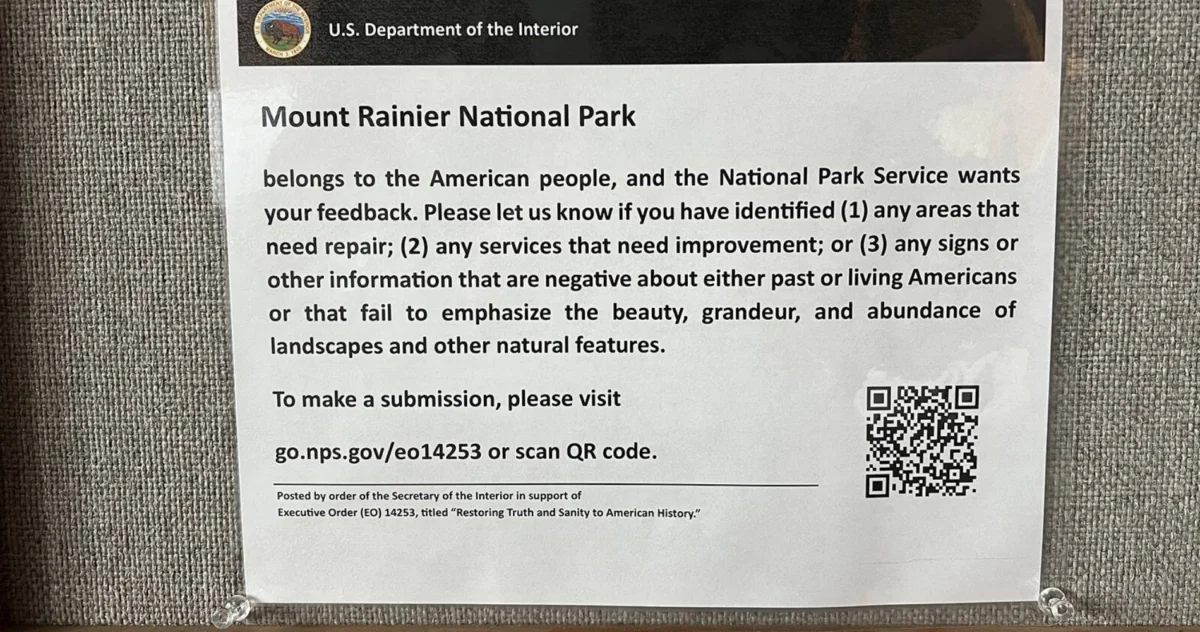
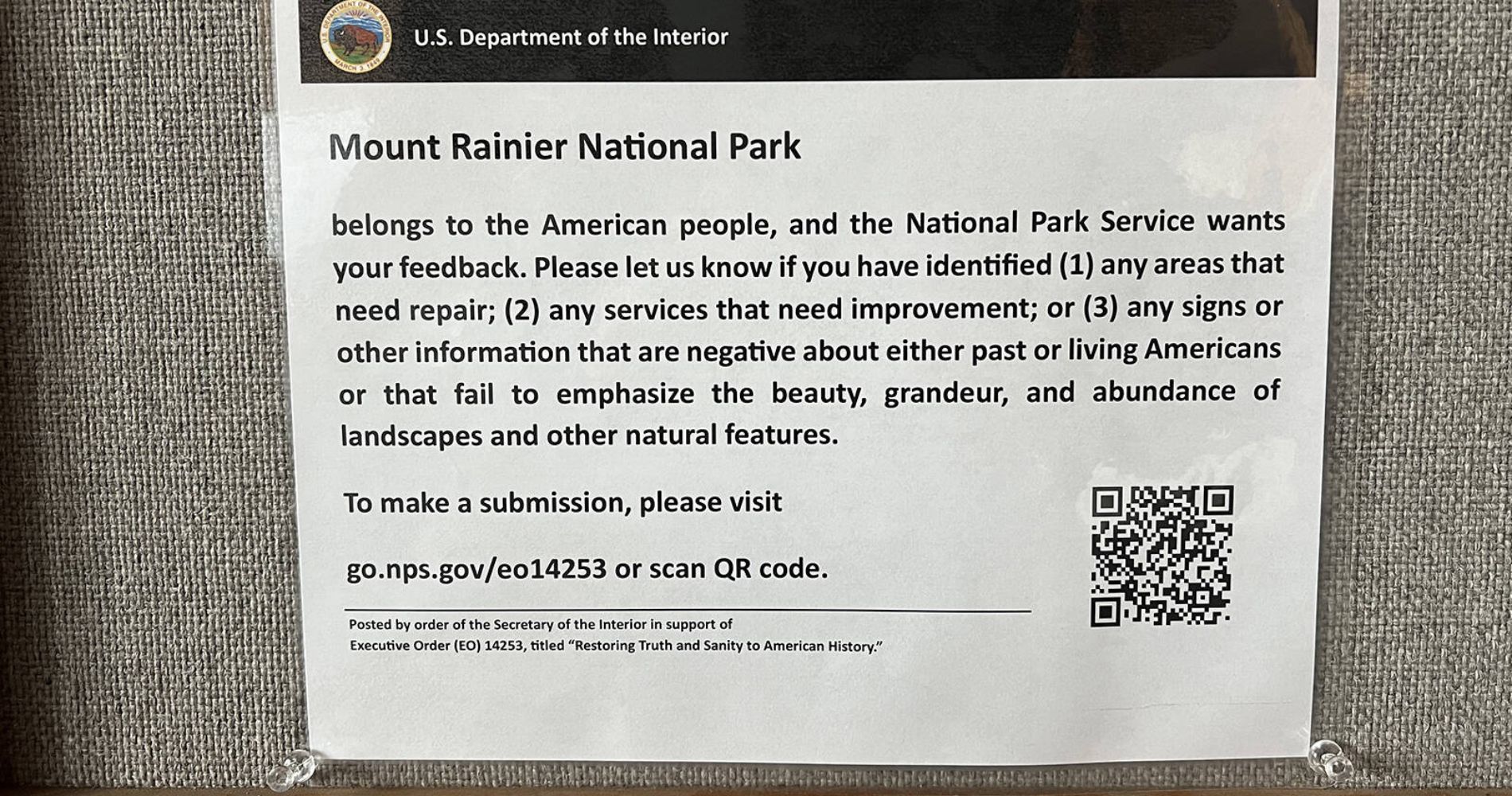
Following the executive order, Interior Secretary Doug Burgum issued Secretary’s Order (SO) 3431, providing the operational framework for its implementation. This order specifically instructed NPS staff to install QR code signs at national park properties across the country. These signs invited visitors to scan the code and submit feedback, specifically asking them to identify "any signs or other information that are negative about either past or living Americans or that fail to emphasize the beauty, grandeur, and abundance of landscapes and other natural features." This mechanism was designed to crowdsource the identification of content that, from the administration’s perspective, required review or removal.
A "Tepid Response" and an Unintended Outcome: Public Rejection
The Department of the Interior recently released the raw data from this initiative, comprising 35,700 comments submitted through the QR codes. While this number might seem substantial, the Associated Press rightly characterized it as a "tepid response" when viewed against the backdrop of the National Park System’s immense popularity. In the preceding year alone, national parks welcomed an astounding 323 million visits across more than 400 sites. This context suggests that the vast majority of visitors either did not engage with the QR code system or found no content objectionable under the administration’s criteria.
However, a deeper analysis of the submitted comments by the Center for Western Priorities (CWP), a nonpartisan conservation and advocacy organization, revealed an outcome starkly different from the administration’s apparent intent. The CWP’s detailed examination of the full dataset uncovered a powerful counter-narrative from the American public.
Out of the 35,700 comments, the CWP identified a mere 47 that genuinely flagged a sign for removal or expressed broad support for the overall removal effort as envisioned by the executive order. Even within this small subset, further scrutiny revealed nuances:
- 20 comments actually used the form to advocate for more inclusive history and better representation in signage, such as pointing out the use of racial slurs on historical markers or calling for a more complete account of marginalized groups. This directly contradicted the administration’s goal, demonstrating a public desire for more comprehensive, rather than less, historical detail.
- 13 comments were categorized as unclear, satirical, or merely pointed out factual inaccuracies unrelated to the "negative content" directive. These did not align with the administration’s intent for historical sanitization.
This leaves an astonishingly small number—only 14 visitors out of 35,700 submissions—who utilized the QR code system to flag "negative" content in the manner the administration intended. This minuscule fraction represents a negligible percentage of the total comments, underscoring the profound lack of public endorsement for the directive.
The CWP’s analysis further revealed that even when excluding coordinated "form letters" from advocacy groups opposing the executive order—which constituted a significant portion of the comments—an overwhelming 99.8% of the remaining submissions "defended historical accuracy, expressed support for the NPS, or pushed back against the order." This statistic is a powerful testament to the widespread public sentiment that national parks should serve as venues for presenting a full and accurate historical record, regardless of its complexity or discomfort.
Voices from the Parks: A Demand for Comprehensive History
The Associated Press’s independent analysis corroborated these findings, highlighting that the majority of comments actively criticized the effort itself. Visitors expressed a strong sense of civic duty and historical integrity. For example:
- One visitor to a North Carolina park passionately labeled the administration’s efforts "un-American," suggesting that a robust democracy requires confronting its past honestly.
- Another objected to "having Americans call in and snitch on each other," highlighting a discomfort with a system perceived as promoting surveillance and censorship rather than open dialogue.
- A particularly poignant comment from a visitor to Gateway Arch National Park in St. Louis articulated the educational value of difficult histories: "We had a great time learning about the development of this site including the difficult parts of our American story. We need those reminders to help us become even better in the future." This sentiment encapsulates the public’s desire for learning from past mistakes and understanding the full trajectory of American development.
- Numerous other comments lauded the existing interpretive materials, praising their thoroughness and educational value. Many stressed the importance of context, emphasizing that history should not be viewed through a simplistic lens of good or bad, but rather understood in its full human complexity. Visitors often pointed out that ignoring difficult periods would be a disservice to future generations and an incomplete portrayal of the nation’s journey.
These comments collectively painted a picture of a public that trusts the National Park Service to present factual, comprehensive history and views any attempt to alter that mission as a detrimental political interference. The public’s engagement, even in opposition, demonstrated a deep connection to their national parks not just as recreational areas but as vital educational institutions.
The National Park Service: A Balancing Act of Preservation and Political Directives
The National Park Service, established in 1916, operates under a dual mandate: to preserve unimpaired the natural and cultural resources and values of the national park system for the enjoyment, education, and inspiration of this and future generations. Its mission inherently involves interpreting history and natural science for a diverse public. This mission often places NPS staff in a delicate position, balancing scientific and historical accuracy with evolving political directives.
Despite the overwhelming public opposition evidenced in its own data, the NPS, as a federal agency, is obligated to implement executive orders. Reports indicate that the Park Service has proceeded with changing or removing dozens of signs across the national park system. This action highlights the inherent tension when political mandates clash with established professional standards of historical interpretation and strong public sentiment. The process of sign review and modification, while often involving internal NPS historians and experts, ultimately falls under the purview of the directive, potentially overriding previous interpretive consensus.
Watchdog Efforts: Documenting Changes and Preserving the Record
In response to these developments, watchdog groups have emerged to monitor and document the changes. "Save Our Signs," a prominent group founded by librarians, public historians, and data experts, has taken on the critical role of tracking the removal and modification of interpretive materials. Jenny McBurney, a University of Minnesota librarian and a key member of the group, reported that "Save Our Signs" has already documented the alteration or complete removal of at least 59 signs.
The affected content includes crucial historical narratives on sensitive yet foundational topics such as slavery, the women’s rights movement, and Native American history. For instance, signs detailing the harsh realities of slave labor at historical plantations now under NPS care, or exhibits explaining the forced removal and cultural suppression of indigenous peoples, have reportedly been targeted for modification to present a less "negative" perspective. Similarly, detailed accounts of the struggles for women’s suffrage or other civil rights movements might be reframed to emphasize national unity over conflict and struggle.
To counter the potential loss of historical information, "Save Our Signs" is actively building a "People’s Archive." This crowdsourced initiative encourages park visitors nationwide to submit photos of existing signs and exhibits, creating a public record of the interpretive content currently on display. This archive serves as a crucial safeguard against the unrecorded removal or alteration of historical information, ensuring that a trace of the original narrative remains accessible. As Ms. McBurney emphasized, "We hear from folks all over the country that history matters, that our national parks matter and that this is important to them." This initiative embodies citizen-led efforts to preserve historical integrity in the face of governmental directives.
Broader Implications: History, Public Trust, and the Future of Interpretation
The controversy surrounding the National Park Service’s sign review process carries significant broader implications for historical scholarship, public education, and the relationship between government agencies and the citizenry.
- Impact on Historical Accuracy and Interpretation: The directive to remove "negative" content risks presenting a sanitized, incomplete, and potentially misleading version of American history. Professional historians and educators widely agree that a comprehensive understanding of the past requires confronting both its triumphs and its tragedies, its heroes and its villains, its progress and its injustices. Selective editing can undermine the complexity of historical events and prevent meaningful learning. It can also create a precedent for future administrations to reshape historical narratives based on political expediency rather than scholarly rigor.
- Erosion of Public Trust: When a federal agency like the NPS, long revered for its commitment to preservation and education, is perceived as engaging in historical censorship, it can erode public trust. Visitors expect national parks to be reliable sources of factual information, not platforms for ideologically driven narratives. The overwhelming public opposition reflected in the QR code comments suggests a significant disconnect between the administration’s agenda and the public’s expectations for its national parks.
- The Role of National Parks in Civic Education: National parks are unique outdoor classrooms, offering immersive experiences that bring history to life. By presenting a balanced and nuanced view of the past, they encourage critical thinking, empathy, and a deeper understanding of the forces that shaped the nation. Undermining this educational mission could diminish the parks’ value as sites for civic engagement and reflection. The pushback from the public indicates a strong desire for these sites to continue serving as spaces where challenging conversations about history can occur.
- Precedent for Future Content Control: The executive order and its implementation set a dangerous precedent for future attempts to control historical narratives in public spaces. If historical content can be deemed "negative" and removed based on political directives, it opens the door to arbitrary censorship across various cultural and educational institutions. This could stifle academic freedom and the independent work of historians and curators.
- Citizen Activism in the Digital Age: The "Save Our Signs" initiative and the public’s robust response via QR codes also highlight the evolving nature of citizen activism. Digital tools enable rapid information sharing and collective action, allowing individuals to monitor governmental actions and preserve information that might otherwise be lost. This demonstrates the power of organized public resistance in safeguarding historical integrity.
In conclusion, the analysis of comments submitted through the National Park Service’s QR code initiative reveals a powerful and unequivocal message from the American people: they are vehemently opposed to attempts to erase, sanitize, or censor history in their national parks. Despite the administration’s stated intent to remove "negative" content, the public has overwhelmingly defended historical accuracy and called for more inclusive and comprehensive narratives. The ongoing efforts by watchdog groups to document and archive these changes underscore the enduring commitment of citizens to ensure that national parks continue to serve as vital educational institutions, preserving and interpreting the full, complex tapestry of American history for generations to come, without political interference.