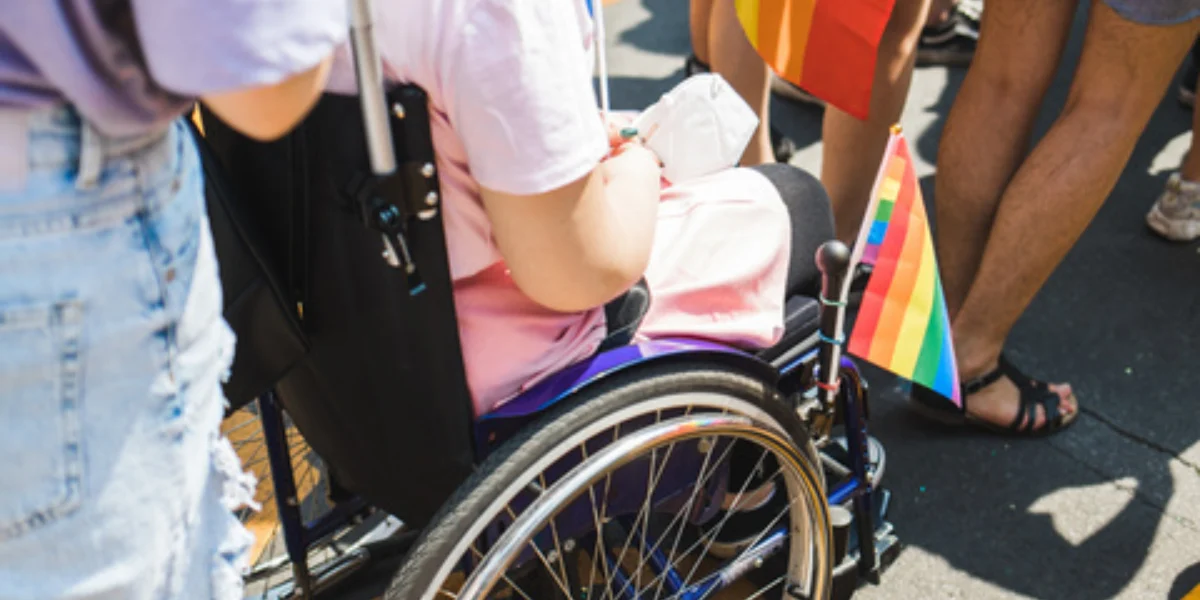
The intersection of disability and LGBTQ+ identity remains a site of significant structural tension, as modern queer spaces frequently struggle to reconcile rhetoric of radical inclusion with the physical and systemic realities of accessibility. While the LGBTQ+ movement has historically championed the rights of marginalized bodies, contemporary events often remain out of reach for nearly half of the community they claim to serve. A recurring case study in this exclusion is found in the promotion of "body positive" events that utilize venues with prohibitive physical barriers, such as steep staircases and a lack of elevator access, effectively barring disabled participants from entry. This phenomenon highlights a broader systemic failure within community organizing, where accessibility is often treated as a secondary consideration rather than a foundational requirement for belonging.
A Chronology of Exclusion: The Burlesque Case Study
The disconnect between inclusive marketing and physical reality is exemplified by the recurring experience of disabled community members attempting to attend local celebrations. In 2023, a highly publicized queer burlesque pride event in a major metropolitan area was marketed as a "safe, supportive space" that welcomed a diverse community. Despite these claims, the event was hosted in a basement venue accessible only via a steep set of stairs, with no elevator or alternative entrance available. When community members raised concerns via social media, organizers issued a formal apology, stating that the venue choice did not align with their values and that they were "actively exploring alternatives" for future iterations of the event.
However, the 2024 iteration of the same event revealed a lack of progress. Despite the previous year’s commitment to change, the event returned to the same inaccessible basement. The organizers’ response to renewed criticism shifted from a promise of change to a defense of the status quo, citing the "realities of a grassroots community event." They pointed to the high cost of accessible venues and the difficulty of finding affordable spaces in gentrified urban centers. This cycle—feedback, apology, and eventual stagnation—is a documented pattern in community organizing that places the emotional and physical burden of advocacy entirely on disabled individuals.
Statistical Reality: The Scale of the Disabled Queer Population
The assumption that disabled individuals represent a small or "special interest" niche within the LGBTQ+ community is contradicted by contemporary data. Research indicates that disability is more prevalent among LGBTQ+ populations than among their cisgender and heterosexual counterparts. According to the Center for American Progress, nearly 50% of LGBTQ+ adults identify as having a disability. This intersectionality is even more pronounced among gender-diverse populations: approximately 70% of transgender adults and 66% of intersex adults live with at least one disability.
Furthermore, a 2018 survey by the Movement Advancement Project (MAP) and the Center for American Progress found that nearly one in four LGBTQ+ adults report having a mental health disability. These figures suggest that accessibility is not a niche requirement but a necessity for half of the community. When events ignore mobility needs, sensory sensitivities, or the requirement for American Sign Language (ASL) interpretation, they are systematically excluding a demographic that constitutes a significant portion of their core audience.
Historical Context: From Mutual Aid to Respectability Politics
The current tension between disability and queer spaces is rooted in a complex historical trajectory. Historically, many prominent LGBTQ+ leaders have been disabled, though their disabilities are often minimized in historical narratives. Figures such as Frida Kahlo, who lived with chronic pain and physical disability, and Congresswoman Barbara Jordan, who navigated public life with multiple sclerosis, exemplify this intersection. Notably, Marsha P. Johnson, a central figure in the Stonewall Uprising, utilized an intersectional approach to organizing that emphasized community care and housing for disabled trans youth.
During the height of the HIV/AIDS crisis in the 1980s and 1990s, the queer community and disability advocates were deeply intertwined. The crisis forced a reimagining of care, as HIV+ individuals fought for bodily autonomy, home care, and accessible public spaces. However, as the movement moved toward the "Respectability Politics" of the late 1990s and early 2000s, a shift occurred. In an effort to gain mainstream acceptance, many LGBTQ+ organizations sought to distance themselves from the "medicalized" or "sick" associations of the past.
Historians argue that the movement began to emphasize "health" and "productivity" to prove that queer people were "normal" citizens. This strategy, while successful in advancing certain civil rights, often reinforced the stigma surrounding mental illness and physical disability. The "Born This Way" era further solidified a narrative of biological normalcy that frequently left those with non-normative bodies or minds on the periphery.
Structural Failures in LGBTQ+ Community Centers
The lack of accessibility is not limited to independent, grassroots events; it extends to the very institutions designed to provide refuge for the community. According to the 2018 LGBTQ Community Center Survey, which analyzed data from centers across the United States, significant gaps remain in basic infrastructure:
- Physical Access: Only 61% of centers reported having fully accessible paths of travel, including ramps, elevators, and automatic doors.
- Restrooms: While 73% had accessible restrooms, nearly 30% of centers lacked facilities that could accommodate mobility devices.
- Communication: Accessibility for the Deaf and hard-of-hearing was notably low, with only 13% offering TTY services.
- Blind and Low-Vision Support: Only 16% of centers provided Braille signs or materials.
These statistics indicate that even in spaces where inclusion is the primary mission, the specific needs of disabled people are frequently treated as an afterthought or a "luxury" that budgets cannot yet accommodate.
The Psychological Impact of Exclusion
The consequences of this exclusion are not merely logistical; they have profound effects on mental health and community cohesion. Research has consistently found that disabled LGBTQ+ individuals experience higher rates of loneliness and psychological distress than their non-disabled peers. A survey commissioned by Stonewall found that 59% of disabled LGBTQ+ people had felt that "life was not worth living" during the previous year, a figure nearly double that of the non-disabled LGBTQ+ population (31%).
Furthermore, the "social isolation" experienced by disabled queer people is exacerbated by the very spaces meant to alleviate it. When a disabled person is told their "presence matters" while being physically barred from a room, it creates a sense of "conditional belonging." This is further complicated by the "free labor" often expected of disabled people, who are frequently asked to provide venues, suggest solutions, or educate organizers on how to be inclusive—often while they are still being excluded from the events in question.
Analysis of the "Budget and History" Defense
Organizers frequently cite two primary reasons for failing to provide access: the high cost of venues and the "historic" nature of buildings. In many metropolitan areas, the scarcity of affordable, community-oriented spaces often leaves organizers with few choices outside of older, non-compliant buildings. However, disability advocates argue that these "realities" are often used to justify a hierarchy of priorities where "vibe," "tradition," or "location" are ranked higher than accessibility.
From a legal perspective, the Americans with Disabilities Act (ADA) provides certain exemptions for historic buildings or small organizations where "readily achievable" barriers cannot be removed without "undue burden." However, advocates point out that the ethical mandate of an "inclusive" community should exceed the bare minimum of legal requirements. When an event is labeled "body positive" but excludes bodies that require ramps or elevators, the marketing becomes a form of "access washing"—using the language of inclusion to mask the reality of exclusion.
Moving Toward Radical Accessibility
For true inclusion to occur, experts suggest that accessibility must be integrated into the earliest stages of event planning. This includes:
- Site Selection: Prioritizing venues with elevators, ramps, and accessible bathrooms over "aesthetic" or "traditional" queer spaces.
- Transparent Communication: Clearly stating accessibility features (or lack thereof) in all promotional materials to allow individuals to make informed decisions without having to perform personal research.
- Sensory and Communication Considerations: Incorporating quiet rooms, ASL interpretation, and captions as standard practice rather than upon-request additions.
- Financial Prioritization: Including accessibility costs as a non-negotiable line item in community budgets, similar to sound systems or performer fees.
The ongoing conversation regarding accessibility in LGBTQ+ spaces highlights a fundamental question for the community: Who is the "everyone" in "everyone is welcome"? As long as physical and systemic barriers remain, the promise of queer liberation remains unfulfilled for a significant portion of the population. Presence is the bare minimum for participation; without it, the possibility of shared organizing, solidarity, and collective joy is lost. The transition from "unfortunate exclusion" to "unacceptable discrimination" requires a shift in how community leaders value the presence of their disabled members.