Our cognitive system, constantly under pressure to process information at high speed, frequently veers our thinking away from our conscious intentions of open-mindedness, respect, and inclusion. This inherent challenge stems from the vast majority of our thinking, often referred to as System 1, operating on autopilot. This rapid, intuitive mode of thought, while efficient, can lead to faulty judgments rooted in immediate feelings, superficial observations, past experiences, ingrained stereotypes, prevailing societal norms, and deeply held beliefs from our upbringing. However, behavioral science offers a potent countermeasure: reframing. By consciously altering what we perceive and how we articulate it, individuals can reshape these mental shortcuts, enhancing their accuracy and aligning them more closely with their desired interactions with themselves and others.
The Cognitive Architecture of Bias: System 1 and Its Influence
The bedrock of this cognitive challenge lies in the dual-process theory of cognition, famously popularized by Nobel laureate Daniel Kahneman. He delineates two distinct systems of thought: System 1, which is fast, automatic, intuitive, and often emotional; and System 2, which is slower, more deliberate, analytical, and logical. While System 2 strives for intentional open-mindedness, the pervasive influence of System 1 means that most of our daily judgments and decisions are made rapidly, often without conscious awareness. This automaticity, while conserving mental energy, makes us susceptible to cognitive biases – systematic errors in thinking that affect the decisions and judgments people make.
These biases are not moral failings but rather inherent features of our brain’s architecture, designed for quick pattern recognition and survival. In modern society, however, these evolutionary shortcuts can manifest as unconscious prejudices, leading to snap judgments based on superficial cues rather than comprehensive evaluation. For instance, encountering a new person might trigger immediate associations based on their appearance, accent, or perceived group affiliation, drawing upon a lifetime of accumulated (and often biased) information. Without conscious intervention, these initial, automatic impressions can dictate subsequent interactions, subtly undermining intentions of equity and inclusion.
Societal Norms and the Reinforcement of Exclusionary Patterns
Throughout our lives, we are relentlessly, albeit often unwittingly, exposed to and internalize messages that define normative patterns of who is considered "good," "attractive," "smart," "trustworthy," "a leader," "friendly," "caring," or "strong." These powerful, often implicit, associations are constantly reinforced through a myriad of societal channels, including family dynamics, peer groups, media portrayals, educational curricula, reward systems in organizations, and broader cultural narratives. From childhood stories to contemporary advertising, consistent messaging shapes our subconscious ideals.
The cumulative effect of these pervasive perceptions is profound. They fundamentally influence our views of others, our interactions, and critically, the very systems and structures we create and inhabit. This deep-seated conditioning can have significant discriminatory impacts, leading to the systemic exclusion of individuals who do not conform to these dominant, often narrow, normative patterns. For example, studies on resume bias consistently show that identical qualifications can be perceived differently based on gender-coded or ethnically suggestive names. Similarly, research on leadership often reveals unconscious biases favoring certain demographic profiles over others, irrespective of actual competence. This pervasive issue is a primary driver behind the global imperative for diversity, equity, and and inclusion (DEI) initiatives across all sectors.
The Personal Dimension: Internalized Bias and "Zoom Dysmorphia"
Beyond societal discrimination, these normative patterns also profoundly affect individuals on a personal level. Many internalize negative associations about themselves when they perceive they do not fit the established norms. This can manifest as self-doubt, diminished self-esteem, or even a sense of being an "outlier." A particularly salient and recent phenomenon illustrating this personal impact is "Zoom dysmorphia," which surged during the nearly two years of widespread video-based online work necessitated by the global pandemic. The constant, often unflattering, self-view presented by video conferencing led many individuals to become negatively fixated on their appearance, perceiving flaws that might not have troubled them in face-to-face interactions. This fixation often occurs unconsciously, directly contradicting rationally held positive self-beliefs. Experts in mental health have noted a significant increase in cosmetic surgery consultations citing "Zoom face" as a concern, highlighting the tangible psychological distress caused by this intensified self-scrutiny. The experience of feeling like an outlier, or struggling with self-perception against societal ideals, is a common thread that resonates across diverse populations.
Behavioral Science as an Intervention: The Power of Reframing
Recognizing the automatic nature of these biases, behavioral change designers have developed targeted interventions to interrupt and reshape internalized negative messages, biases, and exclusionary behaviors. These interventions leverage insights from behavioral science to design environments and prompts that steer individuals towards more inclusive choices and perceptions. Among these, "Inclusion Nudges" stand out as a practical methodology for implementing such changes.
The core principle behind many Inclusion Nudges is "reframing" – a technique that involves consciously altering the way we perceive and describe situations, people, or ourselves. By changing the language we use, internally and externally, we can directly influence the automatic associations made by System 1 thinking. This is not about denying reality but about consciously choosing a more expansive, empathetic, or accurate lens through which to view it.
Case Studies: Personal Application of Reframing with "That’s a Human…"
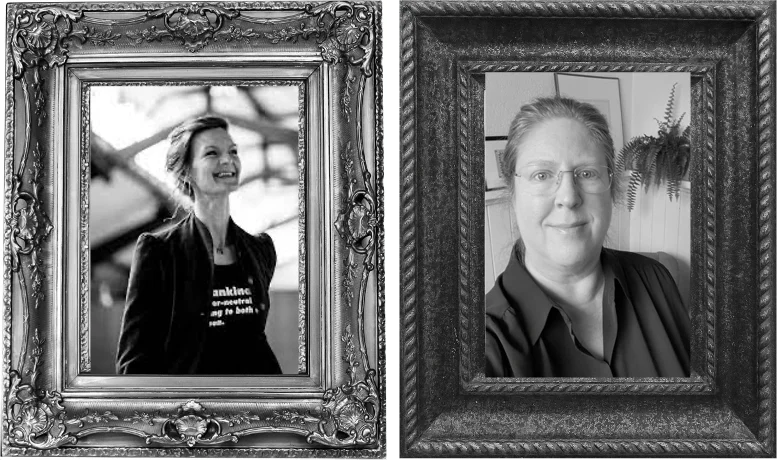
Behavioral change designers often pilot their techniques on themselves to refine and validate their efficacy. Two such practitioners, Lisa and Tinna, independently experimented with a reframing design they developed, which they termed "That’s a human…" Their experiences offer compelling insights into the practical application and benefits of this approach.
Lisa’s Experience: Countering Self-Criticism
Lisa utilized the extended period of lockdown, from mid-2020 to early 2022, as an opportunity to experiment with countering negative thoughts about her own appearance. She observed that when looking in a mirror, she would typically take quick, functional glances – checking her hair, teeth, or clothes. However, if her gaze lingered "too long," negative internal narratives would invariably surface, often escalating into an internal argument between her critical and confident selves. This expenditure of mental energy was unproductive, and she sought to redirect it by intentionally reshaping her internal dialogue during these moments.
Her inspiration stemmed from an Inclusion Nudge example detailed in The Inclusion Nudges Guidebook, titled "Re-Frame ‘Migrant’ to ‘Human’." In this design, members of the South African non-profit organization PASSOP actively commented on social media posts that used terms like "refugee crisis" or "migrant crisis," reframing them as "human crisis." The objective was to shift focus from labels to the inherent humanity of the individuals involved, emphasizing the shared human experience. This demonstrated the power of language in altering perceptions towards desired outcomes – to see and treat people as humans.
Applying this principle to herself, Lisa embarked on her personal reframing exercise. The specific steps involved:
- Conscious Mirror Gazing: Instead of quick glances, she would intentionally look at her reflection for a slightly longer period.
- Identifying the Automatic Thought: As the negative self-judgment (e.g., "My nose is too big," "My skin looks tired") began to form, she would consciously acknowledge it.
- Applying the Reframe: She would then internally state, "That’s a human nose," or "That’s a human face," or "That’s a human body." The key was to detach the specific feature from negative judgment and anchor it in the fundamental truth of being human.
- Observing the Shift: She paid attention to how this reframe interrupted the critical narrative and shifted her internal state.
These statements quickly became a regular habit for Lisa. She observed a significant reduction in the intensity and frequency of negative self-criticism. Importantly, she extended this practice to her observations of other people, finding it surprisingly less effortful, a testament to the common phenomenon that individuals are often most critical of themselves. She would catch herself thinking, "That’s a human face," or "That’s a human body," when encountering others. This internal statement served as a prompt to check her preceding thoughts about the person. While not always able to recall the initial fleeting judgment due to the speed of System 1, in many instances, she could, and the dissonance between her inclusive intentions and her actual, unconscious thoughts served as a powerful motivator to continue practicing this reframing technique. This ongoing process reinforces the understanding that bias is not "cured" but managed through consistent, intentional design and practice, allowing for interruptions that foster more thoughtful and inclusive perspectives.
Tinna’s Experience: Disrupting External Judgment
Tinna, inspired by Lisa’s experiment, adopted a similar practice, internalizing the phrase "There’s a human being" whenever she observed people in public spaces. She had noticed a recurring tendency in her own mind to automatically categorize and judge others based on their physical appearance – thoughts such as "she is skinny," "she is tall," "he is overweight," or "ugly shoes" would frequently arise. This judgmental inclination caused her personal shame and discomfort, yet she found it difficult to consciously alter.
By adopting the default statement, "There’s a human being," Tinna experienced a significant transformation. She observed a marked increase in positive internal energy and a rapid dissipation of judgmental thoughts. The reframe acted as an immediate interruption, preventing her mind from fully engaging with the critical assessment. The judgmental state, once a persistent internal monologue, now arose and disappeared almost instantaneously. Furthermore, this practice had a profound impact on her self-perception. As a woman who is 185 cm tall, Tinna had often felt like an outlier, conscious of her height in comparison to societal norms. Through the consistent application of her reframing, she began to internalize the message that she, too, was simply "a human being among others," fostering a greater sense of belonging and self-acceptance. Both Lisa and Tinna’s experiences underscore the profound personal benefits of consciously designed reframing techniques in cultivating greater self-compassion and empathy towards others.
Framing Perceptions Inclusion Nudges: A Deeper Dive
The psychological phenomenon where judgments of body shape, appearance, or voice can overshadow an individual’s strong sense of self, accomplishments, and intrinsic value is a pervasive and often absurd reality. Despite conscious intentions to the contrary, these biases persistently "creep in." This highlights the critical need for leveraging behavioral insights to design effective ways to reshape these harmful mental messages. Framing Perceptions Inclusion Nudges are specifically designed for this purpose.
As defined in The Inclusion Nudges Guidebook by Kepinski & Nielsen, "Framing Perceptions Inclusion Nudges are designs that alter perceptions to help the brain perceive issues related to inclusion, diversity, equality in a resource discourse. The designs also prime specific associations and counter stereotypes. Altering the framing of an issue or message and changing the anchor of a thought process helps to promote inclusive behaviour because it influences the reactions in the automatic, stereotyped, and unconscious mind."
These designs operate by subtly influencing System 1 thinking, which is highly susceptible to contextual cues and framing. By introducing a new frame – a different way of seeing or describing something – these nudges redirect automatic associations away from stereotypes and towards more inclusive perspectives. For example, presenting images that challenge traditional gender roles (e.g., men as caregivers) can gradually erode unconscious biases by creating new, positive associations in the automatic mind. Similarly, using inclusive language in job descriptions or organizational communications can prime candidates and employees to perceive a more equitable environment.
Beyond "Re-Frame ‘Migrant’ to ‘Human’," other impactful Framing Perceptions designs include:
- Ask Flip Questions to Change Your Perceptions in the Moment: This technique encourages individuals to ask themselves questions that challenge their initial assumptions or biases, forcing a System 2 intervention. For instance, if evaluating a candidate, one might ask, "What if this candidate were of a different gender/ethnicity? Would I still interpret this behavior the same way?"
- Images Framing Immigrants as One of Us: This involves strategically using visuals that depict immigrants in everyday, relatable contexts, integrating them into the fabric of society rather than portraying them as "other" or "problems."
- Interrupt Gender Caregiver Stereotypes with Images: This involves deliberately showcasing images and narratives that break traditional gender roles in caregiving, promoting a more equitable view of family responsibilities.
These designs are not merely about political correctness; they are scientifically grounded strategies to rewire cognitive pathways, leading to more accurate and equitable judgments and behaviors. Their efficacy has been widely reported by individuals and organizations who have adopted them, demonstrating their significant impact in expanding thinking, improving information gathering, and enhancing decision-making in both professional and personal spheres.
Broader Implications for Inclusion, Diversity, and Equity
The individual practice of reframing, as demonstrated by Lisa and Tinna, has profound implications that extend far beyond personal well-being. When individuals consciously engage in interrupting their own biases and adopting more inclusive perspectives, they contribute to a ripple effect that can transform organizational cultures and societal norms.
For organizations, the systematic application of Framing Perceptions Inclusion Nudges can be a game-changer in achieving DEI objectives. By integrating these designs into communication strategies, recruitment processes, performance evaluations, and leadership development programs, organizations can:
- Mitigate Bias in Decision-Making: Reduce the impact of unconscious bias in hiring, promotions, and project assignments, leading to more equitable outcomes and better talent utilization.
- Foster Inclusive Cultures: Create environments where diverse perspectives are genuinely valued, and individuals feel a stronger sense of belonging and psychological safety.
- Enhance Employee Well-being and Performance: By reducing the prevalence of microaggressions and fostering a more respectful environment, employees are more likely to thrive, innovate, and contribute their best work.
- Strengthen Brand Reputation: Organizations known for their commitment to genuine inclusion attract top talent and build stronger relationships with customers and stakeholders.
On a societal level, the widespread adoption of reframing techniques can contribute to a more just and empathetic world. By continuously challenging and reshaping the mental shortcuts that perpetuate stereotypes and discrimination, individuals can collectively erode systemic biases. This ongoing process, while never fully "curing" bias, cultivates a society that is more attuned to the inherent dignity of every human being, promoting greater understanding, respect, and equity across diverse communities. It empowers individuals to become active agents in creating a more inclusive future, starting with the conscious design of their own thoughts and perceptions.
Expert Perspectives and Future Directions
The insights gleaned from behavioral science confirm that while our automatic cognitive processes are powerful, they are not immutable. With intentional design and consistent practice, individuals and organizations can significantly lessen the influence of negative biases and stereotypes. The work of practitioners like Lisa and Tinna, and the broader framework of Inclusion Nudges, provides a robust methodology for this ongoing effort. By understanding how our brains operate and designing interventions that work with our cognitive architecture rather than against it, we can create more equitable and inclusive environments for all.
To learn more about Framing Perceptions designs and other behavioral insights for inclusion, further resources are available. The continuous sharing of experiences and innovative approaches is vital in this evolving field. Individuals and organizations are encouraged to explore how reframing techniques can be applied in their own lives and work to foster greater understanding and mitigate bias. Those interested in sharing their experiences or seeking further information are invited to contact the practitioners at [email protected]. The journey towards a truly inclusive society begins with the conscious decision to rewire our perceptions, one thought, one word, one human at a time.