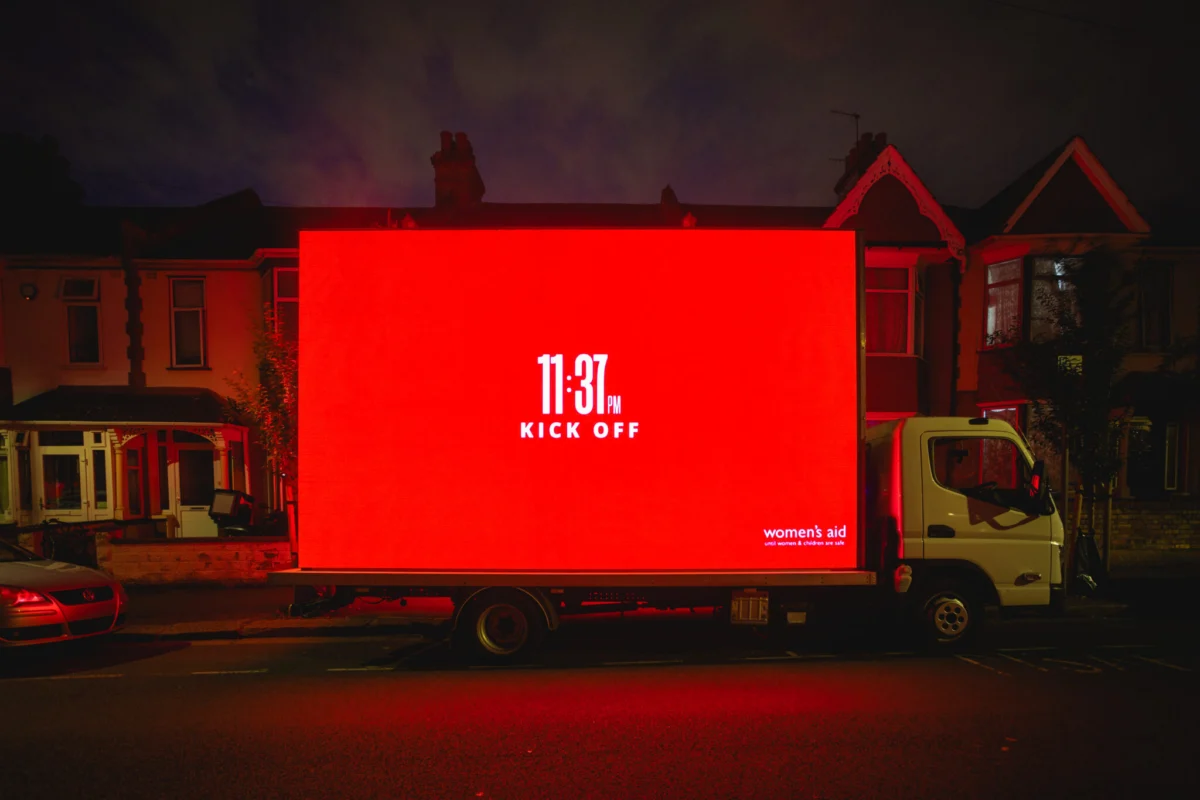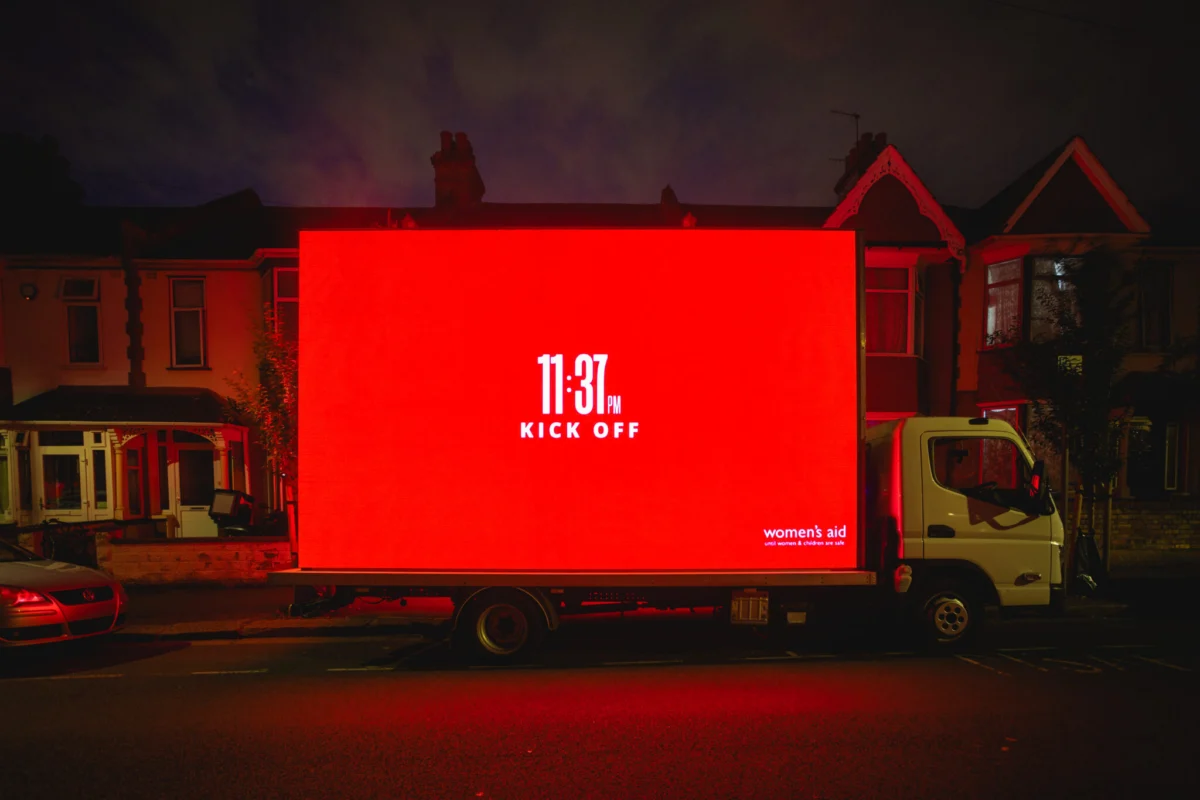
London, 17th June 2026 – As England gears up for its pivotal opening World Cup match tonight, the national domestic abuse charity Women’s Aid has unveiled a stark new campaign, "The Other Kick Off," designed to cast a harsh light on a darker, often hidden reality: the predicted surge in domestic abuse following major football events. While millions across the nation anticipate the official 9 pm kick-off, Women’s Aid points to a more sinister, delayed "kick-off time" – 11:37 pm – marking the moment when, for countless women and children, fear escalates as abusive partners return home after the game.
This poignant initiative aims to hijack the ubiquitous World Cup question, "What time is kick-off?", redirecting public attention from the celebratory start of the match to the harrowing aftermath experienced by survivors of domestic abuse. The calculated time of 11:37 pm accounts for the full duration of a football match, including extra time, post-match celebrations or commiserations often involving alcohol consumption, and travel time home. It represents a precise, chilling moment that many vulnerable individuals dread, turning a national moment of unity into one of heightened danger. The particular timing of this year’s late-night matches further exacerbates the isolation and terror for those living in abusive situations, as darkness and late hours can intensify feelings of helplessness.
A Sobering Reality: The Link Between Football and Domestic Abuse
The campaign is rooted in extensive, long-standing research that unequivocally demonstrates a disturbing correlation between major football tournaments and a rise in domestic abuse incidents. Studies, including the seminal work by Kirby & Francis (2014) referenced by Women’s Aid, reveal that domestic abuse increases by a staggering 38% when England loses a match. Even in victory, the statistics remain alarming, with incidents rising by 26% when the national team wins. These figures underscore a critical truth: football itself does not cause domestic abuse, which is fundamentally about power and control. However, the unique environment surrounding major tournaments – characterized by heightened emotions, increased alcohol consumption, and often intensely gendered viewing environments – acts as a potent accelerant for existing patterns of abuse, making them more frequent and severe.
This pattern is not new. Women’s Aid has consistently drawn attention to this issue during previous tournaments. Their 2022 "He’s Coming Home" campaign, a powerful inversion of the popular football anthem, highlighted the fear many women feel when abusive partners return home after matches. The success of these previous campaigns in sparking public discourse and encouraging reporting has paved the way for "The Other Kick Off," building on a foundation of critical awareness.
Strategic Visibility: Reaching the Public Where It Matters
To ensure its message cuts through the World Cup fever, Women’s Aid has deployed "the other kick-off time" across a strategic network of digital billboards, mobile vans, and fly posters. These impactful visuals are deliberately placed near major fan zones and prominent football hotspots throughout London, aiming to confront the public with the uncomfortable truth amidst the celebratory atmosphere. Each poster features a prominent QR code, providing an immediate pathway for individuals to access Women’s Aid’s comprehensive website. This digital gateway offers vital support, enables donations, educates the public on the often-subtle signs of domestic abuse, and empowers individuals to take action, whether for themselves or for loved ones they are concerned about.
The visual nature of the campaign is crucial. By juxtaposing the official kick-off time with the sinister "other kick-off," Women’s Aid creates a jarring contrast designed to stop passers-by in their tracks. It forces a moment of reflection, challenging the collective joy with the stark reality faced by thousands behind closed doors. The use of leading out-of-home media partners, such as The Outernet and Ocean Outdoor, who have generously donated billboard placements, amplifies the campaign’s reach and impact, ensuring maximum visibility during a period of intense national focus on football.
Voices from the Frontline: Leadership and Advocacy
Farah Nazeer, CEO at Women’s Aid, articulated the charity’s mission with profound clarity: "The World Cup is a wonderful opportunity for us to come together and cheer on our team. However, for women and children living with domestic abuse, ‘kick-off’ has a different meaning. For those living with abuse, the final whistle of the game signals the beginning of something frightening and potentially life-threatening. While we know that domestic abuse isn’t caused by football, we also know that heightened emotions and alcohol consumption can lead to a rise in domestic abuse frequency and severity. Whether England wins, loses or draws, no woman or child should live in fear of that final whistle blow. We hope that our campaign helps raise awareness of this heinous crime, while also signposting people to support, not only for themselves, but for loved ones they’re concerned about." Her words emphasize the duality of the tournament – a source of joy for many, a source of terror for others – and the urgent need for widespread understanding and intervention.

Adding her voice to the campaign, Women’s Aid Ambassador Charlie Webster, a prominent broadcaster and survivor of domestic abuse, highlighted the personal stakes involved: "The World Cup is one of those rare moments when the whole country holds its breath together – united, hopeful, alive! That joy is real, and it’s precious. But for women and children living with domestic abuse, tournament time brings something very different: heightened fear, and heightened danger. That is a reality we cannot look away from. Football is our game. It belongs to all of us, and it should be a place of safety. I am proud to be raising awareness to change that, and make sure that when England plays, every woman at home is safe." Webster’s powerful testimony underscores the responsibility of the football community and society at large to protect the most vulnerable during these national celebrations.
Government Pledges and Broader Strategy
The campaign has also garnered significant government support, with Natalie Fleet, Minister for Safeguarding and Violence Against Women and Girls, issuing a robust statement: "Nobody should live in fear because of a football match. As a Mum and a Nana, I find it heartbreaking that while many families come together to enjoy the World Cup, some women and children are left dreading the final whistle. The latest Women’s Aid campaign shines a powerful light on this reality." Minister Fleet acknowledged the escalation of domestic abuse during major sporting events and reiterated the government’s zero-tolerance stance.
She detailed key initiatives within the government’s Violence Against Women and Girls (VAWG) Strategy, including the implementation of Raneem’s Law, which places domestic abuse specialists in 999 control rooms to provide immediate expert support. The rollout of Domestic Abuse Protection Orders (DAPOs) is another crucial measure, designed to proactively protect victims from further harm. Furthermore, the government is actively collaborating with partners to challenge harmful behaviours and address the root causes of abuse. "We are clear that enough is enough. We will deploy the full power of the state to halve violence against women and girls in a decade," Minister Fleet asserted, signaling a firm commitment to systemic change and accountability.
Beyond the Whistle: Understanding the Dynamics of Abuse
The statistics linking football and domestic abuse are not intended to demonize the sport but rather to highlight how external stressors and cultural phenomena can interact with pre-existing abusive dynamics. Domestic abuse thrives in environments of isolation, control, and fear. Factors like increased alcohol consumption, heightened emotional states (both positive and negative), and the perceived ‘permission’ of a festive atmosphere can lower inhibitions and escalate aggression in perpetrators who already harbour abusive tendencies. The late-night kick-off times further compound this issue, creating prolonged periods of potential danger, often in the dead of night when escape or external help feels most distant.
For survivors, the build-up to a major tournament can be fraught with anxiety, not excitement. They may anticipate increased verbal abuse, physical violence, or coercive control. The collective focus on the game can also make it harder for victims to seek help, feeling that their plight is overshadowed or that emergency services might be stretched. This campaign serves as a vital counter-narrative, ensuring that the plight of these individuals is not forgotten amidst the national fervor.
The Enduring Role of Women’s Aid
Women’s Aid, as a national charity and a federation of 183 organisations supporting over 300 local lifesaving services across the UK, has been at the forefront of the fight against domestic abuse for over 50 years. Their work spans campaigning, policy advocacy, and direct support for women and children. The charity’s extensive support services include the Survivors’ Forum, the No Woman Turned Away Project, the Survivor’s Handbook, Love Respect (a dedicated website for young people), the national Women’s Aid Directory, and various advocacy projects. These resources collectively aid thousands of women and children annually, providing lifelines in desperate situations.
The "Other Kick Off" campaign is more than just an awareness drive; it is a critical intervention, reminding the public that while the nation enjoys the World Cup, a significant segment of the population lives in terror. It underscores the ongoing need for vigilance, community support, and robust protective measures to ensure that football, a source of joy and national pride, does not inadvertently become a catalyst for harm. The message is clear: no matter the match outcome, domestic abuse cannot be tolerated, and the final whistle should never signal the beginning of fear.
For more information, support, or to donate, visit womensaid.org.uk. Because no woman or child should fear what happens after the match ends.