While more than 100 countries worldwide can be considered democracies, each exhibits unique characteristics in how its political system functions. As the United States approaches the 250th anniversary of its Declaration of Independence, a comparative analysis reveals several key distinctions between American democracy and those of its global peers. This examination, drawing on expert ratings from three prominent organizations, highlights eight areas where the U.S. political framework diverges significantly from the norm.
A Spectrum of Democratic Governance
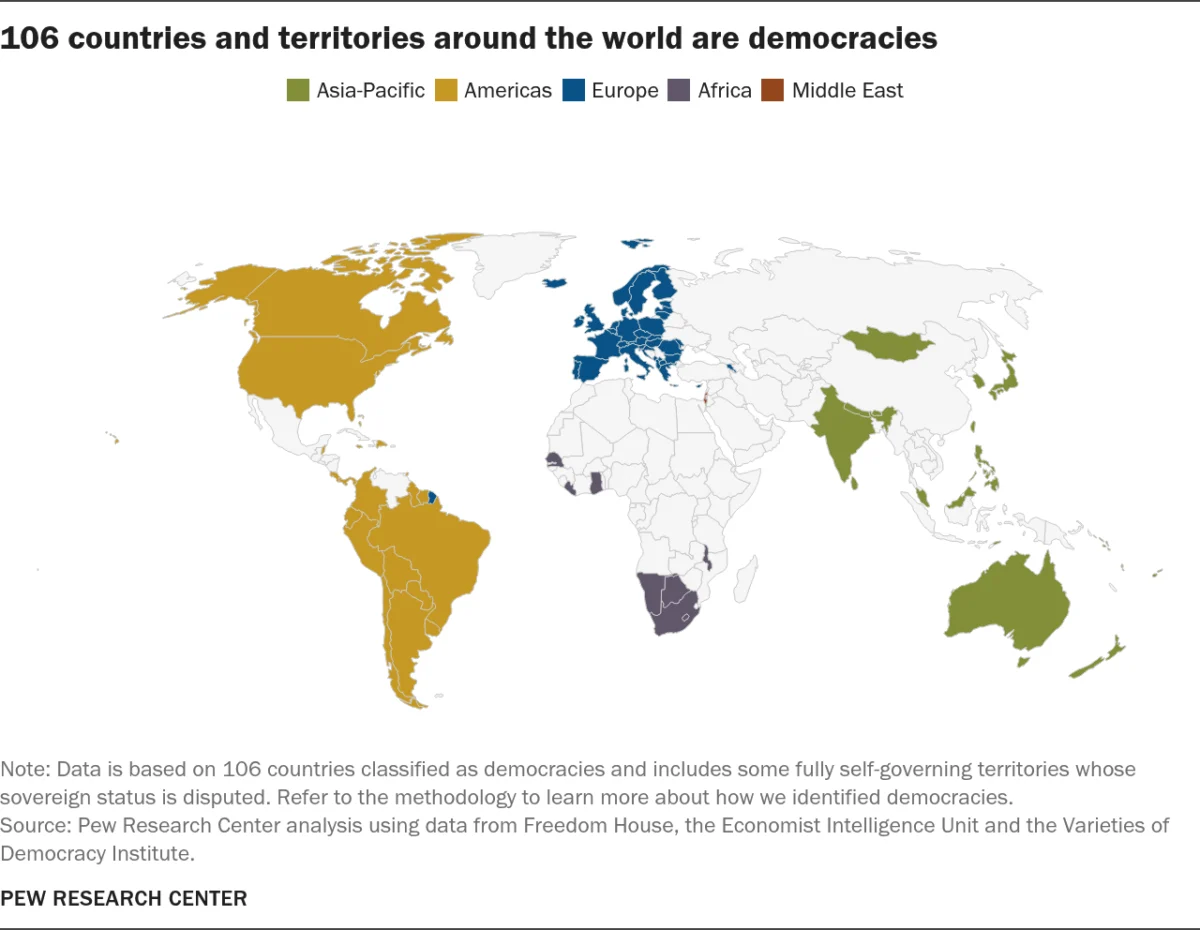
The very definition of democracy encompasses a wide array of structures and practices. Pew Research Center’s analysis, which identified 106 nations and self-governing territories as democracies, underscores this diversity. From parliamentary republics to constitutional monarchies, the methods by which governments are formed, leaders are chosen, and citizens are represented vary considerably. Understanding these differences provides crucial context for evaluating the unique aspects of American governance.

The Unyielding Framework: Constitutional Amendment Processes
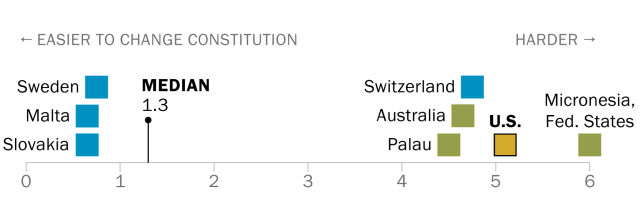
One of the most striking divergences lies in the difficulty of amending the U.S. Constitution. While Americans express widespread support for various political reforms, including term limits and campaign finance regulations, many of these proposals would necessitate constitutional amendments. The U.S. Constitution, in effect for 237 years, has undergone formal amendment only 27 times, a testament to its rigorous amendment process.
Utilizing a classification system developed by Donald S. Lutz, an analysis of 101 democratic constitutions revealed that the United States possesses the second-most challenging amendment process among those studied. Amendments require a two-thirds majority in both the House of Representatives and the Senate, followed by ratification by three-quarters of the state legislatures (38 out of 50 states). This multi-layered hurdle is surpassed only by the Federated States of Micronesia, a Pacific island nation with a significantly smaller population, whose amendment process involves multiple supermajority votes and state-level ratification. Countries like Palau, Switzerland, and Australia also feature complex amendment procedures requiring both national and sub-national approval, though generally less stringent than the U.S. model. Conversely, many democracies with unicameral legislatures can amend their constitutions with greater ease, often requiring only a qualified majority vote similar to standard legislative procedures.
Citizenship by Birth: A Comparative Landscape
The principle of birthright citizenship, where an individual born within a nation’s territory is automatically granted citizenship, is a cornerstone of many democracies. However, the prevalence and form of this right vary significantly across the globe. The U.S. system, guaranteeing birthright citizenship via the 14th Amendment, is notably inclusive, extending this right to virtually all individuals born on American soil, irrespective of their parents’ citizenship or immigration status.

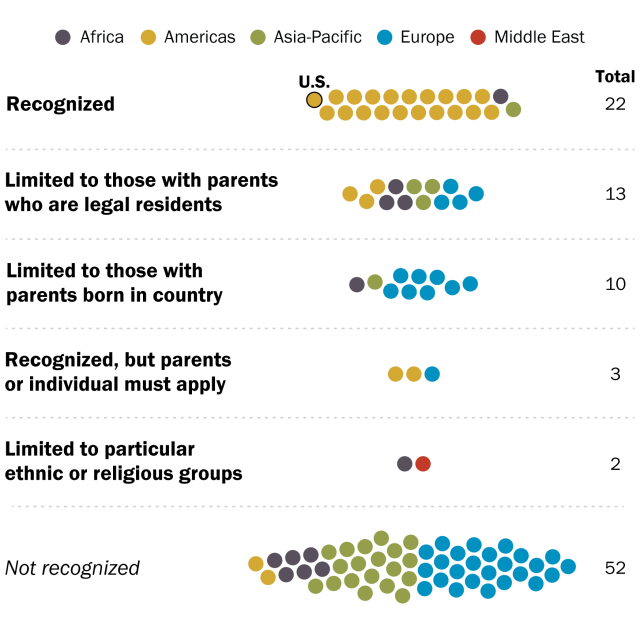
A comprehensive review of citizenship laws in 106 democracies found that only 21 other nations, predominantly in the Western Hemisphere, offer a form of birthright citizenship as broadly as the United States. In three additional democracies, while birthright citizenship is generally available, it requires an application process by the child or their parents. A further 25 democracies impose limitations, granting birthright citizenship only if one or both parents are legal residents, were born in the country, or belong to specific ethnic or religious groups.
Alarmingly, nearly half of the democracies surveyed (52 nations) do not recognize any form of birthright citizenship. In these countries, citizenship at birth is typically contingent upon at least one parent being a citizen. This stark contrast highlights the expansive nature of the U.S. approach to birthright citizenship, a feature that has been consistently upheld by the Supreme Court.
Executive Leadership: A Unique U.S. Model
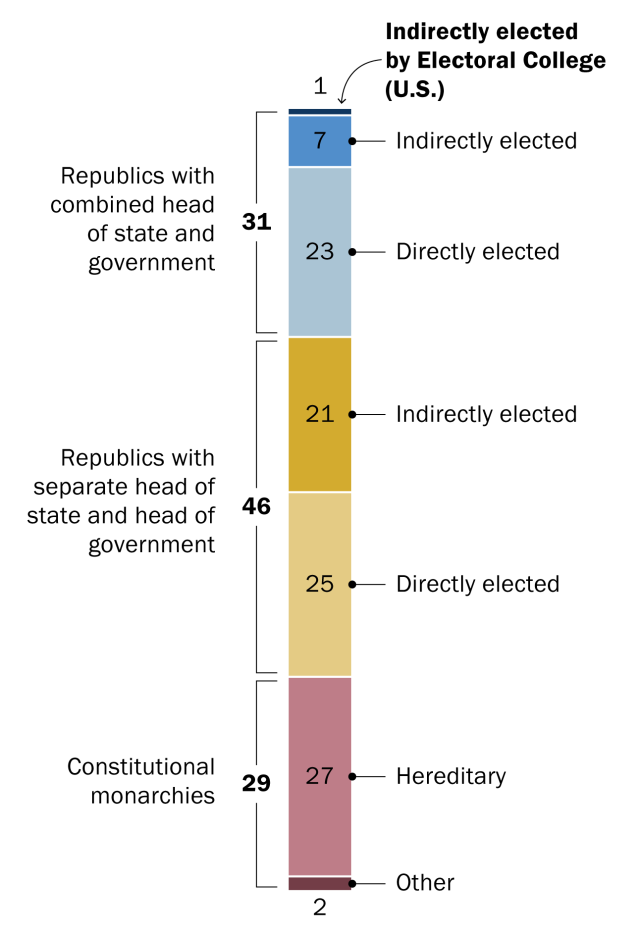
The structure and selection of executive leadership present another area where U.S. democracy distinguishes itself. The American president uniquely combines the roles of head of state and head of government, a dual function mirrored in only 30 other democracies. In the majority of democratic nations, these roles are bifurcated, with a ceremonial head of state (often a monarch or president) and a separate head of government (typically a prime minister).
While the combination of these roles is not exclusive to the U.S., the method of selecting the president is highly atypical. Of the 31 democracies with a combined head of state and government, 23 elect their leaders directly, and seven are chosen by the national legislature. The United States, however, stands alone in its reliance on the Electoral College, a distinct body whose sole purpose is to elect the president. This indirect election system means that the winner of the national popular vote does not always secure the presidency, a phenomenon that has occurred four times in U.S. history, most recently in 2016. Public opinion surveys consistently show a majority of Americans favoring a direct popular vote system for presidential elections, reflecting a potential desire for alignment with global democratic norms.
Legislative Representation: District Size and Drawing
The manner in which legislative districts are drawn and the number of constituents each representative serves are critical aspects of democratic representation. The U.S. system, which traditionally redraws House districts only every ten years following the census, is also characterized by a relatively small number of representatives for its population size.
The U.S. House of Representatives, with 435 voting members, means each representative serves approximately 802,000 constituents, based on UN population projections. This "representation ratio" is higher than in all but one other democracy: India. The Lok Sabha, India’s lower house, has 543 members, each representing an average of 2.72 million people, due to India’s immense population. In contrast, the average representation ratio across 106 democracies is around 31,000 constituents per lawmaker. For the U.S. to achieve this median ratio, the House would need to expand to over 11,000 members, far exceeding the size of any current national legislature.
Furthermore, the U.S. stands out in its reliance on single-member districts for electing the majority of its national legislators. Only 40 other democracies primarily use this system, while many others opt for multi-member districts or nationwide proportional representation. Even among those that use single-member districts, the U.S. is unique, along with the Federated States of Micronesia, in assigning the primary responsibility for drawing these district lines to state legislatures, a process often susceptible to political influence. In contrast, independent boundary commissions or national election agencies are typically tasked with this duty in other democracies.
Election Day Practices: A Distinctive U.S. Approach
The day on which national elections are held also reveals variations in democratic practice. In the United States, Tuesday has been the customary Election Day since the mid-19th century, a tradition rooted in the nation’s agrarian past. This scheduling choice, while historically pragmatic, contrasts with the practices of many other democracies.
Globally, 60 out of the 106 analyzed democracies typically hold their national elections on Saturdays or Sundays, offering citizens more flexibility to cast their ballots. The U.S., along with 27 other democracies, routinely holds elections on ordinary weekdays. An additional 16 countries designate Election Day as a public holiday, further facilitating voter participation. Proposals to move U.S. Election Day to a weekend or make it a national holiday aim to increase voter turnout by reducing barriers related to work schedules.
Capital City Representation and Debt Limits
The political status of national capitals varies, but Washington, D.C., presents a unique case among democratic nations. Its residents are the only ones in a democratic capital city who lack voting representation in the national legislature. While many capitals have special administrative or symbolic status, their residents typically retain the right to elect national lawmakers. D.C.’s lone non-voting delegate to the House of Representatives highlights this disparity, a situation that would require a constitutional amendment or statehood to rectify. The only other capital without resident voters is Ngerulmud, Palau’s capital, which is essentially an administrative center without a permanent population.
The U.S. also distinguishes itself with its debt limit, which is legally defined in absolute terms rather than as a percentage of Gross Domestic Product (GDP), a more common approach among democracies. While 70 democracies have some form of debt limit, most use the GDP-based method, allowing for automatic adjustment with economic growth. The U.S. debt limit, currently set at $41.1 trillion, necessitates frequent congressional action to raise it, transforming the process into a recurring political battleground. This rigidity has led to repeated standoffs between Congress and the White House, contributing to government shutdowns and unsettling financial markets due to concerns about potential defaults. This leverage, however, is jealously guarded by lawmakers from both parties, demonstrating a reluctance to relinquish this potent tool for policy negotiation.