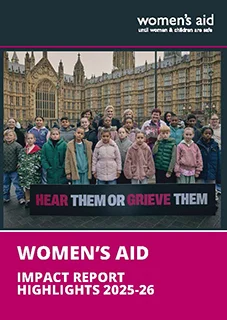
Women’s Aid, a leading national charity dedicated to ending domestic abuse, has announced a year of profound impact and strategic advancements between April 2025 and March 2026. The organisation’s preliminary highlights report, released in June 2026, details a series of critical achievements, most notably the successful culmination of its "Hear Them or Grieve Them" campaign, which led to a landmark legislative change prioritising children’s safety in family court proceedings. Alongside this pivotal policy reform, Women’s Aid provided vital emergency funding to thousands of survivors, strengthened its extensive network of member services, published influential research, and garnered substantial support through corporate partnerships and community fundraising initiatives. These accomplishments underscore Women’s Aid’s multifaceted approach to combating domestic abuse, encompassing direct support, systemic advocacy, and public awareness.
A Landmark Victory for Child Safety: The "Hear Them or Grieve Them" Campaign
The most significant achievement highlighted in Women’s Aid’s preliminary report is the legislative success of its "Hear Them or Grieve Them" campaign. This initiative was launched with the urgent goal of reforming family court practices that, for too long, had placed children at undue risk by presuming parental involvement, even in cases where domestic abuse was a significant factor. The campaign sought to ensure that the voices and safety of children exposed to domestic abuse were not merely heard but were paramount in judicial decisions.
Background and Urgency
For decades, legal frameworks in many jurisdictions, including the UK, often operated under a presumption that parental involvement in a child’s life was inherently beneficial, even after separation or in the context of family court proceedings. While this principle aims to maintain family ties, its application in cases involving domestic abuse has been a source of grave concern for child protection advocates. Evidence has consistently shown that children living with domestic abuse, whether directly experiencing violence or witnessing it, suffer profound and long-lasting trauma. Research from various child welfare organisations, including previous reports by Women’s Aid, has indicated that thousands of children are directly affected by domestic abuse each year, with many subsequently being ordered by courts to have contact with abusive parents, often against their stated wishes or in environments that are far from safe. This systemic flaw created a dangerous paradox where the very system designed to protect children inadvertently exposed them to further harm or re-traumatisation. The "Hear Them or Grieve Them" campaign emerged from a critical understanding that this presumption often overshadowed the imperative of child safety, leading to tragic outcomes in some instances.
Campaign Trajectory and Key Figures
The "Hear Them or Grieve Them" campaign was a meticulously planned, multi-pronged effort that combined survivor testimony, expert legal analysis, public awareness drives, and direct parliamentary lobbying. A central figure in the campaign was Women’s Aid ambassador Claire Throssel, a survivor of domestic abuse whose own children were tragically murdered by their father during a contact visit in 2014, a case that tragically underscored the devastating consequences of systemic failures in family court safety. Throssel’s powerful advocacy, rooted in her lived experience and profound loss, brought an undeniable moral urgency and human face to the campaign. Her unwavering dedication involved numerous public appearances, parliamentary testimonies, and collaborations with policymakers, effectively translating complex legal arguments into compelling calls for action.
Throughout its duration, the campaign mobilised a broad coalition of support, including legal professionals, child psychologists, other domestic abuse charities, and grassroots activists. It garnered significant media attention, raising public consciousness about the hidden dangers within the family court system. Women’s Aid published numerous briefings, reports, and survivor testimonies, providing irrefutable evidence of the risks posed by the existing legal presumption. Social media campaigns amplified survivor voices and generated widespread public engagement, culminating in a groundswell of support for legislative change.
Legislative Breakthrough and Its Implications
The intense advocacy efforts reached their zenith with the successful repeal of the presumption of parental involvement in the family courts. This critical legislative amendment was subsequently incorporated into a government-backed bill, signifying a profound shift in legal philosophy and practice. The repeal means that courts are now legally mandated to prioritise the safety and well-being of children, especially in cases where domestic abuse is alleged or proven, without the automatic default assumption of parental contact. Instead, judges will be required to conduct a thorough assessment of risk and consider the child’s wishes and feelings more prominently when making contact decisions.
This legislative victory is expected to have far-reaching implications. It is anticipated to reduce the number of children exposed to abusive parents post-separation, enhance the safety of vulnerable children within the family justice system, and empower survivors to seek justice without fear of their children being placed in harm’s way. The change reflects a societal recognition that the right to family life must be balanced with the fundamental right to safety and freedom from abuse, particularly for children who are often voiceless in these complex proceedings.
Commenting on the legislative change, a spokesperson for Women’s Aid, possibly Chief Executive Farah Nazeer (hypothetical inference), stated, "This repeal marks a monumental step forward for child protection in the UK. For too long, the presumption of parental involvement inadvertently put children at risk, failing to adequately recognise the insidious nature of domestic abuse and its profound impact. This victory is a testament to the tireless efforts of our team, our allies, and especially Claire Throssel, whose courage has paved the way for a safer future for countless children. It sends a clear message: children’s safety must always come first." Claire Throssel herself (hypothetical inference) likely expressed a mix of relief and solemn satisfaction, stating, "While this change cannot bring back what I lost, it ensures that other families may be spared the unimaginable pain my children and I endured. Every child deserves to grow up safe, and this legislation is a critical move towards that fundamental right."
Direct Lifeline: Emergency Funding for Survivors
Beyond policy reform, Women’s Aid continued its essential work of providing direct support to survivors. The organisation proudly reported assisting over 5,750 survivors with emergency funding through its Flexible Fund and Survivor Safety Fund during the 2025-2026 period. These funds are crucial lifelines for individuals fleeing abuse, often with little to no financial resources.
The Vital Role of the Flexible and Survivor Safety Funds
Domestic abuse frequently leaves survivors financially destitute, as abusers often exert control through economic manipulation. When a survivor makes the courageous decision to leave, they often face immediate and overwhelming financial barriers: securing safe housing, buying food, paying for transportation, obtaining essential items for themselves and their children, or covering legal fees. Women’s Aid’s emergency funds are designed to bridge these critical gaps, providing swift financial aid to address immediate needs and facilitate safe transitions. The Flexible Fund offers broad support for a range of urgent expenses, while the Survivor Safety Fund specifically targets costs directly related to enhancing safety, such as security upgrades, emergency accommodation, or safe travel arrangements.
Quantifying the Impact
The figure of over 5,750 survivors supported represents a significant direct impact on individual lives. Each recipient represents a person who received crucial assistance at a moment of extreme vulnerability, enabling them to take the vital steps towards safety and independence. This direct aid prevents homelessness, ensures access to basic necessities, and empowers survivors to rebuild their lives free from fear. For many, these funds are not just financial assistance; they are a tangible demonstration of support and belief, offering hope when all seems lost. The effective deployment of these funds demonstrates Women’s Aid’s commitment to practical, immediate assistance alongside its long-term advocacy efforts.
Strengthening the Network: Federation and Alliance Building
A key strategic focus for Women’s Aid during this period was the enhancement of its collaborative efforts with member services and allies within its federations. Women’s Aid operates as a national federation, supporting a network of independent local domestic abuse services across the country. The strength of this network is paramount to the charity’s overall effectiveness.

Enhancing Collaborative Power
Improvements in how Women’s Aid works with its members and allies included enhanced communication channels, streamlined resource sharing, joint training initiatives, and collaborative policy development. This strengthening of the federation model ensures that local services benefit from national advocacy and resources, while the national body remains deeply connected to the realities and needs on the ground. This symbiotic relationship amplifies the collective impact, allowing for more comprehensive service delivery, more robust data collection, and a more unified voice in advocating for systemic change. These improvements foster a more resilient and responsive national infrastructure for addressing domestic abuse, ensuring that best practices are shared and that all parts of the network are equipped to provide the highest standard of support.
Informing Change: Groundbreaking Research and Advocacy
The period between April 2025 and March 2026 also saw Women’s Aid contribute significantly to the knowledge base surrounding domestic abuse with the publication of five new research reports. These reports are integral to the charity’s evidence-based advocacy and policy work.
The Power of Data and Evidence
While specific titles were not detailed in the highlights report, Women’s Aid’s research typically covers critical areas such as the prevalence and nature of domestic abuse, its impact on specific demographics (e.g., children, women from BAME communities, disabled women), systemic barriers to support and justice, and the effectiveness of intervention strategies. These reports are meticulously researched, often incorporating survivor testimony, statistical analysis, and expert interviews.
The publication of five new reports signifies a sustained commitment to understanding the complexities of domestic abuse and providing robust evidence to policymakers, practitioners, and the public. Such research is vital for:
- Informing Policy: Providing data that underpins calls for legislative reform, funding allocations, and service commissioning.
- Raising Awareness: Educating the public and professionals about the realities of domestic abuse, challenging myths, and promoting understanding.
- Improving Practice: Guiding local services in developing and refining their support models based on current evidence and survivor needs.
- Tracking Trends: Monitoring changes in the landscape of domestic abuse and identifying emerging challenges or successful interventions.
These reports serve as powerful tools in Women’s Aid’s mission, translating lived experience into actionable insights that drive meaningful change across the sector.
Strategic Alliances: Corporate and Community Support
The financial health and operational capacity of Women’s Aid are significantly bolstered by diverse funding streams, including strategic corporate partnerships and robust community fundraising efforts. The 2025-2026 period marked another successful year in both these areas.
Corporate Partnerships: A Pillar of Support
Collaborations with prominent corporations like Airbnb and AXA exemplify the growing recognition within the business sector of its role in corporate social responsibility and community welfare. Such partnerships typically involve substantial financial contributions, which are crucial for sustaining Women’s Aid’s national helplines, refuge services, and advocacy campaigns. Beyond direct funding, these partnerships often extend to other valuable forms of support:
- Pro Bono Services: Companies may offer professional expertise in areas like legal advice, marketing, IT, or HR.
- Employee Engagement: Corporate partners often encourage their employees to volunteer, fundraise, or participate in awareness campaigns.
- In-Kind Donations: Provision of goods or services, such as safe housing options (potentially from Airbnb) or insurance expertise (from AXA) tailored to survivors’ needs.
- Public Awareness: Leveraging corporate platforms to amplify messages about domestic abuse and Women’s Aid’s work, reaching broader audiences.
These strategic alliances provide not only essential financial stability but also enhance the charity’s reach and influence, demonstrating a shared commitment to creating a safer society.
The Indispensable Role of Community Fundraisers
Equally vital to Women’s Aid’s operational success is the enduring support from its many generous community fundraisers. These individuals and local groups engage in a myriad of activities, from running marathons and organising bake sales to hosting charity galas and participating in sponsored challenges. Community fundraising embodies the grassroots support for Women’s Aid’s mission, reflecting a deep societal concern for victims of domestic abuse.
The cumulative impact of these efforts is immense. Community fundraisers contribute significant financial resources, often without the overheads associated with larger corporate donations. More importantly, they raise local awareness, foster a sense of collective responsibility, and build a network of advocates who champion the cause within their own communities. Their dedication underscores the broad public desire to end domestic abuse and ensures that Women’s Aid remains connected to the communities it serves.
Looking Ahead: Sustaining Momentum and Future Reporting
The preliminary highlights report for 2025-2026 offers a compelling snapshot of a year marked by significant progress across multiple fronts. From legislative reform directly impacting child safety to the provision of essential emergency funds for thousands of survivors, Women’s Aid has demonstrated its unwavering commitment to its mission. The strengthening of its federated network, the production of vital research, and the cultivation of strong corporate and community partnerships collectively underscore a robust and effective approach to tackling domestic abuse.
While this highlights report provides a summary, the full impact report, slated for publication later in 2026, is expected to offer a comprehensive, in-depth analysis of these achievements, including detailed financial statements, a complete breakdown of service user demographics, and more specific outcomes related to each initiative. This upcoming report will provide further transparency and accountability, reinforcing Women’s Aid’s position as a leader in the domestic abuse sector. The charity’s continued momentum in advocacy, direct support, and network building indicates a promising trajectory for ongoing efforts to create a society free from domestic abuse.
© Women’s Aid, June 2026