On Friday, June 19, the Legacy Sites in downtown Montgomery, Alabama, will open their doors to the public free of charge, offering an immersive journey through 400 years of American history in observance of Juneteenth. All four sites—the Legacy Museum, the National Memorial for Peace and Justice, the Freedom Monument Sculpture Park, and Montgomery Square—will operate from 8:30 a.m. to 6:30 p.m., providing an opportunity for visitors to honor the lives and memories of the 10 million Black people subjected to enslavement in America and to celebrate their enduring courage and resilience. No tickets are required for entry, underscoring a commitment to accessibility for all who wish to engage with this pivotal history.
The Historical Significance of Juneteenth
Juneteenth, officially recognized as a federal holiday on June 17, 2021, commemorates June 19, 1865, the day when Union Army General Gordon Granger arrived in Galveston, Texas, and issued General Order No. 3, informing enslaved African Americans of their freedom. This announcement came more than two and a half years after President Abraham Lincoln’s Emancipation Proclamation, which had been issued on January 1, 1863. The delay in Texas was due to a combination of factors, including the limited presence of Union troops, the vastness of the state, and the resistance of slaveholders to enforce the proclamation. For the estimated 250,000 enslaved people in Texas, Granger’s order marked a tangible end to their bondage, transforming a legal declaration into lived reality.
Initially celebrated by formerly enslaved people in Texas with prayers, feasts, and educational events, Juneteenth evolved into an annual tradition that spread across the nation as African Americans migrated. It became a day of remembrance, reflection, and celebration of freedom, underscoring the long and arduous struggle for civil rights. While Juneteenth marks the freedom of the last enslaved people in the Confederacy, it also highlights the ongoing fight for true equality and justice that continued for generations. Its federal recognition signifies a broader national acknowledgment of this crucial chapter in American history and a renewed commitment to confronting its legacy.
The Equal Justice Initiative’s Vision for Truth and Reconciliation
The Legacy Sites are the brainchild of the Equal Justice Initiative (EJI), a non-profit organization founded by attorney Bryan Stevenson. EJI is dedicated to ending mass incarceration and excessive punishment in the United States, challenging racial and economic injustice, and protecting basic human rights. Stevenson’s vision for the Legacy Sites stems from a belief that true reconciliation in America requires a profound reckoning with its history of racial injustice, particularly slavery, racial terrorism, and segregation. Much like post-conflict societies that establish museums and memorials to acknowledge past atrocities, EJI created these sites to provide a physical and emotional space for Americans to confront the nation’s past honestly.
The four sites collectively offer a comprehensive narrative, guiding visitors through a historical continuum from the horrors of enslavement to the terrorism of lynching, the oppression of codified segregation, and the enduring challenges of contemporary racial injustice, including mass incarceration and threats to voting rights. This integrated approach emphasizes that these historical periods are not isolated events but interconnected chapters in an ongoing struggle for human dignity and equality.
A Chronology of Remembrance: Exploring the Legacy Sites
The Legacy Sites are strategically located in Montgomery, Alabama, a city deeply intertwined with both the history of slavery and the Civil Rights Movement.
The Legacy Museum: From Enslavement to Mass Incarceration
Opened in 2018, the Legacy Museum is situated on the site of a former warehouse where enslaved Black people were imprisoned in Montgomery, a city that became one of the nation’s most active domestic slave trading ports by the mid-19th century. The museum meticulously documents the brutal journey of enslaved people, from the transatlantic slave trade to the forced migration within the United States, using first-person accounts, interactive exhibits, and evocative multimedia presentations. It powerfully illustrates how the ideology of white supremacy that justified slavery continued to manifest through Reconstruction, the Jim Crow era, and into the modern age of mass incarceration.
Visitors encounter holographic figures sharing harrowing stories of enslavement, witness detailed data visualizations of the domestic slave trade (which forcibly moved an estimated 1.2 million enslaved people from the Upper South to the Lower South between 1810 and 1860), and confront the systemic nature of racial injustice through the lens of discriminatory laws and practices. The museum draws a direct line from the racial caste system of slavery to the present-day disparities in the criminal justice system, highlighting how policies like mandatory minimum sentencing and racial profiling disproportionately affect communities of color, echoing historical patterns of control and subjugation.
The National Memorial for Peace and Justice
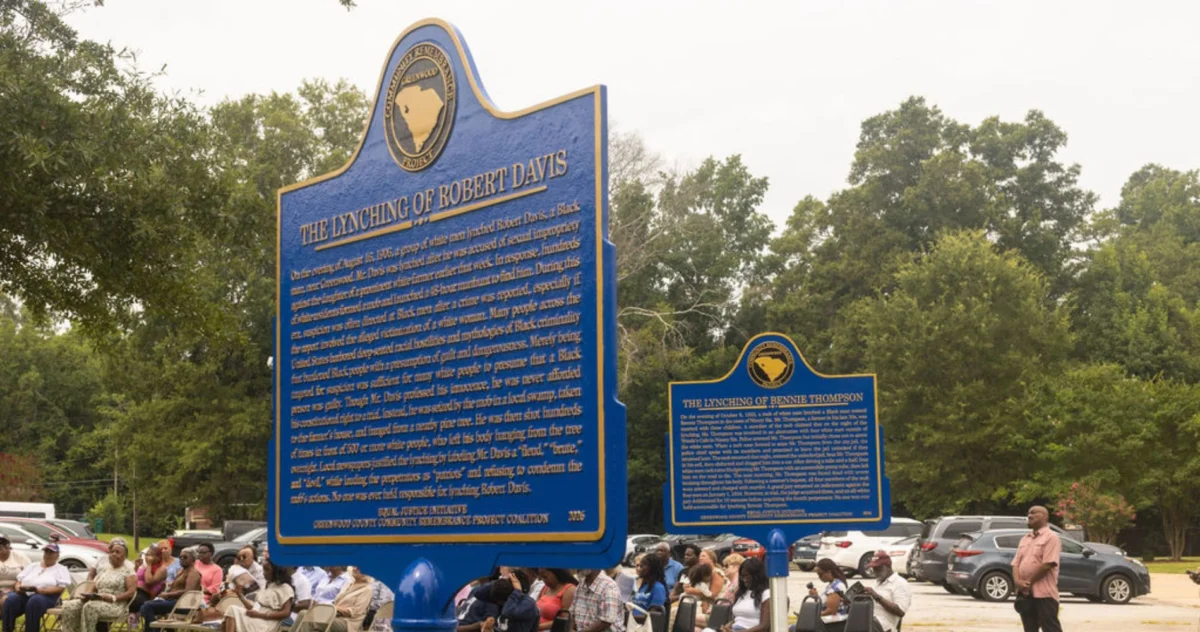
Also dedicated in 2018, the National Memorial for Peace and Justice stands as a solemn tribute to the more than 4,400 documented victims of racial terror lynchings in America between 1877 and 1950. EJI’s extensive research identified these lynchings, which were not merely acts of individual violence but public spectacles designed to enforce racial hierarchy and terrorize Black communities. The memorial features 800 corten steel monuments, each six feet tall, representing the counties where these lynchings occurred, with the names of victims inscribed upon them.
As visitors walk through the memorial, the suspended monuments rise gradually, creating a chilling visual representation of bodies hanging, evoking the pervasive fear and trauma inflicted upon Black Americans. Below these monuments, duplicate columns lie on the ground, awaiting collection by their respective counties—a powerful invitation for communities across America to confront their own history of racial violence and participate in a process of truth-telling and reconciliation. The memorial also includes jars of soil collected from lynching sites, symbolizing the sacred ground where lives were brutally taken, and a contemplative space with water flowing over engraved names, offering a place for reflection and mourning.
Freedom Monument Sculpture Park
Unveiled in 2024, the Freedom Monument Sculpture Park spans 17 acres along the banks of the Alabama River, a site historically significant as a landing point for slave ships and a bustling center for the domestic slave trade. This outdoor museum specifically delves into the institution of slavery, celebrating the resilience, cultural contributions, and profound humanity of enslaved people. The park has quickly been hailed as an "essential American experience," particularly as the nation approaches its 250th birthday, offering a vital perspective on the foundational role of slavery in American development.
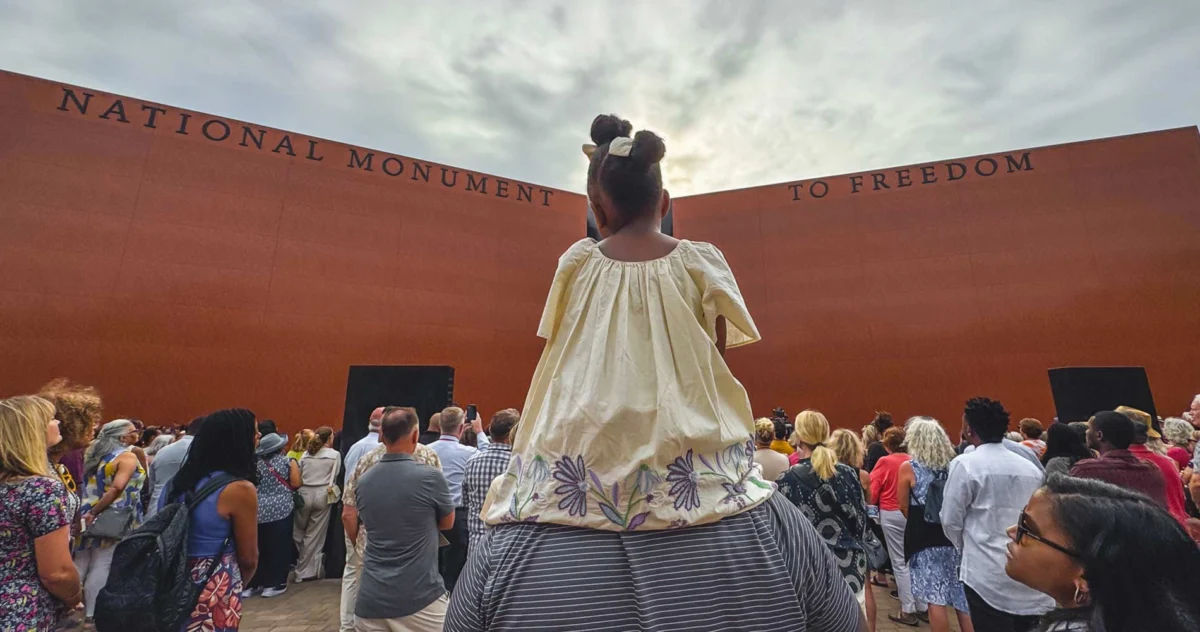
At the heart of the park is the soaring National Monument to Freedom, which was fittingly dedicated on Juneteenth. This monument is inscribed with 122,000 surnames—names carried by millions of Black families today—representing the ancestral connections forged through generations of enslavement. Its purpose is to honor the courage, strength, and tenacity of formerly enslaved ancestors and to provide a tangible link for tens of millions of descendants who carry these names into the 21st century, affirming their heritage and the unbroken chain of family. The park also features sculptures and installations that depict various aspects of enslaved life, from forced labor and family separation to acts of resistance and cultural preservation, all set against the backdrop of the natural landscape, inviting visitors to ponder the land’s own historical memory.
Montgomery Square
The newest addition to the Legacy Sites, Montgomery Square, shifts focus to the pivotal decade of activism between 1955 and 1965, reminding visitors that racial injustice and threats to voting rights are not new phenomena, but battles that can be overcome through collective action. This site is dedicated to the extraordinary courage and determination of Black residents in Montgomery who ignited a movement that transformed the country and the world.
The square commemorates the Montgomery Bus Boycott (1955-1956), sparked by Rosa Parks’s defiance and led by Dr. Martin Luther King Jr., an unprecedented and victorious act of nonviolent resistance against segregated public transportation. It also honors the Selma to Montgomery marches of 1965, which drew national attention to voter suppression and directly led to the passage of the landmark Voting Rights Act. The site celebrates the spirit, lives, courage, and tenacity of those who worked together to dismantle legal segregation and expand democratic participation. It serves as a powerful reminder of the fragility of democratic rights and the ongoing necessity of vigilance and advocacy to protect them, particularly in the face of contemporary challenges to voting access.
Broader Impact and Implications for a Nation’s Conscience
The Legacy Sites collectively represent a profound national investment in truth-telling and reconciliation. By making access free on Juneteenth, EJI reinforces its commitment to educating the public and fostering a deeper understanding of American history. These sites are not merely museums of the past; they are vital educational institutions that illuminate the enduring legacies of slavery and racial injustice on contemporary society.
The impact of the Legacy Sites extends beyond historical commemoration. They serve as catalysts for dialogue, encouraging visitors from all backgrounds to confront difficult truths about America’s past and present. The overwhelming response since their opening, drawing hundreds of thousands of visitors annually, underscores a growing national desire for honest engagement with racial history. By grounding visitors in the tangible realities of historical trauma and resistance, the sites empower individuals to recognize the systemic nature of racial injustice and inspire them to contribute to ongoing efforts for equity and human rights.
EJI’s consistent message, echoed through the narratives presented at each site, is a call for a more just future. Bryan Stevenson and the organization advocate for a society where historical injustices are acknowledged, where the dignity of all people is affirmed, and where the promise of equal justice under the law is fully realized. The Juneteenth celebration at the Legacy Sites in Montgomery is more than a free entry day; it is an invitation to participate in a collective act of remembrance, reflection, and renewed commitment to the unfinished work of justice. It stands as a powerful testament to the conviction that the nation has "come too far to turn around now" in its journey toward true equality and freedom for all.