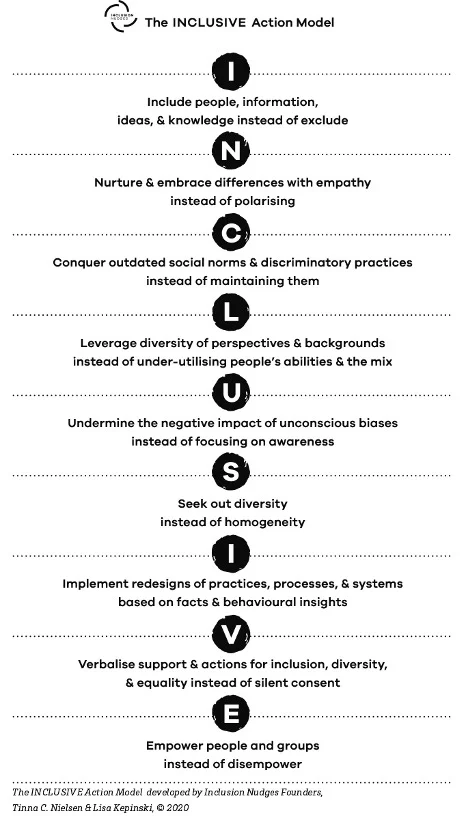
Unconscious bias awareness training has emerged as the most widely adopted intervention in the global effort to combat discrimination and foster equity and inclusion within organizations. This approach, often embraced as a swift remedy, has fueled a burgeoning, multi-billion dollar industry. However, a growing body of research and real-world outcomes increasingly points to a critical flaw: at best, these trainings are ineffective; at worst, they can paradoxically exacerbate the very biases they aim to eradicate. This necessitates a fundamental re-evaluation of current strategies and a pivot towards systemic design solutions for a more just and equitable world.
The Proliferation of Bias Awareness Training
The widespread adoption of unconscious bias awareness training follows a discernible pattern within corporate and institutional settings, often triggered by significant societal movements or internal crises. The #MeToo movement, exposing pervasive gender-based discrimination and harassment, frequently prompted organizations to implement such trainings as a visible response. Similarly, the global resonance of #BlackLivesMatter spurred another wave of bias awareness initiatives, as companies sought to address systemic racial inequalities. Beyond these large-scale movements, individual employee grievances or a general aspiration to demonstrate commitment to diversity, equity, and inclusion (DEI) often lead to the predictable rollout of bias training across entire workforces.
This reflexive reliance on training stems from a prevailing mindset that education alone can "fix" deeply ingrained issues of exclusion, disrespect, and underleveraged human potential. For many leaders, offering bias training serves as a defensive shield against calls for substantive change, creating an illusion of progress. The declaration, "we’re offering bias training across the organization," is often presented as tangible proof that "things are going to change here." Yet, the anticipated transformation rarely materializes, prompting a critical inquiry into the efficacy of this ubiquitous solution.
The Flawed Premise: Why Awareness Isn’t Enough
The core challenge with over-reliance on unconscious bias awareness training lies in its fundamental misunderstanding of human cognition and behavior. The multi-billion dollar industry built around this approach profits from the hopeful but often misguided belief that simply making individuals aware of their biases will lead to lasting behavioral change. Scientific evidence, however, consistently demonstrates that this is not the case.
Human cognition operates through two primary systems, as popularized by psychologist Daniel Kahneman: System 1 (fast, intuitive, unconscious) and System 2 (slow, deliberative, conscious). Unconscious bias resides predominantly within System 1, the realm where the vast majority of our cognitive functioning and rapid decision-making occurs. Traditional, knowledge-based bias awareness training primarily appeals to System 2 – the rational, conscious mind. While individuals may intellectually grasp the concepts of bias and group dynamics and express good intentions, this conscious understanding often fails to penetrate or alter the automatic, deeply embedded processes of the unconscious mind. For lasting behavioral change, interventions must target System 1, which drives habitual actions and spontaneous reactions. When training speaks to the wrong brain system, it inevitably speaks the wrong language for behavioral transformation.
Moreover, the very act of attempting to be consciously aware of unconscious biases can be counterproductive. Research indicates that this effort can lead to mental overload, which paradoxically strengthens the impact of biases rather than mitigating them. When individuals are intellectually aware of biases but lack the practical tools or the systemic environment to act on that knowledge, they can become paralyzed. This inaction often results in an increased reliance on default, biased behaviors, creating a vicious cycle where awareness inadvertently reinforces the problem.
Research Unveils Counterproductive Effects
Beyond mere ineffectiveness, several studies highlight how unconscious bias awareness training can actively backfire:
- Enhancement of Biases and Stereotypes: Contrary to its intended purpose, some research and real-world experiences suggest that unconscious bias awareness training can unintentionally enhance biased thinking and behaviors, thereby strengthening existing stereotypes. By framing bias as a natural, universal human phenomenon, it can inadvertently legitimize its existence without providing effective mechanisms for mitigation.
- Strengthening Misconceptions of Inequality: A 2020 study published in Personality and Social Psychology Bulletin revealed that making individuals in privileged positions aware of racial prejudice, inequality, and discrimination in contemporary society did not necessarily shift their perception of society as largely fair. Instead, it sometimes strengthened this belief and even led to a more optimistic, and often unrealistic, view of past inequalities. This "awareness backfire" indicates that simply highlighting problems without empowering solutions can entrench existing worldviews.
- Passive Acceptance of Bias: When individuals are repeatedly told that bias is "natural" and that everyone holds stereotypes, it can foster a sense of resignation. This can lead to decreased motivation to actively challenge or change their own biases, or even result in a worse outcome where individuals feel less accountable for biased actions, attributing them to an unavoidable human condition.
- Activation of Shame and Fear: The very terminology, "Unconscious Bias Awareness Training" or "Inclusion & Diversity Training," often triggers counter-productive emotional responses in the unconscious mind. Phrases like "I am going to be fixed" can induce anxiety. The fear of "losing privilege, status, and power" can activate loss-aversion, leading to resistance. Some individuals might react with resentment, thinking, "Now, I’ll get them and show them how wrong they are." Conversely, others might develop an inflated sense of self-efficacy, believing, "Now, I know my bias and control it," leading to over-optimism about their unbiased nature. These emotional reactions hinder genuine engagement and openness to change.
- Moral Licensing: Perhaps one of the most insidious unintended consequences is "moral licensing." Attending bias training can create a self-perception of being "one of the good people" who are not discriminating, leading to a sense of moral credentialing. This unconscious mental phenomenon makes individuals more likely to subsequently make immoral or non-inclusive choices because their self-image as morally upright provides a "license" to deviate. Studies, such as those by Monin and Miller (2001), have shown that people who strongly expressed disagreement with sexist statements were later more likely to hire a man for a job stereotypically associated with women and even make sexist comments, feeling secure in their "non-sexist" self-image. Similarly, those who outwardly rejected racist statements have been observed to unconsciously discriminate against racial minorities in subsequent actions. This demonstrates a dangerous disconnect between declared values and actual behavior, directly undermining the goals of DEI.
A Multi-Billion Dollar Industry Under Scrutiny
The market for diversity and inclusion training, heavily dominated by unconscious bias programs, is estimated to be worth billions globally, with some reports placing it well over $8 billion annually and growing. This robust industry thrives on the corporate demand for readily available solutions to complex social issues, often fueled by regulatory compliance, public relations concerns, or a genuine but misinformed desire to address internal inequities. Organizations pour significant financial resources into these programs, often with little to no robust, long-term evaluation of their effectiveness. The return on investment (ROI) for these trainings, in terms of measurable reductions in discrimination or increases in diversity metrics, remains largely elusive. This situation highlights a critical disconnect between investment and impact, where the act of providing training often supersedes the actual outcome of fostering a more inclusive environment.
Towards a New Paradigm: Designing for Inclusion
Given the evidence that traditional awareness training is largely ineffective and can even backfire, a fundamental shift in strategy is urgently required. The human mind’s inherent cognitive biases cannot be simply "unlearned" or "fixed" through conscious effort alone. Instead, the solution lies in working with our interdependent cognitive systems by transforming cognitive barriers into strengths through environmental and systemic design.
This approach necessitates appealing to the unconscious system (System 1) directly, as this is the system that drives automatic behavior. This is where the power of "Inclusion Nudges" comes into play.
What is an Inclusion Nudge?
An Inclusion Nudge is a meticulously designed action intended to influence the unconscious mind, making it effortless for individuals to behave inclusively and to integrate inclusive practices automatically into their daily routines. These actions are practical applications of insights gleaned from behavioral and social sciences, nudge theory, and a deep understanding of the hidden psychological and systemic barriers to achieving genuine inclusion. Inclusion Nudges operate by subtly steering the unconscious mind—both one’s own and that of others—towards inclusive behaviors by default, without requiring conscious deliberation or rational persuasion.
Inclusion Nudges function by minimizing the impact of mental shortcuts (biases) and reducing reliance on the conscious mind to drive change. Consequently, there is no need to employ rational arguments to convince people to alter their behavior. Instead, Inclusion Nudges render the desired inclusive behavior automatic, aligning actions with stated values, beliefs, and intentions. This is achieved without resorting to threats, punishments, or compromising freedom of choice, and often with minimal associated costs. This approach offers a compelling, effective alternative to the current, often futile, efforts in bias awareness.
The Power of Design: The Symphony Orchestra Example
A quintessential example illustrating the power of mitigating bias through design dates back to the 1970s within symphony orchestras. Driven by internal questioning regarding the predominant demographic of white males among musicians, some orchestras pioneered anonymous auditions. In this design, musicians perform behind a screen, completely unseen by the selection committee. The results of initial pilot programs were astonishing: the number of women selected for orchestras increased by as much as 50%, and the ethnic diversity of successful candidates also saw a radical shift. This design was subsequently implemented as a permanent standard. Today, many of the world’s leading symphony orchestras utilize anonymous auditions to ensure that selections are based solely on merit, free from biases related to gender, ethnicity, or appearance. Some orchestras have even gone further, placing a carpet behind the screen to prevent the sound of shoes on the floor from inadvertently priming gender bias in the unconscious minds of committee members, thereby skewing their perception of the musical performance.
Anonymizing candidates is a prime example of an Inclusion Nudge. Despite the compelling evidence of its positive impact, available for over 40 years, its widespread adoption across many industries has been remarkably slow. While technological platforms are now emerging to facilitate such anonymous processes in various organizational contexts, the delay in implementing such a simple yet profoundly effective change underscores the deep-seated preference for awareness-based solutions over design-based ones. The urgency to accelerate the adoption of proven, design-led interventions cannot be overstated.
Implications and the Path Forward
The implications of relying on ineffective unconscious bias awareness training are far-reaching. Organizations risk squandering vast financial resources, fostering a false sense of progress, and inadvertently perpetuating or even strengthening existing biases. This misdirection of effort can lead to cynicism among employees, undermine genuine DEI initiatives, and ultimately fail to create the equitable and inclusive environments that are vital for innovation, talent retention, and societal well-being.
The path forward demands a strategic shift from merely raising awareness to actively redesigning systems, processes, and environments to make inclusion the default. We cannot fundamentally change the way the human mind processes information or eliminate cognitive biases entirely. However, we can meticulously craft environments and systems that minimize the influence of these biases, nudging the unconscious mind towards inclusive actions and outcomes as the norm. This approach, grounded in behavioral science, offers a tangible, evidence-based strategy for achieving true equity and inclusion. It is imperative for leaders and organizations to embrace these design-led solutions, moving beyond the illusion of quick fixes to implement changes that demonstrably work, ensuring inclusion becomes the norm everywhere, for everyone.