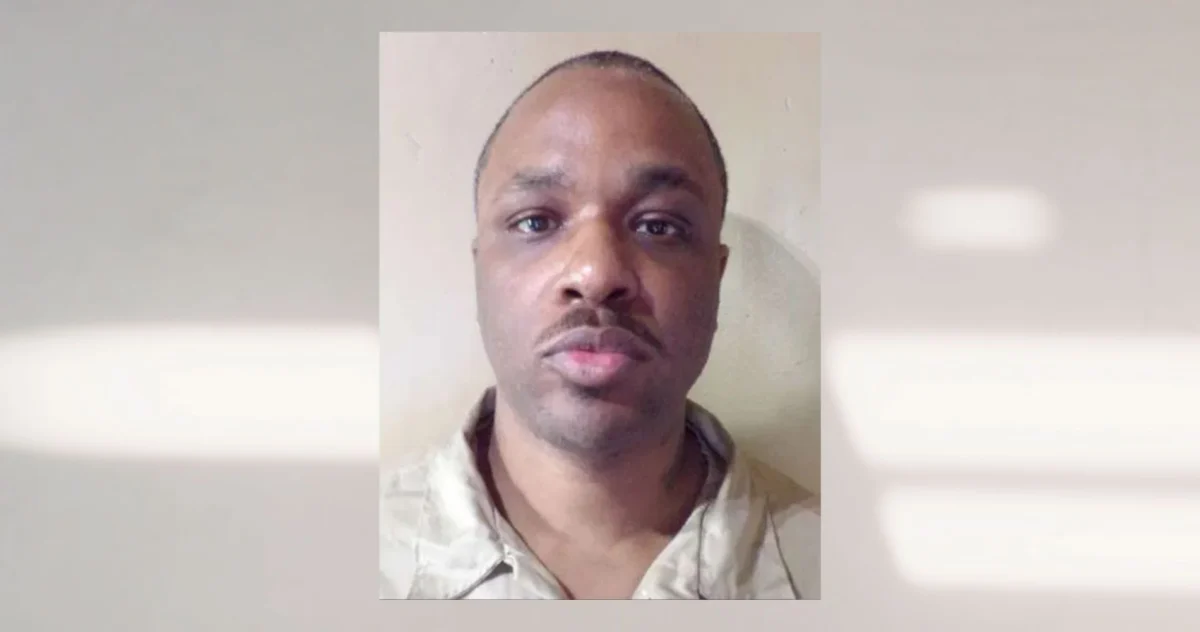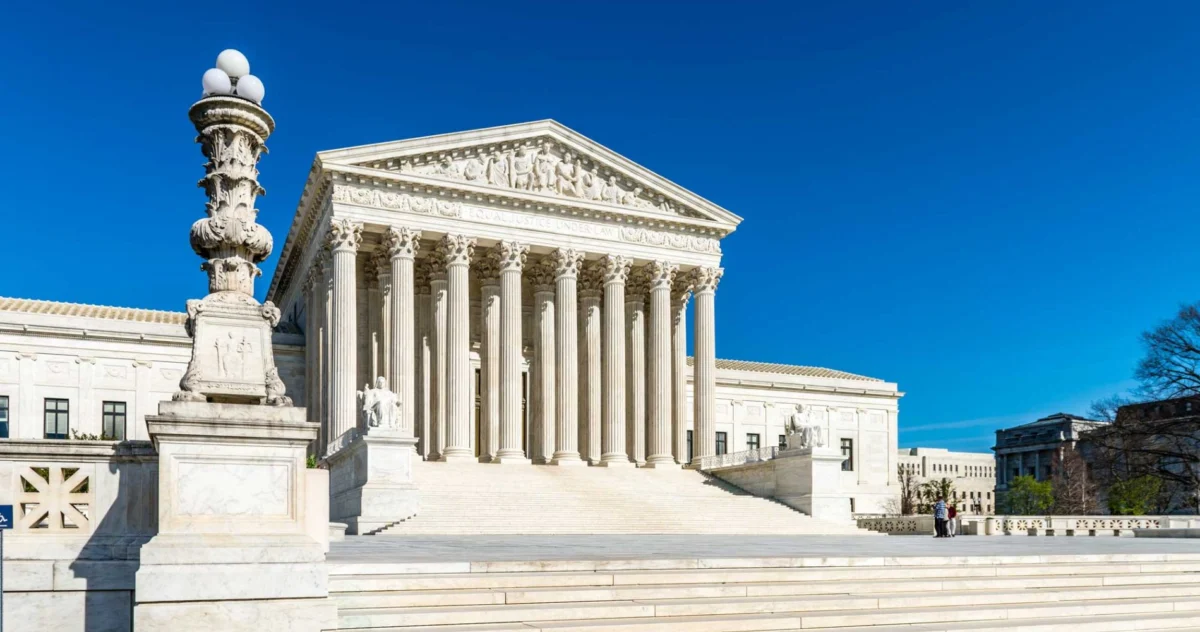
The Supreme Court of the United States ruled on Thursday in favor of Terry Pitchford, a Black man who was sentenced to death in Mississippi, overturning his capital conviction due to demonstrable racial discrimination in jury selection. The 5-4 decision, penned by Justice Brett Kavanaugh, affirmed a lower court’s finding that Pitchford was denied a fair opportunity to challenge the prosecution’s use of peremptory strikes, which systematically excluded Black prospective jurors from his trial. This landmark ruling highlights persistent issues of racial bias within the American justice system, particularly concerning the historically fraught process of jury selection.
The high court’s decision mandates a new trial for Pitchford, now 40, nearly two decades after his initial conviction and death sentence in 2006. The case centered on the failure of the original trial court to properly conduct the third and final step of the Batson v. Kentucky inquiry, a critical legal framework designed to prevent racially motivated jury selection. This procedural misstep, coupled with the notorious record of the prosecutor involved, District Attorney Doug Evans, underscored the systemic challenges to achieving impartial justice in certain jurisdictions.
The Crime and the Initial Trial: A Disputed Path to Justice
Terry Pitchford’s legal ordeal began in 2004, when, at the age of 18, he was implicated in the robbery of a grocery store near Grenada, Mississippi. During the incident, the white store owner was tragically killed by Eric Bullins, another Black teenager who was 16 at the time and fired three shots. Pitchford, by his own account, fired a pistol into the floor, not directly at the victim.
The legal ramifications for the two teenagers diverged significantly. Eric Bullins, due to his age, was not eligible for the death penalty. He subsequently pleaded guilty to manslaughter and received a 20-year prison sentence. Terry Pitchford, however, was charged as an accomplice with capital murder in Grenada County, a jurisdiction where approximately 40% of the population was Black at the time. This demographic context becomes crucial when examining the jury selection process that followed.
During Pitchford’s 2006 trial, the jury pool initially included 40 Black residents. Of these, five were excused for statutory reasons, and another 30 were removed for cause, primarily owing to their stated views on the death penalty. This left only five Black prospective jurors remaining. It was at this juncture that the prosecution, led by District Attorney Doug Evans, exercised peremptory strikes to remove four of these five remaining Black individuals, leaving only one Black person on the final jury that would determine Pitchford’s fate.
Batson v. Kentucky and the Unfinished Inquiry
Defense counsel promptly objected to these strikes, citing Batson v. Kentucky, a landmark 1986 Supreme Court decision that prohibits prosecutors from excluding prospective jurors solely on the basis of race. Batson established a three-step process for evaluating such challenges:
- Step One: The defendant must make a prima facie showing that the prosecutor has exercised peremptory challenges on the basis of race.
- Step Two: If such a showing is made, the burden shifts to the prosecutor to articulate a race-neutral reason for the strike.
- Step Three: The trial court must then determine whether the defendant has proven purposeful racial discrimination, which requires assessing the plausibility of the prosecutor’s race-neutral explanation in light of all the circumstances. Crucially, the defense must be given an opportunity to argue that the stated reasons are merely a pretext for discrimination.
In Terry Pitchford’s trial, the court acknowledged the defense’s prima facie showing (Step One) and required the prosecutor to provide race-neutral explanations (Step Two). However, the trial court abruptly halted the process at Step Two, denying the Batson challenge without allowing Pitchford’s defense team the crucial opportunity to demonstrate that the prosecutor’s stated reasons were pretextual—that is, merely a cover for racial bias. This procedural truncation, as the Supreme Court later found, was a fatal flaw.
The nearly all-white jury subsequently found Pitchford guilty on February 8, 2006, and sentenced him to death the very next day.
A Decades-Long Battle Through the Courts
Pitchford’s legal team immediately began the arduous process of appeal. His initial arguments before the Mississippi Supreme Court highlighted the Batson violation, contending that the state had illegally discriminated against Black prospective jurors. However, the state’s highest court rejected his claim, asserting that his lawyers had failed to adequately rebut the prosecutor’s stated reasons for the strikes. This ruling underscored the procedural Catch-22 Pitchford faced: denied the opportunity to rebut at trial, he was then faulted for not having done so on appeal.
The case then moved to the federal court system. In 2023, a federal district court granted Pitchford federal habeas relief, a mechanism by which federal courts review the legality of a person’s detention by the state. The district court meticulously reviewed the trial record, concluding that defense counsel had indeed attempted to argue pretext but were explicitly cut off by the trial judge, thereby denying them any chance to rebut the state’s reasons.
The federal district court’s ruling was unequivocal: because the trial court had "full-stop ended its Batson analysis" at Step Two, it had never proceeded to the essential Step Three. Consequently, the court vacated Pitchford’s conviction and death sentence and remanded the case for a new trial. This decision, however, was subsequently reversed by the U.S. Court of Appeals for the Fifth Circuit, pushing Pitchford’s case to the nation’s highest judicial body.
The Supreme Court’s Affirmation: "Things Broke Down"
The Supreme Court, in its majority opinion, sided with Pitchford, agreeing that the Mississippi trial court had indeed failed to conduct the essential third step of the Batson inquiry. Justice Kavanaugh, writing for the majority, articulated the court’s concern:
"In this case, whether due to confusion, oversight, an overly hurried jury selection process, or some other cause, things broke down, and the ordinary trial-court procedure for resolving Batson claims at step three never occurred—notwithstanding the repeated efforts of Pitchford’s counsel to pursue and preserve the Batson objection."
This statement not only highlighted the specific procedural error in Pitchford’s trial but also implicitly criticized the trial court’s failure to uphold a fundamental constitutional right. The Court reversed the Fifth Circuit’s decision and remanded the case for a new trial, affirming the principle that a defendant must have a full and fair opportunity to challenge racially discriminatory jury selection practices.
The Shadow of District Attorney Doug Evans: A History of Batson Violations
A significant dimension of the Supreme Court’s decision, and one that adds profound context to Pitchford’s case, is the prosecutor involved: District Attorney Doug Evans. This marks the second instance in which the Supreme Court has vacated a capital conviction due to a Batson claim against Evans. His track record of jury selection practices in Mississippi has drawn national scrutiny and raised serious questions about racial fairness in the region’s justice system.
The most prominent prior case was that of Curtis Flowers, a Black man from Winona, Mississippi, who was tried an unprecedented six times for the same offense, a 1996 quadruple murder. In those six trials, Evans struck 41 of the 42 Black prospective jurors he could have removed. In 2019, the Supreme Court reversed Flowers’ conviction in a 7-2 decision, also authored by Justice Kavanaugh, who wrote, "The numbers speak loudly. The State’s relentless, determined effort to rid the jury of Black individuals strongly suggests that the State wanted to try Flowers before a jury with as few Black jurors as possible, and ideally before an all-white jury."
Flowers, like Pitchford, was convicted and sentenced to death by a jury predominantly composed of white individuals (11 white jurors and one Black juror in the sixth trial). Justice Kavanaugh’s admonition to the Mississippi Supreme Court in the Flowers case for failing to consider Evans’s extensive history of racially biased jury selection resonates strongly with the Pitchford decision. "We cannot ignore that history," Kavanaugh wrote in Flowers. "We cannot take that history out of the case."
The federal district court in Pitchford’s case explicitly acknowledged this "troubling case history…by the same district attorney in the same judicial district." It found that this pattern was well-known when Pitchford’s case reached the Mississippi Supreme Court and should have been thoroughly examined as part of the "totality of the circumstances" analysis required by Batson. The Supreme Court’s consistent stance on Evans’s record sends a clear message about the unacceptability of systemic racial bias in jury selection.
Broader Implications for Racial Justice and Jury Selection
The Supreme Court’s ruling in Terry Pitchford’s case carries significant implications for racial justice, the enforcement of Batson, and the integrity of the judicial process, particularly in jurisdictions with histories of racial discrimination.
Firstly, it reinforces the critical importance of Batson‘s Step Three. The decision clarifies that merely requiring prosecutors to offer race-neutral reasons is insufficient; trial courts must actively allow defense counsel to challenge those reasons as pretextual. This procedural safeguard is essential to prevent perfunctory explanations from masking underlying discriminatory intent.
Secondly, the repeated intervention of the Supreme Court in cases involving District Attorney Doug Evans underscores the persistent challenge of addressing systemic bias, even in the face of established legal precedent. It highlights how individual actors within the justice system can perpetuate discriminatory practices over decades, necessitating higher court intervention. This pattern of rulings may prompt greater oversight of jury selection practices in Mississippi and other states where similar issues have been identified.
Civil rights advocates and legal organizations have consistently pointed to the disproportionate impact of all-white or nearly all-white juries on Black defendants. Studies have shown that all-white juries are significantly more likely to convict Black defendants than diverse juries, and are also more likely to impose harsher sentences, including the death penalty. This decision offers a ray of hope for those who argue that a truly representative jury is fundamental to a fair trial, particularly in capital cases where the stakes are life and death.
The ruling will likely encourage defense attorneys to vigorously pursue Batson challenges and will serve as a reminder to trial judges of their affirmative duty to ensure that jury selection processes are free from racial discrimination. For Terry Pitchford, the decision means a new opportunity for a fair trial, potentially before a jury selected without the taint of racial bias. His journey, from an 18-year-old on death row to a man whose conviction has been overturned by the nation’s highest court, serves as a stark reminder of the enduring fight for equal justice under the law. The path forward will undoubtedly involve a complex legal process, but the Supreme Court’s ruling marks a crucial step toward rectifying a fundamental injustice in his nearly two-decade-long legal battle.