Israel currently serves as a host country to approximately 60,000 displaced individuals, a diverse group comprising about 30,000 asylum seekers from Sudan and Eritrea, alongside 30,000 Ukrainians and Russians seeking refuge from ongoing regional conflicts. Despite the country’s foundational role as one of the original signatories to the 1951 UN Refugee Convention—a treaty born from the global necessity to address displacement following the Holocaust and World War II—these populations exist in a state of permanent legal and social uncertainty. With an asylum recognition rate that has consistently remained below 1%, the vast majority of these individuals navigate a system designed more for deterrence than integration.
Historical context and the legal framework
The arrival of African asylum seekers in Israel peaked in the mid-2000s, with many individuals traversing the Sinai Peninsula to escape war, genocide, and systemic persecution in their home countries. Eritrea, for instance, remains under one of the world’s most restrictive regimes, characterized by indefinite national service, forced labor, and severe repression of political dissent. Sudanese refugees, many of whom arrived nearly two decades ago, fled the violence in Darfur and, more recently, the devastating civil war that erupted in 2023, which has since displaced millions and rendered the prospect of a safe return impossible.
In response to this influx, the Israeli government implemented a series of legislative and structural measures intended to discourage migration. The most notable of these was the construction of a secure fence along the Egyptian border, completed in 2013, which effectively halted the flow of new arrivals. However, for those already within the country, the policy approach shifted toward "voluntary departure" incentives, detention, and the limitation of rights.
Chronology of asylum policy and systemic hurdles
The current climate for refugees in Israel is the result of decades of administrative decisions and judicial challenges.
- 1951: Israel signs the UN Refugee Convention, pledging to protect those fleeing persecution.
- 2000s–2012: A period of significant influx as refugees from the Horn of Africa seek safety in Israel.
- 2013: The border fence with Egypt is finalized, effectively ending irregular migration across that route. The government begins to formalize the use of "Conditional Release Permits" as the primary document for asylum seekers.
- 2013–Present: The Israeli government begins the formal process of reviewing asylum claims, though the recognition rate remains statistically negligible.
- 2014–2018: The operation of the Holot Residential Facility, a detention center used to pressure asylum seekers into leaving the country, highlights the tension between the state’s security concerns and human rights obligations.
- 2022–2024: The invasion of Ukraine creates a new cohort of displaced persons in Israel. While these individuals receive different humanitarian considerations compared to African asylum seekers, they encounter similar systemic barriers regarding long-term legal status, employment, and social welfare.
The mechanics of the Conditional Release Permit
The cornerstone of the Israeli asylum system is the "Conditional Release Permit." While this document protects holders from immediate deportation, it does not function as a work visa, nor does it grant access to national health insurance, social security, or education for children in the same capacity as citizens.
Employers are not strictly prohibited from hiring individuals with these permits, creating a de facto labor market that relies on vulnerable populations without providing them with legal protections. This grey area leaves workers susceptible to exploitation, wage theft, and workplace safety violations, as they have little recourse within the legal system. Furthermore, the administrative burden of renewing these permits every few months—a process often requiring legal intervention by groups like HIAS—places a constant, exhausting pressure on asylum seekers to maintain their precarious status.
Data and comparative analysis
When compared to international standards, Israel’s asylum recognition rates are starkly low. Data from the European Union Agency for Asylum indicates that recognition rates for Eritrean and Sudanese applicants frequently exceed 70% in many European member states, reflecting the internationally recognized risks those individuals face in their home nations. In contrast, Israel’s refusal to grant refugee status to the overwhelming majority of these applicants suggests a policy environment that diverges significantly from the norms established by the 1951 Convention.
The economic and social implications are profound. Without stable status, families cannot plan for the future, invest in education, or build long-term social ties, leading to a state of perpetual "limbo." This is particularly detrimental to the children of asylum seekers, many of whom have lived in Israel for their entire lives, speak fluent Hebrew, and identify culturally with their surroundings, yet remain legally disconnected from the state.
Impact of the regional security crisis
The escalation of violence following the October 7th attack, and the subsequent conflicts in Gaza, Lebanon, and across the regional front, have exacerbated the vulnerabilities of refugee communities. Displaced from areas under fire and facing loss of income due to the war economy, many refugees and asylum seekers have been excluded from government-led emergency relief efforts.

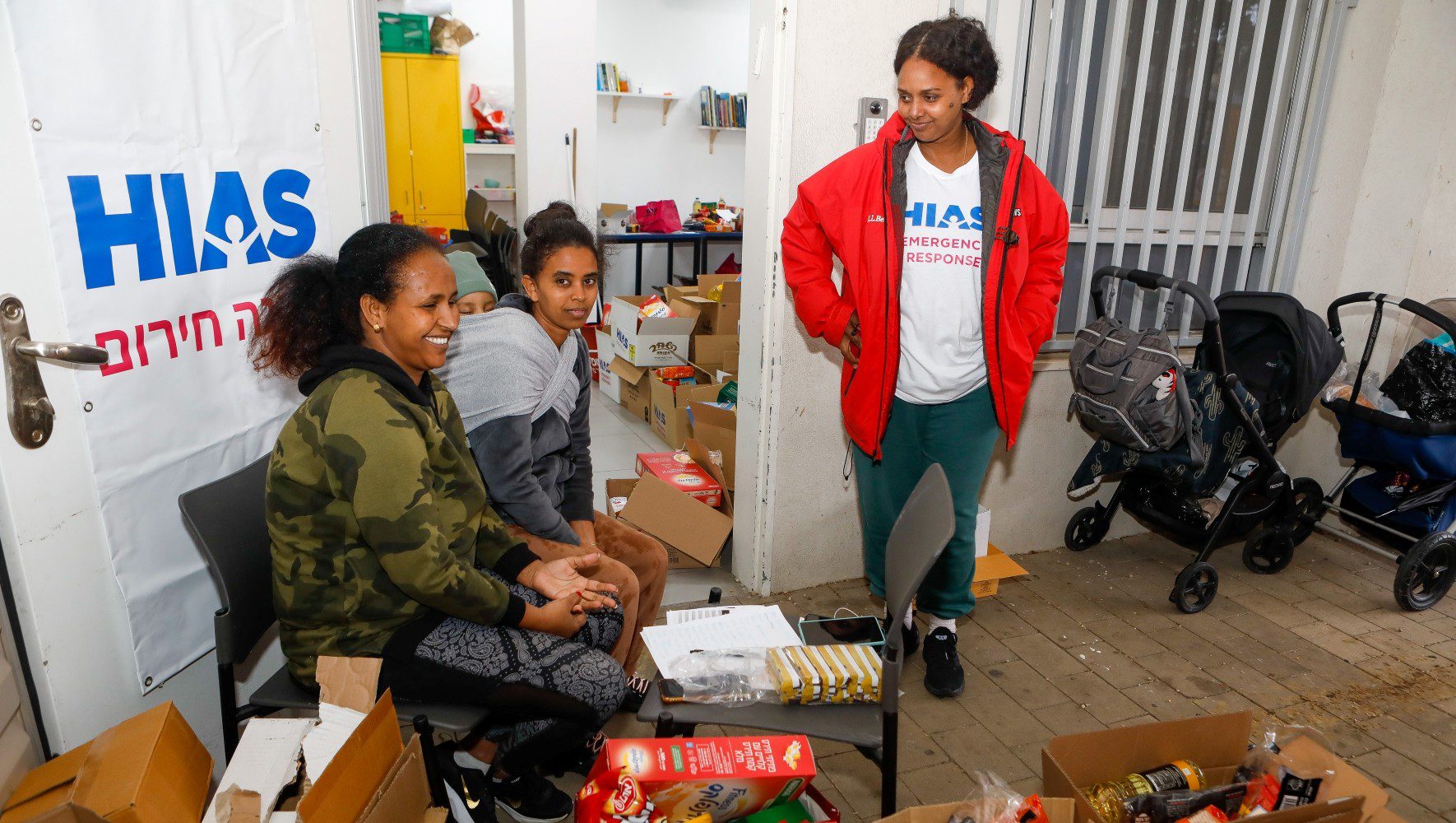
HIAS Israel, which has been operating in the country since 1950, has pivoted its resources to bridge this gap. During the current emergency, the organization has focused on:
- Emergency Humanitarian Aid: Distributing food, household supplies, and cash assistance to families who have lost their livelihoods.
- Mental Health Support: Providing trauma-informed care for individuals forced to flee conflict zones multiple times.
- Strategic Litigation: Utilizing the courts to challenge the exclusion of asylum seekers from state-provided aid and advocating for the fair processing of protection claims.
Institutional responses and the role of NGOs
The Israeli government maintains that its policies are necessary to preserve the country’s national identity and security, frequently citing the need to control borders in a volatile region. Government spokespeople have historically argued that the asylum system is not intended to provide a pathway to permanent residency for economic migrants, often characterizing the asylum seekers as such despite the clear evidence of persecution in their countries of origin.
Conversely, human rights organizations and legal advocacy groups, including HIAS, emphasize that the legal obligations under the 1951 Convention are non-negotiable. They argue that the failure to process claims fairly is a violation of international law and a moral failure to protect those who have survived genocide and war. Through pro bono partnerships with law students and attorneys, these organizations provide the essential legal representation that is often the only thing standing between a refugee and deportation or detention.
Looking ahead: Implications for the future
The status of refugees in Israel remains a microcosm of the broader tensions between state security and human rights. As regional instability continues to displace populations, the reliance on ad-hoc arrangements and "conditional" status is becoming increasingly unsustainable.
The future of these 60,000 individuals depends on potential legislative reform, shifts in judicial policy, and the ongoing advocacy of international organizations. For the refugees themselves, the goal is not merely survival, but the ability to integrate into the communities they have lived in for years, to work with dignity, and to access the rights guaranteed to them by international treaty. As long as the current system of "limbo" persists, the work of HIAS and its partners remains a critical lifeline, ensuring that those who have endured the most harrowing of journeys are not forgotten in the face of ongoing geopolitical crises.