
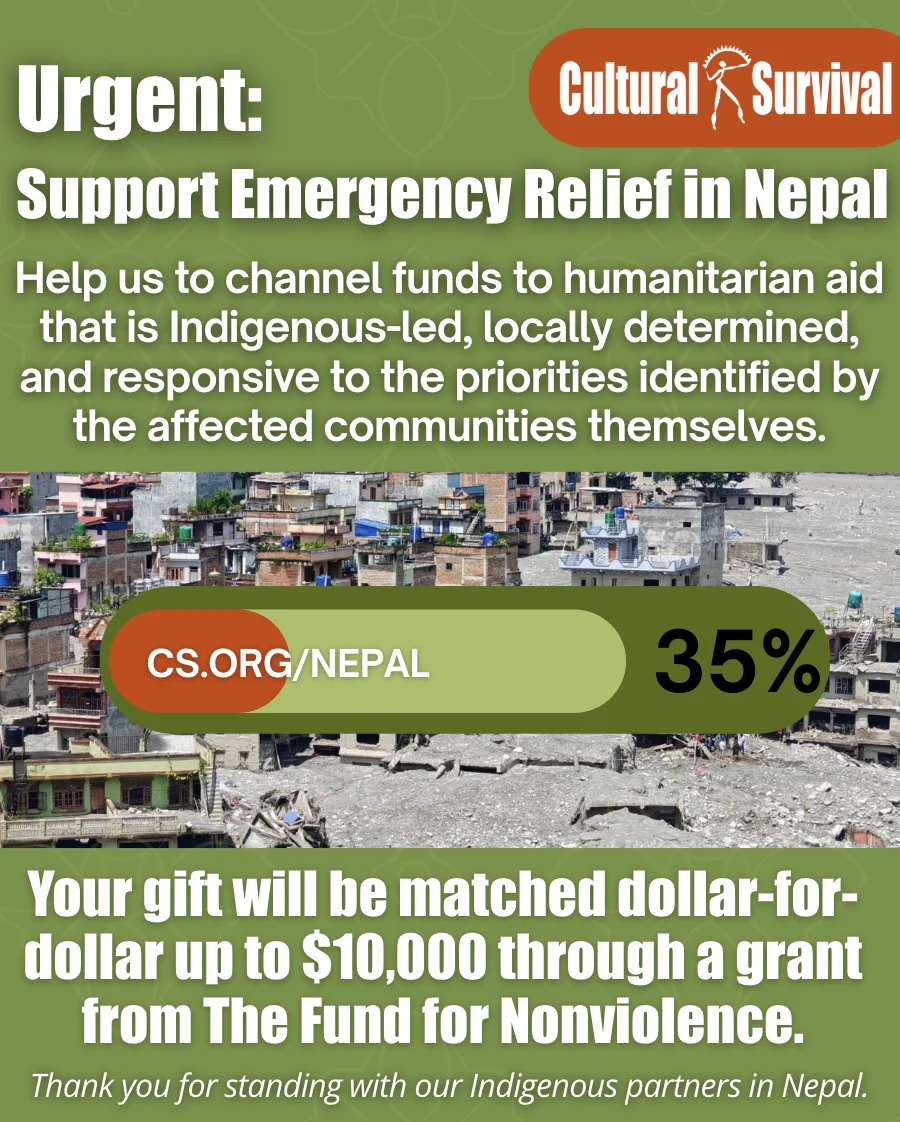
The devastating flash floods that swept through parts of Nepal on August 26 have left behind a trail of profound destruction, heavily impacting vulnerable Indigenous populations whose livelihoods, ancestral territories, and cultural systems remain under immediate threat. Months after the initial catastrophe, the road to recovery has proven arduous, hampered by crippled infrastructure, communication blackouts, and systemic socioeconomic challenges. In response to the unfolding humanitarian crisis, international advocacy groups like Cultural Survival have stepped up relief efforts, channeling critical, Indigenous-led funding directly to those on the front lines of recovery. As relief operations press forward, the disaster has reignited urgent national and international conversations regarding climate vulnerability, global carbon inequity, and the indispensable role of Indigenous ecological knowledge in disaster mitigation and long-term resilience.
Anatomy of a Catastrophe: The Events of August 26
The flash flood event, centered around the Bhote Koshi river basin and surrounding regions, struck with little warning during the height of the monsoon season. Heavy, localized cloudbursts triggered sudden, violent surges of water, mud, and debris that tore through valley settlements, sweeping away homes, bridges, agricultural lands, and critical public infrastructure. Mountainous terrain, already destabilized by seasonal rainfall and compounded by human interference, amplified the destructive velocity of the torrents.
Entire communities found themselves completely isolated within hours. Roads were blocked by massive landslides, and bridges connecting remote villages to regional hubs were washed away. The physical isolation was immediately compounded by a total failure of local communication networks. In the Dhunche district headquarters of Rasuwa, local FM radio station manager Dipak Lama experienced the crippling impact of the disaster firsthand as he attempted to broadcast emergency safety advisories to the public.
"On the very same morning, we had information from the police about the flood, and we were in the middle of sharing information through the radio, but the electricity went off, as the electricity office was destroyed by then," Lama recounted.
For remote Himalayan settlements, local FM radio stations represent a vital lifeline. When conventional telecommunications fail, these stations provide critical updates regarding rescue operations, safe evacuation routes, food distribution points, and emergency medical services. However, the destruction of local power grids—coupled with a systemic lack of backup batteries, generators, and solar power systems in rural broadcasting stations—severely impaired the dissemination of life-saving information during the most critical hours of the crisis.
Humanitarian Response and Matching Aid Initiatives
In the wake of the disaster, Cultural Survival has mobilized alongside local Indigenous partners to ensure that humanitarian aid is determined and executed at the grassroots level. Recognizing that top-down relief models often fail to reach the most marginalized populations, the organization has emphasized Indigenous-led recovery frameworks that respect local autonomy and traditional ways of life.
To accelerate these efforts, a matching grant program has been established to amplify the impact of public donations. Through a dedicated grant from The Fund for Nonviolence, contributions made toward the Nepal emergency relief fund are being matched dollar-for-dollar up to $10,000. Humanitarian coordinators have expressed deep gratitude to early donors, whose prompt contributions have helped bridge critical resource gaps in food security, temporary shelter, and medical supply distribution. Nevertheless, humanitarian organizations emphasize that long-term recovery will require sustained financial commitments, as entire local economies and agricultural systems have been reset to zero.
A Climate-Induced Crisis: Nepal and Global Emissions Disparities
The catastrophic scale of the Bhote Koshi disaster has intensified the ongoing debate regarding state responsibility, environmental degradation, and the disproportionate impacts of global climate change on developing nations in the Global South. Environmental scientists and government officials have firmly categorized the disaster as a climate-induced event, driven by increasingly erratic monsoon patterns, accelerated glacial melting, and extreme weather volatility linked to rising global temperatures.
Dr. Maheshwar Dhakal, Head of the Climate Change Management Division under Nepal’s Ministry of Forests and Environment, addressed the systemic injustice inherent in the disaster during recent policy discussions.
"The loss of life and property we suffered in the Bhote Koshi flood is purely a climate-induced disaster," Dr. Dhakal stated, pointing to the stark imbalance between industrialized carbon emissions and the vulnerability of nations like Nepal.
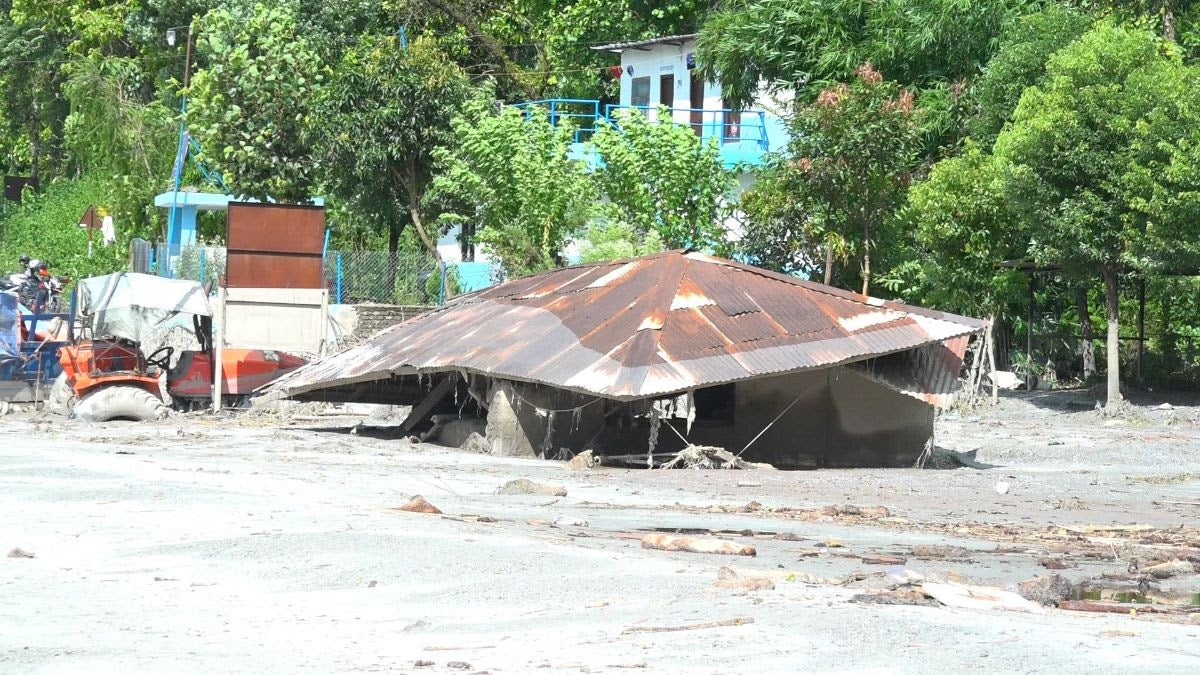
Data highlights this profound disparity: while industrialized nations have emitted vast quantities of greenhouse gases over centuries of economic development, Nepal’s total contribution to global greenhouse gas emissions remains negligible, hovering at less than 0.1 percent. Despite bearing virtually no responsibility for the drivers of global heating, Himalayan nations face some of the most immediate and severe consequences, including glacial lake outburst floods (GLOFs), unpredictable monsoon downpours, and catastrophic soil erosion. Experts argue that international climate finance mechanisms must evolve to provide direct adaptation and loss-and-damage funding to nations experiencing these disproportionate impacts.
Development Pressures and the Fragility of Mountain Ecosystems
Beyond macro-level climate trends, environmental analysts and Indigenous rights advocates point to localized development pressures as a major compounding factor in the severity of the August 26 disaster. Over the past several decades, rapid infrastructure expansion—including the construction of large-scale hydroelectric dams, poorly planned road networks, and commercial excavation projects—has fundamentally altered the geological stability of Nepal’s river valleys.
Unregulated hillside cutting and tunneling for hydropower facilities have loosened topsoils, increased runoff velocities, and disrupted natural drainage systems. When extreme weather events like the August flash flood occur, these human-made vulnerabilities intersect with natural hazards, exponentially multiplying the loss of life and infrastructural damage.
In response to these compounding risks, Indigenous Peoples’ rights organizations and community leaders are forcefully advocating for a paradigm shift in how regional development projects are planned and executed. Central to this advocacy is the enforcement of the principle of Free, Prior and Informed Consent (FPIC), which mandates that Indigenous communities must be fully consulted and granted veto power over industrial projects proposed on their ancestral territories.
The Vital Role of Traditional Ecological Knowledge
As policymakers grapple with strategies for post-disaster reconstruction and long-term climate adaptation, a growing consensus emphasizes the necessity of integrating Indigenous ecological knowledge into national policy frameworks. For generations, Indigenous communities in the Himalayan region have practiced sustainable land management, biodiversity preservation, and soil conservation techniques tailored to the delicate mountain ecosystem.
Traditional practices—such as maintaining sacred forests, utilizing native vegetation for slope stabilization, practicing rotational agriculture, and respecting natural hydrological boundaries—have historically served as effective buffers against landslides and soil erosion. Indigenous leaders argue that modern disaster risk reduction (DRR) strategies frequently fail because they rely exclusively on Western engineering models while ignoring centuries of empirical, localized observations regarding weather patterns and landscape behavior.
Activists are urging the Nepalese government and international development agencies to center Indigenous knowledge systems in future environmental management plans. Protecting forests, preserving traditional biodiversity, and restoring natural watershed boundaries are viewed not merely as cultural preservation efforts, but as essential scientific strategies for mitigating future climate shocks.
Implications for the Future of Disaster Resilience in the Himalayas
The August 26 flash flood serves as a grim warning of the cascading crises facing mountainous developing regions in an era of rapid climate change. As humanitarian organizations work to complete the immediate recovery phase, the broader implications of the disaster demand systemic institutional reforms.
First, investments in decentralized, climate-resilient communication infrastructure—such as solar-powered community radio networks and satellite messaging systems—are urgently required to ensure that remote settlements are never again plunged into information blackouts during emergencies. Second, national development frameworks must undergo rigorous environmental and social audits, prioritizing ecological safety and community consent over rapid, unchecked industrial expansion. Finally, global climate negotiations must accelerate the operationalization of loss-and-finance mechanisms, ensuring that frontline communities in nations like Nepal receive the necessary resources to rebuild, adapt, and protect their ancestral lands from impending climatic threats.
Through solidarity, financial support, and the empowerment of Indigenous-led leadership, organizations like Cultural Survival continue to help communities navigate the difficult path forward. Yet, as the people of Rasuwa and the Bhote Koshi basin rebuild their homes from the wreckage, the global community is reminded that true recovery requires addressing the root causes of climate vulnerability and honoring the knowledge of those who have stewarded these lands for generations.




