
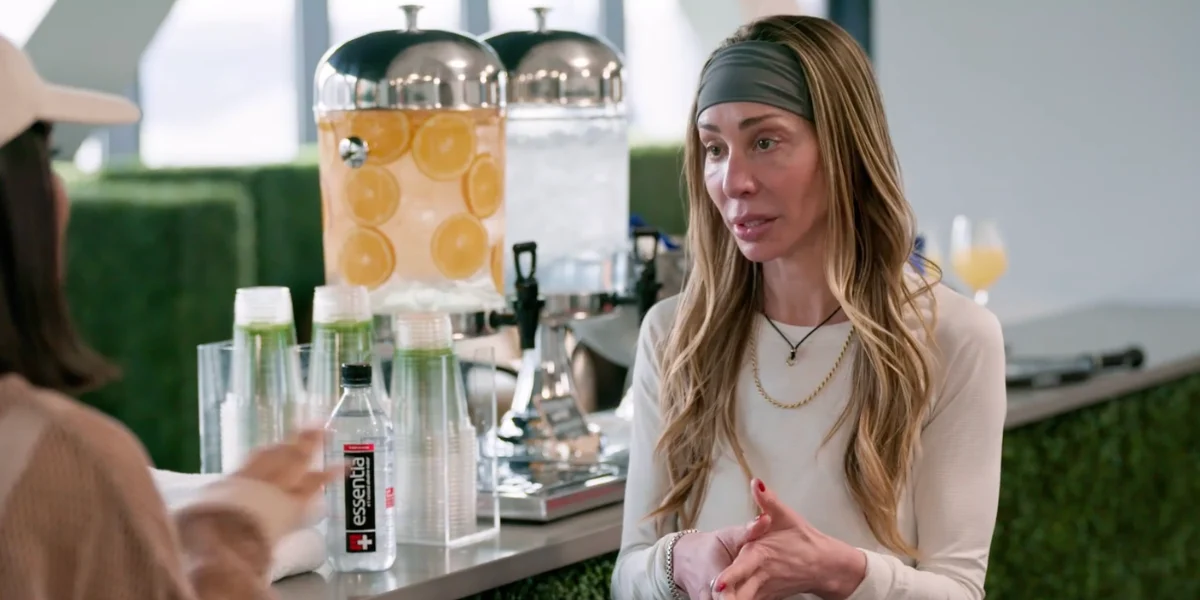
The sixteenth season of The Real Housewives of New York City (RHONY) has introduced a notable shift in the franchise’s casting philosophy, marked by the arrival of Hailey Glassman. As the production navigates the evolving expectations of its audience, the inclusion of Glassman serves as a focal point for discussions regarding queer representation, the dynamics of modern marriage, and the intersection of reality television and personal identity. Glassman’s introduction follows a period of transition for the series, which saw the departure of previous cast members Jenna Lyons and Racquel Chevremont, the latter of whom had been a notable presence within the LGBTQ+ demographic of the show’s viewership.
Contextualizing the Casting Shift
The restructuring of the RHONY cast has been a subject of intense industry scrutiny since the franchise underwent a total reboot for its fourteenth season. The goal was to modernize the series to better reflect the demographics of contemporary New York City. The loss of previous queer-identifying cast members initially sparked concerns among loyal viewers that the show might regress in its diversity efforts. However, the production team’s decision to cast Glassman suggests a strategy aimed at highlighting more candid, unconventional, and unapologetic portrayals of queer life in the metropolis.
Glassman is perhaps best known in the public consciousness for her early association with Jon Gosselin, a period of her life that was heavily scrutinized by the tabloid media in the late 2000s. This early exposure to public judgment appears to have informed her current approach to reality television: she displays a marked lack of inhibition, which contrasts sharply with the often-guarded nature of previous reality stars. Her presence on the program represents a departure from the traditional "Housewife" archetype, moving away from domestic-focused narratives toward a more unfiltered exploration of individual lifestyle choices.
The Dynamics of a Lavender Marriage
One of the most discussed aspects of Glassman’s introduction is her public description of her relationship with her husband, Rubin. Glassman has openly identified their union as a "lavender marriage," a term historically used to describe a marriage of convenience intended to hide the sexual orientation of one or both partners. While the accuracy of her usage has been debated by cultural commentators, the arrangement itself is clear: it is a functional, non-traditional partnership that provides Glassman with a specific form of social and personal stability, while granting her the autonomy to pursue romantic and sexual relationships exclusively with women.
This narrative thread provides the show with a unique look at the spectrum of modern relationship structures. Unlike previous queer cast members on the Bravo network who were often depicted in committed, monogamous relationships, Glassman’s storyline centers on the complexities of dating, the logistical challenges of queer courtship, and the social friction that arises when these choices are introduced into a predominantly heteronormative social circle.
Chronology and Episode Developments
The first few episodes of season 16 have established a clear trajectory for Glassman’s role in the group dynamic:
- Introduction: Glassman’s arrival was characterized by a distinct aesthetic, featuring an unconventional mode of transport—rollerblading through Manhattan in a full-length fur coat. This established her as an outlier within the group’s social hierarchy.
- Social Integration: During the early episodes, Glassman made a concerted effort to introduce her external social circle to the other cast members, including bringing a female date to a Lunar New Year event hosted by castmate Jessel Taank.
- Conflict Emergence: Tensions escalated in the third episode when cast member Erin Lichy utilized details of Glassman’s personal life—specifically a humorous anecdote regarding a past injury sustained during a sexual encounter—as a rhetorical weapon during a confrontation. This incident highlights the recurring friction between the cast members’ differing perspectives on sexuality and personal boundaries.
Analysis of Group Dynamics and Social Friction
The friction between Glassman and the wider cast offers a window into the challenges faced by minority voices in high-pressure, ensemble reality settings. Observers of the genre have noted a recurring pattern where queer cast members are subjected to a form of "othering." When cast members like Erin Lichy respond to Glassman’s openness with curiosity that borders on performative or condescending, it serves as a commentary on the prevailing attitudes toward queer sexuality in affluent social circles.
The specific interaction regarding the "strawberry jam" comment serves as a case study in how social slights are processed within the RHONY ecosystem. When Glassman compared a castmate to a generic, unmemorable condiment, the response was not merely an interpersonal conflict but an attempt to reframe her identity as "perverse" or "kinky." This tendency of straight cast members to equate queer identity with salaciousness has been a point of critique in similar shows, such as The Real Housewives of Miami, and remains a central tension point in the current season of RHONY.
Athleticism and Personal Interests
Beyond the interpersonal drama, Glassman’s background as a competitive athlete adds a layer of depth to her persona that is rarely explored in reality television. Having served as a high school tennis captain and a collegiate athlete, her interest in sports—ranging from competitive tennis to pickleball—aligns with a demographic of the viewership that values athletic representation. Her brief stint in collegiate sports, which ended prematurely due to disciplinary action involving cannabis use, serves as another example of her transparency regarding her past, further distancing her from the curated, often sanitized image typically associated with reality stars.
Her recent foray into the concept of "queer birding"—and her initial misunderstanding of the term—provides a moment of levity that underscores the show’s attempt to bridge the gap between niche cultural subcultures and the broader audience.
Broader Implications for the Franchise
The inclusion of a figure like Hailey Glassman indicates that the production team is prioritizing "high-friction" personalities that can generate organic conflict while representing a broader range of the human experience. The implications for the franchise are significant:
- Normalization vs. Sensationalism: The challenge for producers remains the delicate balance between showing the reality of queer life and allowing the cast to treat such lives as objects of fascination or derision.
- Audience Engagement: By focusing on a character who is unapologetic about her dating life, sexual history, and unconventional marriage, the show is signaling a move toward more provocative content that mirrors the changing cultural landscape of New York City.
- Future Casting: Should Glassman’s tenure prove successful in maintaining high viewership, it is likely that the franchise will continue to seek out cast members who exist outside of traditional social structures, potentially moving away from the "suburban family" model that dominated the series in its earlier iterations.
As the season progresses, the focus will likely remain on whether Glassman can maintain her autonomy within a group that has shown an inclination to use her life as a point of contention. Her ability to navigate these social minefields, while simultaneously serving as a catalyst for the show’s most dynamic storylines, will determine her long-term viability as a central figure in the RHONY canon. For now, her presence has effectively ensured that the discourse surrounding the franchise remains as volatile and engaging as the city it aims to represent.




