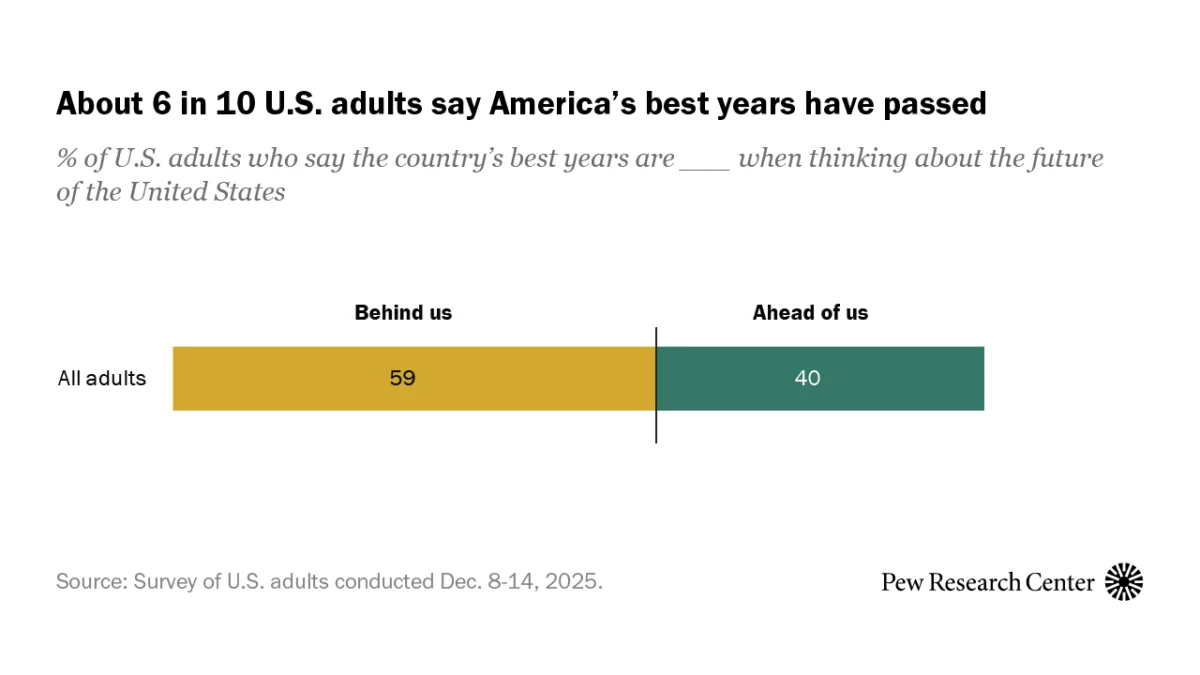
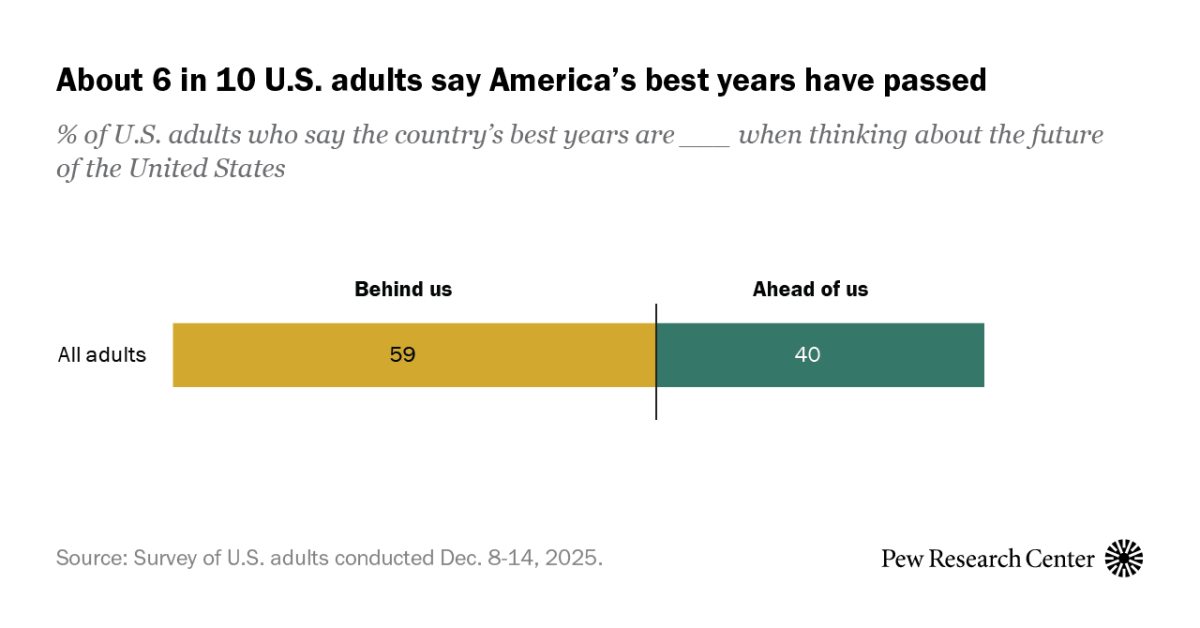
As the United States approaches its 250th anniversary, a significant portion of its populace believes the nation’s most prosperous days are in the rearview mirror. A comprehensive survey conducted by the Pew Research Center in December 2025 reveals a prevailing sentiment of nostalgia, with 59% of Americans stating that the country’s best years have already passed. This outlook contrasts sharply with the 40% who remain optimistic that the nation’s brightest era lies ahead.
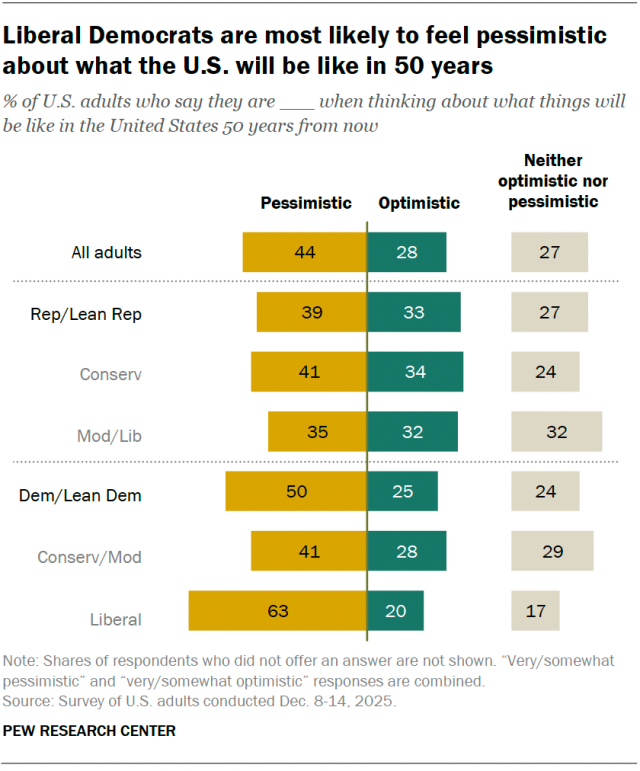
The introspection surrounding the upcoming milestone extends beyond a simple evaluation of past glories. When asked to project their vision of the United States 50 years into the future, a pronounced wave of pessimism washes over the American public. A substantial 44% of respondents expressed pessimism about the nation’s trajectory over the next half-century, while a mere 28% conveyed optimism. A notable 27% of Americans remain neutral, neither optimistic nor pessimistic about the long-term outlook. These findings underscore a palpable sense of uncertainty and, for many, a deepening concern about the nation’s future course.
This research, conducted by the esteemed Pew Research Center, is part of a broader initiative to gauge public perception of the United States’ direction as it stands on the cusp of its semiquincentennial celebration. The timing of this survey is particularly poignant, coinciding with parallel analyses by the Center examining the transformations the U.S. has undergone since its bicentennial in 1976. The inquiry into the nation’s historical trajectory and future prospects aims to provide a comprehensive understanding of the American psyche during this pivotal moment.
The survey, which canvassed 3,560 adults from December 8th to 14th, 2025, employed members of the Pew Research Center’s American Trends Panel, ensuring that the results represent a robust cross-section of U.S. adult opinion. The detailed methodology and survey questions are publicly available, allowing for transparency and further academic scrutiny.
Divergent Views Across Demographic and Political Lines
The overarching sentiment of looking to the past for America’s best years is not uniformly distributed across the population. Significant variations emerge when analyzing the data through the lenses of race, ethnicity, income, and political affiliation, highlighting the complex and multifaceted nature of national sentiment.
Racial and Ethnic Perspectives:
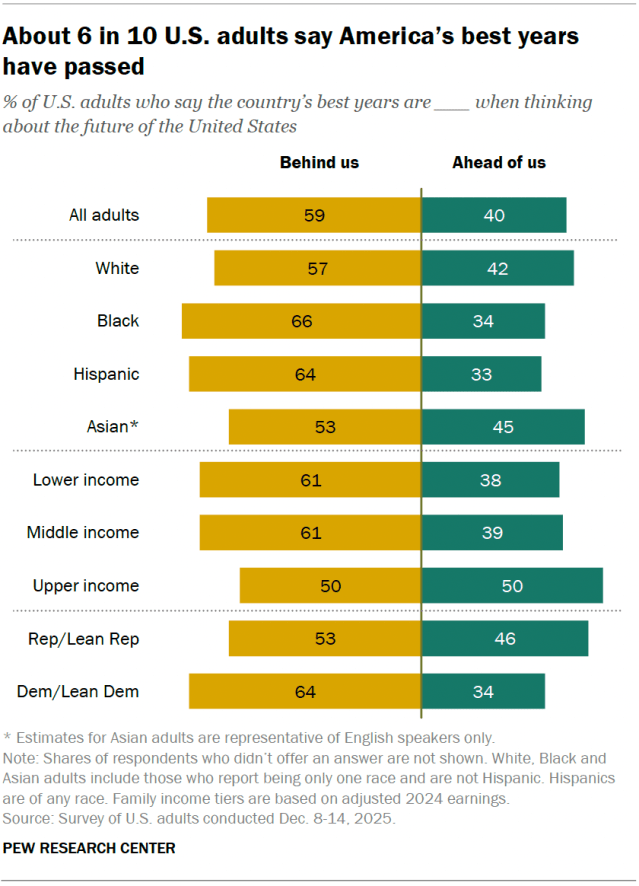
A majority across key demographic groups share the view that America’s peak has been reached. This sentiment is particularly strong among Black adults, with 66% believing the country’s best years are behind them. Hispanic adults also lean heavily in this direction, with 64% expressing a similar view. Among White adults, 57% concur that the nation’s golden age has passed. Even among Asian adults, a slight majority of 53% hold this perspective, indicating a widespread feeling of historical achievement rather than future potential.
Income-Based Outlooks:
Economic standing appears to be a significant factor in shaping views on the nation’s trajectory. A substantial 61% of adults in lower-income brackets believe the country’s best years are in the past. This sentiment is mirrored by an identical 61% of middle-income adults. In contrast, upper-income adults present a more divided picture, with an even split: 50% believe the nation’s prime has passed, while the other half remain hopeful that its best is yet to come. This suggests a correlation between economic security and optimism about the future.
Partisan Divides:
Political affiliation plays a crucial role in shaping perceptions of America’s past and future. Democrats and those leaning Democratic are more inclined to believe the country’s best years are behind it, with 64% holding this view, compared to 34% who believe its best years are ahead. Republicans and Republican leaners, while still leaning towards a past golden age, exhibit a more divided stance. Fifty-three percent of Republicans believe the nation’s best years have passed, while a considerable 46% maintain that they are still on the horizon.
A Shifting Political Landscape: A Look Back at Partisan Sentiment
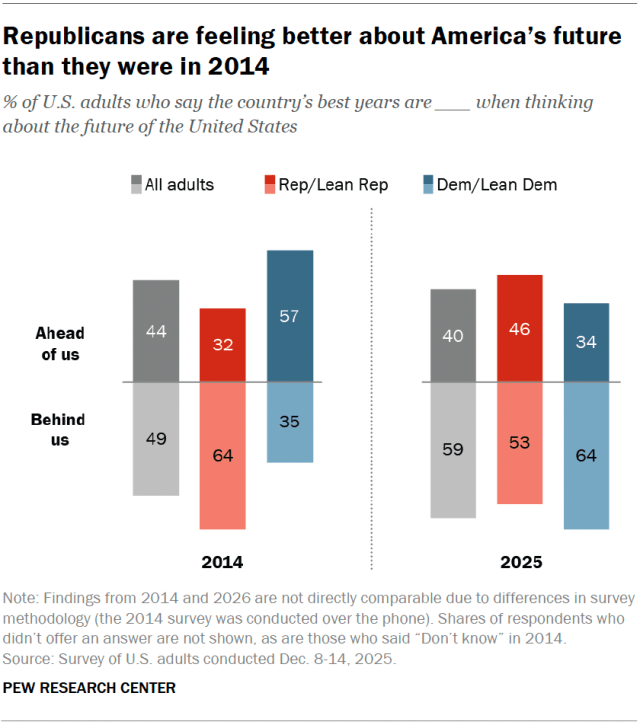
The current partisan divide on the question of America’s best years is not static; it reflects a significant evolution in political outlooks over time. A comparison with a similar Pew Research Center telephone survey conducted in 2014, a period when the Democratic Party held sway in both the White House and the U.S. Senate, reveals a stark reversal in partisan sentiment.
In 2014, under a Democratic administration, Democrats were notably more optimistic about the nation’s future, with 57% believing its best years were ahead, compared to only 32% of Republicans who shared this view. Conversely, in that earlier survey, a majority of Republicans (64%) expressed the belief that the country’s best years had already passed.
This dramatic shift underscores the influence of the prevailing political climate on public opinion. As the party in power changes, so too does the demographic that tends to express optimism or pessimism about the nation’s trajectory. It is important to note that due to methodological differences between the 2014 telephone survey and the 2025 panel-based survey, a direct statistical comparison is not entirely appropriate. However, the broad trends in sentiment shift offer valuable insights into the dynamic nature of national optimism.
The Shadow of Pessimism: Looking 50 Years Ahead
The apprehension surrounding the nation’s future is further amplified when Americans are asked to contemplate the United States in 50 years. The survey reveals a predominantly downbeat outlook, with pessimism outweighing optimism by a significant margin.
As previously noted, 44% of Americans are pessimistic about what the U.S. will be like in 2075. This pessimism is more pronounced among Democrats, with half of all Democrats expressing pessimistic views, compared to 39% of Republicans. The ideological spectrum within the Democratic Party shows a particularly stark divide: a substantial 63% of liberal Democrats report feeling either very or somewhat pessimistic about the country’s future. This contrasts with a still considerable, but lower, 41% of moderate and conservative Democrats who share this apprehension. Within the Republican Party, however, opinions on this question do not vary as significantly by ideology, suggesting a more unified, albeit still concerned, outlook among its members.
Broader Implications and Contextualizing the Findings
The prevailing sentiment that America’s best years are behind it, coupled with a widespread pessimism about the distant future, carries significant implications for the nation’s civic discourse and policy-making. This mood could influence everything from individual investment decisions and career choices to electoral outcomes and the public’s receptiveness to ambitious national projects.
The approaching 250th anniversary, intended as a moment of national pride and reflection, appears to be instead serving as a catalyst for introspection that, for many, leads to a somber assessment of the present and future. The findings suggest a populace grappling with a complex interplay of perceived decline in certain areas, alongside enduring national strengths.
Scholars and political commentators have long debated the cyclical nature of national confidence. Periods of great optimism, often following periods of national triumph or technological advancement, can give way to eras of doubt and introspection, particularly when faced with economic challenges, social upheaval, or geopolitical shifts. The current sentiment may be a reflection of these broader historical patterns, amplified by contemporary anxieties surrounding issues such as economic inequality, political polarization, and global instability.
The Pew Research Center’s continued commitment to tracking these sentiments provides a vital barometer for understanding the American mind. As the nation embarks on the final years leading up to its 250th anniversary, these findings offer a crucial, albeit sobering, insight into the collective mood of a country at a crossroads, prompting a national conversation about what has been achieved, what has been lost, and what future can still be built. The stark divergence in views across demographic and political lines also underscores the ongoing challenge of forging a unified national identity and a shared vision for the future in an increasingly fragmented society.
The data from this survey serves as a critical resource for policymakers, educators, and citizens alike, prompting a deeper examination of the factors contributing to this prevailing mood and the potential pathways toward fostering a more optimistic and forward-looking national spirit as America looks to its next chapter. The upcoming anniversary offers not just a commemoration of the past, but a critical opportunity to address the concerns that are shaping the nation’s present and its future.