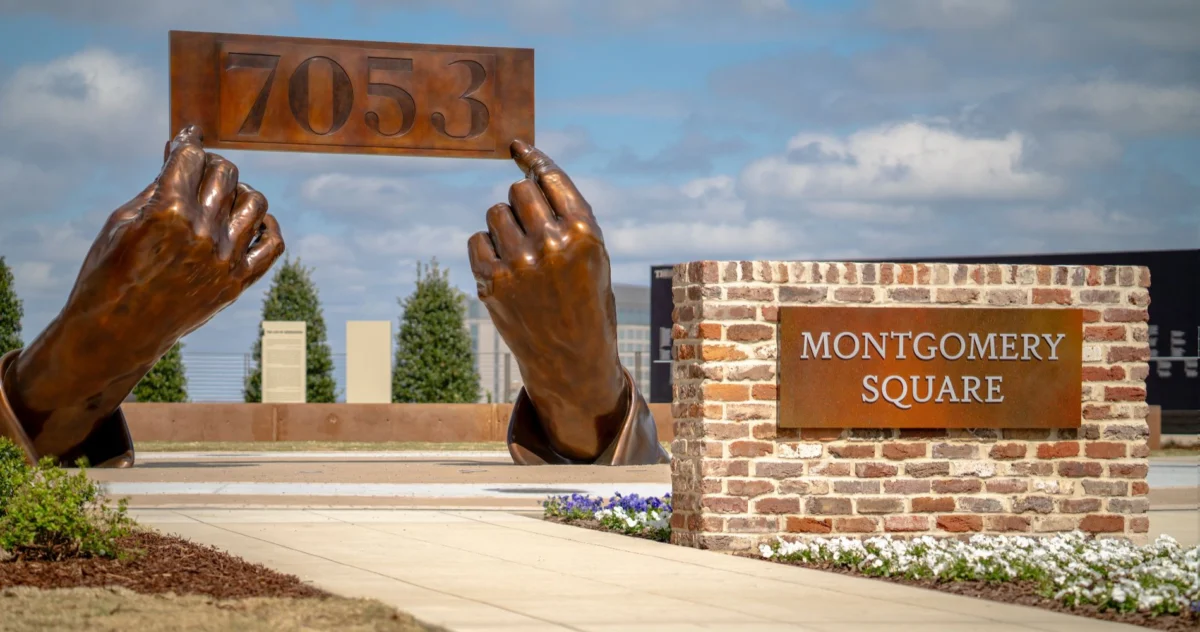
Montgomery, Alabama – The city of Montgomery has officially unveiled Montgomery Square, a powerful new outdoor interpretive site dedicated to the pivotal decade from 1955 to 1965, a period during which the courageous stand of Black residents against systemic racial injustice ignited a movement that fundamentally transformed the United States and reverberated across the globe. This significant addition to the Equal Justice Initiative’s (EJI) renowned Legacy Sites network, which includes the Legacy Museum, the National Memorial for Peace and Justice, and the Freedom Monument Sculpture Park, emphasizes the profound "power of place" by inviting visitors to physically engage with the history that unfolded on these very grounds.
A Pivotal Decade in American History
The decade between 1955 and 1965 in Montgomery, Alabama, was not merely a local struggle; it was a crucible that forged the modern American Civil Rights Movement. Before this period, the South, and indeed much of the nation, operated under the oppressive weight of Jim Crow laws, a system of racial segregation and discrimination enforced by law and custom. In Montgomery, Black citizens faced daily humiliation, economic disenfranchisement, and the constant threat of violence, particularly on segregated public transportation. Buses, a vital mode of transport for many, became a symbol of this systemic oppression, where Black passengers were forced to enter through the front to pay, then exit and re-enter through the back, often being left behind or forced to stand even when seats were available in the "white" section. This deeply entrenched system of racial hierarchy created an environment ripe for change, needing only a spark to ignite a revolution.
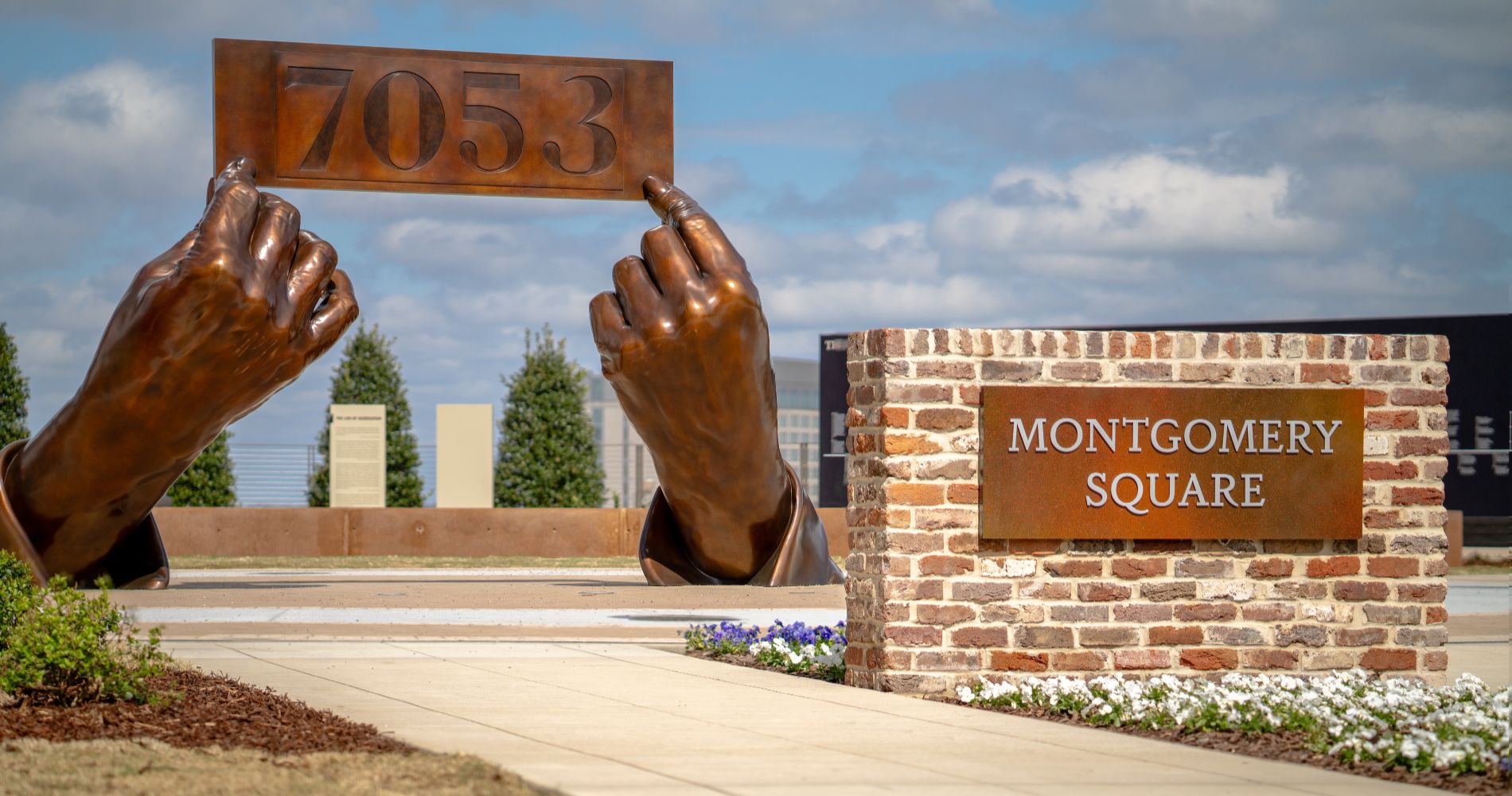
The opening of Montgomery Square offers an unparalleled opportunity to delve into this complex history, presenting a meticulously researched narrative that highlights both the well-known figures and the unsung heroes whose collective bravery laid the groundwork for a more equitable society. Located strategically adjacent to the Elevation Convening Center and Hotel, at the apex of Montgomery Street, the site holds immense symbolic weight. This very street served as the triumphant final stretch for tens of thousands of voting rights activists who completed the historic Selma to Montgomery March on March 25, 1965, a moment that galvanized national support for federal intervention and ultimately led to landmark legislation.
A Timeline of Transformation: 1955-1965
The journey through Montgomery Square is structured around a comprehensive timeline, guiding visitors through the critical events of this transformative decade.
- December 1, 1955 – Rosa Parks’ Arrest: The catalyst for the Montgomery Bus Boycott occurred when Rosa Parks, a seamstress and NAACP activist, refused to give up her seat to a white passenger on a city bus. Her arrest was not an isolated incident but a carefully planned act of civil disobedience, following earlier, less publicized acts of defiance, such as that of 15-year-old Claudette Colvin nine months prior. Parks’ action, backed by a strong community infrastructure, provided the perfect moment for organized resistance.
- December 5, 1955 – The Montgomery Bus Boycott Begins: In response to Parks’ arrest, the Black community of Montgomery, organized by the Women’s Political Council and quickly formalized under the Montgomery Improvement Association (MIA) with the Reverend Dr. Martin Luther King Jr. as its president, launched a city-wide bus boycott. What was initially planned for a single day extended for 381 days, becoming one of the longest and most successful mass protests against racial segregation in history. This act of collective nonviolent resistance captured national attention and demonstrated the power of organized economic and social pressure.
- November 13, 1956 – Browder v. Gayle Ruling: The legal challenge to bus segregation, Browder v. Gayle, reached the U.S. Supreme Court. The Court affirmed a lower court’s decision, declaring Alabama’s and Montgomery’s laws requiring segregated buses unconstitutional. This ruling was a monumental victory, validating the boycott’s demands and setting a precedent for desegregation.
- December 20, 1956 – Boycott Ends, Buses Desegregated: Following the Supreme Court’s decision, the Montgomery Bus Boycott officially ended. On December 21, Black and white passengers rode integrated buses for the first time. This victory not only desegregated public transportation in Montgomery but also solidified Dr. King’s leadership and provided a blueprint for future civil rights campaigns across the South.
- 1957 – Formation of the Southern Christian Leadership Conference (SCLC): Building on the success of the Montgomery Bus Boycott, Dr. King and other Black ministers and civil rights leaders founded the SCLC, an organization dedicated to coordinating and supporting nonviolent direct action as a means of achieving full equality for African Americans.
- Early 1960s – Escalation of the Movement: While the primary focus of Montgomery Square remains the 1955-1965 period, it implicitly acknowledges the broader civil rights struggles that continued to build momentum. The early 1960s saw the proliferation of sit-ins, Freedom Rides, and other nonviolent protests across the South, challenging segregation in various public accommodations and interstate travel. These actions, often met with brutal violence, drew increasing national and international scrutiny to the plight of Black Americans.
- 1963 – Birmingham Campaign: Though not in Montgomery, the events in Birmingham, Alabama, including the use of police dogs and high-pressure water hoses against peaceful demonstrators and Dr. King’s "Letter from Birmingham Jail," played a crucial role in shifting public opinion and pressuring the federal government to act.
- 1964 – Civil Rights Act: Largely a result of the relentless pressure from the Civil Rights Movement, President Lyndon B. Johnson signed the Civil Rights Act of 1964, outlawing discrimination based on race, color, religion, sex, or national origin in employment practices and public accommodations.
- March 7, 1965 – "Bloody Sunday" in Selma: The struggle for voting rights intensified in Selma, Alabama. On March 7, 1965, civil rights marchers attempting to cross the Edmund Pettus Bridge were brutally attacked by state troopers and local law enforcement, an event known as "Bloody Sunday." Images of the violence shocked the nation and spurred a renewed push for federal voting rights legislation.
- March 25, 1965 – Selma to Montgomery March Concludes: After two failed attempts and intense negotiations, the Selma to Montgomery March, led by Dr. King and protected by federalized National Guard troops, successfully reached the Alabama state capitol. The culmination of this historic march on Montgomery Street served as a powerful demonstration of resilience and a demand for the fundamental right to vote.
- August 6, 1965 – Voting Rights Act: In direct response to the Selma campaign and the broader movement, President Johnson signed the Voting Rights Act of 1965, which prohibited racial discrimination in voting. This act eliminated literacy tests, poll taxes, and other discriminatory practices that had systematically disenfranchised Black Americans for decades.
Immersive Exhibits Bring History to Life
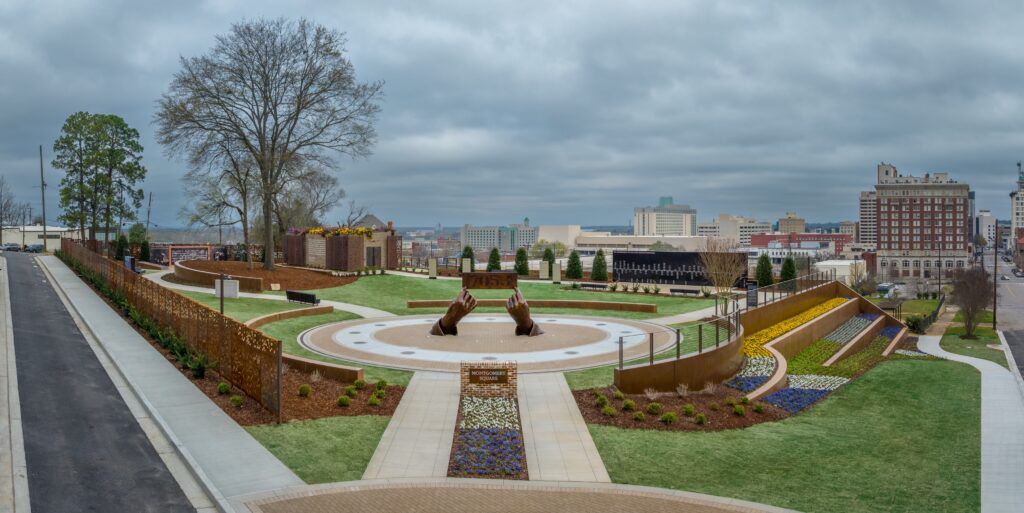
Montgomery Square is designed to be an immersive educational experience, blending art, photography, and personal narratives to provide a deeply moving encounter with history. Visitors will literally walk in the footsteps of the women, men, and children whose bravery and determination in the face of violent opposition ultimately led to the passage of the Voting Rights Act.
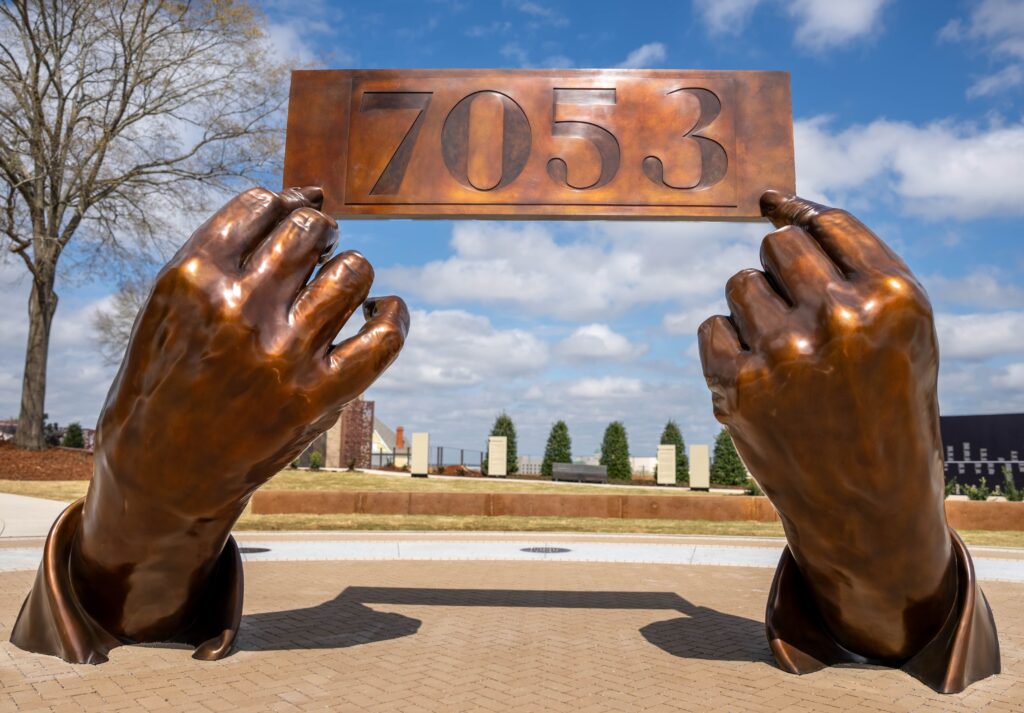
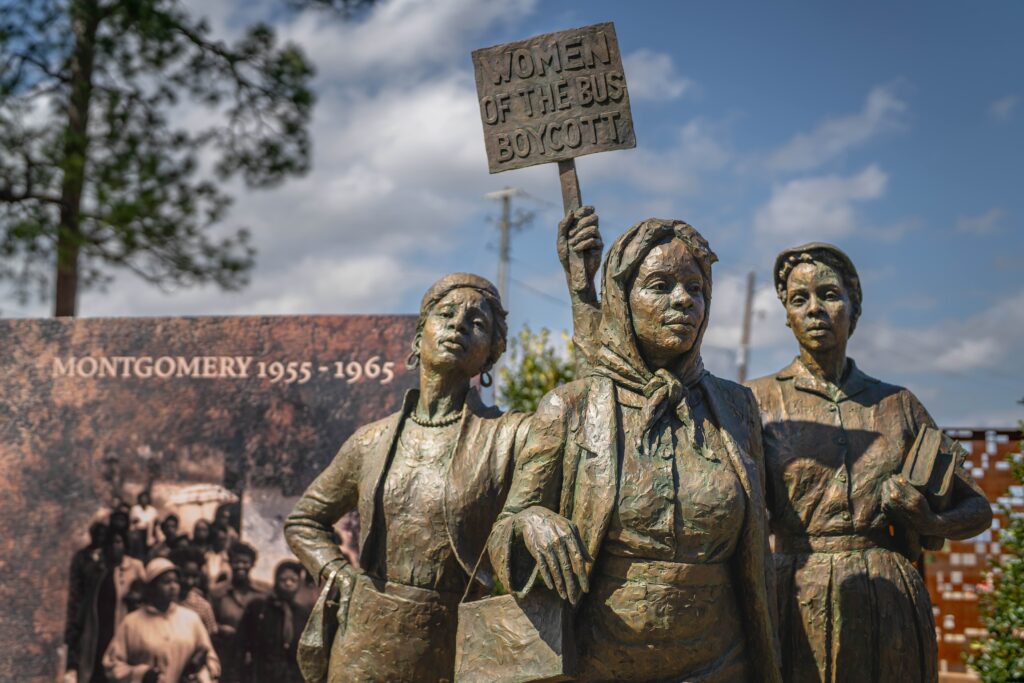
The site features powerful sculptures by acclaimed artists Hank Willis Thomas and Basil Watson. Thomas’s work often explores themes of identity, race, and popular culture, and his sculpture at Montgomery Square celebrates arrest numbers as badges of honor, transforming symbols of oppression into emblems of defiance. Basil Watson’s sculpture vividly depicts proud participants in the Montgomery Bus Boycott, capturing the spirit of unity and resilience that sustained the community through over a year of hardship. Historic photography from the era further illustrates the deeply researched narrative, offering candid glimpses into the daily lives, struggles, and triumphs of the movement’s participants.
Central to the visitor experience is "Heroes Hall," an indoor space where new documentary films are screened. These films bring to life the stories of key figures who led and fueled this remarkable movement. Featured individuals include Claudette Colvin, whose earlier defiance on a Montgomery bus predated Parks’; Rosa Parks, the iconic figure whose arrest sparked the boycott; E.D. Nixon, a prominent civil rights leader who helped organize the boycott; Jo Ann Robinson, a driving force behind the Women’s Political Council; Fred D. Gray, the brilliant attorney who litigated many landmark civil rights cases; Congressman John Lewis, a young activist at the time; Jo Ann Bland and Sheyann Webb Christburg, child activists from Selma; Amelia Boynton Robinson, a pivotal figure in the Selma voting rights movement; and Lynda Blackmon Lowery, the youngest marcher in Selma. The films also incorporate interviews and speeches from the Reverend Dr. Martin Luther King Jr., providing direct access to his eloquent calls for justice and equality.
Beyond the personal narratives, the site features massive timeline installations detailing the momentous decade, starting with the widespread and constant humiliation and threats of violence that Black residents of Montgomery experienced on segregated city buses for decades leading up to the boycott. Pillars throughout the square display actual segregation laws, starkly illustrating one of the most rigid and extensive systems of racial segregation in the world. These laws, which even barred Black and white people from playing checkers together, underscore the pervasive nature of racial discrimination that touched every aspect of life.
Crucially, Montgomery Square also unflinchingly documents the relentless, often violent opposition from tens of thousands of white residents who organized to uphold racial segregation. Visitors can read the words of faith leaders, elected officials, journalists, and prominent members of the Montgomery establishment who vowed to "forever stand like a rock against social equality, intermarriage, and mixing of the races in the schools." This inclusion ensures a comprehensive and honest portrayal of the challenges faced by activists and the deep-seated resistance to change.
At the heart of Montgomery Square stands a giant oak tree, a silent, living witness to the events of this transformative period. This tree bore witness as thousands of Black people walked the city’s streets to end segregation in 1955 and as tens of thousands risked their lives to end Black disenfranchisement in 1965. Its presence serves as a poignant reminder of the enduring connection between the past and the present.
EJI’s Vision and Broader Impact
The creation of Montgomery Square is the culmination of hundreds of hours of meticulous research conducted by the Equal Justice Initiative. This extensive scholarship is also presented in EJI’s new report, The Montgomery Decade That Changed the World: 1955 to 1965, and on its accompanying website. These resources aim to highlight the often-overlooked historical context and the unsung heroes of this decade in Montgomery who are not widely known, ensuring that their contributions are properly recognized and remembered.
Bryan Stevenson, EJI Director and a leading voice in American justice reform, articulated the profound significance of this new site. "We are extremely excited to open this site, which explores how Montgomery created a new new chapter for democracy and justice in America," Stevenson stated. He emphasized, "The movement birthed by Montgomery’s residents in 1955, culminating in a triumphant march in 1965, changed the cultural, legal, social, and economic landscape of this nation." Stevenson further underscored the imperative of historical understanding, asserting, "This history needs to be studied and understood by every American. We are proud to make learning about this critical decade more accessible to everyone at Montgomery Square."
The opening of Montgomery Square reinforces EJI’s broader mission to confront the nation’s history of racial injustice and its ongoing legacies. By creating spaces like the Legacy Museum and the National Memorial for Peace and Justice, EJI provides vital platforms for truth-telling and reconciliation. Montgomery Square extends this mission, offering a granular look at a specific, transformative period, allowing visitors to grasp the human cost of injustice and the extraordinary power of collective action. Local community leaders and educators are expected to welcome the new site as a crucial educational resource, providing a tangible link to the past that can inspire future generations. The free admission policy reflects EJI’s commitment to making this vital history accessible to all, fostering widespread engagement and understanding.
Beyond Montgomery: National and Global Reverberations
The events centered in Montgomery between 1955 and 1965 had far-reaching implications, extending well beyond the city limits and indeed, beyond national borders. The Montgomery Bus Boycott served as a model for nonviolent direct action, inspiring civil rights movements across the American South and influencing activists worldwide. Its success demonstrated the effectiveness of sustained community organizing and economic pressure in challenging entrenched systems of oppression. The legal victory in Browder v. Gayle set a precedent that undermined the legal basis of segregation, paving the way for further challenges to Jim Crow laws.
The Selma to Montgomery marches, culminating on Montgomery Street, dramatically escalated the national conversation around voting rights. The televised images of "Bloody Sunday" shocked the conscience of the nation, prompting President Johnson to call for swift federal legislation. The subsequent passage of the Voting Rights Act of 1965 was a landmark achievement, fundamentally altering the political landscape of the South by enabling millions of Black Americans to exercise their constitutional right to vote for the first time since Reconstruction. This act dismantled systemic barriers that had perpetuated Black disenfranchisement for nearly a century, leading to a dramatic increase in Black voter registration and the election of Black officials at all levels of government.
Globally, the American Civil Rights Movement, heavily influenced by the Montgomery experience, became a beacon of hope and a blueprint for anti-colonial struggles and human rights movements in other parts of the world. The philosophy of nonviolent resistance championed by Dr. King, refined in the crucible of Montgomery, resonated with leaders like Nelson Mandela in South Africa and activists advocating for human rights across continents.
Today, the lessons from the Montgomery decade remain profoundly relevant. Discussions around racial justice, voting rights, and systemic inequality continue to shape American discourse. Montgomery Square serves as a powerful reminder of the progress achieved through courageous struggle and the ongoing work required to uphold the principles of democracy and justice for all. It underscores that confronting difficult history is not about dwelling in the past, but about understanding its profound impact on the present and informing a more equitable future.
Montgomery Square is now open to the public from 9 am until 6 pm, Wednesday through Monday. Admission is free, and no ticket is required, inviting everyone to experience the power of confronting injustice in this sacred place, fueled by the deep knowledge gained from the EJI Legacy Sites. Visitors are encouraged to join in Montgomery and engage with a history that continues to shape the world.