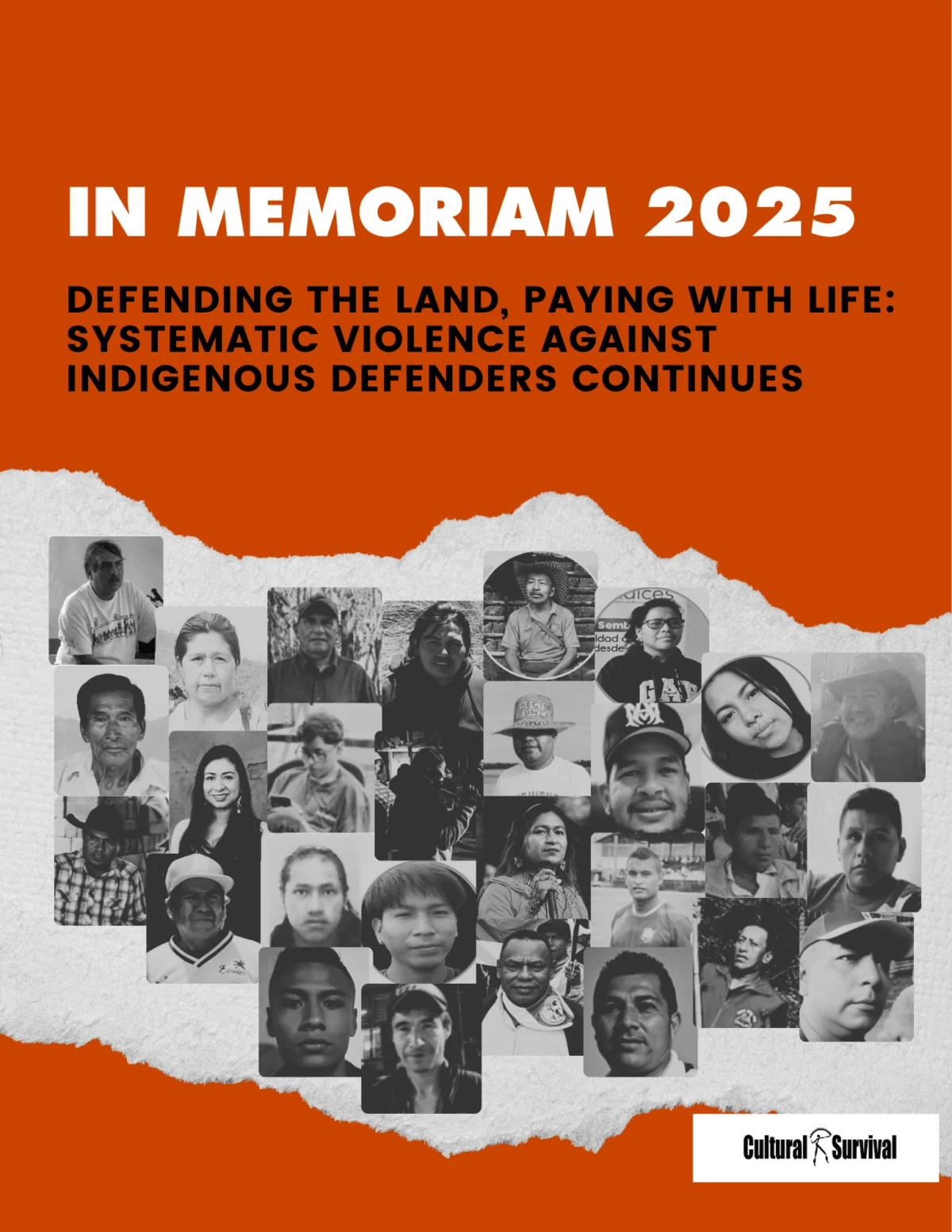
On March 10, 2026, the Indigenous Peoples’ rights organization Cultural Survival released its annual "In Memoriam" report, meticulously documenting the tragic murders of Indigenous land and rights defenders across Latin America in 2025. This year, however, Cultural Survival has amplified its call to action with the publication of a comprehensive advocacy brief titled "Defending the Land, Paying with Life." This critical document delves into the systemic violence underpinning these assassinations, framing them within established international human rights legal frameworks. It simultaneously presents a series of urgent recommendations directed at the entities most responsible for safeguarding these defenders and upholding Indigenous rights. The brief specifically targets corporations, national governments, the UN Permanent Forum on Indigenous Issues, the governing board of the Escazú Agreement, and the broader international community.
The stark reality underscored by Cultural Survival’s findings is that Latin America continues to be the most perilous region globally for individuals defending their right to land and territory. Data from 2024 corroborates this grim assessment, with Global Witness reporting that an overwhelming 82% of the 146 documented murders of defenders occurred within this region. This statistic paints a chilling picture of the pervasive threats faced by those on the front lines of environmental and human rights advocacy. Mexico and Colombia, two nations with ostensibly established protection mechanisms for human rights defenders, are identified as particularly lethal environments. Despite the existence of these frameworks, the report highlights a devastating continuation of violence, with defenders frequently subjected to not only murder but also a barrage of other grave human rights violations. These include persistent threats, intimidation tactics, kidnappings, and both physical and digital attacks, all designed to render their vital work impossible or unsustainable. The persistence of these atrocities, even within countries with protective legislation, points to significant gaps in implementation and enforcement, and a profound failure to adequately address the root causes of the violence.
Cultural Survival’s "In Memoriam" report, a somber testament to the sacrifices made, specifically names and honors the Indigenous defenders who were tragically killed. These individuals, as the report emphasizes, lived in dedicated service to their communities and to the vital ecosystems they inhabit. Their ultimate price was paid for the essential work they undertook – work upon which the health of the entire planet critically depends. By protecting forests and water sources, and by standing firm against extractive projects, these defenders were actively mitigating the drivers of climate change and preventing further environmental devastation, impacts that ripple throughout global supply chains and contribute to widespread ecological crises. The report serves as a powerful memorial, ensuring that their stories and their contributions are not forgotten, and that their struggles are recognized on a global stage.
The advocacy brief, "Defending the Land, Paying with Life," meticulously draws upon a robust foundation of international human rights standards and legal precedents. It cites key instruments such as the UN Declaration on the Rights of Indigenous Peoples (UNDRIP), the International Labour Organization Convention 169 (ILO 169), the International Covenant on Civil and Political Rights (ICCPR), and influential precedents set by the Inter-American Court of Human Rights. These legal frameworks, the report argues, clearly delineate the obligations of States to undertake concrete and effective measures to implement the rights of defenders. The brief emphasizes that these rights are not merely aspirational but are legally binding commitments that require proactive and robust enforcement. The failure to adhere to these standards constitutes a dereliction of duty by the implicated parties.
Key Recommendations for Enhanced Protection
Cultural Survival’s advocacy brief outlines a series of crucial recommendations aimed at fostering a more protective environment for Indigenous land and environmental defenders. These recommendations are multifaceted, addressing the responsibilities of various actors in the global human rights landscape:
- For States: Implement and strengthen national protection mechanisms for human rights defenders, ensuring they are adequately resourced, independent, and responsive to the specific risks faced by Indigenous peoples. This includes prompt, impartial, and thorough investigations into all allegations of violence against defenders, with perpetrators held accountable. Furthermore, States must uphold the principle of Free, Prior, and Informed Consent (FPIC) in all projects affecting Indigenous territories, ensuring genuine consultation and the right of Indigenous peoples to say no to developments that threaten their lands, cultures, and livelihoods. This includes rigorous environmental and social impact assessments that prioritize Indigenous perspectives and rights.
- For Corporations: Conduct comprehensive human rights due diligence throughout their operations and supply chains, identifying and mitigating risks to Indigenous peoples and their defenders. This necessitates moving beyond mere compliance and actively engaging with Indigenous communities to ensure their rights are respected. Companies should adopt transparent grievance mechanisms that are accessible to Indigenous communities and ensure that their business activities do not contribute to the criminalization or violence against defenders. Investment in sustainable and ethical practices that align with Indigenous land stewardship principles is also paramount.
- For International Bodies: The UN Permanent Forum on Indigenous Issues and the Presidency of COP Escazú’s governing board, among other relevant international bodies, are urged to elevate the issue of Indigenous defender protection on the global agenda. This includes advocating for the full implementation of UNDRIP and the Escazú Agreement, monitoring compliance, and providing technical and financial support to states and civil society organizations working to protect defenders. Increased coordination and collaboration between these bodies are essential to present a unified and impactful front.
- For the International Community: Uphold and strengthen international human rights law, hold States and corporations accountable for violations, and support Indigenous-led advocacy efforts. This includes providing financial and political support to organizations like Cultural Survival and to local Indigenous communities. Diplomatic pressure and targeted sanctions against those responsible for perpetrating or enabling violence against defenders can also be effective tools. Public awareness campaigns and consumer advocacy play a vital role in pressuring corporations to adopt more responsible practices.
The Human Cost of Defending the Earth
Alicia Moncada, Cultural Survival’s Director of Advocacy and Communications (Wayuu), eloquently articulated the profound loss associated with each murder: “Every name in this report is a universe that was extinguished, a language, a territory, a form of knowledge that the world will never recover. In memoriam is not an act of mourning; it is an act of resistance.” This statement underscores the irreplaceable cultural and ecological knowledge that is lost with each defender’s life, highlighting the broader societal implications of this violence. The extinction of these “universes” represents a significant detriment to global biodiversity, cultural diversity, and the collective human capacity to address pressing environmental challenges. The defenders’ work is not just about protecting their immediate territories; it is about safeguarding planetary health and promoting sustainable models of development that benefit all of humanity.
A Call to Action: Amplifying the Voices of Defenders
Cultural Survival is not only presenting a report and recommendations but also mobilizing for concrete action. The organization urges individuals to participate in a global campaign to raise awareness and demand justice.
Actions to Take:
- Share Your Support: Individuals are encouraged to share a vertical photo of themselves holding a sign that reads: "Justice for Indigenous defenders murdered in Latin America." This simple yet powerful act serves to amplify the message and demonstrate global solidarity.
- Utilize Hashtags: The campaign utilizes key hashtags to ensure widespread reach and visibility across social media platforms. These include: #ProtejanALasDefensorasIndigenas, #JusticiaParaLxsDefensorxsIndigenas, #ProtectTheProtectors, and #DefendTheDefenders.
- Tag Relevant Authorities: To ensure accountability and to pressure governmental bodies, the campaign directs participants to tag specific official social media accounts. This includes:
- Mexico:
- Attorney General’s Office (X: @FGRMexico | IG: @fgrmexico)
- Ministry of the Interior (X: @GobiernoMX | IG: @gobmexico)
- Protection Mechanism (X: @Mecanismo_MX)
- Colombia:
- Attorney General’s Office (X: @FiscaliaCol)
- Ministry of the Interior (X: @MinInterior | IG: @mininterior)
- National Protection Unit (X: @UNPColombia | IG: @unpcolombia)
- Mexico:
- Engage with Cultural Survival: Participants are encouraged to tag @culturalsurvival in their posts to foster a sense of community and collective effort.
The Imperative of the Escazú Agreement
The advocacy brief places significant emphasis on the Escazú Agreement, officially the Regional Agreement on Access to Information, Public Participation and Access to Justice in Environmental Matters in Latin America and the Caribbean. This landmark treaty, the first of its kind in the world to specifically address the rights of environmental defenders, represents a crucial legal and political framework for strengthening environmental governance and protecting those who advocate for environmental justice. The agreement mandates that signatory states take measures to protect individuals and groups who defend the environment from threats, harassment, and violence. Cultural Survival’s call to action directed at the Presidency of COP Escazú’s governing board highlights the critical need for the agreement’s full and effective implementation across all signatory nations. The continued murders of defenders, even in countries that have ratified Escazú, underscore the urgent need for robust national implementation strategies, including dedicated protection programs and mechanisms for swift and impartial justice. The agreement’s success hinges on the political will of states to translate its principles into tangible protections on the ground.
The Broader Impact: A Global Crisis
The violence against Indigenous land and environmental defenders is not merely a regional issue; it is a global crisis with far-reaching implications. These defenders are often the first line of defense against activities that fuel climate change, biodiversity loss, and unsustainable resource extraction. Their protection is intrinsically linked to the achievement of global environmental goals, including the Sustainable Development Goals (SDGs). The report from Cultural Survival serves as a stark reminder that the pursuit of economic development, often driven by corporate interests, must not come at the cost of human lives and fundamental rights. The international community has a moral and legal obligation to ensure that those who risk everything to protect our planet are not left vulnerable and unprotected. The continued silencing of these voices through violence represents a profound loss for humanity’s collective efforts to build a sustainable and just future.
The report, "Defending the Land, Paying with Life," is available for review and download, serving as a vital resource for policymakers, researchers, activists, and concerned citizens worldwide. It is a call to conscience, a demand for accountability, and a testament to the enduring spirit of those who continue to fight for their lands and for a healthier planet, even in the face of extreme danger.