
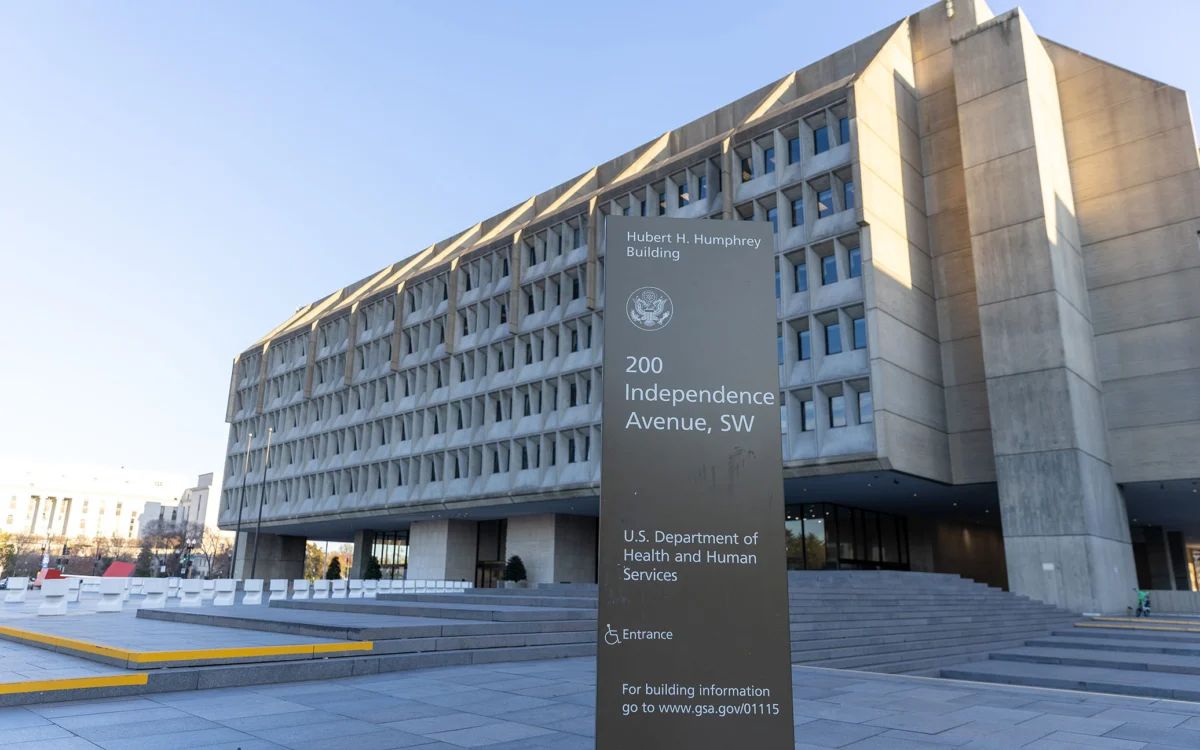
A federal court approval of a settlement between the federal government and a coalition of states has officially dismantled key regulatory requirements ensuring that individuals with disabilities receive care and services within community settings. Finalized late last week by U.S. District Judge James W. Hendrix, the agreement removes explicit references to the "most integrated setting" from the 2024 updates to the Department of Health and Human Services (HHS) regulations regarding Section 504 of the Rehabilitation Act of 1973.
The decision marks a profound shift in federal policy, effectively rolling back decades of administrative enforcement and regulatory standards designed to protect the autonomy and integration of disabled citizens. The settlement concludes the contentious multi-state lawsuit known as Texas v. Kennedy, bringing an end to a protracted legal battle that has winded through the federal court system for approximately two years.
While legal experts and disability advocates emphasize that the core statutory protections and constitutional precedents—including the landmark Supreme Court decision Olmstead v. L.C.—remain technically intact, the federal government’s voluntary capitulation has triggered widespread alarm. Civil rights defenders argue that the administration’s decision to side with the plaintiff states rather than defend existing regulations represents a systemic abandonment of vulnerable populations, threatening to plunge communities back into eras of widespread institutionalization.
Background and Context of Section 504 and the Integration Mandate
Enacted more than fifty years ago, Section 504 of the Rehabilitation Act of 1973 stands as a foundational civil rights statute for individuals with disabilities. It prohibits discrimination against qualified individuals based on disability in programs, services, and activities receiving federal financial assistance. For decades, federal regulations interpreting Section 504 have incorporated an "integration mandate," requiring public entities and federally funded programs to administer services in the most integrated setting appropriate to the needs of qualified individuals with disabilities.
This mandate received a monumental affirmation in the 1999 landmark U.S. Supreme Court ruling in Olmstead v. L.C. In that decision, the high court held that the unjustified institutional isolation of individuals with disabilities constitutes discrimination under the Americans with Disabilities Act (ADA). The Court ruled that states are required to provide community-based services for persons with disabilities when such services are appropriate, the affected persons do not oppose community placement, and the placement can be reasonably accommodated.
In 2024, the Department of Health and Human Services updated its Section 504 regulations to modernize and clarify standards across health care and human services sectors. These updates reaffirmed and codified the operational definitions of the "most integrated setting," creating clearer compliance guidelines for health care providers, social service agencies, and state governments. However, these updated rules immediately drew fierce opposition from conservative state attorneys general who argued that federal integration mandates overstepped statutory boundaries and imposed unsustainable financial and administrative burdens on state budgets.
Chronology of the Litigation: Texas v. Kennedy
The legal journey leading to the recent settlement began approximately two years ago, when the state of Texas, joined by a coalition of 16 other states, filed a lawsuit initially designated as Texas v. Kennedy.
Initially, the multi-state coalition pursued a two-pronged legal strategy. First, the plaintiff states sought to invalidate the inclusion of gender dysphoria as a protected condition under the updated 2024 Section 504 regulations. Second, and more broadly, the states asked the federal court to strike down Section 504 regulations in their entirety, arguing that federal agencies lacked the statutory authority to enforce community-integration rules.
As the litigation progressed, the coalition shifted its legal posture. Under heavy pressure from national disability rights organizations and public scrutiny, all but a small handful of states dropped out of the lawsuit. However, the litigation persisted as Texas, joined by Louisiana and Montana, maintained their challenges against the federal disability protections.
The definitive turning point in the case occurred in recent weeks, when the federal government executed an abrupt reversal. Citing a June memorandum issued by the Department of Justice’s Office of Legal Counsel (OLC), federal attorneys announced a change in position. The OLC memo asserted a controversial legal interpretation: that neither the Americans with Disabilities Act nor Section 504 of the Rehabilitation Act legally obligates states to treat individuals with mental or physical disabilities in the most integrated setting appropriate to their individual needs.
Rather than mounting a legal defense of the 2024 HHS regulations, the federal government under Health and Human Services Secretary Robert F. Kennedy Jr. chose to enter into a formal settlement agreement with the plaintiff states.
Terms of the Judicial Settlement
Under the terms of the court-approved agreement, the foundational framework of the Section 504 regulations remains on the books, but vital enforcement mechanisms and definitions have been systematically excised.
Specifically, the agreement strips out the explicit regulatory definition of the "most integrated setting." Furthermore, it deletes multiple provisions that previously mandated that public entities and federally funded service providers prioritize methods offering programs and activities to qualified individuals with disabilities in community-based environments.
Because the alterations were achieved through a negotiated settlement rather than a judicial finding on the merits of the law, Judge Hendrix’s order did not establish a binding legal precedent regarding the underlying statutory scope of Section 504 or the ADA. The structural wording of the original statute remains unchanged, leaving a complex legal landscape where statutory law and administrative regulations are temporarily misaligned.
Responses and Reactions from Stakeholders
The federal government’s withdrawal from the litigation and the subsequent court order have drawn swift, condemnation from legal experts, advocacy organizations, and civil rights groups across the United States.
Shira Wakschlag, senior executive officer for legal advocacy and general counsel at The Arc of the United States, did not mince words when assessing the judicial outcome.
"The court’s order accepting the parties’ agreement is inconsistent with 50 years of law," Wakschlag stated. "The federal government is abandoning its duty to enforce the right of people with disabilities to live in their own homes and communities."
Advocates point out that the decision represents a profound departure from historical bipartisan consensus regarding the civil rights of disabled Americans. For decades, successive administrations have defended the right of individuals with disabilities to participate fully in civic and social life, making community integration a cornerstone of federal health and human services policy.
Michelle Uzeta, executive director at the Disability Rights Education & Defense Fund (DREDF), emphasized that while the administrative setback is severe, the legal foundation supporting community integration has not been entirely wiped away by the settlement.
"The integration mandate doesn’t depend on this regulation," Uzeta explained. "It comes from Section 504 itself, from the ADA, and from the Supreme Court’s decision in Olmstead v. Lois Curtis. All of those are still in place. The most frustrating thing is that this was not a legal loss. It was a surrender. HHS didn’t defend these rights and protections. It joined the states that sued and asked the judge to strike them."
Broader Implications and Potential Consequences
While national advocates stress that the underlying legal protections of the ADA and Olmstead remain legally binding, legal scholars warn that the practical consequences of the settlement could be severe and far-reaching.
Eve Hill, a prominent civil rights attorney who served as deputy assistant attorney general for civil rights during the Obama administration, highlighted the dangerous signaling effect the settlement transmits to state agencies and health care providers.
"It demonstrates that the five state plaintiffs believe they are free to put people with disabilities into institutions," Hill noted. "Unfortunately, because the court has amended the regulations to delete the community integration requirements, some states and other covered entities—health care providers, managed care organizations, and local agencies—will believe they can institutionalize people with disabilities."
Hill added that this administrative vacuum will likely result in a surge of institutionalization and unnecessary out-of-home placements, forcing individuals with disabilities and their families to bear the immense emotional and financial burden of fighting unlawful segregation independently through the courts.
Furthermore, state budget directors and health policy analysts anticipate that the settlement could encourage states to scale back investments in home- and community-based services (HCBS) programs. HCBS programs have historically faced severe backlogs and long waiting lists across the country; without robust federal regulatory oversight demanding continuous progress toward integration, states may reallocate resources toward institutional care models, which often offer consolidated administrative structures at the expense of individual liberty and quality of life.
As the legal community continues to digest the ramifications of Texas v. Kennedy, disability rights organizations are mobilizing to monitor state-level policy shifts and prepare for potential litigation. The settlement underscores an increasingly fraught ideological divide over federal authority, state sovereignty, and the scope of civil rights protections for marginalized populations in the United States.




