
The rise of artificial intelligence has fundamentally altered the landscape of digital information, transforming search engines and social platforms into complex intermediary systems. As these technologies become the primary interface through which the public consumes information, communications professionals—particularly those in the nonprofit and public interest sectors—are facing a paradigm shift in how their work is discovered, interpreted, and validated. This transformation was the central theme of a recent session at ComNet 2026, where Claudia Deane, Executive Vice President, and Monica Anderson, Director of Internet and Technology Research at the Pew Research Center, outlined the necessary strategies for organizations to maintain visibility and authority in an AI-driven ecosystem.
The Evolution of the Search Ecosystem
To understand the current state of digital communications, one must examine the rapid evolution of information retrieval. For decades, the primary model for accessing information was the search engine results page (SERP), which functioned as a directory, directing traffic toward original source material. Today, that model is being superseded by generative AI, which aggregates, synthesizes, and presents information directly to the user within the interface.
This shift has created a dual-audience requirement for communicators. Content can no longer be optimized solely for human consumption; it must now be structured to be machine-readable, ensuring that AI models can accurately index and utilize an organization’s expertise. According to research presented by the Pew Research Center, this is not merely a technical challenge but a fundamental change in the social contract of information dissemination. As AI becomes the gatekeeper, the onus is on organizations to ensure their content is accessible to these systems without sacrificing accuracy or institutional voice.
Chronology of the AI Integration
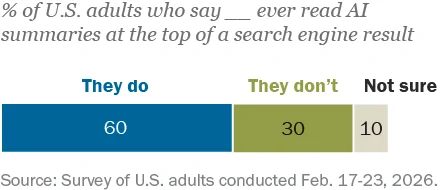
The integration of AI into public discourse has followed a compressed timeline that has caught many organizations off guard. In early 2023, the public release of generative AI tools triggered a global gold rush in adoption, moving from niche technical fascination to widespread consumer integration within months. By late 2023 and throughout 2024, search engine giants began embedding AI-generated answers directly into their query results, effectively shortening the "user journey" by eliminating the need to click through to a source website.
By 2025, the focus for institutional communicators shifted from mere experimentation to operational strategy. The ComNet 2026 session highlighted that many nonprofit organizations are still operating under the assumption that traditional search engine optimization (SEO) is sufficient. However, the data suggests that reliance on legacy SEO practices leads to a decline in direct traffic, as users are increasingly satisfied with the summaries provided by AI chatbots rather than visiting the primary source.
Data-Driven Realities
The Pew Research Center’s longitudinal data indicates a significant shift in how Americans interact with emerging technology. While public sentiment toward AI remains nuanced—characterized by a blend of cautious optimism and significant concern regarding bias and misinformation—the behavioral data is clear: adoption is rising across all demographic cohorts.
According to recent Pew reports, a significant portion of the adult population now uses AI tools for tasks ranging from drafting professional correspondence to gathering information on complex social issues. This adoption rate carries profound implications for nonprofit organizations. If a user asks an AI chatbot about a social issue, and that bot synthesizes information from various sources, the organization’s visibility depends entirely on its ability to be "parsed" by the underlying large language model (LLM). Failure to appear in these summaries results in a "digital invisibility" that can severely hamper advocacy and fundraising efforts.
The Three Pillars of AI Readiness
During the ComNet 2026 session, Deane and Anderson emphasized three critical pillars for organizations to maintain relevance: Acceptance, Adaptation, and Advancement.
Acceptance requires a pragmatic acknowledgment of the current technological reality. It is no longer viable to view AI as a peripheral trend; it is a core infrastructure component of the modern internet. Organizations that resist this reality or hope for a return to traditional web traffic patterns risk obsolescence. The acceptance phase involves a shift in mindset: acknowledging that the organization’s website is no longer the final destination, but rather a data source for broader digital ecosystems.
Adaptation involves a granular audit of how an organization’s work currently appears in AI-driven interfaces. This process entails testing how various chatbots characterize an organization’s mission, its data, and its impact. It requires technical adjustments to web architecture—such as schema markup, structured data, and clean, accessible content—to ensure that machine learning models can accurately parse and prioritize the information provided by the organization.
Advancement represents the long-term integration of these findings into a sustainable communications strategy. This involves a fundamental change in content production. Professional writers and communications officers must now balance the needs of two distinct audiences: human readers who require narrative depth, and machines that require structured, logical, and unambiguous data.
An Actionable Checklist for Nonprofits
The transition to an AI-first communications model requires rigorous internal assessment. Based on the framework provided by the Pew Research Center experts, organizations should consider the following diagnostic questions:
- Strategic Alignment: Does the organization have a stated objective for its presence in AI chatbots? It is essential to determine whether the organization views these platforms as distribution channels for their research and advocacy.
- Visibility Audit: How does the organization’s current body of work appear in AI summaries? Are the summaries accurate, or are they prone to hallucination? This requires regular testing across multiple AI platforms (e.g., ChatGPT, Claude, Gemini, and Perplexity) to observe discrepancies in output.
- Machine Readability: Are the organization’s digital assets designed for machine comprehension? This includes the use of clear, descriptive headings, concise summaries, and the removal of "friction" elements that prevent AI crawlers from accessing the core data of a webpage.
- Performance Metrics: How is success defined in this new era? Organizations must move beyond tracking "clicks" and "page views," which are becoming increasingly unreliable metrics of success, and instead look at brand sentiment and the inclusion of their research in AI-generated answers.
Broader Implications for the Information Landscape
The shift toward AI-mediated information has broader implications for the credibility of the information ecosystem. As AI systems aggregate information, they also risk consolidating bias or amplifying specific narratives over others. For nonprofits and research-driven institutions, this presents a unique challenge: maintaining the integrity of their work while ensuring it is optimized for systems that may not prioritize nuance or academic rigor.
Industry analysts observe that as AI becomes the default "research assistant" for the public, the responsibility for maintaining the veracity of information rests heavily on the source organizations. If a nonprofit fails to communicate its work clearly to the machines, the AI will inevitably fill the vacuum with either incomplete information or, in some cases, misinformation derived from less reliable sources.
Conclusion
The session at ComNet 2026 served as a call to action for the nonprofit sector to engage with AI not as an adversary, but as a medium that requires a new set of literacies. By prioritizing machine-readable content and accepting the role of AI as an intermediary, organizations can ensure that their work continues to inform the public discourse. The future of communications will belong to those who can successfully bridge the gap between human expertise and machine intelligence, ensuring that when the public turns to AI for answers, the best, most evidence-based information remains at the forefront.
For further insights into the public’s changing relationship with these technologies, practitioners are encouraged to consult the extensive resources available on the Pew Research Center’s Artificial Intelligence topic page, which tracks ongoing shifts in adoption, usage, and societal concern. By grounding their communications strategy in rigorous data and proactive adaptation, organizations can navigate the complexities of this new digital era with confidence.




