Montgomery, Alabama – A powerful new cultural and educational landmark, Montgomery Square, has officially opened its doors, inviting visitors to delve into the transformative decade from 1955 to 1965 when the city became the epicenter of the American Civil Rights Movement. This mostly outdoor site, strategically located atop Montgomery Street—the very thoroughfare where tens of thousands culminated the historic Selma to Montgomery March on March 25, 1965—is dedicated to the extraordinary courage and unwavering determination of Black residents who stood against racial injustice, sparking a movement that fundamentally reshaped the United States and reverberated globally. Operated by the Equal Justice Initiative (EJI), Montgomery Square extends the profound narrative woven through EJI’s existing Legacy Sites, including the Legacy Museum, the National Memorial for Peace and Justice, and the Freedom Monument Sculpture Park, each animated by the unique "power of place."
A Deep Dive into a Defining Era
Montgomery Square offers an immersive experience, physically placing visitors in the footsteps of the trailblazing women, men, and children whose bravery ultimately led to the passage of the landmark Voting Rights Act of 1965. EJI Director Bryan Stevenson articulated the profound significance of the new site, stating, “We are extremely excited to open this site, which explores how Montgomery created a new chapter for democracy and justice in America. The movement birthed by Montgomery’s residents in 1955, culminating in a triumphant march in 1965, changed the cultural, legal, social, and economic landscape of this nation.”
The decade chronicled at Montgomery Square is a testament to grassroots activism and sustained resistance against a deeply entrenched system of segregation and disenfranchisement. It began with the Montgomery Bus Boycott in 1955, ignited by Rosa Parks’ courageous refusal to give up her seat, and propelled by figures like Claudette Colvin and the organizational prowess of Jo Ann Robinson and E.D. Nixon. The boycott, lasting 381 days, demonstrated the collective power of a community united for dignity and justice, ultimately leading to a Supreme Court ruling that desegregated public transportation. This victory not only challenged Jim Crow laws but also propelled Reverend Dr. Martin Luther King Jr. onto the national stage, laying the groundwork for the broader Civil Rights Movement.
A decade later, the focus shifted to voting rights, culminating in the Selma to Montgomery Marches. Despite the passage of the Civil Rights Act of 1964, Black citizens in states like Alabama continued to face systemic barriers, violence, and intimidation at the polls. The brutal suppression of peaceful marchers on "Bloody Sunday" in Selma on March 7, 1965, captured national attention and galvanized support for federal intervention. The subsequent march, under federal protection, concluded in Montgomery, emphasizing the demand for full voting rights and directly influencing the swift passage of the Voting Rights Act of 1965, a cornerstone of American democracy.

The Site’s Immersive Features
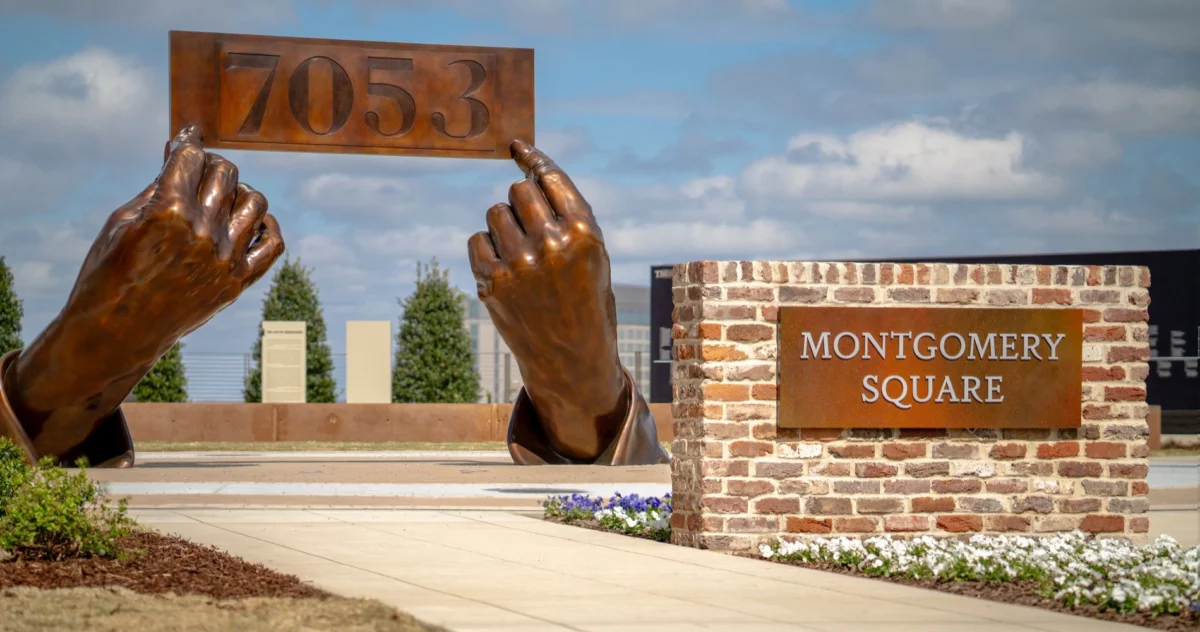
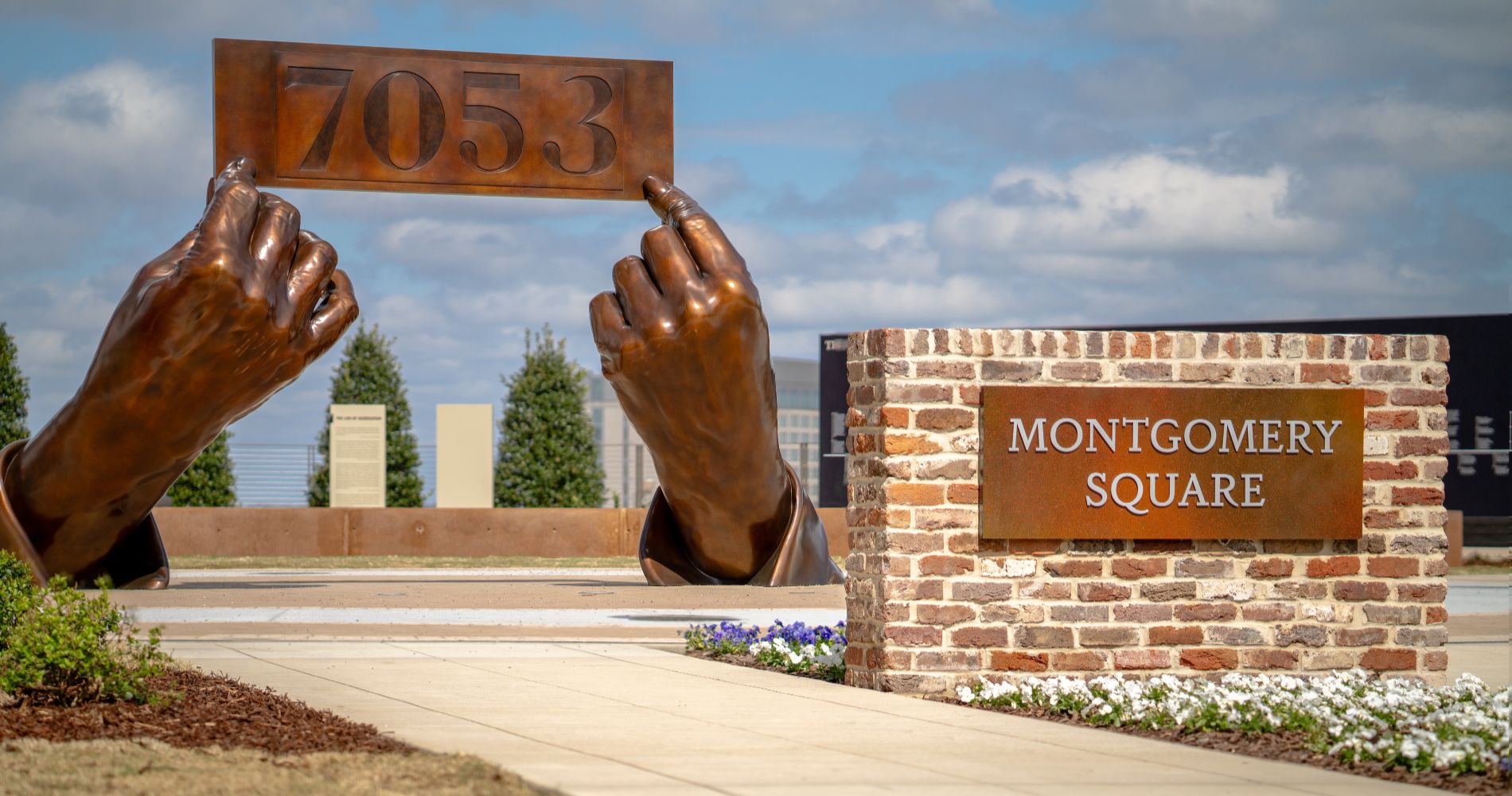
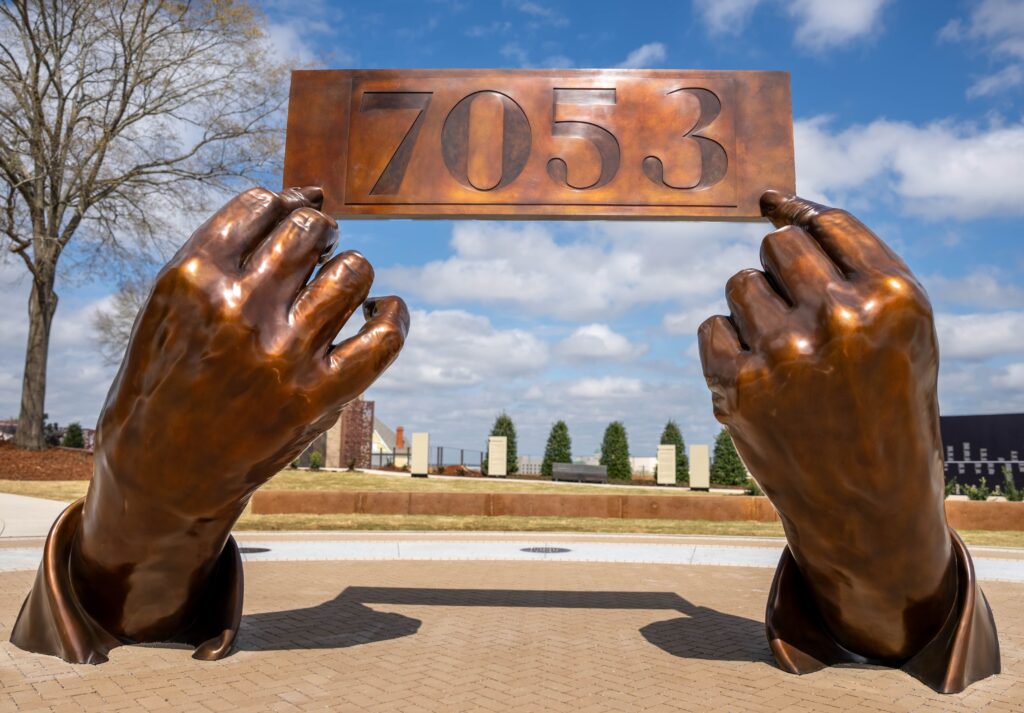
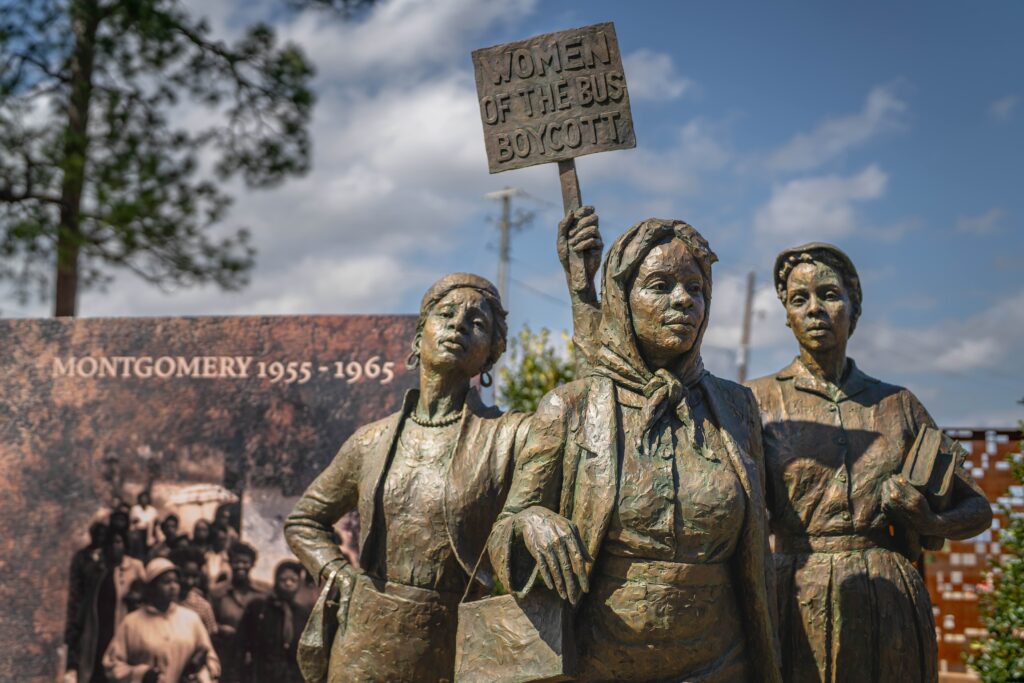
Montgomery Square is meticulously designed to educate and inspire, employing a diverse array of artistic and historical elements. Sculptures by acclaimed artists Hank Willis Thomas and Basil Watson, alongside powerful photography from the era, vividly illustrate the deeply researched narrative of Montgomery’s pivotal role in advancing democracy and opportunity. Hank Willis Thomas’s work celebrates arrest numbers as badges of honor, transforming symbols of oppression into emblems of defiance and courage. Basil Watson’s sculpture, meanwhile, powerfully depicts the proud participants of the Montgomery Bus Boycott, capturing the spirit of resilience that sustained the movement for over a year.
Within Heroes Hall, visitors are treated to new documentary films that bring to life the stories of key figures who led and fueled this remarkable movement. The screenings feature interviews and narratives from icons such as Claudette Colvin, Rosa Parks, E.D. Nixon, Jo Ann Robinson, Fred D. Gray, John Lewis, Jo Ann Bland, Sheyann Webb Christburg, Amelia Boynton Robinson, and Lynda Blackmon Lowery. These personal accounts, coupled with interviews and speeches from the Rev. Dr. Martin Luther King Jr., provide an intimate and authentic perspective on the sacrifices and triumphs of the era.
A massive timeline meticulously details the momentous decade, beginning with the pervasive humiliation and threats of violence that Black residents endured daily on segregated city buses, which served as the immediate catalyst for the Bus Boycott. The exhibition further includes pillars displaying actual segregation laws that enforced one of the most rigid and extensive systems of racial segregation globally, chillingly illustrating how laws even prohibited Black and white people from engaging in innocuous activities like playing checkers together.
Crucially, Montgomery Square does not shy away from documenting the relentless, often violent opposition from tens of thousands of white residents who organized to uphold racial segregation. Visitors can read the stark words of faith leaders, elected officials, journalists, and prominent members of the Montgomery establishment who publicly vowed to "forever stand like a rock against social equality, intermarriage, and mixing of the races in the schools." This unflinching portrayal provides essential context, highlighting the immense courage required to challenge such deeply entrenched prejudice.
At the heart of Montgomery Square stands a giant oak tree, a silent witness to history. This ancient sentinel observed as thousands of Black people walked the city’s streets to end segregation in 1955 and tens of thousands risked their lives to end Black disenfranchisement in 1965. Its presence serves as a tangible link to the past, grounding the historical narrative in the very soil where these transformative events unfolded.
Broader Impact and Educational Resources
The physical site is underpinned by hundreds of hours of meticulous research, which EJI has compiled into a new report, The Montgomery Decade That Changed the World: 1955 to 1965. This comprehensive report, available alongside the dedicated Montgomery Square website (montgomerysquare.eji.org), illuminates overlooked historical contexts and celebrates the unsung heroes of this pivotal decade in Montgomery. These resources are designed to provide educators, students, historians, local residents, and visitors with deeper insights into the city’s historic role in championing human rights and launching a worldwide movement towards racial justice.
Bryan Stevenson emphasized the imperative of this historical understanding: “This history needs to be studied and understood by every American. We are proud to make learning about this critical decade more accessible to everyone at Montgomery Square.” The site, along with its accompanying digital and print resources, serves as a vital tool for fostering a more complete and accurate understanding of American history, ensuring that the lessons of the past inform the pursuit of justice in the present and future.
Operating Information and Vision
Montgomery Square is now open from 9 am until 6 pm, Wednesday through Monday. Admission is free, and no ticket is required, ensuring accessibility for all who wish to engage with this critical period of history. The EJI hopes that visitors will join them in Montgomery to experience the profound "power of confronting injustice in this place," a power amplified by the deep knowledge gained across all of the Legacy Sites.
The opening of Montgomery Square represents more than just the unveiling of a new museum; it is a commitment to continuous education and remembrance. By physically connecting visitors to the struggles and triumphs of the Civil Rights Movement in the very places where history was made, EJI aims to foster empathy, provoke reflection, and inspire continued advocacy for human rights and equality. This new site stands as a beacon, reminding all of the enduring legacy of those who fought for justice and the ongoing responsibility to uphold their vision for a more just and equitable world.