October 7, 2026, marks three years since the unprecedented multi-front attack on Israel, an event that fundamentally altered the geopolitical landscape of the Middle East and triggered a humanitarian crisis of historic proportions. As the anniversary passes, international aid organizations, including HIAS, reflect on the enduring trauma inflicted upon civilians across the region—from the kibbutzim in southern Israel to the densely populated corridors of the Gaza Strip and the border communities of Lebanon. The passage of time has not diminished the gravity of the displacement, the loss of life, or the moral disorientation that continues to characterize global public discourse surrounding the conflict.
Chronology of a Regional Crisis
The events of October 7, 2023, began with a coordinated infiltration of Israeli territory by Hamas militants, resulting in the deaths of approximately 1,200 people, the majority of whom were civilians, and the taking of more than 250 hostages. The scale of the violence, which included mass casualty events at a music festival and multiple residential communities, prompted an immediate and decisive military response from the State of Israel.
By late October 2023, the Israel Defense Forces (IDF) had launched a comprehensive ground and air campaign in Gaza aimed at dismantling Hamas’ military and governance infrastructure. This military action initiated a cycle of displacement that, within months, saw the vast majority of Gaza’s 2.3 million residents forced to flee their homes. As of mid-2026, the humanitarian landscape remains dire. Despite sporadic negotiations and intermittent ceasefire agreements, the infrastructure of the Gaza Strip has been largely devastated, with international aid agencies reporting critical shortages of clean water, medical supplies, and shelter.
Simultaneously, the conflict has reverberated throughout the region, including escalations along Israel’s northern border with Lebanon, which have resulted in the mass displacement of tens of thousands of residents on both sides of the Blue Line. The cumulative effect has been a regional instability not seen in decades, characterized by a persistent state of emergency for humanitarian responders.
Data on Displacement and Humanitarian Need
The scale of displacement is unprecedented in the modern history of the Levant. According to data aggregated by the United Nations Office for the Coordination of Humanitarian Affairs (OCHA) and various international non-governmental organizations (INGOs), the number of internally displaced persons (IDPs) in Gaza has fluctuated between 1.7 and 1.9 million for much of the last three years. In Israel, the internal displacement of residents from the northern and southern border zones has placed significant strain on domestic social services.
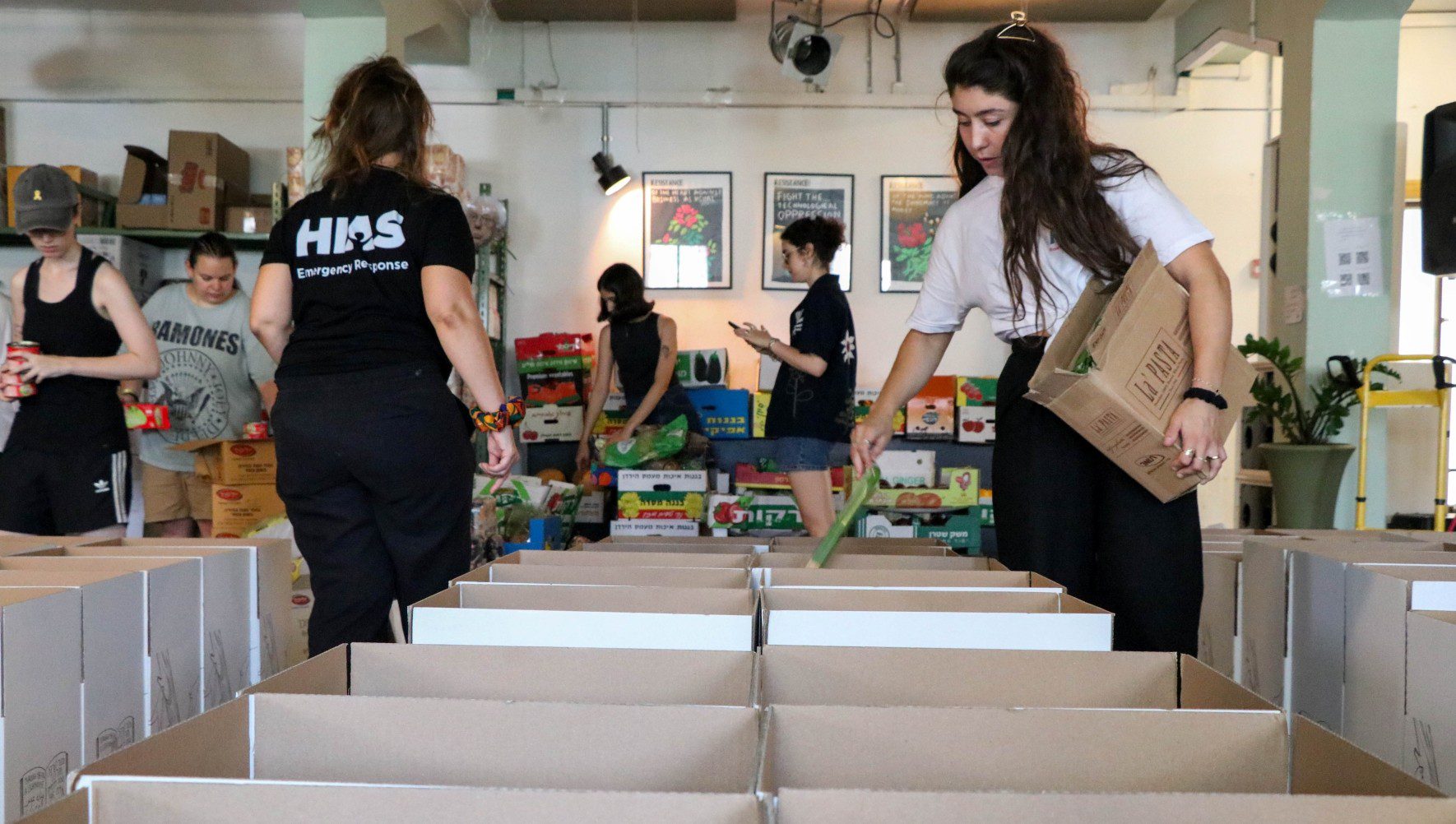
Humanitarian organizations, such as HIAS, have been compelled to pivot their operations to meet these evolving needs. In Israel, HIAS has provided emergency food and hygiene support not only to citizens displaced by the conflict but also to vulnerable refugee and asylum-seeker populations in urban centers like Tel Aviv, who often fall outside the purview of state-sponsored relief programs. These efforts highlight a broader organizational philosophy: that humanitarian aid must be directed by need, rather than political or tribal affiliation.
Financial commitments from the international community have been substantial but remain insufficient relative to the scale of the destruction. Reconstruction efforts in Gaza are estimated by the World Bank to require tens of billions of dollars, a timeline for which remains elusive while active conflict and localized violence persist.
The Erosion of Universal Empathy
A critical theme emerging three years post-October 7 is the increasing polarization of humanitarian discourse. Observers note a "selective application of empathy," where the recognition of suffering is frequently filtered through political or ideological lenses. This phenomenon has profound implications for aid organizations. When humanitarian aid is perceived through a political prism, the protection of aid workers—a fundamental tenet of international humanitarian law—becomes increasingly precarious.
In the past 36 months, the world has witnessed the tragic toll on humanitarian personnel, with record numbers of aid workers killed in the line of duty. This deterioration of the "humanitarian space" complicates the ability of agencies to operate neutral, life-saving missions. The discourse, which often pits the trauma of one community against the trauma of another, risks normalizing the dehumanization of "the other," a trend that historians and sociologists warn is a precursor to further cyclical violence.

Institutional Responses and Moral Clarity
For organizations like HIAS, the last three years have been an exercise in maintaining "moral resolve." The operational objective has been to provide consistent, logistical, and life-affirming support to those displaced, regardless of their nationality or background. This work, often described as "mundane" in its logistical detail—such as the distribution of food, medical kits, and legal aid—is viewed by staff as a radical act of resistance against the surrounding toxicity of the conflict.
The organization’s position, echoed by its leadership and resident experts, emphasizes that the protection of civilians and the facilitation of unobstructed humanitarian aid are not political choices but moral imperatives. By focusing on the "small kernel of human kindness"—a reference to the writings of Vasily Grossman—aid organizations attempt to rebuild the foundation of a society that has been fractured by systemic violence.
Broader Implications and Future Outlook
The implications of the post-October 7 era extend beyond the immediate borders of the conflict zone. The normalization of mass displacement and the systemic disregard for international humanitarian norms in urban warfare settings set a dangerous precedent for future global conflicts.
- The Protection of Civilians: The international community faces a crisis of enforcement regarding the Geneva Conventions. The failure to secure reliable humanitarian corridors suggests that traditional diplomatic mechanisms are currently insufficient to protect non-combatants in high-intensity urban warfare.
- Economic Fragility: The long-term economic impact on the region is profound. The loss of labor, the destruction of physical infrastructure, and the psychological trauma of a generation of youth will likely suppress regional economic development for years to come.
- The Role of Civil Society: As state institutions struggle to provide safety and order, the role of international NGOs and local grassroots organizations has become the primary safety net for the most vulnerable. This shift places an immense burden on the charitable sector to bridge the gap between existential need and government policy.
As the anniversary of October 7 passes, the call for a reassessment of humanitarian priorities remains paramount. Healing for the victims of the initial attacks, as well as for the millions displaced in the subsequent years, requires a discourse that refuses to diminish or contextualize suffering. It demands a commitment to the principle that human dignity is a prerequisite for a stable society.
Looking forward, the task for the international community is twofold: to provide the immediate, life-sustaining resources necessary for survival, and to advocate for a political framework that recognizes the humanity of all parties involved. Whether this objective can be met remains the defining challenge of the decade. For those on the ground, the work continues—not with the expectation of an immediate resolution to the conflict, but with the steady, consistent dedication to ensuring that the most basic human rights are upheld even in the face of profound adversity. The resilience of the humanitarian spirit, demonstrated by those who continue to bear witness and provide aid, remains the most viable, albeit fragile, pathway toward a future that is kinder and more hopeful than the present.