The terrorist attacks of September 11, 2001, marked a seismic shift in the American consciousness, altering the geopolitical trajectory of the nation and fundamentally reshaping the day-to-day existence of Muslim Americans. As the United States marks the 25th anniversary of that day, the legacy of the attacks remains deeply etched into the public discourse, influencing how a significant portion of the population perceives their Muslim neighbors. While the trauma of 2001 persists in the collective memory, the intervening quarter-century has seen the American Muslim community grow, diversify, and assert a level of political and social visibility that would have been unimaginable to many in the immediate aftermath of the tragedy.
A quarter-century later, the paradox of the American Muslim experience is clearer than ever: they are simultaneously a vibrant, integral part of the nation’s religious and social fabric and a community frequently subjected to persistent suspicion and political marginalization.
The Immediate Aftermath: A Nation Transformed
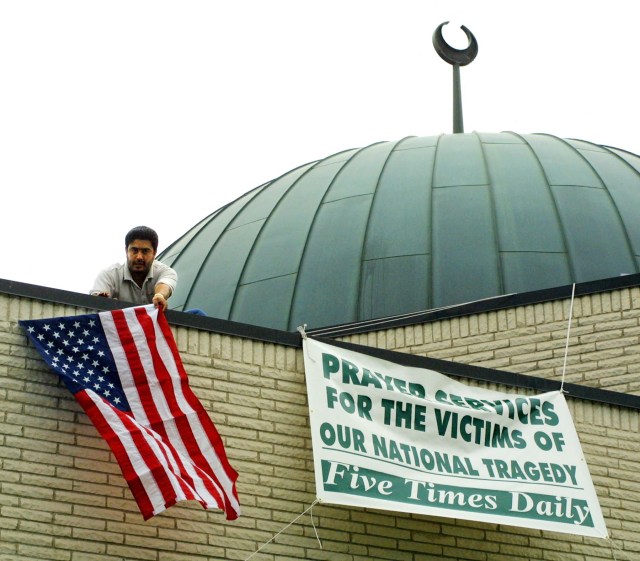
On September 11, 2001, the world changed. Following the destruction of the World Trade Center and the attack on the Pentagon, the United States entered an era defined by a heightened state of national security and a deep-seated anxiety regarding the intersection of faith and terror. In the weeks that followed, Muslim Americans, many of whom had been established members of their communities for generations, found themselves facing a wave of hostility.
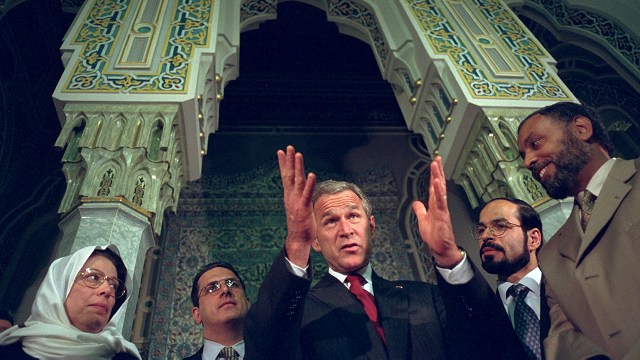
FBI data from the era provides a stark illustration of this shift. In the year 2000, the agency recorded 28 anti-Islamic hate crime incidents. By the close of 2001, that number had surged to 481—a nearly 1,600% increase in a single calendar year. While political leaders, most notably President George W. Bush, attempted to mitigate the backlash by declaring that Islam was a "religion of peace," the institutional and social pressures on the community were immediate.
Shifting Public Perceptions: Two Decades of Data
Public opinion polling conducted by the Pew Research Center over the last 25 years reveals a troubling trend: while the initial surge of hostility following 9/11 eventually plateaued, it never returned to pre-attack levels. Furthermore, the framing of Islam as a "threat" has become increasingly entrenched in the American political psyche.
In March 2002, roughly 25% of U.S. adults surveyed believed that the Islamic religion was more likely than others to encourage violence. By 2016, that figure had risen to 52%. As of early 2026, 51% of U.S. adults continue to hold this view. This data suggests that the "War on Terror" era narratives have left a lasting imprint on how the American public evaluates the theological underpinnings of Islam.
This sentiment has become heavily polarized along partisan lines. In 2002, the gap between Republicans and Democrats regarding their perception of Islam’s relationship with violence was relatively narrow, at roughly nine percentage points. Today, that gap has widened significantly, with 76% of Republicans and GOP-leaning independents expressing a belief that Islam encourages violence, compared to 29% of Democrats and Democratic leaners. This ideological split reflects a broader trend in American life, where religious identity is increasingly used as a proxy for partisan affiliation.
The Muslim American Response: Resilience and Activism
Despite these external pressures, the American Muslim population has experienced significant growth and internal transformation. In 2007, the estimated Muslim population in the United States was 2.4 million; by 2026, that number has more than doubled to 5.5 million. This growth has been accompanied by a surge in the construction of physical and communal infrastructure, with the number of mosques in the country rising from 1,200 in 2000 to approximately 2,800 by 2020.
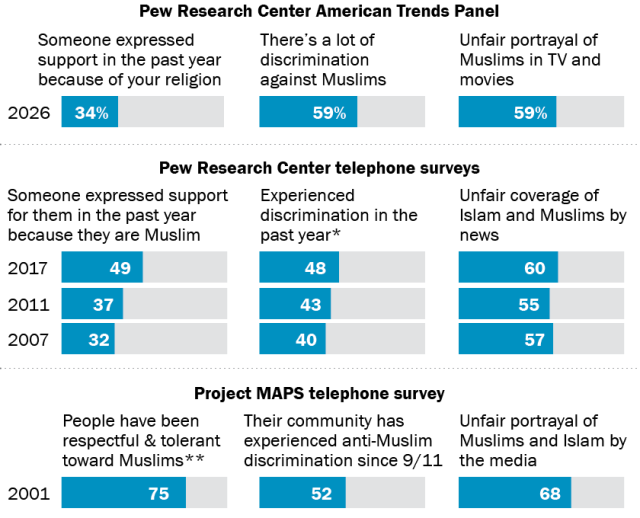
The community’s response to persistent scrutiny has been a shift toward deeper engagement. Younger generations of Muslim Americans, in particular, have demonstrated a marked inclination toward political activism and institutional representation. The 2017 Pew Research Center study on the Muslim experience highlighted a generational divide: younger Muslims (ages 18–40) were found to be less likely than their older counterparts to perceive the American public as "friendly" toward them, but significantly more likely to be involved in advocacy to address the systemic discrimination they face.
One participant in the study, a U.S.-born Muslim, captured this sentiment: "The older generation of immigrants were often more quiet on these issues. I was born here, I am here to change it and to make it better." This philosophy has fueled a new wave of political leadership. From the 2022 Senate nomination of Dr. Mehmet Oz to the 2026 mayoral inauguration of Zohran Mamdani in New York City, Muslims are increasingly visible in halls of power that were previously inaccessible.
Political Rhetoric and the "Civilizational" Shift
While individual Muslims have achieved historic electoral victories, the national political environment remains volatile. The rhetoric of the early 2000s, which focused heavily on "national security" and "terrorism," has in some circles evolved into a broader "civilizational" framing of the Muslim presence in America.
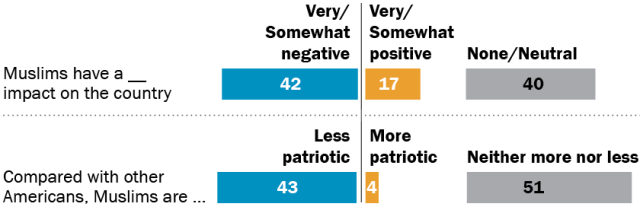
In 2026, high-profile politicians have utilized platforms like X (formerly Twitter) to openly question the loyalty of Muslim public servants. Rep. Nancy Mace’s recent characterization of Muslims in office as "Trojan horses" illustrates that for some, the suspicion directed toward the community has moved beyond concerns about extremism to a fundamental questioning of the compatibility of Muslim identity with American citizenship. This rhetoric continues to complicate the integration of Muslims into the mainstream political narrative, creating a dichotomy between the success of individual candidates and the persistent demonization of the group they represent.
Institutional Challenges and the Path Forward
The FBI’s hate crime data remains a critical barometer for the health of the relationship between Muslim Americans and the wider public. While the number of incidents fluctuates, the figures have remained elevated compared to the 1990s. The 2025 data, recording 205 incidents, highlights that anti-Muslim bias remains a consistent feature of the American landscape.
For researchers and sociologists, these 25 years have provided a wealth of data on how religious minority groups navigate a society in the aftermath of a major national trauma. The consistent findings—that many Muslims report feeling a sense of pride in their faith while simultaneously navigating the realities of being "othered"—point to a resilience that is often overlooked in media coverage.
The experiences of Muslim Americans are not a monolith; they vary by age, country of origin, and level of integration. However, the data confirms that the events of September 11 acted as a "defining moment" that forced an entire community into a long-term negotiation with their own identity in a country that is still, at times, ambivalent about their presence.
Conclusion: A Legacy of Complexity
As the United States moves into the next quarter-century following the 9/11 attacks, the situation for Muslim Americans remains complex. There is a clear, evidence-based pattern of growing population size and institutional stability, paired with a persistent, statistically significant level of negative public opinion and legislative skepticism.
The story of the American Muslim in 2026 is one of survival and assertion. It is a story of a community that has moved from the shadows of suspicion into the glare of the political spotlight. Whether this increased visibility leads to greater integration or continues to serve as a lightning rod for ideological conflict remains the central question for the next generation of American religious life. The data from the past 25 years makes one thing certain: the American Muslim experience is no longer an outlier to the American experience—it is a central, unavoidable chapter in the ongoing history of the nation’s pluralism.
Summary of Key Demographic and Social Indicators
- Population Growth: The U.S. Muslim population has grown from 2.4 million in 2007 to 5.5 million in 2026, reflecting both immigration and natural growth.
- Institutional Presence: Mosque numbers have increased from 1,200 in 2000 to 2,800 in 2020, representing a significant investment in local religious infrastructure.
- Political Representation: In 2001, there were zero Muslims in the U.S. Congress. By 2026, that number has reached five, signaling a trend toward increased civic participation.
- Public Sentiment: The percentage of Americans who believe Islam is more likely than other religions to encourage violence has remained consistently high, hovering near 50% for the past decade, demonstrating the "stickiness" of post-9/11 negative perceptions.
- Hate Crime Trends: While hate crime incidents against Muslims spiked to 481 in 2001, the data shows an inability to return to the pre-2001 baseline of approximately 30 incidents per year, with figures remaining in the hundreds annually through 2025.
This longitudinal analysis demonstrates that while the immediate, acute shock of the 9/11 attacks has faded for many, the structural and social consequences for Muslim Americans have evolved into a long-term condition of the American social contract. The ongoing task for researchers, policymakers, and the public is to reconcile these statistics with the lived reality of a community that continues to grow, contribute, and seek its place in the American tapestry.