

The third season of the acclaimed BBC One thriller Vigil marks a significant departure from the localized, enclosed settings of its predecessors, moving from the claustrophobic confines of a nuclear submarine and the high-stakes environment of drone-warfare facilities to the remote, icy landscape of the Svalbard archipelago. Starring Suranne Jones as DCI Amy Silva and Rose Leslie as DI Kirsten Longacre, the series continues to explore the intersection of personal relationships and global intelligence operations. While the series has garnered a dedicated following for its portrayal of its protagonists’ professional and personal partnership, the latest installment faces scrutiny regarding its handling of complex geopolitical themes and scientific accuracy.
Background and Series Trajectory
Since its debut in 2021, Vigil has carved a niche in the procedural drama landscape by centering its narrative on the partnership between DCI Amy Silva and DI Kirsten Longacre. The first season focused on a suspicious death aboard a Royal Navy ballistic missile submarine, utilizing the "locked-room" trope to build tension. The second season shifted focus to the military-industrial complex, examining the ethical implications of autonomous drone warfare.
The third season introduces a new premise: a diplomatic crisis in Svalbard. Svalbard, a Norwegian archipelago in the Arctic Ocean, operates under the 1920 Svalbard Treaty, which grants Norway sovereignty while allowing signatory nations—including Russia and China—certain commercial rights. This unique legal status makes it a volatile theater for international tension. The current season posits a scenario where British, Russian, and Chinese interests collide over the extraction of rare earth minerals, a critical resource in the global transition toward renewable energy.
Chronology of the Svalbard Incident
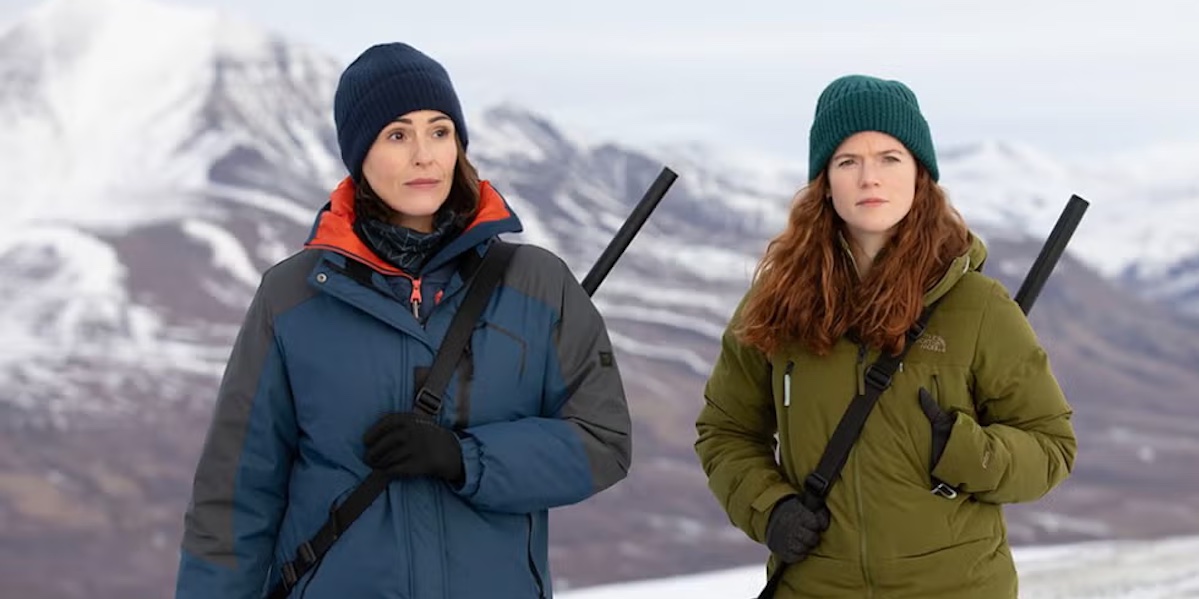
The plot initiates when a British military operation, conducted covertly on the island, encounters Russian forces. The skirmish leads to the disappearance of a high-profile Chinese scientist, Shen Jia, and the discovery of a deceased British serviceman within a Russian-controlled enclave. The British government, seeking to avoid a formal diplomatic rupture, tasks DCI Amy Silva and DI Kirsten Longacre with an extralegal investigation.
The narrative arc is divided between Kirsten’s deployment to the harsh, barren terrain of Spitsbergen, where she must collaborate—and compete—with local and international intelligence assets, and Amy’s investigation in Scotland. Amy’s efforts to trace the scientist’s recent movements lead her into a series of confrontations with activists and corporate interests, ultimately revealing that the motivation for the violence stems from the discovery of prehistoric biological samples unearthed by melting permafrost.
Geopolitical and Scientific Analysis
The series attempts to ground its fictional narrative in the reality of the Arctic’s shifting political and environmental climate. The Arctic has become a focal point for international competition due to the receding ice caps, which open new shipping lanes and expose mineral deposits. According to the United States Geological Survey, the Arctic contains an estimated 13 percent of the world’s undiscovered oil and 30 percent of its undiscovered gas. The drive for rare earth minerals, which are essential for modern electronics and green technology, further exacerbates these tensions.
However, the scientific premise of the season—that researchers have discovered dangerous, dormant microbial life capable of causing a global crisis—has faced criticism for its lack of nuance. While the melting of permafrost is a documented phenomenon that presents risks, including the potential release of ancient pathogens, the show’s implementation of these scientific concepts is often described as sensationalist. Experts in the field of microbiology and climate science have noted that the dramatic "thaw" depicted in the series simplifies a slow-moving, multi-generational environmental challenge into a fast-paced, episodic thriller trope.
The Dynamics of the Lead Characters
Central to the series’ appeal is the relationship between Amy Silva and Kirsten Longacre. Throughout three seasons, the show has depicted the couple navigating the pressures of law enforcement, motherhood, and the constant threat of state-level violence. In the third season, the narrative focuses on their evolving roles as they manage a young family while dealing with the demands of their respective careers.
The show highlights a common struggle for dual-career, queer households: the division of labor and the negotiation of professional competence. Critics have noted that the show’s decision to place the characters in a high-stress, life-or-death situation in the Arctic serves as a crucible for these domestic tensions. The climax of their conflict, occurring during a severe storm, serves as a focal point for their internal struggles regarding their commitment to one another and their individual identities within the family unit.
Official Responses and Industry Implications
The BBC has not yet confirmed a fourth season, and there is speculation within the industry that the current arc may serve as a conclusion for the series. Showrunners have previously suggested that the anthology-style structure of Vigil allows for versatility, but the emotional resolution of the third season feels, to many observers, like a definitive end to the Silva-Longacre narrative.

From an industry perspective, Vigil has been a successful exercise in "prestige procedural" television. By integrating high-concept political thrillers with character-driven drama, the series has demonstrated a model for retaining audience interest across multiple, disconnected settings. However, the third season’s reliance on complex, often clunky, political maneuvers and a somewhat predictable resolution has prompted discussions about the limitations of using a two-person investigative team to resolve systemic, global-scale corruption.
The Broader Impact
The portrayal of the British intelligence services and their interaction with international counterparts in the series reflects a broader trend in television to examine the "secret state." By questioning the morality of the British government’s attempts to secure resources under the guise of national security, the show invites the audience to consider the ethical costs of resource independence.
Despite its narrative flaws, the series remains significant for its visibility of queer women in lead roles within the thriller genre. The show has consistently challenged traditional portrayals of the "detective" archetype, shifting the focus from the solitary, brooding investigator to a partnership defined by interdependence and emotional labor.
Conclusion and Future Outlook
The conclusion of the third season leaves the central characters in a position of relative stability, having successfully navigated the geopolitical minefield of Svalbard. While the narrative resolution—involving the exposure of covert operations and the resolution of the murder mystery—has been viewed by some as overly idealistic, the series succeeds in its primary objective: maintaining high tension and a consistent character study.
As the television industry continues to evaluate the success of Vigil, the show stands as a testament to the popularity of the geopolitical thriller. Whether or not the series returns, the arc of Amy Silva and Kirsten Longacre remains a notable chapter in contemporary British drama, illustrating the complexities of balancing personal devotion with the often-opaque demands of the state. The shift toward the Arctic landscape serves as a reminder of the fragility of both global political agreements and the delicate ecosystems currently undergoing rapid, irreversible change. As environmental and geopolitical pressures in the Arctic continue to escalate in the real world, the themes explored in the third season will likely remain relevant to global audiences, even as the fictionalized accounts of those events fade from the cultural conversation.




