The global workforce is currently navigating a period of unprecedented transformation, characterized by a fundamental re-evaluation of the professional landscape. The past two years have functioned as a massive, unplanned experiment in organizational structure, work-life integration, and employee expectations. As economies transition from the reactive phase of the COVID-19 pandemic to a more strategic, long-term recovery, the "People" component of business—how talent is attracted, retained, and valued—has become the central axis upon which organizational success turns. This shift has not occurred in a vacuum; it is the culmination of pre-existing labor trends that were sharply accelerated by the external shocks of the pandemic, leading to what economists and sociologists have termed "The Great Resignation" and, conversely, "The Great Divergence."
A Chronology of the Pandemic Labor Shift
To understand the current crisis, one must view the timeline of the last 24 months. In early 2020, the primary focus for global organizations was business continuity and the rapid deployment of remote work technologies. As the crisis deepened, the initial period of "survival mode" gave way to a period of intense reflection among the workforce.
By late 2020 and early 2021, as vaccine rollouts began and the long-term reality of hybrid work set in, a shift in power dynamics emerged. Employees, having experienced the flexibility of remote work, began to prioritize autonomy and well-being over traditional career progression metrics. By mid-2021, the phenomenon of high-volume voluntary turnover became impossible for leadership to ignore. In the United States, the Bureau of Labor Statistics (BLS) recorded a record-breaking 4.3 million voluntary resignations in August 2021 alone. This was accompanied by a historically high number of open positions—10.4 million in the same month—illustrating a massive mismatch between employer supply and worker demand.
This trend was mirrored globally. In the United Kingdom, job vacancies surpassed the 1 million mark for the first time in 2021. Meanwhile, in Germany, the EU’s largest economy, the Ifo Institute reported in July 2021 that 34.6% of companies were facing a shortage of skilled labor, an 11% increase in just three months. This trajectory suggests that the labor shortage is not a temporary anomaly but a structural issue that will likely persist well into the coming years.
The Anatomy of Resignation: Who is Leaving and Why?
Data from the Harvard Business Review and other analytical bodies indicate that the resignation trend is not evenly distributed across the workforce. The most significant uptick in turnover has been observed among mid-career employees—individuals aged 30 to 45. This demographic, often burdened by the "sandwich generation" responsibilities of caring for both children and aging parents during lockdowns, saw resignation rates rise by 20% compared to pre-pandemic levels.
The tech and healthcare sectors have been particularly hard-hit. These industries faced the highest levels of professional burnout due to the surge in demand for digital services and the grueling reality of frontline pandemic response, respectively. Furthermore, the rise of "rage quitting"—impulsive resignations driven by untenable working conditions—has become a hallmark of this era. This trend reflects a breaking point for many workers in service and hospitality sectors, where public empathy for the "essential worker" has collided with the reality of low wages and high stress.
The Great Divergence: The Unspoken Inequality
While the narrative of "The Great Resignation" dominates headlines, it is vital to acknowledge "The Great Divergence." This term encapsulates the stark inequality in the economic recovery. While some professionals have used the labor market shift to pivot toward better opportunities, others have faced involuntary displacement.
The International Labour Organization (ILO) has reported that global working hours in 2021 remained 4.3% below pre-pandemic levels, a deficit equivalent to roughly 125 million full-time jobs. Furthermore, the OECD notes that this reduction in hours has disproportionately affected low-paid workers. The global employment crisis is characterized by a "K-shaped" recovery, where white-collar, knowledge-based roles have experienced a shift in location and flexibility, while service-based and manual roles have seen a reduction in stability and total available work. The 20 million fewer people in the workforce across OECD nations since the start of the pandemic serves as a stark reminder that the current labor market is not functioning with universal equity.
Implications for Corporate Leadership and DEI
For organizational leaders, the implication of these trends is clear: the traditional command-and-control model of management is no longer a viable strategy for talent retention. The current environment has empowered employees to demand more than just a paycheck; they are seeking alignment with their personal values, a culture that supports mental health, and an inclusive environment that addresses systemic inequities.
Diversity, Equity, and Inclusion (DEI) initiatives can no longer be peripheral projects. They must be integrated into the core of business strategy. In an era where employees are hyper-aware of workplace culture, "performative" inclusivity—such as social media statements without systemic change—is quickly identified and rejected by the talent pool. Organizations that fail to offer a tangible, inclusive, and human-centric employee experience are finding it increasingly difficult to compete for the best talent.
Research by Willis Towers Watson confirms the urgency of this situation: 70% of U.S. employers expect talent acquisition challenges to persist, and 61% report that employee retention is their primary operational struggle. This environment necessitates a "Great Reset" in how companies interact with their workforce.
Strategies for the Future: Inclusive Recovery
As organizations move toward a post-pandemic steady state, the focus must shift to structural reforms. This involves several critical steps:
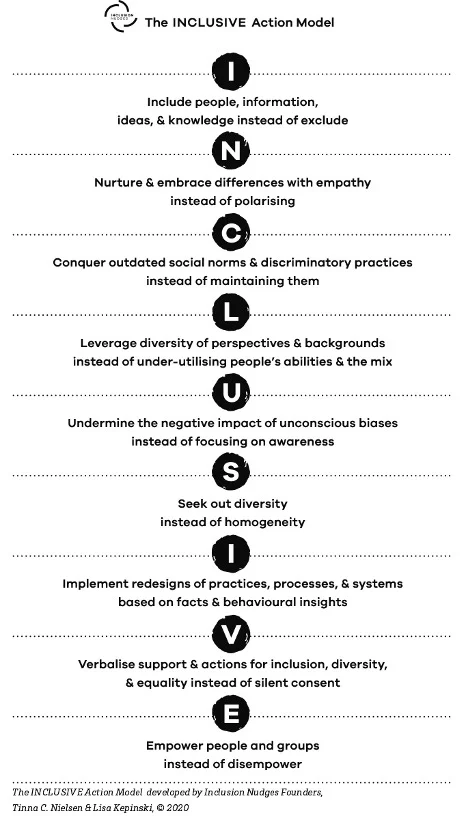
- Re-evaluating Retention Metrics: Companies must move beyond exit interviews and conduct "stay interviews" to understand what motivates their current workforce. The "Inclusion Nudges" framework, for instance, suggests that creating an "Alternative Future Vision" can help employees see their growth trajectory within the firm, reducing the urge to look elsewhere.
- Addressing Meritocracy and Bias: As the workforce becomes more distributed, there is a risk that proximity bias will creep into performance reviews. Leaders must employ objective "color-coding" or structured, skill-based assessment tools to ensure that meritocracy is maintained regardless of whether an employee is working remotely or in the office.
- Prioritizing Empathy as a Leadership Skill: The rise of "rage quitting" is a symptom of a breakdown in communication between management and staff. Developing leaders who are capable of empathic perspective-taking is no longer a "soft skill" but a business necessity.
- Addressing the "Full Scope" of Work: An inclusive recovery requires acknowledging the needs of all employees, not just those in high-demand sectors. Fair labor practices—including wage transparency, flexible scheduling, and clear career pathways—are the foundational elements of any sustainable talent strategy.
Conclusion: The Path Forward
The pandemic has functioned as a catalyst for a long-overdue examination of the social contract between employer and employee. We are currently in a state of high ambiguity, where the traditional benchmarks of professional success are being rewritten in real-time. The organizations that will thrive in this environment are those that view the current labor crisis not as a temporary hurdle to be overcome, but as a defining moment to build a more equitable and human-centered future of work.
As we move forward, the focus for DEI practitioners and organizational leaders must remain on the intersection of policy and practice. By moving from reactive policy-making to proactive, inclusive design, companies can ensure that the "Great Reset" results in a more resilient and satisfied global workforce. The data is clear: talent is no longer a commodity to be acquired, but a relationship to be nurtured. Those who master this shift will be the ones to define the next era of global economic prosperity.