
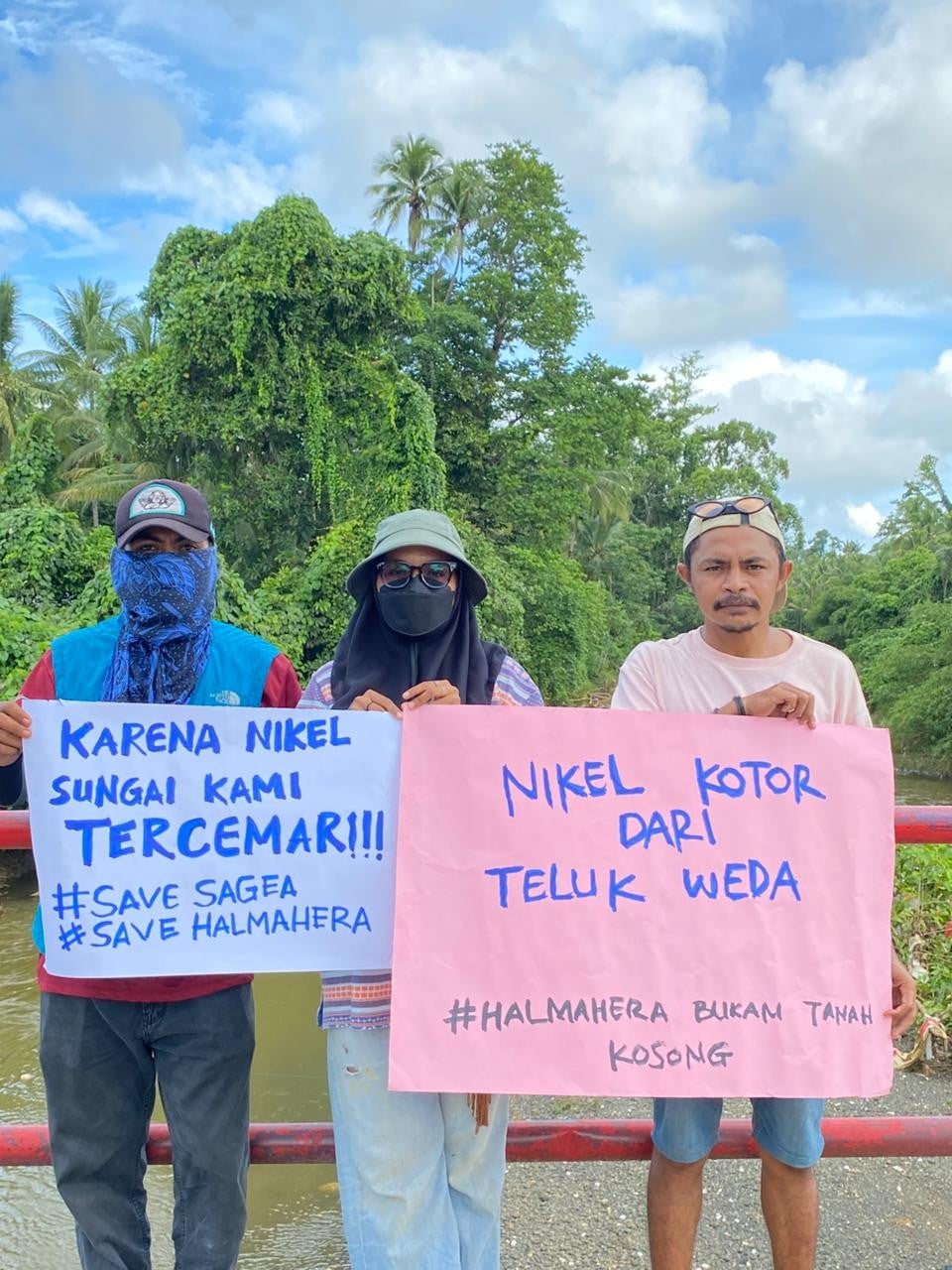
The landscape of Indonesia’s resource-rich Maluku Islands has increasingly become a crucible for conflicts between global energy transition demands and Indigenous land rights. In the remote district of Central Halmerha, fourteen Indigenous residents of Sagea-Kiya Village now find themselves entangled in a high-stakes legal battle after peacefully protesting nickel mining operations encroaching upon their ancestral customary territories. Initiated by the mining concession holder PT Zhong Hai Rare Metal Mining Indonesia, the legal action highlights a growing national trend wherein criminal statutes are deployed against local communities seeking to safeguard their environment, cultural heritage, and traditional livelihoods.
This unfolding confrontation is emblematic of broader systemic tensions across Indonesia, where the aggressive acceleration of nickel extraction—vital for the global electric vehicle and green energy supply chains—frequently collides with the rights of customary populations. Civil rights advocates and environmental watchdogs have sounded the alarm, pointing to a recurring pattern of criminalization that targets grassroots resistance against extractive industries in North Maluku and beyond.
Chronology of Conflict: From Blockades to Legal Summons
The friction between Sagea-Kiya villagers and corporate interests reached a boiling point in early 2026, culminating in a sequence of events that rapidly transitioned from civil disobedience to criminal investigation.
According to community accounts and coalition reports from Save Sagea, residents exhausted formal avenues for dialogue with mining operators regarding the unchecked expansion into their traditional lands. When negotiations stalled, community members took direct action on February 5, 2026, establishing a protest tent and blockade at the jetty crossing utilized by PT Zhong Hai Rare Metal Mining Indonesia. The intent was to peacefully halt heavy operational transit and draw immediate attention to environmental degradation risks.
Shortly after the tent was erected, the situation deteriorated. Four corporate workers, identified as foreign nationals from China, approached the structure and attempted to dismantle it. The resulting confrontation caused structural damage to the tent, triggering anger among the assembled demonstrators and leading to a localized physical altercation between residents and corporate personnel.
The legal fallout was swift. Just three days after the protest, on February 8, 2026, Save Sagea activist and Sagea resident Lada Ridwan received a formal police summons from the Central Halmerha Police. Simultaneously, investigators issued inquiry orders regarding alleged assault and obstruction at the Zhong Hai jetty. By February 26, 2026, the investigative machinery had formalized its trajectory. Investigators submitted a Notice of Commencement of Investigation (SPDP Number SPDP/01/1/RES.5./2026/DITRESKRIMSUS) to the North Maluku High Prosecutor’s Office.
The state initiated proceedings to investigate fourteen villagers under strict legal provisions, notably Article 162 in conjunction with Article 136 paragraph (2) of Law Number 3 of 2020, which amends the foundational Mineral and Coal Mining Law (Minerba Law), further reinforced by the omnibus provisions of the Job Creation Regulation (Law Number 6 of 2023). Two prominent Indigenous women from the village, Rifya Rusdi and Sulastri Mahmud, were singled out in initial police paperwork, accused by authorities of orchestrating and mobilizing the demonstration, before police eventually consolidated multiple reports into a single dragnet involving fourteen community members.
The Legislative Weaponization of Article 162
At the core of the legal defense is a sharp critique of how national statutory instruments are applied to civil disputes in resource zones. Legal experts and advocates representing the Sagea-Kiya fourteen argue that the utilization of Article 162 of the Minerba Law represents a dangerous overreach designed to silence dissent.
Fahrizal Dirhan, head of the Save Sagea Advocacy Team, has continuously warned that the statute is systematically weaponized against local populations living adjacent to extractive projects. Originally framed to prevent unauthorized disruptions of licensed business operations, the article is frequently interpreted by law enforcement to criminalize any form of community resistance. Consequently, legitimate citizen grievances regarding ecological disruption, loss of clean water sources, and desecration of sacred sites are legally reframed as criminal obstruction of national development projects.
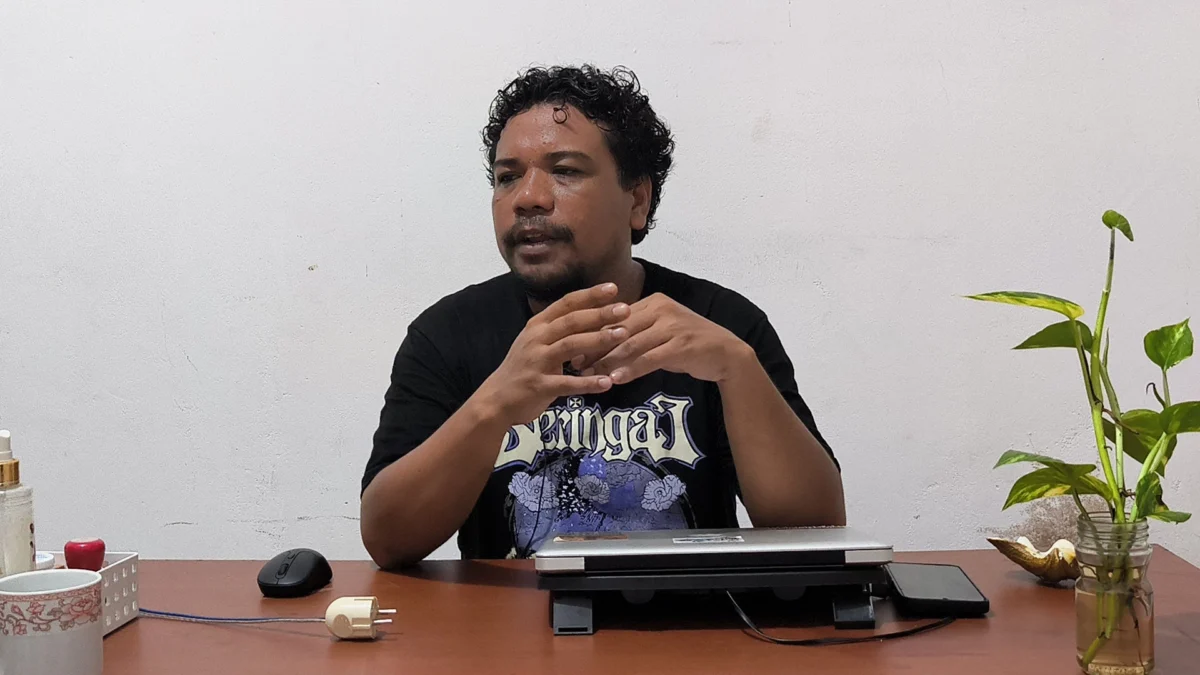
"The people of Sagea-Kiya were not actively involved from the beginning when their territory was determined as a mining business location," Dirhan stated, emphasizing the lack of Free, Prior, and Informed Consent (FPIC) that plagues major concession grants. "The community views this investment and extractive development program as management of their land without their participation."
Legal representatives have rejected prosecution narratives attempting to portray the grassroots movement as manipulated by outside agitators. Instead, they maintain that the coalition—which has roots stretching back years as a youth-led environmental protection initiative—embodies a genuine, organic defense of communal survival.
Broader Economic and Environmental Context in North Halmahera
The legal pressure facing Sagea-Kiya residents does not occur in a vacuum. It mirrors a parallel case from 2025, when eleven members of the Maba Sangaji Indigenous Community in neighboring East Halmahera Regency faced similar prosecutions for opposing mining incursions on their ancestral domains. These recurring legal battles highlight the deep structural friction generated by Indonesia’s rapid ascension as a global nickel processing superpower.
Central Halmahera and North Maluku more broadly have experienced massive capital influxes and industrial expansion following national policies designed to ban raw mineral exports and foster domestic downstream processing. While these economic strategies have successfully attracted multibillion-dollar investments—particularly from international partners—they have simultaneously imposed severe ecological costs on local ecosystems. Indigenous communities, whose traditional economies rely heavily on sustainable agroforestry, coastal fisheries, and pristine watershed systems, frequently bear the brunt of industrial pollution, deforestation, and the loss of access to customary forests.
The expansion of nickel mining in regions like Sagea directly threatens karst ecosystems, subterranean river networks, and local fisheries that sustain coastal and inland populations. When customary landowners attempt to protect these vital lifelines, they routinely encounter a wall of corporate security and state-backed legal intimidation.
Institutional Silence and the Call for Government Intervention
As the fourteen residents navigate ongoing police interrogations and await decisions regarding formal suspect designations, legal teams and civil society networks have leveled sharp criticisms at local government institutions.
Dirhan noted a conspicuous absence of meaningful intervention or impartial mediation by regional authorities throughout the escalating conflict. Rather than acting as a neutral arbiter to protect vulnerable citizens and investigate corporate non-compliance or lack of community consultation, local government bodies have largely remained passive, effectively greenlighting the legal persecution of land defenders. This hands-off approach by administrative leaders underscores a systemic governance gap across Indonesia’s resource frontiers, where corporate utility often supersedes constitutional protections for Indigenous rights.
In response to this institutional vacuum, the Save Sagea Advocacy Team has called for nationwide solidarity. Human rights defenders, environmental organizations, and civil society coalitions across Indonesia are being urged to monitor the proceedings closely. Legal strategists emphasize that safeguarding the Sagea-Kiya fourteen is essential not only for the preservation of local livelihoods in Halmahera but also for maintaining the broader democratic space necessary for citizens to voice environmental concerns.
As the case proceeds toward potential trials, the situation in Central Halmahera serves as a critical test for Indonesia’s judicial system. It lays bare the urgent need to balance aggressive energy transition targets with fundamental human rights, environmental justice, and the legal recognition of Indigenous territories. For the residents of Sagea-Kiya, the fight is ultimately about preserving their identity, their environment, and their right to exist on the land of their ancestors.




