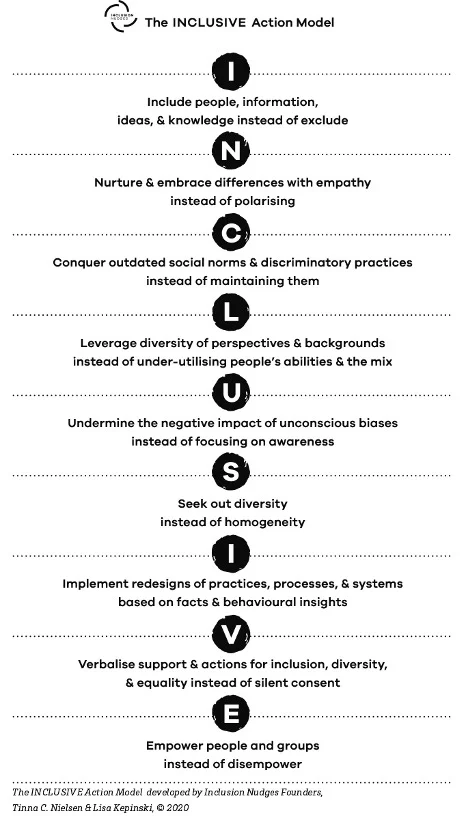
In an era increasingly focused on fostering diverse, equitable, and inclusive environments, a novel methodology known as Inclusion Nudges is emerging as a critical tool for systemic change. This approach, rooted in behavioral science, aims to fundamentally redesign organizations, communities, and society to embed inclusion as the default, making it the norm for everyone, everywhere. By targeting the unconscious cognitive processes that often undermine even the best intentions, Inclusion Nudges offer a practical, evidence-based pathway to sustainable inclusivity, moving beyond traditional awareness-based strategies that frequently yield inconsistent results.
The Persistent Challenge of Traditional DEI Initiatives
For decades, organizations and societal change agents have grappled with the complexities of diversity, equity, and inclusion (DEI). Despite significant investment in training programs, policy reforms, and awareness campaigns, many initiatives have encountered a frustrating cycle: initial progress followed by a regression to default behaviors. This phenomenon, often described as taking "three steps forward and one step back," highlights a fundamental challenge. Well-intentioned efforts, aimed at promoting fairness, gender parity, human rights, and anti-discrimination, have frequently failed to deliver the anticipated speed or scale of change.
This struggle became particularly evident for internal change makers within multinational corporations, who, like their counterparts across global networks, observed a consistent gap between stated organizational values and actual daily practices. The frustration stemmed from seeing individuals and groups revert to ingrained patterns of behavior, leadership, collaboration, and decision-making that inadvertently perpetuated exclusion. This pervasive issue underscored the urgent need for a new solution, one that could effectively bridge the chasm between conscious intent and unconscious action.
Unmasking the Unconscious Mind: The Core Obstacle to Inclusion
At the heart of the challenge lies the intricate functioning of the human mind, specifically the interplay between its two interdependent modes of thinking. Decades of research in behavioral economics, psychology, and neuroscience have revealed that human judgment and decision-making are not solely governed by rational thought. Instead, a significant portion of our actions and choices are driven by an automatic, unconscious system.
Consider a hypothetical, yet illustrative, scenario: a group of leaders evaluating candidates for a senior management position, concluding that the "tallest candidate is definitely the best qualified." While consciously, no rational leader would assert that height directly correlates with strategic execution or resilience, research consistently demonstrates that unconscious associations profoundly influence such decisions. Studies, including those published in the Journal of Applied Psychology and Organizational Behavior and Human Decision Processes, have repeatedly shown that height plays a disproportionately heavy role in perceptions of leadership ability and status. For instance, data indicates that approximately 60% of top leaders in various sectors are 185 cm (6 ft 1 in) or taller, a stark contrast to the mere 14% of the general population who reach this height. This "height-leadership effect" extends to greater high-status opportunities, promotions, and higher incomes, establishing tall leaders as a normative, albeit irrational, pattern that transcends local cultures.
This occurs because the unconscious mind, operating on an instinctive and intuitive level, forms associations—connections between elements like "tall" and traits such as "strong," "presence," "powerful," and "capable." Once these unconscious beliefs are activated, the conscious, reflective mind often engages in confirmation bias, selectively seeking evidence to validate the initial unconscious judgment. This process can render individuals blind to the merits of other candidates, leading to flawed conclusions and perpetuating exclusionary patterns without conscious awareness.
The Two Systems of Thought: A Universal Cognitive Architecture
Psychological research, notably the work of Daniel Kahneman and Amos Tversky, delineates these two modes of thinking:
- The Automatic System: This system is characterized by being unconscious, fast, instinctive, effortless, associative, and uncontrolled. It functions like an autopilot, dominating an estimated 90-99% of our daily behaviors and choices. It relies on mental shortcuts, or heuristics, including associations and biases—errors in processing and interpreting information—to make rapid judgments and decisions.
- The Reflective System: This system is conscious, slow, effortful, rational, logical, self-aware, rule-following, and controlled. It is engaged when deliberate thought is required, allowing for complex evaluations and reasoned decision-making.
Both systems are universal across all human beings and operate interdependently. The gap between them—the disparity between our rational knowledge and our unconscious doing—is a primary source of the perpetuation of "absurd realities" in both professional and personal life. Even when an HR professional or hiring manager consciously knows that height does not determine leadership quality, their unconscious mind may still influence their judgment as if it did. This intention-action gap is a significant hurdle for DEI efforts, as knowledge and willpower alone are often insufficient to overcome deeply ingrained automatic responses.
The Genesis of Inclusion Nudges: A Behavioral Science Solution
Recognizing that traditional methods focused on rational arguments and awareness were not effectively closing this intention-action gap, the creators of Inclusion Nudges embarked on a new path. They began experimenting with insights derived from a multidisciplinary array of sciences: behavioral economics, nudging theory, psychology, anthropology, linguistics, neuroscience, and complex system and microeconomic theory. This integrated approach proved crucial, yielding a significant difference in impact compared to previous efforts.

Behavioral economics and nudge theory challenge the flawed assumption that people consistently act in their own or society’s best interest. Instead, they propose that by carefully designing the "choice architecture"—the environment and processes within which choices are made—people can be predictably steered toward better outcomes. A "nudge" is a subtle intervention that influences choices in a non-intrusive way, without removing the freedom to choose otherwise. Applied to DEI, this means designing environments and processes that make inclusive behavior the easiest, most natural option, effectively "nudging" the unconscious mind toward equity.
Furthermore, contemporary societal trends underscore the increasing relevance of this approach. Cognitive overload, stemming from the heightened complexity of modern life, the echo chambers of social media, and increasingly busy and stressful lifestyles, intensifies our reliance on mental shortcuts. This reliance, in turn, can lead to greater homogeneity and exclusion, ironically at the expense of our collective need for diverse perspectives. Thus, actively designing for inclusion, by targeting the unconscious mind with inclusive behavioral design, becomes not just beneficial but imperative. An Inclusion Nudge is defined as a design based on behavioral and social science insights, engineered to steer the unconscious mind toward inclusive behaviors by targeting behavioral drivers, judgment processes, and perceptions.
The Strategic Framework of Inclusion Nudges: Three Pillars of Change
The Inclusion Nudges change approach is built upon three distinct yet interconnected types of designed interventions, each serving a specific purpose in fostering inclusive environments:
1. Revealing Hidden Realities: The "Feel the Need" Nudges
These designs are engineered to make invisible patterns of exclusion visible, thereby evoking an emotional response and creating a felt need for change, rather than merely an intellectual understanding. The human mind is more effectively motivated to alter behavior by what it sees and feels, not just by what it rationally knows. For instance, simply telling individuals they harbor biases is often ineffective; however, showing them the tangible implications of bias, without explicitly labeling the bias itself, can be profoundly impactful.
A practical example is the "Seeing those not seen and sponsoring them" nudge. This intervention addresses the issue of unequal visibility and networking opportunities within organizations, particularly concerning gender. By visually mapping formal and informal networks among senior executives, and starkly highlighting the limited representation of women compared to men, leaders are confronted with a compelling visual reality. When a presentation explicitly lists numerous men’s names but only a handful of women’s names in a relevant network map, it bypasses intellectual resistance and directly impacts the unconscious mind, generating a felt need for interventions like sponsorship programs. This design avoids accusatory language, instead allowing the data visualization to speak for itself, compelling a genuine desire for change. These "Feel the Need" Inclusion Nudges motivate individuals and groups to actively engage in profound systemic shifts for greater inclusiveness.
2. Engineering Inclusive Processes: The "Process Design" Nudges
Beyond motivating change, it is often more powerful to enable inclusion to happen automatically, without requiring conscious effort or constant dialogue about diversity. This category of nudges focuses on embedding inclusive practices into the very fabric of organizational processes, systems, and environments. By designing the facilitation of collaboration, idea generation, decision-making processes, IT systems, or physical spaces to be inclusive by default, organizations can ensure that individuals naturally adopt inclusive behaviors. This approach mitigates the negative influence of bias and ensures that diverse perspectives are considered automatically, fostering an inclusive culture as the norm.
Consider the "Share with a peer to access diversity in groups" nudge. This design tackles the common challenge of group dynamics where individuals may self-silence, conform to majority views, or engage in power games, thereby limiting access to a diversity of perspectives crucial for optimal decision-making. By implementing a process where, before a group discussion, individuals first share their initial thoughts with a single peer, and then reconvene to share their individual and peer-validated insights, several benefits accrue. It ensures that all voices are heard, provides a safe space for initial ideation (especially important in groups with varying levels of trust), and helps capture and correct communication misunderstandings. This "Process Design" Inclusion Nudge empowers individuals to act inclusively as a default, enhancing psychological safety and fostering a culture where every voice is valued.
3. Reshaping Perceptions and Narratives: The "Frame Perceptions" Nudges
This category leverages the power of language, communication, and presentation to alter individual and collective perceptions, judgments, and understanding of issues related to inclusion. Often, ingrained perceptions, stereotypes, or dominant narratives hinder progress despite good intentions. By strategically framing issues—through reversing numbers, priming specific associations, appealing to identity, or altering the anchor of thought processes—these nudges can influence what people see, how they interpret data, and ultimately, how they behave.
An example is the "Show the hidden people by reversing the numbers" nudge. This design challenges the conventional way data is presented, often focusing on the majority or the "achieved" diversity metrics, which can obscure the reality of underrepresented groups. By reversing the numbers—for instance, instead of stating "80% of leadership roles are held by men," framing it as "20% of leadership roles are held by women, meaning 80% of qualified women are potentially overlooked"—it shifts the focus to the often-invisible segments of the population and the consequences of their exclusion. This reframing alters the unconscious mind’s perception, transforming an issue that might seem like a burden or an abstract statistical problem into a vivid representation of human potential being missed, thereby supporting action to address systemic imbalances. These "Framing Perceptions" Inclusion Nudges are instrumental in changing narratives and challenging stereotypes that influence behaviors towards others.
The Broader Impact and Global Movement
The efficacy of Inclusion Nudges has been demonstrated across diverse communities, organizations, and leadership contexts worldwide. This approach simplifies the role of change agents, making it easier to drive impactful change while maintaining personal motivation. By fostering co-creation with the very people affected by the changes, Inclusion Nudges ensure that interventions are relevant, embraced, and sustainable. This methodology empowers individuals and groups to actively design systems, processes, cultures, technologies, policies, and even physical environments that inherently foster inclusive behaviors, interactions, and decision-making.
The contemporary global landscape, marked by increasing polarization and social fragmentation, underscores the critical need for fundamentally new approaches to achieve inclusive outcomes. While the aspiration to be inclusive is widespread, the practical execution often falters. This is precisely why the Inclusion Nudges global initiative is dedicated to empowering individuals globally to apply these designs, making inclusion the norm everywhere, for everyone.
The initiative champions an open-source philosophy, founded on principles of sharing, reciprocity, and collaboration. Unlike many proprietary solutions that guard their methodologies, Inclusion Nudges actively encourages the sharing of "how-to" details, step-by-step descriptions of effective change designs, and the underlying behavioral insights. This commitment to open access—manifested through guidebooks, action guides, and a collaborative community—democratizes knowledge, accelerates progress, and enables a wider array of change makers to implement effective solutions. This collective endeavor, inviting individuals to contribute their insights and experiences, embodies the core belief that a truly inclusive world can only be built through shared knowledge and concerted action. By making everyday experimentation with these behavioral designs a natural and integrated part of daily work, interactions, and decisions, Inclusion Nudges seeks to transform the aspiration of inclusion into a tangible, lived reality.