The feature film debut of director Meredith Alloway, Forbidden Fruits, is scheduled for a limited theatrical release followed by a digital premiere on the Shudder streaming platform on March 27. Adapted from Lily Houghton’s stage play, originally titled Of the woman came the beginning of sin and through her we all die, the film marks a significant entry into the subgenre of female-centric social thrillers. Produced by Academy Award winner Diablo Cody, the project represents a fusion of contemporary retail culture critique and the psychological horror elements characteristic of 1980s and 1990s cult cinema.
The narrative follows a young woman who enters the insular world of a high-end mall retail establishment, where she must navigate a rigid social hierarchy defined by performative sisterhood and aesthetic perfection. The film’s thematic core explores the tension between individual identity and the collective demands of a curated social group, set against the backdrop of modern consumerism.
Creative Pedigree and Production Background
The production of Forbidden Fruits brings together a creative team with a history of exploring complex feminine dynamics. Producer Diablo Cody, known for her work on Juno, Jennifer’s Body, and Young Adult, provides a stylistic bridge to a previous era of "mean girl" cinema that prioritized sharp dialogue and morally ambiguous protagonists. Alloway, making her feature directorial debut, previously established her visual style through short films such as Deep Tissue and First Date, both of which explored themes of eroticism and toxic interpersonal relationships.
The transition from stage to screen was facilitated by Lily Houghton, who adapted her own play for the film. The original theatrical production was noted for its surrealist exploration of gender and power, elements that Alloway has translated into a cinematic language that emphasizes atmosphere and rhythmic tension. The involvement of Cody suggests a deliberate effort to reclaim a specific type of cinematic "bite" that critics argue has been diluted in recent mainstream adaptations of similar tropes.
Narrative Structure and Character Archetypes
The film utilizes a specific naming convention for its central characters, with each member of the core group named after a fruit, signaling both their unity as a collective and their status as consumable products within a retail environment.
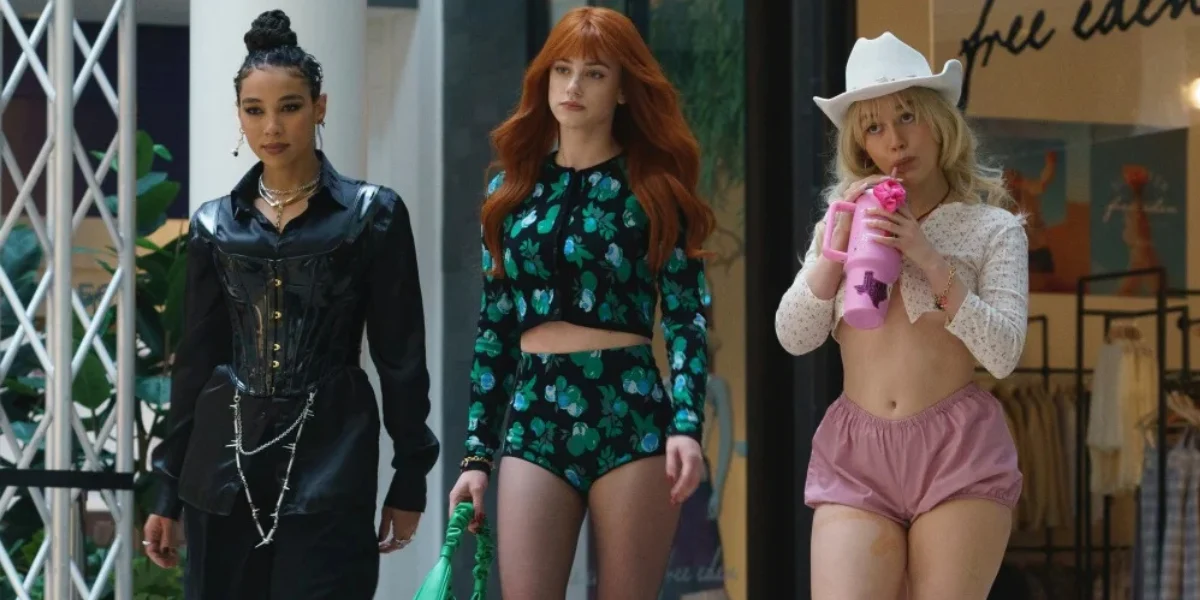
Lola Tung, known for her role in The Summer I Turned Pretty, portrays Pumpkin, the narrative’s protagonist and audience surrogate. Unlike the traditional "naive newcomer" archetype, Pumpkin is framed as an investigative figure who actively seeks vulnerabilities within the group’s facade to secure her own position.
Lili Reinhart portrays Apple, the group’s authoritative leader. Reinhart’s performance has been described as a heightened evolution of her "dark Betty" persona from the television series Riverdale, characterized by a controlled, icy demeanor. Alexandra Shipp plays Fig, a character who balances intellectual eccentricity with the group’s mandated coolness, while Victoria Pedretti portrays Cherry, a character whose hyper-feminine, Monroe-esque presentation masks a deeper sense of tragedy.
The plot progresses as the internal "cracks" in this sisterhood are tested by external pressures and internal betrayals. The script focuses on the absurdity of modern communication—such as the reliance on emojis for complex emotional interactions—and the predatory nature of modern sales tactics, exemplified by a sequence involving the manipulation of a social media influencer.
Reviving the Sharp-Edged ‘Mean Girl’ Subgenre
Industry analysts note that Forbidden Fruits arrives at a time when the "mean girl" subgenre is undergoing a period of transformation. Historically defined by films like Michael Lehmann’s Heathers (1988), Jamie Babbit’s But I’m a Cheerleader (1999), and Mark Waters’ Mean Girls (2004), the genre has traditionally used female social cruelty as a lens through which to examine broader societal anxieties.
However, recent entries in the genre, including the 2024 musical adaptation of Mean Girls, have been critiqued for softening the antagonistic edges of their characters to better align with contemporary sensibilities regarding "likability." Forbidden Fruits appears to reject this trend, opting instead for a return to the unapologetic and often destructive behavior found in earlier cult classics. The film’s willingness to depict queer and feminine spaces as sites of genuine conflict rather than idealized solidarity aligns it with the subversive energy of the Heathers television reboot and Cody’s own Jennifer’s Body.
Cinematic Influences and Visual Language
Director Meredith Alloway employs a visual style that draws comparisons to the work of British filmmaker Peter Strickland, particularly his 2018 film In Fabric. Like Strickland, Alloway focuses on the "commodity cinema" aspect of the setting—a boho-chic storefront named "Free Eden," which serves as a satirical stand-in for real-world retailers like Free People.
The cinematography emphasizes the claustrophobic nature of the shopping mall environment, utilizing dead-eyed gazes and deliberate, offbeat gestures to create a sense of uncanny artifice. The film’s "witchcraft" elements—involving rituals that utilize blood, tears, and retail merchandise—serve as a metaphor for the social power dynamics at play. While the supernatural elements are described as ancillary to the psychological drama, they provide a framework for the film’s more visceral horror sequences.
The auditory experience of the film is equally curated, featuring a soundtrack designed to complement the rhythmic delivery of Houghton’s dialogue. The use of "nonsense words" as a form of ritualistic prayer within the film further emphasizes the group’s isolation from reality and their commitment to their own self-created mythology.
Social Commentary: Capitalism and Performative Sisterhood
At its intellectual core, Forbidden Fruits functions as a critique of how capitalism commodifies personal relationships. The characters’ lives are entirely contained within the walls of a shopping mall, suggesting a world where identity is inseparable from one’s role as a consumer or a salesperson.
The "performative sisterhood" depicted in the film is a direct response to the loneliness of modern life. By adhering to the strict rules set by the "queen bee," the characters avoid the existential dread of isolation, even if the cost is the constant threat of social expulsion. The film suggests that the "utopia" Apple attempts to create is inherently fragile because it is built on the same foundations of manipulation and envy that define the capitalist systems outside the mall.
The script’s focus on scamming "mommy bloggers" and the transactional nature of friendship provides a factual basis for its critique of contemporary digital culture. It examines how women are often encouraged to punish one another for failing to meet impossible standards of aesthetic and behavioral consistency.
Distribution and Industry Positioning
The decision to release Forbidden Fruits via a limited theatrical run followed by a debut on Shudder reflects a strategic move within the independent film market. Shudder, a subscription service owned by AMC Networks, has become a primary hub for "elevated horror" and genre-bending features that may not find a traditional wide release in a landscape dominated by franchise blockbusters.
The film’s 100-minute runtime and its focus on niche subcultures—retail workers, boho-chic aesthetics, and queer-coded horror—make it a strong candidate for the "cult classic" trajectory. Its association with Diablo Cody provides a level of brand recognition that is likely to attract both older fans of 2000s teen cinema and younger audiences familiar with the lead actresses’ television work.
Broader Impact and Implications
Forbidden Fruits represents a growing trend in cinema where playwrights are given the opportunity to expand their theatrical visions into feature-length films. This allows for a more dialogue-heavy, character-driven approach to genre filmmaking. Lily Houghton’s background in theater is evident in the film’s structured pacing and its focus on ensemble dynamics.
Furthermore, the film contributes to the ongoing discussion regarding the representation of "difficult women" in media. By allowing its protagonists to be monstrous, manipulative, and "messy," the film challenges the narrative requirement for female characters to be inherently empathetic.
As the film prepares for its March 27 release, it stands as a testament to the enduring appeal of the "mean girl" trope when updated with contemporary social anxieties and a sophisticated visual palette. Whether Forbidden Fruits will spawn a broader cinematic universe—as hinted at by Houghton’s other works involving similar themes—remains to be seen, but its arrival marks a definitive return to a more acerbic form of social satire in independent cinema.