The publication of feminist author Lindy West’s latest memoir, Adult Braces: Driving Myself Sane, in March 2024, has ignited a widespread cultural debate regarding the ethics, stability, and feminist implications of non-monogamous relationships. West, widely recognized for her previous work Shrill and her role as a prominent voice in millennial feminism, detailed her transition from a traditional marriage to a "throuple" involving her husband and their shared girlfriend. While the memoir covers various aspects of West’s personal evolution, the focus of public discourse has centered almost exclusively on her description of polyamory, a subject that continues to challenge deeply embedded social norms.
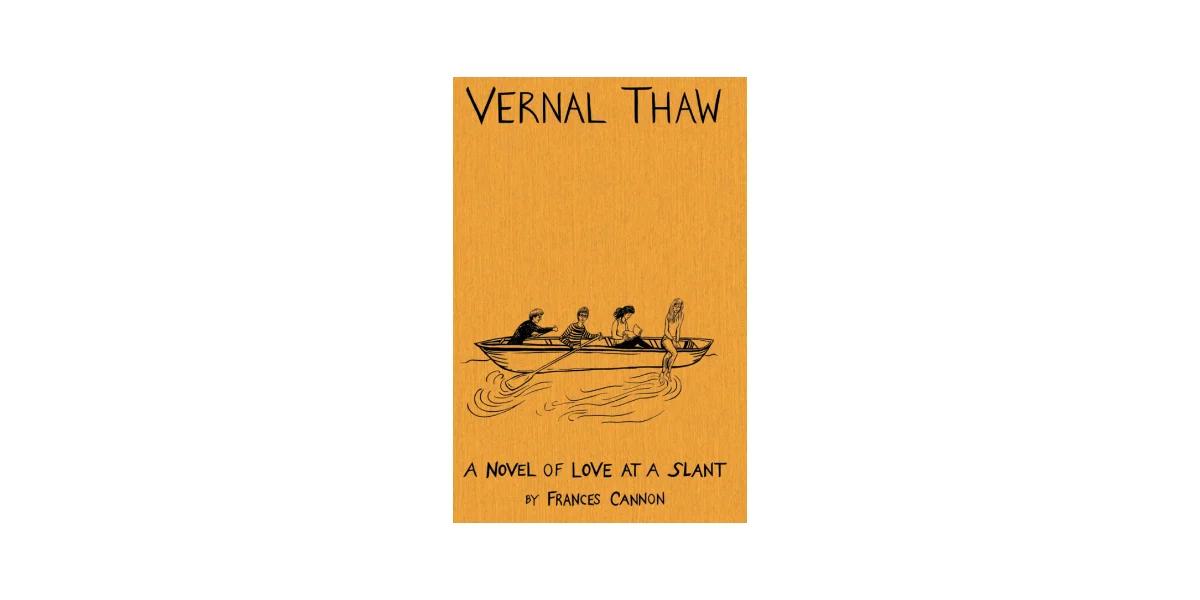
This controversy coincides with a burgeoning movement in contemporary literature that seeks to re-examine relationship structures through a non-mononormative lens. A significant contribution to this field is Vernal Thaw: A Novel of Love at a Slant by Frances Cannon, an interdisciplinary artist and scholar. Unlike West’s memoir, which follows the opening of a relationship, Cannon’s work explores the psychological toll of "closing" a relationship, positioning monogamy as a restrictive experiment rather than a natural default. Together, these works provide a framework for analyzing the current shifting landscape of modern intimacy and the societal resistance it faces.
The Public Backlash to Adult Braces
Since the release of Adult Braces, media outlets and social media commentators have analyzed West’s narrative through a variety of critical lenses. The discourse has largely fallen into four categories of skepticism: the belief that West has been coerced or "brainwashed," the assertion that polyamory is inherently unstable, the claim that West has betrayed her feminist principles, and the suggestion that she has lost her sense of self in the process of accommodating her husband’s desires.
Columnists at publications such as The Atlantic and The Free Press have led the charge in questioning the health of West’s relationship. Some critics argue that West’s initial devastation at her husband’s request for an open relationship suggests a lack of true consent, characterizing her eventual acceptance as a survival mechanism rather than a liberation. These reactions reflect a broader societal phenomenon known as mononormativity—the assumption that monogamy is the only natural, moral, or successful way to structure a romantic life.
The feminist critique of West’s memoir is particularly nuanced. Some observers argue that the "burden" of emotional labor in navigating an open relationship often falls disproportionately on women, suggesting that West’s pivot to polyamory serves male interests under the guise of progressive politics. Conversely, supporters of West argue that the ability to negotiate the terms of one’s own relationship is a fundamental feminist act, asserting that the intense scrutiny of her personal life is a form of policing women’s autonomy.
Statistical and Social Context of Non-Monogamy
The debate surrounding West’s memoir is occurring against a backdrop of increasing visibility for consensual non-monogamy (CNM). Data from recent years suggests that traditional relationship structures are undergoing a gradual but significant transformation in Western societies.
According to a 2021 study published in the Journal of Sex & Marital Therapy, approximately one-fifth of single adults in the United States have engaged in some form of consensual non-monogamy at some point in their lives. Furthermore, research conducted by YouGov in 2020 indicated that roughly one-third of Americans (32%) say that their ideal relationship would be non-monogamous to some degree. Among younger demographics, specifically Millennials and Gen Z, the preference for monogamy is notably lower than in previous generations.
Legal recognition of these structures is also beginning to emerge. In 2020 and 2021, the Massachusetts cities of Somerville and Cambridge passed ordinances recognizing domestic partnerships between more than two people, providing multi-partner households with legal protections previously reserved for two-person couples. Despite these shifts, social stigma remains high, as evidenced by the hostile reactions to West’s memoir, which often frame polyamory as a pathology or a sign of relationship failure.
Vernal Thaw: Monogamy as a Deviant Experiment
As the public grapples with West’s memoir, Frances Cannon’s Vernal Thaw offers a compelling literary counter-narrative. Cannon, a Reviews Editor for Poetry Wales and an affiliated scholar at Kenyon College, utilizes the genre of autofiction to explore the complexities of queer desire and control. The novel, set over the course of a year in Vermont, follows the narrator, Franky, as she enters a relationship with Vera, an older neurosurgeon.
The central conflict of the novel arises from their differing relationship philosophies: Franky is polyamorous, while Vera is strictly monogamous. In a reversal of the traditional polyamorous narrative—where a monogamous couple "opens up"—Franky chooses to "close" her other romantic connections to appease Vera. By framing monogamy as the "experiment," Cannon highlights the anxieties and losses associated with conforming to traditional scripts.
The narrative details the weight of this compromise. Franky describes the "heavy choice" of breaking off connections with other partners, Jacob and Ava, to pursue a singular focus on Vera. In this context, monogamy is portrayed not as a haven of security, but as a source of tension and a potential tool for domestic control.
Chronology of the Relationship and Narrative Development
The timeline of Vernal Thaw tracks the seasonal changes of Vermont, mirroring the internal evolution of the protagonists.
- Late Autumn: The relationship begins with high intensity. Franky decides to end her other connections to commit to Vera’s monogamous requirement. This period is marked by a desire for "ease" and the hope that conforming to Vera’s needs will foster stability.
- Winter: The isolation of the Vermont winter sets in, and the cracks in the relationship begin to show. The "monogamous experiment" becomes a source of claustrophobia. Franky begins to experience the haunting of past traumas, including encounters with violent men, which bleed into her current reality.
- The Thaw: As spring approaches, the relationship becomes increasingly toxic. Vera’s preference for monogamy is revealed to be less about a romantic ideal and more about the ownership and control of Franky. The "ghostly feminine shapes" Franky sees in the water serve as a motif for the impending violence and the erasure of her own needs.
Cannon’s choice to use autofiction—a blend of autobiography and fiction—allows for an exploration of "emotional truth" that transcends the facts of a specific case. The novel explores how the temptation of love can often override "red flags," leading individuals to stay in unhealthy dynamics long after the initial thrill has faded.
Comparative Analysis of Relationship Dynamics
The contrast between West’s memoir and Cannon’s novel reveals a shared theme: the struggle for autonomy within rigid relationship structures. While West is criticized for leaving monogamy, Cannon’s protagonist suffers for entering it. Both texts challenge the idea that any specific relationship structure is a guarantee of safety or happiness.
In an interview regarding the book’s themes, Cannon noted that monogamy in the novel serves as a method of control. "It’s that she [Vera] wants to own Franky," Cannon stated, suggesting that the structure of the relationship was secondary to the underlying power imbalance. This echoes the findings of relationship experts such as Jessica Fern, author of Polysecure. Fern argues that emotional security is not derived from whether a relationship is monogamous or polyamorous, but rather from the presence of honesty, trust, and effective communication.
The "red flags" discussed in Cannon’s work are particularly relevant to the discourse surrounding Lindy West. Critics of West point to her initial discomfort as a red flag for emotional abuse. However, Cannon argues that in real life, such signs are often ambiguous. "All of us are strange, flawed creatures," Cannon observed, suggesting that the simple framing of "you should have seen the red flags" fails to account for the complexity of human attraction and the willingness to compromise for love.
The Role of Independent Publishing in Queer Literature
The publication of Vernal Thaw also highlights the importance of independent and experimental presses in fostering nuanced discussions about marginalized identities. Cannon worked with Set Margins, a European press based in the Netherlands, which allowed for the inclusion of her signature illustrations and a hybrid genre approach.
Independent publishing often bypasses the "gatekeeping" of major literary houses, which may be hesitant to publish works that deviate significantly from established commercial tropes. For Cannon, the freedom of working with an open-minded press was essential to capturing the unconventional nature of the story. While global distribution presents challenges, the result is a work that feels authentically "queer" in both content and form—defying social scripts and literary norms alike.
Broader Impact and Future Implications
The intense reaction to Lindy West’s personal life and the critical acclaim for Frances Cannon’s experimental fiction suggest that the cultural conversation around non-monogamy is reaching a tipping point. As more individuals openly explore relationship structures outside of the traditional binary, the literature reflecting these experiences is becoming more sophisticated, moving beyond simple "how-to" guides toward complex psychological explorations.
The implications of this shift are twofold. First, it necessitates a re-evaluation of how society defines "healthy" relationships. If monogamy can be used as a tool of control—as seen in Vernal Thaw—and polyamory can lead to stable, long-term happiness—as West claims—then the metric for relationship success must move away from structure and toward the quality of the interpersonal connection.
Second, the discourse highlights the ongoing tension within feminism regarding agency and social conditioning. The debate over whether West’s choices are "feminist" reflects a broader struggle to determine how much of our desire is truly our own and how much is shaped by the cultures we inhabit.
In conclusion, the works of Lindy West and Frances Cannon represent different facets of the same cultural evolution. By documenting the "entangling and unraveling" of relationships that defy the norm, they provide a roadmap for navigating the complexities of modern desire. Whether through the memoir of a public figure or the autofiction of an artist, these narratives challenge the observer to question the "normalcy" of their own lives and to recognize that, in the realm of human intimacy, there is no single path to fulfillment.