In an era defined by relentless change and unprecedented global challenges, ranging from pandemics to geopolitical shifts and rapid technological evolution, the imperative for robust and adaptive organizational structures has never been more acute. While discussions around diversity, equity, and inclusion (DEI) have rightfully gained significant traction, often centering on demographic factors such as gender and race, a critical dimension frequently overlooked is cognitive diversity. This distinct form of diversity, focusing on the varied ways individuals perceive, process, and apply information, is increasingly recognized by researchers and industry leaders as a profound differentiator for team performance, innovation, and resilience. Its strategic cultivation offers a potent advantage in problem-solving and decision-making, particularly when facing novel, complex, and uncertain situations.
The Evolving Landscape of Diversity in Business
For decades, the business case for diversity has been articulated through various lenses. Initially, the emphasis was often on ethical considerations and compliance with anti-discrimination laws, aiming for fairer representation within the workforce. The late 20th and early 21st centuries saw a growing body of literature highlighting the tangible benefits of demographic diversity, such as improved market understanding, enhanced reputation, and better employee engagement. Companies began to recognize that a workforce reflecting their customer base could lead to more relevant products and services. However, as organizations matured in their understanding of DEI, it became clear that simply having diverse individuals was insufficient; the true power lay in leveraging their unique perspectives. This realization marked a pivotal shift, moving beyond mere representation to active inclusion—the creation of environments where all voices are heard and valued.
The global pandemic, which began its widespread impact in early 2020, served as a stark accelerator for this understanding. Companies worldwide were thrust into an environment of extreme uncertainty, requiring rapid adaptation, innovative solutions, and agile decision-making. Traditional hierarchical structures and homogenous thinking often proved inadequate. This crisis underscored the need for teams capable of approaching problems from multiple angles, challenging assumptions, and quickly generating and testing new ideas. It was in this crucible that the strategic importance of cognitive diversity truly began to crystallize as a non-negotiable asset for organizational survival and growth.
Unpacking Cognitive Diversity: A Deeper Understanding of Thought
Cognitive diversity extends beyond visible characteristics to encompass the fundamental differences in how individuals think, solve problems, and make decisions. It involves variations in cognitive styles, knowledge processing preferences, and the application of expertise. Rather than focusing on who people are, it delves into how they think. This includes individual preferences for consolidating existing knowledge versus generating new insights, or for applying one’s own expertise versus orchestrating the ideas of others.
Pioneering research in this domain has been conducted by academics such as Alison Reynolds and David Lewis. Through decades of rigorous study into how individuals and teams approach new, uncertain, and complex situations, their findings consistently highlight the superior performance of cognitively diverse teams, particularly when combined with a culture of psychological safety. Their work, informed by assessment tools like those developed by psychiatrist Peter Robertson, categorizes cognitive diversity along two primary axes:
-
Knowledge and Information Processing: This dimension measures an individual’s preference when confronted with novel, ambiguous, or intricate issues. Do they instinctively lean towards consolidating and implementing existing knowledge, relying on established frameworks and proven solutions? Or do they gravitate towards generating entirely new knowledge, exploring uncharted territories and conceptualizing innovative approaches? A balance between these two processing styles within a team ensures both stability and groundbreaking potential.
-
Perspective and Expertise Facilitation: This aspect evaluates how individuals leverage their expertise in complex scenarios. Do they primarily prefer to apply their own specialized knowledge and perspectives, leading with their personal insights? Or do they demonstrate a greater inclination to orchestrate and synthesize the diverse ideas and expertise of others within the team, acting as facilitators of collective intelligence? Teams that can effectively oscillate between deep individual expertise and collaborative synthesis are better equipped to tackle multifaceted problems.
Reynolds and Lewis’s studies unequivocally demonstrate that teams exhibiting a high degree of diversity across both these parameters consistently outperform their less diverse counterparts in challenging environments. These teams naturally access a wider spectrum of knowledge, perspectives, and problem-solving strategies. Crucially, when coupled with a robust culture of psychological safety—where members feel secure enough to take interpersonal risks, share nascent ideas, challenge assumptions, and admit mistakes without fear of retribution—these teams foster constructive conflict and relentless exploration. This environment encourages curiosity and experimentation, in stark contrast to teams lacking these traits, which often fall prey to groupthink or become mired in unproductive, combative internal dynamics.
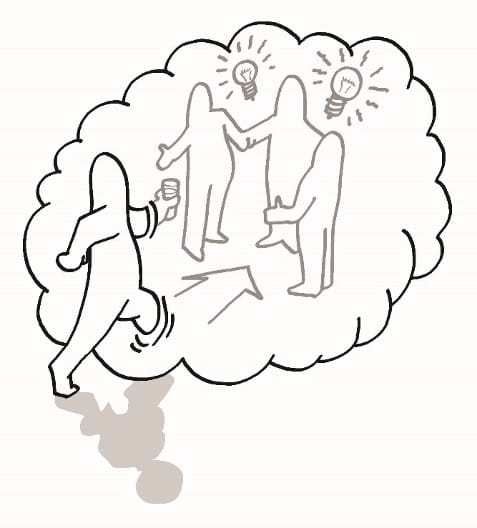
Beyond these two core dimensions, cognitive diversity also encompasses a broader range of individual attributes. These include personality styles (such as introversion and extroversion, which influence how individuals contribute and recharge), mental frameworks for approaching risk, preferences for process adherence versus flexibility, and varying tolerances for ambiguity and complexity. The recognition that people fundamentally differ in these intrinsic ways underscores the necessity of intentionally composing teams with complementary members to achieve optimal outcomes.
The Crucial Nexus of Psychological Safety and Inclusive Leadership
The mere presence of cognitive diversity within a team is a necessary, but not sufficient, condition for success. Its potential can only be fully unlocked and leveraged within an environment characterized by psychological safety and inclusive leadership. Without a foundation of trust and openness, diverse thoughts remain unvoiced, critical insights are withheld, and the benefits of varied perspectives are lost.
Psychological safety, a concept popularized by Harvard Business School professor Amy Edmondson, refers to a shared belief held by members of a team that the team is safe for interpersonal risk-taking. In such an environment, individuals feel comfortable speaking up, asking questions, offering dissenting opinions, and admitting errors without fear of humiliation or punishment. This safety net is particularly vital for cognitively diverse teams, as it enables the constructive friction that leads to innovation and robust decision-making. When individuals feel psychologically safe, their unique cognitive styles are not just present but actively engaged and valued.
Inclusive leadership serves as the primary catalyst for cultivating psychological safety and, by extension, harnessing cognitive diversity. Inclusive leaders are those who actively seek out and value diverse perspectives, ensure fairness and respect, empower team members, and foster a strong sense of belonging. They are adept at facilitating dialogues, mediating constructive disagreements, and creating an equitable platform where every individual feels invited and encouraged to contribute their unique insights.
Research from Deloitte Australia, for instance, highlights the profound impact of inclusive leadership, indicating that a leader’s behaviors can account for up to 70 percentage points of difference in the proportion of employees who feel highly included versus those who do not. This effect is even more pronounced for members of minority groups, for whom inclusive leadership can be a critical determinant of their sense of belonging and engagement.
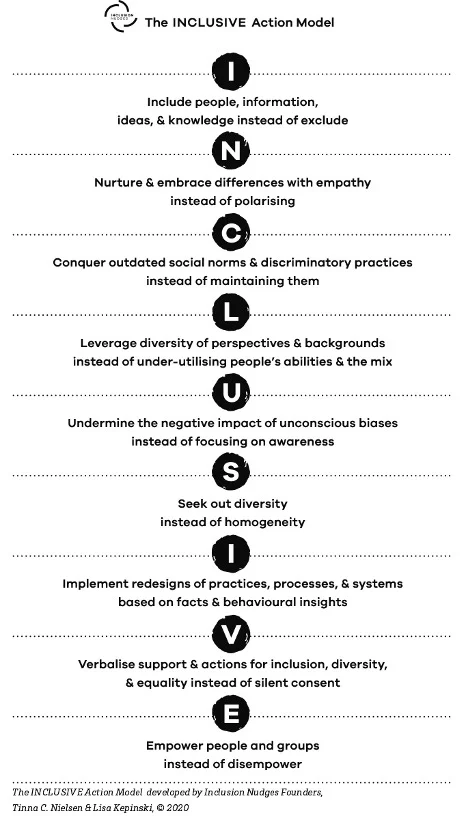
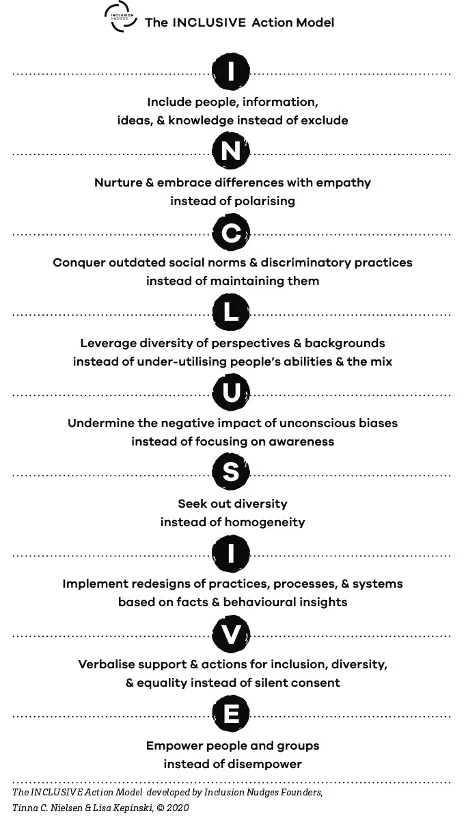
Despite the growing consensus on the importance of inclusive leadership, many leaders report feeling ill-equipped to effectively implement inclusive practices. They often express uncertainty about how to facilitate difficult conversations related to exclusion or discrimination, and how to actively champion diverse thought processes. This leadership gap poses a significant barrier to realizing the full potential of cognitive diversity. Recognizing this challenge, practitioners like Tinna Nielsen and Lisa Quast, through their "Inclusion Nudges" initiative, have developed actionable frameworks and guides, such as the "Inclusion Nudges Inclusive Action Model" and "Inclusion Nudges for Leaders." These resources provide practical, step-by-step behavioral designs to help leaders embed inclusive practices into their daily routines, fostering confidence and sparking broader cultural transformation. By making inclusion the default, these tools empower leaders to create environments where cognitive diversity thrives.
Broader Implications and Strategic Imperatives
The strategic embrace of cognitive diversity carries far-reaching implications across various organizational facets:
- Enhanced Innovation: Teams comprising individuals with varied cognitive styles are inherently more creative. The interplay of different ways of thinking—from analytical and detail-oriented to conceptual and big-picture—generates a wider array of ideas and novel solutions, critical for staying competitive in dynamic markets.
- Superior Problem Solving: Complex problems rarely have single, straightforward solutions. Cognitively diverse teams can dissect problems from multiple angles, identify overlooked variables, and develop more comprehensive and robust strategies. This leads to quicker, more effective resolution of challenges.
- Mitigated Risk: A diversity of thought acts as a powerful safeguard against groupthink and confirmation bias. Different perspectives help identify potential blind spots, challenge assumptions, and uncover unforeseen risks, leading to more thorough risk assessments and more resilient operational plans.
- Improved Decision Making: By integrating a wider range of data interpretations, predictive models, and ethical considerations, cognitively diverse teams make more informed and balanced decisions. This reduces the likelihood of costly errors and increases the probability of achieving desired outcomes.
- Organizational Resilience and Adaptability: In an increasingly volatile, uncertain, complex, and ambiguous (VUCA) world, organizations must be able to adapt rapidly. Teams with cognitive diversity are better equipped to pivot, innovate, and thrive amidst disruption, enhancing the organization’s overall resilience.
- Talent Attraction and Retention: Organizations that actively champion and leverage cognitive diversity become magnets for top talent. High-performing individuals, particularly those with unique cognitive styles, seek environments where their contributions are genuinely valued and where they can engage in meaningful work alongside diverse thinkers. Such an inclusive culture fosters higher engagement and significantly reduces attrition.
The current global climate, marked by geopolitical tensions, climate change, and rapid technological advancements like artificial intelligence, only magnifies the urgency for organizations to cultivate cognitive diversity. These macro trends introduce unprecedented levels of complexity and uncertainty, demanding sophisticated problem-solving capabilities that no single individual or homogenous group can reliably provide. The ability to integrate different ways of thinking—from technical expertise to ethical foresight, from operational efficiency to creative disruption—will determine an organization’s capacity to not only navigate but also shape the future.
In conclusion, while demographic diversity remains a fundamental ethical and business imperative, the discourse on DEI must evolve to encompass the profound strategic advantages of cognitive diversity. It is not merely about achieving representation but about actively cultivating and leveraging the rich tapestry of human thought processes. This requires a concerted effort to foster psychological safety and empower inclusive leaders who can effectively orchestrate diverse perspectives. By doing so, organizations can unlock unprecedented levels of innovation, strengthen their decision-making capabilities, and build the resilience needed to thrive in an increasingly unpredictable world. The investment in understanding and nurturing cognitive diversity is not just a best practice; it is a critical investment in future success.