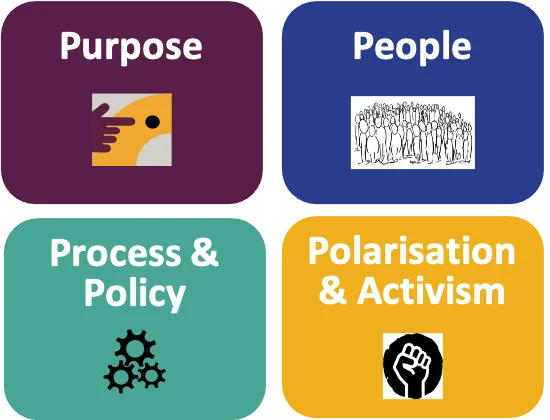
The past two years have undeniably marked a tumultuous period, characterized by an unprecedented, rapid-paced experimentation with new paradigms of work. The ongoing pandemic has not merely accelerated pre-existing trends but has instigated a profound, fundamental shift in how societies and organizations conceptualize work and envision its future. While many questions remain open and data continues to evolve, a comprehensive analysis reveals four critical emerging trends: Purpose, People, Process & Policy, and Polarisation & Activism. These shifts carry significant implications for Diversity, Equity, and Inclusion (DEI) efforts, compelling leaders to navigate a highly ambiguous and fast-changing landscape with strategic foresight and agile responses.
Purpose: Redefining the "Why" of Work in a Post-Pandemic World
The onset of the pandemic, a truly life-shaking global event, compelled millions worldwide to engage in deep introspection regarding their personal purpose and its alignment with their professional lives. This period of widespread societal disruption triggered a fundamental re-evaluation of priorities, moving beyond traditional career progression metrics. A U.S. survey by McKinsey, for instance, revealed that nearly two-thirds of respondents reflected on their life’s purpose due to the pandemic experience. This introspection gave rise to critical questions such as: "Is this job truly worth my energy and time?" and "Does it align with how I genuinely want to spend my life?"
This emergent anchor of purposeful work is actively altering the implicit work model that historically demanded significant personal sacrifices for career advancement. A global Edelman survey from August 2021 underscored this, finding that almost 60% of employees had either left or were planning to leave their jobs to find roles that better aligned with their personal values. Concurrently, 50% were seeking positions offering an improved lifestyle. These motivations represent a stark departure from pre-pandemic drivers for job changes, where higher compensation or conventional career growth often dominated exit reasons. This purpose-driven shift transcends generational boundaries; millennial workers in the U.S. were three times more likely to be re-evaluating their work, while in the U.K., the number of employees over 50 taking early retirement more than doubled since the pandemic’s commencement. While not every job exit can be solely attributed to a lack of purpose, its emergence as a primary consideration is undeniable.
The widespread lockdowns undeniably exposed the limitations of pre-existing work models in supporting individual purpose, simultaneously highlighting the considerable costs of unequal and biased workplaces. A well-documented example is the pervasive dual burden experienced by many women, balancing professional responsibilities with disproportionate domestic and caregiving duties. While this issue was not new, the pandemic-era work experience finally brought an unavoidable, stark realization of its impact to the forefront for many. The consensus emerged that the "old way of working" was simply unsustainable for fostering a healthy, connected, and fulfilled life. Consequently, many women with caregiving responsibilities reported significantly higher rates of burnout and resignations. Globally, during the first year of the pandemic, women’s employment declined by 54 million (4.2%), compared to a 3% drop for men. While not all these were voluntary resignations, this trend unequivocally demands an immediate and robust response to create healthier, more equitable work models for all employees, particularly women, to facilitate a holistic and sustainable integration of personal purpose with work and life.
Historically, despite a broad understanding of purpose’s importance, a significant "intention-action gap" persisted. Pre-pandemic research by PwC indicated that nearly 79% of business leaders acknowledged purpose’s importance, yet only 34% actively integrated organizational purpose into decision-making. Furthermore, many organizations struggled to cultivate environments that genuinely stimulated employees’ feelings of purpose, both individually and collectively. The pandemic, however, drastically disrupted this inertia, fundamentally shaking how individuals perceive the meaning and purpose of their work. This seismic shift carries profound implications for employees, managers, leaders, stakeholders, organizations, and society at large, necessitating a strategic and empathetic response to align individual aspirations with organizational missions.
People: The Great Resignation, The Great Divergence, and the Employee Power Shift
As economies, organizations, and individuals worldwide endeavor to recover from the profound disruptions of the pandemic, the strategic importance of talent has never been more pronounced. A significant power shift has occurred, empowering employees to voice their expectations regarding what will attract and, crucially, retain them within their organizations. This era has been widely characterized by "The Great Resignation," a phenomenon reflecting a substantial increase in voluntary employee turnover. A global Microsoft survey released in March 2021 indicated that over 40% of employees were contemplating leaving their employers within the year. While researchers acknowledge that a building resignation trend predated the pandemic, and intent to resign doesn’t always translate to actual departure, the pandemic undeniably accelerated and amplified this talent concern.
The sheer scale of recent job data underscores this. In the U.S., August 2021 saw 4.3 million voluntary quits, coinciding with 10.4 million open jobs. Similarly, the U.K. recorded over 1 million open jobs during the same period, an unprecedented high. These figures raise long-term concerns for employers: a Willis Towers Watson survey found 70% of U.S. employers anticipated the talent gap persisting into 2022, with 61% struggling with employee retention. Even in Germany, the EU’s largest economy, company leaders expressed increasing worry over the lack of skilled employees, with an 11% jump in three months to 34.6% by July 2021.
Analysis reveals that resignation rates were particularly prevalent among mid-career professionals (up 20% from pre-pandemic levels) and concentrated in sectors like technology and healthcare, both of which experienced extreme demand and pressure during the pandemic. While traditionally high turnover rates in service and hospitality sectors continued, the pandemic brought greater public awareness and empathy for the often-poor working conditions in these industries. Across many sectors, there has been a noticeable rise in "Rage Quitting," where workers abruptly resign due to an inability to tolerate negative work environments any longer. The pandemic has undeniably sharpened the collective attention on the imperative to genuinely value employees and ensure inclusive workplaces, underpinned by fair labor practices and policies.
In the current climate, uncertainty is a constant. While for some, this breeds stress and anxiety, for others, it has catalyzed a re-evaluation of their current situations, opening doors to new opportunities. This dynamic environment actively triggers change, and quitting has become a potent declaration that "we can do better." With employees increasingly aware of alternative work options, no organization can afford to disregard the profound impact of workplace culture and employee experience on talent attraction, retention, and ultimately, organizational success and broader economic growth. Moving forward, people-centered work cultures must be integral to "The Great Reset" and other "build back better" initiatives as societies emerge from the pandemic’s shadow.
It is crucial, however, to acknowledge "The Great Divergence," which refers to the exacerbating inequalities within the current economic recovery. Not all pandemic-era employment changes have been voluntary "Great Resignations"; many were unwanted job losses, contributing significantly to a global employment crisis. OECD countries have seen 20 million fewer people in work since the pandemic’s start, with over 110 million fewer jobs worldwide. The International Labour Organization (ILO) estimated that global hours worked in 2021 would be 4.3% below pre-pandemic levels, equivalent to 125 million full-time jobs. The OECD also highlighted that reduced working hours disproportionately affected low-paid jobs. While global unemployment saw a slight drop by May 2021, it remained higher than pre-pandemic levels. This demands an inclusive approach to talent and employment, one that comprehensively addresses the full scope of pandemic-era work shifts and actively resets talent and employment practices to be fairer and more equitable for all. This period represents a critical juncture to enact profound and lasting changes.
Process & Policy: The Overhaul of Workplace Norms and the Future of Flexible Work
Periods of profound change often illuminate with stark clarity where the status quo has become untenable, no longer serving the needs of current or emerging realities. The pandemic presented a valuable, albeit challenging, opportunity to critically assess, design, and experiment with innovative solutions for how work is performed and managed. The heightened scrutiny on where and how work gets done has instigated major upheavals in the traditional social contract between employees and employers. Workers now exhibit a significantly lower tolerance for long-accepted norms such as workplace "presenteeism," arduous office commutes, rigid formal clothing codes, substandard working conditions, unfair compensation, and instances of abuse or discrimination. The pandemic also exposed the fragility of a false belief in meritocracy, low employee control over their work, always-on availability expectations, excessive business travel, feelings of isolation, and a widespread lack of well-being and psychological safety, alongside persistent gender inequality in family care responsibilities.
It has become unequivocally clear that many traditional workplaces were operating on outdated norms, ill-suited to modern realities and detrimental to employee well-being and productivity. Consequently, a pressing imperative has emerged for organizations to fundamentally reset and clearly communicate new policies regarding work location and methodology.
One of the most significant policy shifts revolves around work location. Emerging data, while sometimes conflicting, consistently indicates a strong desire among various demographic groups—including women, working parents, and employees of color—to continue working remotely. In the U.S., remote work is projected to continue at least one day a week, with the desire for flexible work being strongest among these groups, who have shown gains in employee experience scores while working remotely (Future Forum Pulse Report). This shift is anticipated to have wide-ranging social ramifications, including increased employee diversity, improved work-life balance, and expanded talent pools, as geographical location and in-office presence become less critical factors.
However, a substantial portion of employees, estimated at two-thirds, expect more than just one day of remote work per week and are prepared to quit if extensive remote work options are not the norm. Pre-pandemic, many organizations adopted an ad hoc approach to remote work requests, a system ripe for biases. This placed an undue burden on managers for decision-making, often discouraged employees from even making such requests, and was generally perceived as unfair. Research conducted by Lisa and Veronika Hucke in 2019 on work location and methods revealed that the vast majority of remote workers were senior males, while working mothers often felt stigmatized for requesting flexibility, and junior staff, despite desiring remote work, feared being perceived as "not serious about their jobs." The current moment, following a massive global experiment with remote work, presents a crucial opportunity to rectify these historical inequities and establish equitable, well-defined policies.
Crucially, the process by which these new policies are created is as important, if not more so, than the policies themselves. An approach designed in isolation risks being unfit for purpose, leading to low acceptance, underutilization, and potentially exacerbating existing inequalities. Alarmingly, a multi-country survey of knowledge workers by Future Forum revealed that 66% of executives were designing post-pandemic workforce policies with little to no direct input from their employees. This isolated approach also fosters an overconfidence in transparency: 66% of executives believed they were being "very transparent," while only 42% of workers agreed. This disconnect sets up new policies for failure from the outset, representing a significant missed opportunity to engage the very people most affected in an inclusive co-creation process. The collective call to action from the pandemic era is clear: policies must be rigorously assessed against current and future needs, leverage data and input from all organizational levels to co-create solutions integrating behavioral insights, and be implemented through agile experimentation. This comprehensive approach is essential for fostering adaptive, equitable, and sustainable work models.
Polarisation & Activism: The Workplace as a Crucible for Societal Divisions and Employee Advocacy
As societies re-emerge from the stringent lockdowns and restrictions of the pandemic, a complex range of emotions—sadness, loss, fear, a lack of control, and anger—pervades the collective consciousness, inevitably spilling over into broader societal dynamics. Research from 17 countries by Pew Research showed that 60% of people felt their society was more divided than before the pandemic, a 30% increase from pre-pandemic rates.
Within the workplace, new challenges have arisen, exemplified by "no jab, no job" policies. While some view mandatory vaccinations for returning to the office or interacting with colleagues and customers as a necessary measure for public and personal health, others perceive it as an overreach into personal autonomy. Global frustration and fatigue are high, with over 50,000 pandemic-related protests recorded worldwide. "COVID rage" manifests in increasing accounts of customer abuse towards workers, particularly in hospitality and service sectors, where up to 80% of employees have witnessed or experienced such incidents. These internal conflicts are exacerbated by widening global inequalities regarding vaccine access, further entrenching the divide between the "haves" and "have-nots," and potentially hindering an inclusive economic recovery.
Beyond pandemic-specific polarization, a long-standing erosion of trust in public officials and civic institutions has intensified over recent years. A global study in August 2021 highlighted that Millennials and Generation Z harbor such deep distrust that they expressed higher faith in governance by artificial intelligence than by fellow human beings. This sentiment stems from ongoing concerns about corruption, stagnant political leadership, and threats to physical safety posed by surveillance and militarized policing against activists and people of color. The tragic murder of George Floyd in May 2020 served as a stark catalyst, igniting a significant surge in Black Lives Matter and anti-racism activism in over 60 countries. This, alongside numerous other issues of inequality and discrimination, has transformed into active discussions both within society and within the workplace.
Employees, with as many as 76% in one global Edelman research, now explicitly expect and demand that their workplace leaders take a clear stand on key social issues. Furthermore, employees are increasingly energized to take action themselves when they perceive it as necessary. The August 2021 Edelman survey indicated that 60% of employees felt empowered to be change-makers in their workplace. A significant 75% globally stated they would take action to advance urgently needed organizational changes, with 40% willing to go public through whistleblowing, protesting, or social media posts. Concurrently, in the U.S., there has been a notable resurgence of interest in labor unions as a means to safeguard human rights at work and actively participate in redesigning organizational cultures. October 2021 alone saw over 25,000 workers on strike, a substantial increase compared to the average of 10,000 during the preceding three months.
The times have unequivocally changed, but have organizational leaders fully grasped the magnitude of this shift? Perhaps not, as respondents to the global survey reported that only 48% of their employers were consistently acting on their stated values. This critical gap carries significant risks, potentially lowering employee trust, diminishing leaders’ credibility, and reducing engagement. Consequently, "The Great Resignation" persists, with 33% of employees quitting because their employer "didn’t speak out about a societal or political issue the employee felt it had an obligation to address." The era of the "silent executive" on DEI issues is over, as is the tolerance for well-meaning public statements without tangible change. The new standard for leadership is to be an inclusive leader, actively demonstrating allyship through concrete actions, not merely through social media posts or rhetorical commitments.
Navigating the New Era of Work and DEI: A Call for Inclusive Leadership
The pandemic has served as an undeniable catalyst, accelerating and fundamentally reshaping the landscape of work across the globe. The intertwined shifts in individual purpose, employee power dynamics, the necessity for flexible and equitable work policies, and the heightened societal polarization mirrored within the workplace collectively demand a profound re-evaluation of organizational strategies, particularly concerning Diversity, Equity, and Inclusion.
The pursuit of purpose has transitioned from a personal luxury to a professional imperative, forcing organizations to align their values with employee aspirations or face significant talent drain. The rise of employee advocacy and "The Great Resignation" underscores a fundamental power shift, compelling employers to foster truly people-centered cultures that prioritize well-being, fairness, and psychological safety. Concurrently, the global experiment with remote work has exposed outdated processes and policies, necessitating the co-creation of flexible, inclusive work models that leverage behavioral insights and challenge historical biases. Finally, the increasing societal polarization and the surge in employee activism mean that leaders can no longer remain neutral on critical social justice issues; instead, they must actively embody inclusive leadership through demonstrable action, building trust and fostering an environment where all employees feel valued and heard.
These four pillars—Purpose, People, Process & Policy, and Polarisation & Activism—are not isolated phenomena but deeply interconnected forces shaping the future of work. Organizations that proactively address these trends with empathy, strategic foresight, and a genuine commitment to DEI will be best positioned to attract and retain top talent, foster innovation, and build resilient, equitable workplaces. This era demands a comprehensive, integrated approach to DEI, moving beyond compliance to embedded behavioral design and cultural transformation. The moment for profound change is now; embracing inclusive leadership and re-imagining work for the benefit of all is not just a moral imperative but a strategic necessity for sustainable success in this new, dynamic global landscape.