As the 2026 midterm elections approach, the demographic profile of the American electorate is undergoing a profound and steady transformation. A comprehensive analysis of U.S. Census Bureau data and projections by the Pew Research Center reveals that while the United States is home to roughly 250 million adult citizens eligible to cast ballots, the composition of this group has shifted significantly over the last two decades. The electorate is becoming increasingly diverse, driven primarily by the rising numbers of Hispanic and Asian eligible voters, even as the demographic footprint of the White population continues to contract.
The latest findings indicate that White Americans currently constitute 61% of all eligible voters. While they remain the majority, this share has experienced a persistent decline from 74% in 2006. In contrast, the combined influence of Hispanic and Asian voters has grown at a rapid pace. Hispanic citizens now make up 16% of the electorate, and Asian citizens account for 5%, with both groups effectively doubling their relative share over the past twenty years. Meanwhile, the Black share of the electorate has remained relatively stable, holding at approximately 12% throughout this two-decade period.
A Two-Decade Chronology of Demographic Shifts
The evolution of the American electorate is not a sudden phenomenon but a long-term trend rooted in shifting immigration patterns, birth rates, and the maturation of younger generations. To understand the current landscape, one must look at the progression from the mid-2000s to the present.
In 2006, the electorate was 74% White, 12% Black, 9% Hispanic, and 3% Asian. By 2012, the White share had dipped to 71%, while the Hispanic share climbed to 11%. By 2020, White voters represented 65% of the electorate, and the Hispanic share reached 14%. The 2026 projections confirm that this trajectory has not slowed. Between 2022 and 2026 alone, the total number of eligible voters grew by 8.4 million, a 3% increase. Of this growth, more than half—roughly 5.2 million individuals—came from the Hispanic community.
This growth is largely attributed to the demographic "pipeline." Every year, approximately one million U.S.-born Hispanics turn 18, officially entering the electorate. This consistent infusion of new, younger voters accounted for nearly 80% of the growth among Hispanic voters between 2022 and 2026. Naturalization—the process by which legal permanent residents become citizens—also plays a critical role, contributing another million voters to the Hispanic category over the same four-year span.
The Rise of Asian American Influence
Perhaps the most striking growth rate is observed within the Asian American community. Since 2022, the number of Asian eligible voters has risen by 2.3 million, reaching a total of 13.7 million. This represents a 20% growth rate, the highest of any racial or ethnic group in the country. This expansion is split relatively evenly between immigrants who have completed the naturalization process and U.S.-born Asian Americans reaching adulthood.
While the Black electorate has also seen growth—increasing by 1.6 million people (6%) since 2022—it has done so at a more measured pace compared to the rapid surges seen in the Hispanic and Asian populations. Conversely, the White electorate is the only group to see a decline in absolute numbers, shrinking by 2.6 million between 2022 and 2026. This contraction is a result of the group’s aging structure; as the baby boomer generation reaches later life stages, the number of deaths within the White population has begun to exceed the combined total of new voters turning 18 and those being naturalized.
State-Level Variations and Regional Dynamics
The national shift toward a more diverse electorate is not uniform; it manifests with varying intensity across different states. Twenty years ago, White Americans constituted a majority of eligible voters in 48 states. Today, that number has fallen to 46 states. The District of Columbia, California, Texas, New Mexico, and Hawaii now have electorates where no single racial or ethnic group holds an absolute majority, or where the traditional majority has been significantly eroded.
Nevada stands out as a focal point of this transformation. Between 2006 and 2024, the state experienced a 20-percentage-point decline in the White share of the electorate, the largest such drop in the country. California followed closely with a 16-point decline. These shifts are almost exclusively driven by the rising numbers of Hispanic voters. In states like Texas and California, Hispanic voters are now major stakeholders, representing 32% and 33% of the electorate, respectively. In New Mexico, the trend has reached a tipping point where the Hispanic population represents 43% of the electorate, effectively becoming the largest single demographic block.
The regional concentration of specific groups also remains a defining feature of the American political landscape. Black voters, for instance, maintain their highest concentrations in the South and the mid-Atlantic, accounting for roughly 30% to 41% of the electorate in states like Mississippi, Georgia, Louisiana, Maryland, and the District of Columbia. Meanwhile, the Asian American influence is most pronounced in Hawaii, where they make up 37% of the electorate—the largest share for that group in any state—followed by California at 15%.
The Gap Between Population and Electorate
A common point of confusion in political analysis is the difference between a group’s share of the total U.S. population and its share of the eligible voter population. These two metrics do not mirror one another because eligibility requires U.S. citizenship and the attainment of the age of majority.
As of 2024, 81% of the White population is eligible to vote, the highest rate of any racial group. This high eligibility rate is largely due to the older median age of the White population and the fact that the vast majority are native-born citizens. In contrast, 74% of the Black population, 60% of the Asian population, and 52% of the Hispanic population are eligible to vote.
The lower eligibility percentages among Hispanic and Asian populations are primarily due to two factors: a younger age profile (with many individuals under 18) and, in the case of immigrants, the time required to navigate the naturalization process. However, these gaps are closing. Between 2006 and 2024, the share of the Hispanic population that is eligible to vote increased by 12 percentage points, and the Asian share increased by 9 percentage points. As these populations age and achieve citizenship, their influence on the electorate will continue to rise.
Demographic Profiles and Political Implications
The demographic characteristics of these groups—specifically age, education, and nativity—carry significant weight for political strategists and policymakers.
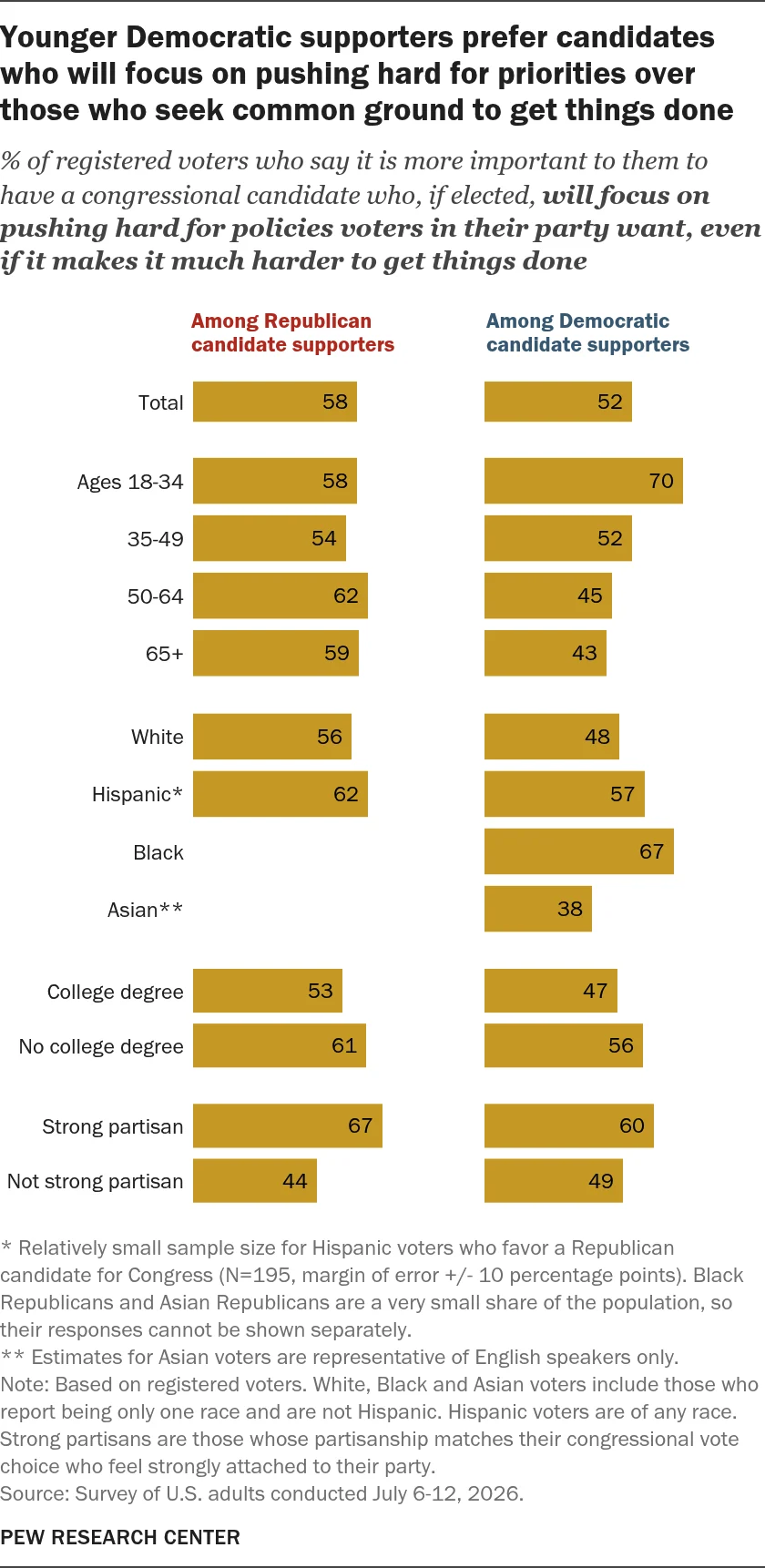
The White electorate is currently the oldest, with a median age of 52. This is a critical factor, as older voters historically exhibit higher turnout rates than younger cohorts. In contrast, the Hispanic electorate is significantly younger, with a median age of 39. While younger voters often bring high levels of energy and engagement to election cycles, they historically face more barriers to consistent turnout. The challenge for political parties, therefore, is not just the changing composition of the electorate, but the ability to mobilize groups with vastly different age profiles and life experiences.
Educational attainment also serves as a sharp dividing line. Data from 2024 shows that 54% of Asian eligible voters and 38% of White eligible voters possess a bachelor’s degree or higher. For Hispanic and Black voters, the figures are lower, with a larger portion of these groups having a high school diploma or some college experience. Because educational attainment is frequently correlated with voter turnout and specific policy priorities, these differences are closely watched by both major political parties.
The Path Forward
The data paints a clear picture of an America that is fundamentally changing. The growth of the Hispanic and Asian electorates is not a temporary anomaly but a structural shift that will likely dictate the strategies of future political campaigns. As the White share of the electorate continues to decline, the importance of engaging a more racially and ethnically diverse coalition of voters has never been higher.
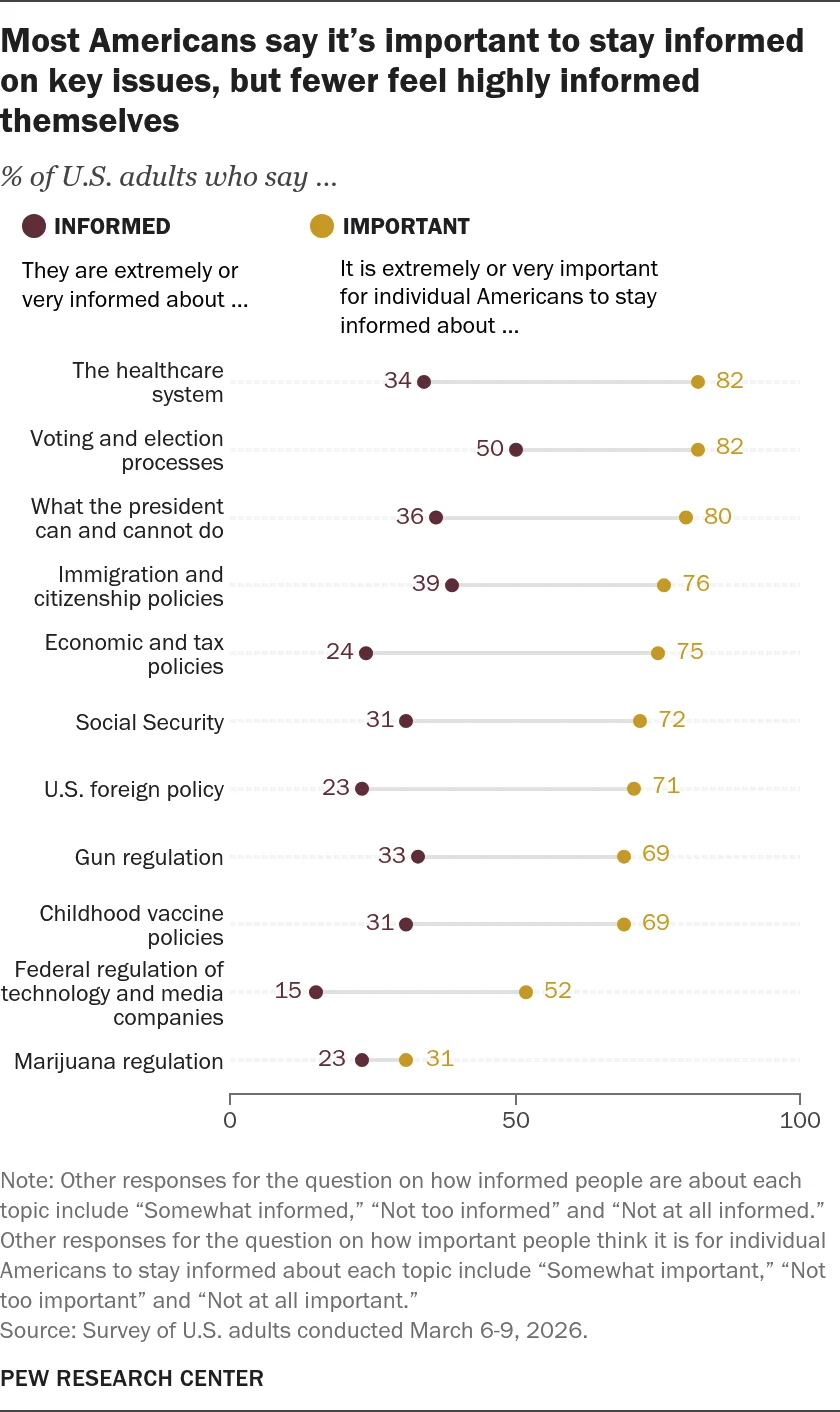
While the number of eligible voters continues to climb, the real-world impact of these demographics will ultimately depend on voter turnout and registration rates. As the 2026 midterms approach, the focus will shift from the sheer size of these demographic blocks to how these groups perceive the issues of the day—from economic stability and education to immigration and healthcare. The changing racial and ethnic makeup of the U.S. electorate is, in essence, a reflection of the nation’s evolving identity, and the 2026 election will serve as the next major indicator of how this new, more diverse electorate intends to shape the future of American governance.