Under pressure to process vast quantities of information, the human cognitive system often prioritizes efficiency over accuracy, frequently bypassing intentional goals of open-mindedness and inclusion. Behavioral scientists categorize this as System 1 thinking—the automatic, rapid, and emotional mode of cognition that relies on mental shortcuts, heuristics, and internalized stereotypes. Because this system operates on autopilot, it can inadvertently steer decision-making toward faulty judgments shaped by upbringing, societal norms, and ingrained societal prejudices. By employing cognitive reframing techniques, individuals and organizations can reshape these mental shortcuts, ensuring that internal thought processes are more accurately aligned with core values of equity and respect.
The mechanism behind this phenomenon is rooted in the constant, often subconscious, internalization of normative patterns. Throughout life, individuals absorb messages about what constitutes being “attractive,” “smart,” “trustworthy,” or “a leader.” These perceptions are reinforced by a complex ecosystem of family, peer groups, social media influencers, educational institutions, and corporate structures. When these normative patterns are narrow, they inevitably lead to the exclusion of individuals who do not fit the established, dominant archetype. This creates a ripple effect: discriminatory impacts in hiring, promotion, and social integration that perpetuate systemic inequality.
The Rise of Digital-Era Cognitive Dissonance
The challenge of internalized bias has been exacerbated in the post-2020 era of remote work. As organizations shifted to video-conferencing platforms, a new psychological phenomenon emerged, colloquially termed "Zoom dysmorphia." This condition is characterized by a negative, obsessive fixation on one’s own appearance as projected through a digital lens. Psychologists observe that this represents a profound disconnect between an individual’s rational, positive self-concept and the reflexive, critical judgments made during daily virtual interactions.
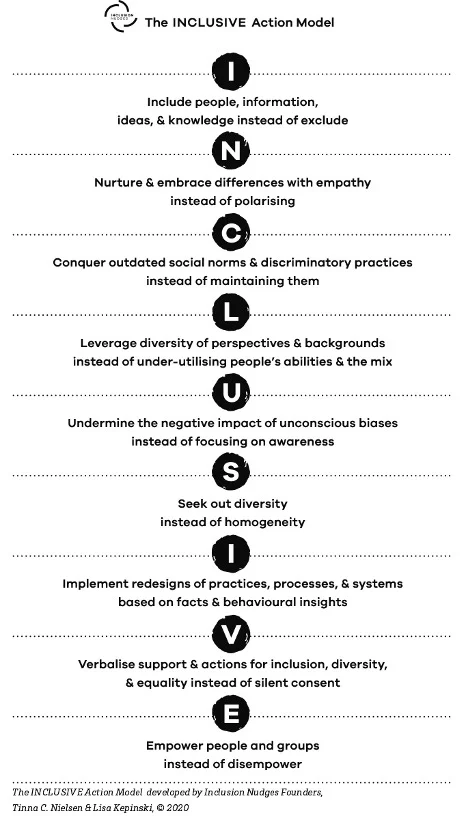
Data from mental health organizations suggests that constant exposure to one’s own image in a real-time, high-definition environment increases self-objectification. For many, this creates an internal feedback loop where the individual becomes their own harshest critic. Behavioral design experts Tinna Nielsen and Lisa Kepinski, founders of the Inclusion Nudges movement, note that this personal struggle is not merely an individual issue but a microcosm of the broader societal struggle to dismantle exclusionary mental frameworks.
A Chronology of Reframing Methodology
The development of "Framing Perceptions" as a tool for behavioral change has evolved over the last several years, moving from theoretical psychology into practical, scalable design interventions.
- 2018–2019: Behavioral designers began focusing on the linguistic framing of migrant and refugee issues. Research indicated that terminology like "migrant crisis" tended to trigger defensive or exclusionary cognitive responses in the public.
- 2020: The onset of global lockdowns necessitated a shift in focus toward digital environments. The "Zoom dysmorphia" phenomenon was identified by clinical psychologists as a byproduct of increased screen time.
- 2021: Practitioners began adapting social justice reframing techniques to personal mental health. The "That’s a Human" technique was developed as an experimental intervention to disrupt the automatic judgment of others based on physical appearance.
- 2022–Present: Organizations began incorporating these "Inclusion Nudges" into their diversity, equity, and inclusion (DEI) training modules, moving beyond traditional bias awareness to active cognitive management.
Data-Driven Insights into Cognitive Bias
The necessity for reframing is underscored by the speed of human information processing. Research into cognitive load theory suggests that when the brain is overwhelmed, it relies on "schemas"—cognitive frameworks that help organize and interpret information. According to the Harvard Implicit Association Test (IAT) data, over 80% of respondents show a moderate to strong automatic preference for dominant social groups.
The implication is clear: even individuals who explicitly hold egalitarian values often harbor implicit biases that manifest in split-second judgments. When an individual views a person or themselves, the brain attempts to categorize them within milliseconds. If that categorization is based on a narrow normative pattern, the resulting judgment—be it a stereotype about ability or a harsh critique of appearance—is solidified before the conscious mind can intervene. Reframing acts as a "speed bump" for this process, forcing the brain to slow down and adopt a more inclusive label.
Case Study: The "That’s a Human" Intervention
One of the most successful applications of this methodology is the "That’s a Human" exercise. Inspired by the work of the South African non-profit PASSOP, which successfully challenged dehumanizing rhetoric in media by replacing exclusionary language with human-centric descriptors, the practice has been adapted for individual mental health.
In this intervention, when an individual notices a judgmental thought surfacing—such as critiquing a stranger’s clothing or body shape—they are prompted to consciously reframe the thought by repeating the phrase, "That is a human being." This simple linguistic shift serves two purposes: it interrupts the rapid-fire, stereotypical categorization by the brain, and it redirects the focus toward the commonality of the human experience.
Reports from participants in these pilot programs indicate that the practice leads to a measurable decrease in self-reported anxiety and a higher sense of internal calm. By intentionally choosing a different "anchor" for their thoughts, participants are able to weaken the neural pathways that lead to habitual judgment.
Institutional Implications and Official Perspectives
The broader impact of these cognitive design interventions on corporate culture is significant. Diversity and inclusion professionals increasingly argue that traditional sensitivity training, which focuses on moral suasion, is often ineffective because it fails to account for the mechanics of System 1 thinking.
"We cannot simply wish bias away," explains a lead consultant at a global diversity firm. "Bias is an evolutionary byproduct of our need for rapid processing. The solution is not to demand that people stop having these thoughts, but to design the environment and the cognitive habits that allow for interruption. When you change what you see, you change how you behave."
Organizations that have integrated these nudges into their decision-making processes—such as using structured interview templates that force specific criteria evaluation rather than gut-feeling assessments—have reported higher rates of demographic diversity in hiring. The implication for leadership is that creating an inclusive workplace is a matter of architectural design rather than just good intentions.
Future Directions in Behavioral Design
As the field of behavioral science continues to mature, the focus is shifting toward "choice architecture." This involves structuring the environment so that the inclusive choice is the easiest, most natural choice. Future developments in this area are likely to include:
- AI-Assisted Language Reframing: Software that monitors internal communications for exclusionary language and suggests more neutral, inclusive alternatives in real-time.
- Digital Interface Design: Modifying video platforms to mitigate the effects of self-view dysmorphia, allowing users to focus on the conversation rather than their own appearance.
- Gamified Mindfulness: Applications that prompt users to practice reframing throughout the day, effectively "training" the brain to bypass stereotypes.
Conclusion
The effort to foster a more inclusive society requires a dual-pronged approach: systemic change within our institutions and cognitive change within our own minds. The "Framing Perceptions" approach provides a practical, evidence-based method for individuals to reclaim control over their own thought processes. By recognizing that judgment is an automatic function of the brain rather than a reflection of character, individuals can move past the limitations of internalized norms.
The work of reframing is an ongoing process. It is not a permanent "cure" for bias, but rather a sustainable way to interrupt, reflect, and choose more inclusive paths. Whether applied to the way we view our own reflections in a digital mirror or the way we perceive those we encounter in the public sphere, the power of a simple, intentional shift in perspective remains one of the most effective tools for social and personal transformation. By consistently choosing to see the humanity in others and ourselves, we begin to dismantle the narrow patterns that have for too long defined our perceptions, paving the way for a more equitable and empathetic future.